AI Is Reading Your Emotions… at Work
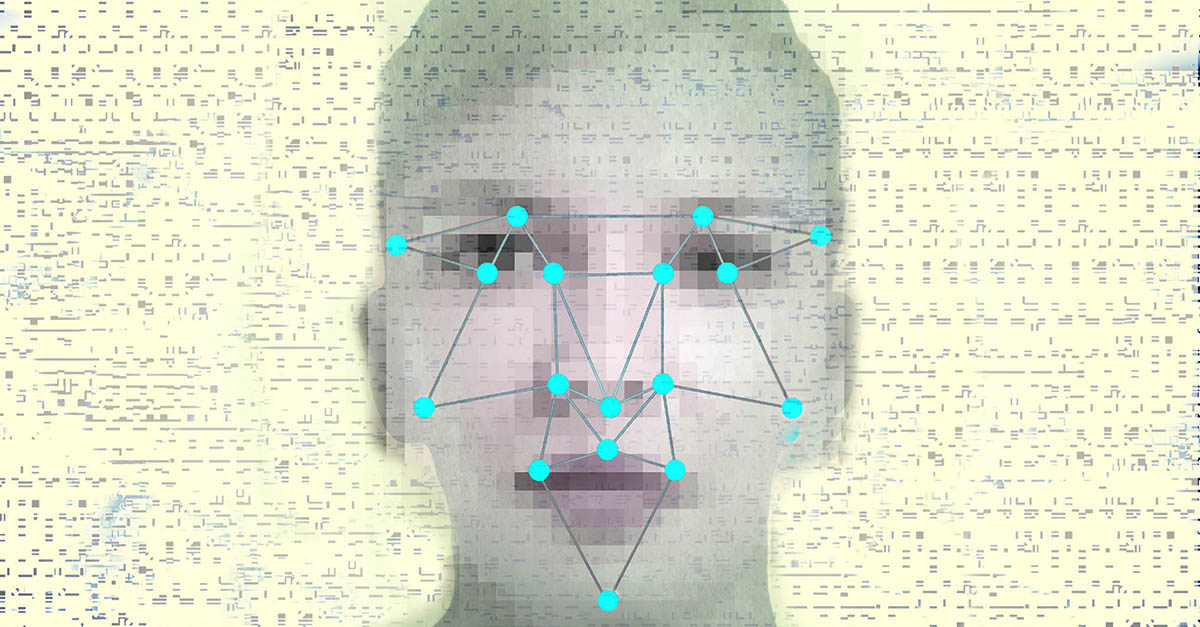
AI that can read people’s emotions is showing up in places employees may not expect. Could monitoring employees be going too far?
The call from the teacher came just as the parent was badging into her office—and she was naturally concerned. It didn’t turn out to be important, but the facial recognition AI read her expression as anxious. An alert was sent to her manager suggesting a check-in conversation.
Welcome to the rapidly growing world of emotion AI, which tries to gauge how people are feeling by body language, tone, and other behavioral or sentiment cues. Once used primarily to evaluate interactions between call center and service agents and customers, emotion AI is now showing up not just in offices but also in elevators, lobbies, and other places employees might not expect. It’s become such a big business that one recent report estimates the market for emotion AI will triple to $9 billion by 2030 from under $3 billion today. Kara Ruskin, a senior client partner in the Technology practice at Korn Ferry, says investment in emotion AI is growing because “no one has really nailed it yet, so it’s the next big opportunity.”
Ruskin says emotion AI has the potential to help employers in hiring and training, where technology can detect when job candidates may be lying or how engaged an employee is with their work. Firms also see value in emotion AI in factory and warehouse settings, where it can monitor when someone is distracted or when safety hazards arise.
But experts worry that the more emotion AI detects, the more potential it has to be invasive. It wasn’t too long ago that people gave up resisting and succumbed to monitoring as an inconvenient byproduct of remote work. Now, more than seven in 10 employees are subject to some form of corporate monitoring. Returning to the office was supposed to lower the volume on monitoring, but the emergence of AI has quietly made it more widespread, say experts.
The problem with emotion AI, says Shanda Mints, vice president of AI strategy and transformation at Korn Ferry, is that the tools right now are just as subjective as traditional engagement and sentiment data like surveys and online reviews. Engagement surveys are often anonymous and self-reported, and online posts are usually from ex-employees, so both methods have the potential for bias, says Mints. Similarly, she says emotion AI is prone to subjective interpretations that could be inaccurate based on the current information it is trained on. “Employee engagement has a direct correlation on productivity,” says Mints, “but measuring it isn’t always accurate.”
For his part, Dennis Deans, vice president of global human resources at Korn Ferry, worries that managers may use emotion AI as evidence of individual performance rather than a barometer for it. It’s a subtle difference, but one with huge ramifications. “Making an assumption about how someone will perform for the day based on their facial expression is not the purpose of emotion AI,” he says. Moreover, the fact that this kind of monitoring is showing up all over offices and not just on company-issued devices or platforms “brings up a lot of questions about what firms are stepping into,” says Deans.
Ruskin agrees, noting that emotion AI may be able help with how employees perform at any given moment but creates all sorts of issues later. “It will be intriguing to see how far firms push this,” she says.
Learn more about Korn Ferry’s AI in the Workplace capabilities.