The Org Chart Goes Trapezoidal

As AI agents gain power, firms are tying themselves into knots over where to seat them—or their managers—in the hierarchy.
A new enterprise AI agent, known as Chief, was tracking performance across the company and reporting to the C-suite. But where in the org chart should Chief sit? And more importantly, where should Chief’s manager sit? The HR leader was stumped: Chief’s builder was not an executive, and yet Chief reported to the C-suite.
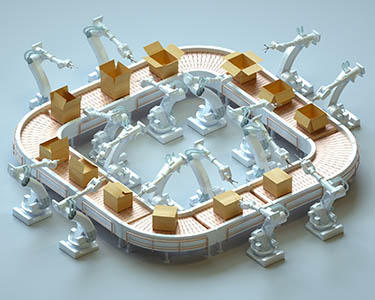
Enterprise AI agents are tossing org charts to the wind. For their 175-year reign, org charts have arranged company hierarchies with relative ease, typically in a pyramid shape. But corporate leaders are finding that the explosive world of AI agents is disrupting this practice. “No one quite knows what org charts will look like,” says Shanda Mints, VP of AI strategy and transformation.
Org charts, of course, are the heart of most firms’ operations, as they set up a command structure. For now, the future of the bottom half of org charts is becoming clearer: Some expect reshaped charts to have wider middles, with a narrower band of entry-level roles populated by employees who mostly manage AI’s work on tasks previously delegated to entry-level workers. Human resources information companies (HRIS) are currently planning to incorporate agents in their organizational structures, but for the most part, they have not yet adopted changes. Higher up the chart, it’s a mind twister: While some agents have a single accountable owner, others work across teams or the enterprise. “Orchestrator agents” are particularly confusing, because they can manage other agents who sit in different parts of the organization.
While larger companies typically set HR norms, smaller companies in less regulated industries are ahead of the curve here, because they have less data and they’re more willing to feed all of it into AI. For them, AI serves not just as a tool, but as a replacement for a level of management. “I’m seeing agents as the decision-makers, requesting KPIs from employees and aggregating information and reporting to the CEO,” says Moses Zonana, senior client partner in the Digital and Technology practice at Korn Ferry. How, exactly, does a firm recognize this power shift in its hierarchy?
Some experts suggest this is a good moment to press the brakes and ask a bigger question: Do agents belong in org charts at all? Seventy-one percent of US adults believe that the use of AI will lead to fewer jobs over the next 20 years, according to a June Pew report, and 27% of workers feel that AI will make their own jobs obsolete, according to September data from Gallup. “How would you feel if you saw Siri on the org chart?” asks Karena Man, senior client partner in the Digital and Technology practice at Korn Ferry. “And she’s equivalent to you?”
Org charts are just the visible manifestation of a pervasive linguistic problem. By calling AI “agent” or “assistant,” firms are anthropomorphizing the tech in a way that signals to employees that they’re replaceable; seating agents in an org chart exacerbates that threat. “We’re blurring lines, which can be super problematic and undermine trust,” says Jenna Young, global solution architect at Korn Ferry.
Regardless of whether Chief gets a plum seat in the org chart, savvy firms are fully occupied with defining what an agent can access and retrieve and share, and under what circumstances. Can the agent access information, but only share subsets of that information—and, if so, with whom? “I think we’ll spend much more time figuring out who is accountable for an agent, what its access is, and where the boundaries need to be,” says Mints.
Learn more about Korn Ferry’s Organization Strategy capabilities.