
All Business, All the Time
Squeaky-clean and by the book, Singapore is fast becoming Asia’s new headquarters for high-income families and businesses alike. Can leaders learn from it?

March 25, 2026
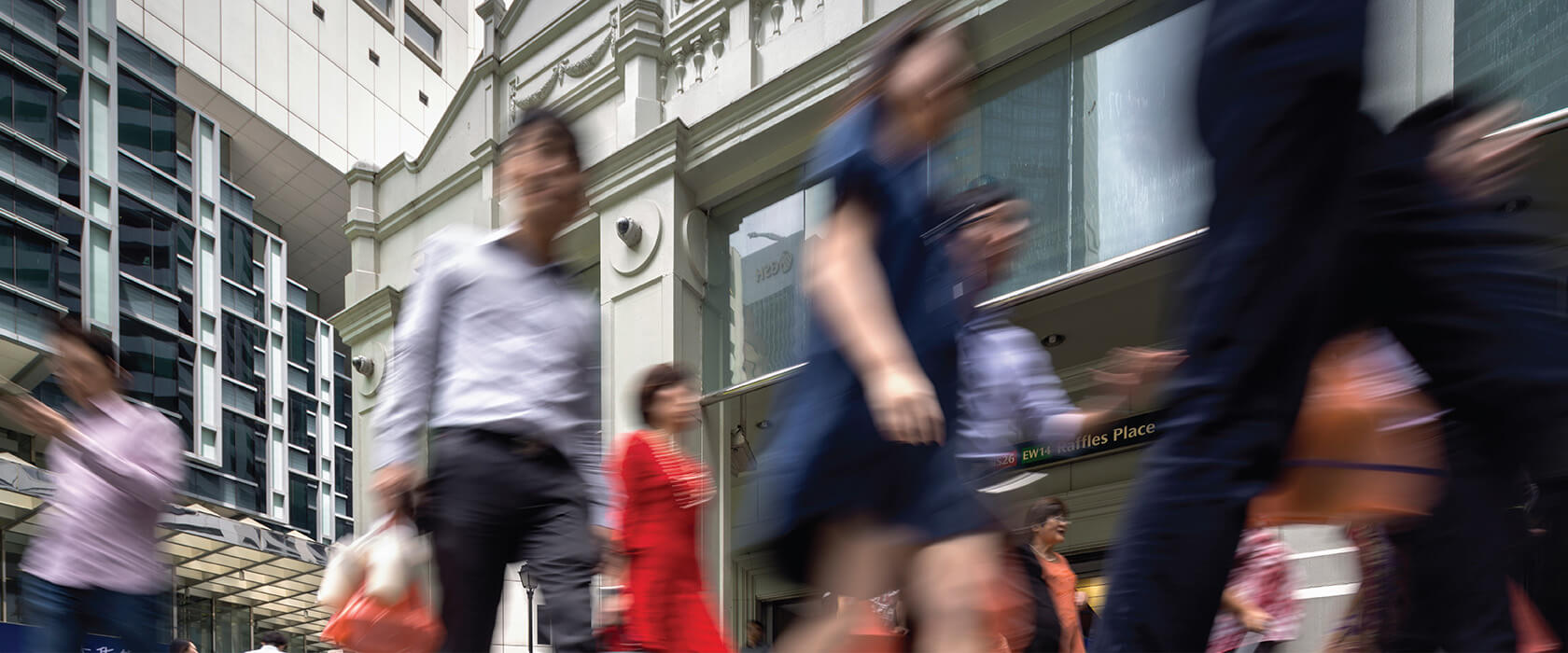
Four people riding a bus round-trip in Singapore is a high-wire act. Each person has to swipe their own credit card at the beginning and end of each ride—that’s 16 swipes. No card can be used twice on the same bus. Eight thousand miles from home, will my US credit cards, two of which I never use, even work? Singapore doesn’t mess around with transit-fare evasion. Laws here are actually enforced.
You don’t ignore rules in Singapore, a 284-square-mile country roughly the size of Chicago that’s both well-known and infamous for intensely punishing even minor offenses. Bus violations are no joke. One political party has been in power for 66 years, pushing consistent laws. And in an ironic turn, Singapore’s written-in-stone rules are why global businesses are flocking to the city of 6 million. “Singapore provides something which many companies just don’t find anywhere else, and that’s stability,” says George Haley, director of the Center for International Industry Competitiveness at the University of New Haven. “It makes it really easy to plan.”
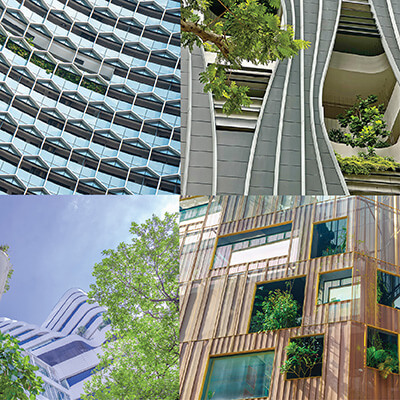
The city is covered by trees or foliage, and newer buildings have vertical walls of ferns integrated into their upper floors.
Companies have noticed: Firms as varied as Dyson, FedEx, Shein, and TikTok have all moved their global or EMEA headquarters to Singapore since the pandemic. Today, the city hosts an estimated 4,200 regional headquarters; over 7,000 multinational corporations operate there, according to Singapore’s Economic Development Board—roughly three times as many as in Hong Kong.
Leaders might have something to learn from a city-state that has also become a massive tourist destination, even with mixed press coverage. With four official languages—English, Mandarin, Malay, and Tamil—Singapore pushes an explicitly multiracial and multicultural vibe, and staunchly maintains political neutrality when possible. You stand on the street and realize that yes, it is totally possible for people from across the globe to get along, and for the bus to always come on time. At a moment when companies need to be razor-sharp on everything from disaster preparation to workforce stability, is Singapore offering a hospitable home base, a blueprint, or both?
.jpg)
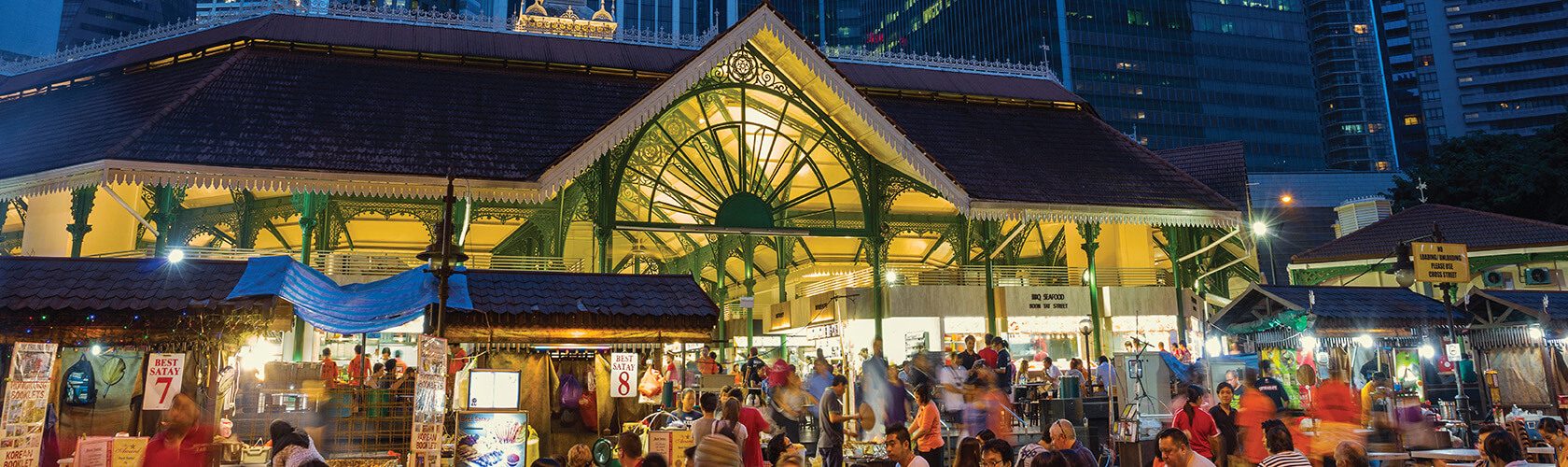
The streets of Singapore are relentlessly clean, like someone power-washed all external surfaces. No gum, no graffiti, no mystery puddles. The port, widely recognized as the world’s most efficient, is gleamingly pristine, and populated by well-behaved crews. Despite the oven-like temperature, which hovers around a heat index of 109 degrees Fahrenheit and humidity of 90 percent, one wants to walk around—and in fact, jogging, biking, hiking, and other outdoor sports are common. Leave your laptop bag sitting on the sidewalk and it will be there when you return. Children as young as seven catch buses solo, which is notable anywhere, but especially in a region where cities tend not to be family friendly. And the bus always comes on time, so everyone takes it. By comparison, Manhattan and Los Angeles seem held together by duct tape and prayer.
To be sure, the port of Singapore has long functioned as a business hub, particularly as a gateway to Asia for Western companies. Firms can staff up with an educated workforce that ranks No. 1 on the 2025 Global Talent Competitiveness Index and know that the Singapore’s 10-year-old SkillsFuture program will fund skill upgrades throughout locals’ careers. Streamlined laws allow companies to set up shop in as little as one day; the rules for incorporation are posted on the internet in four languages, and the task is simply to follow them. It’s a far cry from some other Asian countries whose business mores can be foggy to outsiders. (One auto manufacturer is well-known for having spent gobs of money building facilities in Vietnam, only to discover that the local government—unimpressed by Westerners in suits—would not provide the necessary permits to open.) Whether a company needs to operate in Indonesia or China or Malaysia, “Singaporeans know how to deal with all of them,” says Haley. “It’s just chock-full of knowledge of how to operate efficiently across Asia.”
Singapore by the Numbers
- Population: 6 million
- Office Vacancy Rate: 4.7% (among the world's lowest)
- Cost of 10-Year License to Own a Car: $100,000
- Share of Foreigners in Population: 50%
- Percent of Office Space that Is Grade A: 94.8%
- City Safety Rating: #1 in The Economist Safe Cities Index
- Regional or Global Headquarters: 4,200
- Expat Cost of Living: 2nd highest in the world (2024 Mercer Cost of Living)
- Life Expectancy: 83 (among the world's highest)
But Singapore’s recent surge of corporate popularity is largely driven by its top-notch, techy COVID-19 management, which proved to be the gold standard for epidemic response. Aggressive testing, tracing, and isolation, along with clear public messaging as early as January 2020, produced only eight weeks of lockdowns (April to May 2020), allowed small-group meetings and travel to continue, and enabled businesses to operate relatively freely. This, despite the heavy influx of tourism and travel typical of a port city. “It’s a model for how to react during a crisis,” says Michael Di Cicco, managing director and head of executive search in Korn Ferry’s Singapore office. The same savvy is evident across the government’s preparations for everything from future disasters to AI. “The work and thinking of the government is just incredible,” says Esther Colwill, president of Asia-Pacific for Korn Ferry. “They’re probably the best at understanding tech and adopting it fast, in a really future-oriented way.”

The moneyed classes of Asia have taken note of gentle local tax laws. In 2019, Singapore hosted fewer than 200 family offices. By 2024, it was home to over 2,000, including Google cofounder Sergey Brin’s. By one estimate, 59 percent of all Asian families globally have their family offices in the city. Singapore’s family-office services are so sought-after that billboards for millionaire and billionaire financial services hover over downtown streets. Thirteen percent of the city’s residents are expected to be millionaires by 2030, according to a report by HSBC.
In an era of constant change, Singapore is a rational, pragmatic, and often frictionless place to run a business.
Foreign businesses have followed suit. Scarred by the logistical backflips of the pandemic, they’ve sought a location where their headquarters could operate smoothly in the face of global instability. Singapore’s preparation for every variety of disaster—disease outbreaks, extreme weather, terrorism, fires—is comprehensive and highly organized, and spearheaded by a phalanx of government agencies that compensate their staffers on par with private firms. (Singapore’s prime minister earns $2.2 million Singapore dollars per year, while entry-level ministers—the equivalent of United States cabinet secretaries—take home S$820,000.) Singapore’s emergency approach incorporates six pillars: military, civil, economic, social, digital, and psychological defenses. It’s a mix of prevention, planning, and drills, plus community awareness and coordinated multi-agency deployment. Nearly 600 shelters have been built to protect the population in the event of war, and high-rises are plastered with fire-exit routes and assembly points. Public-warning sirens are tested quarterly, with helpful signage in four languages to explain what the heck the signals mean.
Simply put, while Singapore can deploy 100,000 emergency personnel in a minute, four people riding one of its buses requires tapping four credit cards eight times. This is precisely the calculus that companies can make when setting up shop there. The government is focused not on foreigners’ bus experiences, but on forecasting 20 to 50 years out. One word comes up again and again in discussions among local experts: future. “I don’t see any other government that is so involved in future planning on such a meticulous level,” says Kartikey Singh, Korn Ferry’s managing director for consulting in Singapore. The government, he says, has systematically put in place the necessary elements for an AI tech hub: a good university system, partnership with the private tech sector, and a healthy commercial landing ground for incoming PhDs. “A lot of their focus is on resilience in the face of technology like AI,” he says.
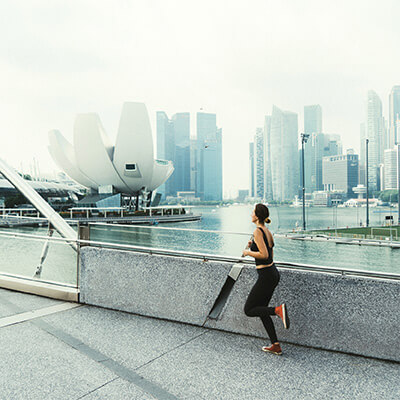
The icing on the cake is that—as lots of expats will attest—Singapore is exceedingly pleasant.
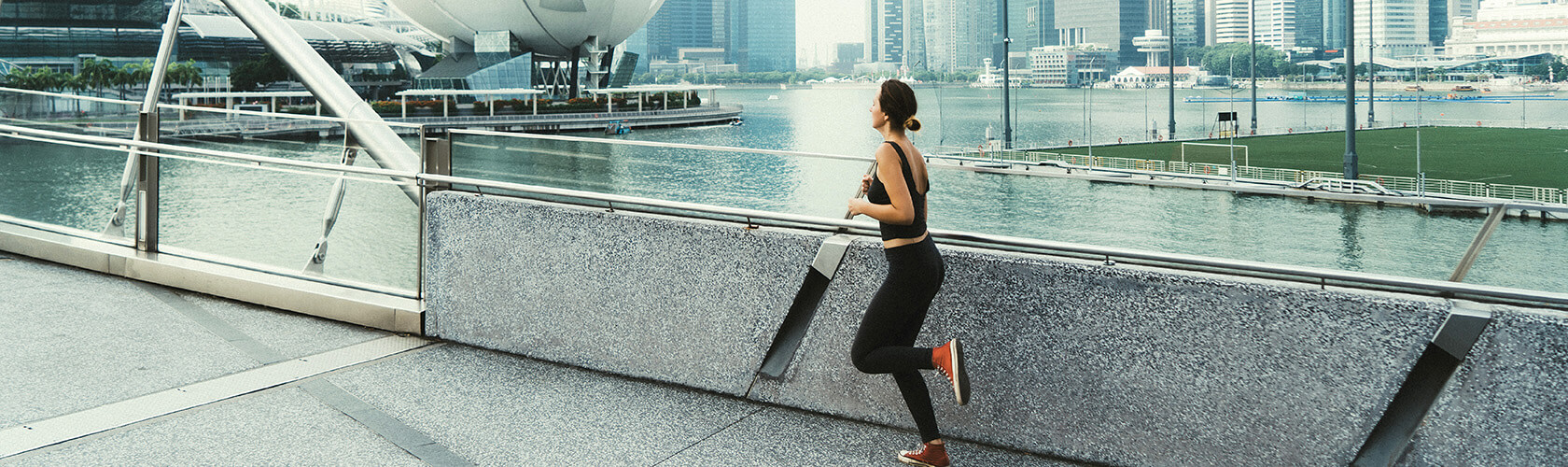
Forty-seven percent of the city is covered by trees or foliage, and newer buildings have vertical walls of ferns integrated into their upper floors. Taking an outdoor business meeting at one of the hundreds of fan-cooled, swank cafés is delightful. Di Cicco says he never used to jog when he lived in other cities: “Here I’m running three times a week. You wouldn’t think, right?”
There are downsides. Singapore’s arts culture isn’t likely to attract much global attention anytime soon, and, by Western standards, freedom of speech and other rights are constrained. And Singapore’s cost of living ranks among the highest in the world for expats. “There are market limitations, namely it being small and expensive,” says Aaron Henry, managing director of Foundeast Asia, a global marketing company. It can be particularly pricey to run a company staffed by foreigners: Salaries must be high enough to cover high rents, and business is commonly discussed at golf or exercise clubs whose fees can be exorbitant. “Personally, I prefer to build and manage a team in Thailand,” Henry notes. And indeed, in the last couple of years, many firms have shifted their headquarters to Singapore, while maintaining larger staffs elsewhere.
5 Gateway Cities to Asia
For firms that want access to the markets and supply chains of Asia, several cities are aggressively positioning themselves as modern hubs of corporate headquarters, laden with expatriates, professional service firms, and wilting humidity.
Bangkok: The New Operations Hub
Thailand has emerged as an increasingly popular locale for staffing up.
- Population: 11.5 million
- Percent expatriates: 5%
- Regional or global headquarters: 450
- Advantages: Low operating costs, central location, growing start-up ecosystem
- Disadvantages: Flooding risks, bureaucracy, political instability

Shanghai: The Granddaddy of Asian Business Hubs
Reborn in the 1990s, the city now mostly serves Chinese markets.
- Population: 31 million, over a vast area
- Percent expatriates: 40%
- Regional or global headquarters: 1,016
- Advantages: World's largest port, low operating costs, access to China's supply chains and huge domestic market
- Disadvantages: Language barrier, air pollution, complex bureaucracy
Tokyo: The Western-Style Financial Center
The corporate friendly megacity has long been a hot spot for international businesses, and currently hosts numerous Fortune 500 regional headquarters.
- Population: 37 million
- Percent expatriates: 3%
- Number of corporations: 700
- Advantages: Political stability, high-quality infrastructure, sophisticated financial markets
- Disadvantages: Aging workforce, complex business etiquette, higher cost of living

Mumbai: The Infrastructure Mess
It's a city well positioned for dominance in 2040 and beyond, though it's currently challenged by urban planning issues like dense traffic and power-grid integrations.
- Population: 22 million
- Percent expatriates: 5%
- Regional or global headquarters: Approx. 750
- Advantages: Domestic market of 1.4 billion, low operating costs, English-speaking workforce
- Disadvantages: Extreme traffic congestion, infrastructure issues, bureaucracy
Hong Kong: The 180-Year-Old Financial Center
Long Asia's premier financial hub, the city serves as the special administrative region of China.
- Population: 7.4 million
- Percent expatriates: 8%
- Regional or global headquarters: 1,410
- Advantages: Deep financial services ecosystem, bilingual workforce (English and Cantonese), simple taxation for companies
- Disadvantages: Political and governance challenges, high cost of living
As in all of Asia, business relationships matter, and companies that try to muscle their way into supply-and-distribution deals while ignoring the business culture of trust and reliability will likely fail. But many see this as a small (and blessedly predictable) price to pay to operate in a leading all-business, all-the-time locale.
As I walk past the glass towers, beneath elevated walkways linking buildings, it’s apparent that everything in Singapore functions. It’s a relief to not have to worry about subway delays or traffic (no commute within the city proper takes longer than 45 minutes). Sure, businesses come for the stability, but leaders stay for the ease. In an era of constant change, Singapore is a rational, pragmatic, and often frictionless place to run a business. In the wilds of global business operations, says Haley, “it’s a layer of sanity.”
Image credits: Jon Hicks/Getty Images; Gonzalo Azumendi/Getty Images; _human, Artvea, Krainukul, Art Sonik, Tetiana Musiyaka, Vector Designer, Calvin Dexter, In8finity, Denny Fachrul Rozzy, Jackyenjoyphotography, Andrew Merry, Getty Images, FredFroese, Eduardo R/Getty Images; Oleh Slobodeniuk/Getty Images; Booblegum/Getty Images
