
What a Great Experience!
Consumers are no longer content to buy things or simply be entertained. They want to be moved. Welcome to the experience economy.

May 28, 2026
Last year, at the moment when tickets for Taylor Swift’s Eras Tour went on sale, a handful of Mikala Slotnick’s family members were furiously refreshing Ticketmaster. Alas, their efforts were futile. Tickets sold out almost instantly. The 24-year-old, full-time student at the University of California, Davis, did eventually secure two nosebleeds for the bargain price of $500 each (the average Eras ticket in California went for $1,088), but she and her aunt had to book a hotel more than an hour away from the Los Angeles venue because rooms were sold out nearby.
THE PROBLEM Consumers are overstimulated and disillusioned, and they’re demanding depth.
WHY IT MATTERS How people spend money and time shapes civilizations.
THE SOLUTION Provide experiences that offer personal growth and community building.
All the effort—totally worth it. Slotnick still wears one of the friendship bracelets from that night (it’s a Swifties tradition to trade friendship bracelets at the shows and to dress in themed attire), and vividly recalls the young girl who gave it to her. “It feels like we’re in a club that spans all over the world,” she says.
When it comes to investing time and money, Slotnick, like many of her generation, chooses one-off occasions over material items—and she’s willing to go into debt if necessary, using credit services like Affirm to pay her way. “Shoes get dirty,” she says. “Bags are seasonal. Trends come and go. Seeing an artist who impacted my life in concert, that’s a once-in-a lifetime opportunity.”
“Fostering human flourishing is the raison d'etre of business.”
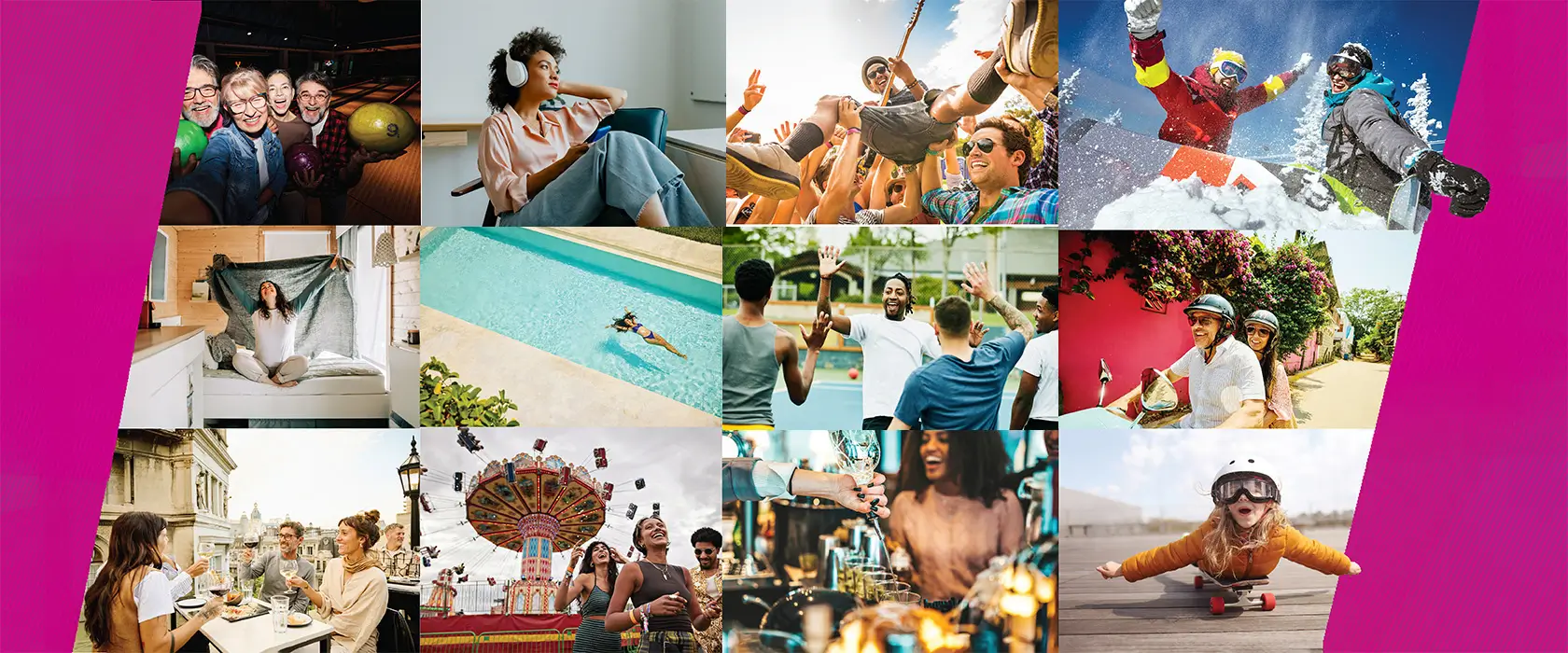
Welcome to the new experience economy, where performances, once regarded as simply an entertaining evening out, are now considered to be cultural pillars that construct a person’s identity and build connection. Where travel is an expression of values and doing is a means of becoming. There has been a marked shift, among not just younger generations but people of all ages, toward spending on things to investing in moments—or, more pointedly, the memories and potential they generate. It’s no longer enough to be pleasantly distracted for a few hours. People want community, self-expression, meaning, and to be moved on an emotional level—and, like Veruca Salt, they want it now.
Over the last 40 years, the share of US consumer spending on live experiences has increased 70 percent, with admissions to performing-arts and sporting events more than doubling since 1990. According to one estimate, people today dedicate a quarter of their budget to traveling, eating out, recreational activities, and other events and services. Once, artists went on tour to sell albums; now they release albums so they can go on tour, with the average concert-ticket price more than doubling in the last decade (economists have a name for this: funflation). “This is happening across the income spectrum and across industries,” Korn Ferry North America president Radhika Papandreou says. “I don’t think it’s cyclical, either. This will be a real shift going forward.”
This shift—which experts warn will be as disruptive as the last great economic turnover from the industrial economy to the service economy—is already reconfiguring business models. Traditional retail brands, such as Gap, are now hiring chief experience officers. Lego, unlike many brick-and-mortar toy stores, is thriving, in part due to its early pivot to in-person experiences, including amusement parks and competitions. And luxury companies like Louis Vuitton are expanding into the travel business by opening hotels, looking to connect with customers through multidimensional offerings. Even the entertainment business, which has always placed experiences at the heart of its model, is evolving from pure spectacle to intentional co-creation. “It’s much less about stimulation and more about connection,” Papandreou says.
And the implications may be even broader still. As society prioritizes becoming more than doing or owning, some say, it won’t just change how people spend money. It will change when, where, and how much employees work. It may even change how people understand prosperity. “When we buy something that’s about personal transformation, the customer becomes the product,” says Ben Hunnicutt, a historian of leisure and author of The Age of Experiences: Harnessing Happiness to Build a New Economy. “Progress will be expressed more in terms of intrinsic motivation and personal outcome than in terms of external consumption.”


To understand this evolution in consumer behavior we need to look back at both the immediate and overarching past. Since the pandemic, there has been an explosion of mass events—festivals, marathons, conferences. People are “revenge living,” as some have termed it. But experts say something deeper is going on.
While companies once competed on quality, convenience, and cost, technology has leveled the playing field to a great extent. In a time when people are oversaturated and disillusioned, what sets brands apart is the emotional effect they deliver. “I think in a broader sense the transactional nature of our lives has caught up to us,” says Akash Abraham, a 44-year-old global director of business-development innovation in the semiconductor industry, who identifies less with his job title than with other descriptors: audiophile, epicure, world traveler. Of the forays he’s made abroad to experience the performing arts or to learn from niche winemakers, he says, “These moments aren’t just lost in the grind of consumption. They live on with you through those emotional dividends.”
Let the Fun Begin
How people invest their time and money in leisure has changed over the decades. A look back at the last 65 years.
1960s: Movies, Bowling, and Vacations
People go to the movies, as well as bowling alleys and skating rinks. They begin taking annual family vacations and spending money dining at cafés. The majority of Americans also own a TV by the end of the decade.
1970s: Festivals, Nightclubs, and Road Trips
Live music and outdoor festivals become popular, eventually moving into nightclubs when disco fever hits. Early video games draw money and people into arcades. The station wagon inspires middle-class families to take road trips, go camping, and stay in motels.
1980s: Buying Binges
There is a greater emphasis on material consumption, with the mall becoming a central social hub. Consumers invest in at-home electronic entertainment, including video-game consoles and VCRs. Families flock to amusement parks. This is the aerobics era.
1990s: Movies at Home
Renting movies becomes a weekend ritual. Themed restaurants, like Rainforest Cafe, proliferate. Casino gambling explodes. A strong economy allows people to invest in high-end sporting and exercise equipment.
2000s: Digital Directions
Consumers continue to invest in at-home entertainment, which now includes computers. With the rise of reality television, gaming, and social media, digital technology becomes interactive. People congregate in coffee shops. Budget travel makes going abroad more accessible.
2010s: Staycations and Streaming
Post recession, there is a shift toward staycations and an explosion of DIY culture. Eating out becomes a form of entertainment. Streaming revolutionizes the TV, movie, and live-sports industries. Boutique fitness surges. With the rise of Airbnb, travelers seek to live like locals.
2020s: Getting in Shape
Wellness becomes a top priority, shaping how people socialize and travel. There is a return to nature immersion. Remote work enables long- term travel. Festival culture continues to grow and become more immersive. Hobbies are a focal point.
Management consultant Joe Pine introduced the concept of the experience economy back in the 1990s, under the theory that economic value progresses through stages. At the base of this ladder are commodities, the raw agricultural materials that fueled agrarian societies. The industrial revolution turned commodities into convenient, ready-made goods, and, as technology standardized manufacturing, those goods were delivered through services. The labor force moved progressively from working in the fields to factories to offices, restaurants, retail, repair, and a multitude of other service industries. In the US, service delivery overtook manufacturing as the top employment sector in the 1950s. With the digital revolution, services increasingly morphed into experiences, which Pine describes as “services delivered in a memorable, engaging way.” In his latest book, The Transformation Economy: Guiding Customers to Achieve Their Aspirations, Pine predicts that experiences will—and have already begun to—mature into transformations, alchemical processes that fundamentally change the consumer.
An experience is not an amorphous construct, Pine argues. It’s as real an offering as any other. The outdoor-retail industry has long understood this. In addition to apparel and gear, companies like Patagonia and REI offer trips and classes. They support local run clubs and host adventure outings. They are selling a way of life—along with the hiking boots needed to traverse it. “Fostering human flourishing is the raison d’etre of business,” Pine says. He urges executives to ask questions that go beyond financial returns: What makes people happier and healthier? What cultivates cohesive communities? What fuels personal, not just economic, growth?


We have pretty good answers to these questions, thanks to both trial and error and decades of scientific research. Amit Kumar, a professor of marketing and psychological and brain sciences at the University of Delaware, has been at the forefront of this research. His conclusion: In terms of satisfaction that endures, experiential purchases return more happiness than material purchases do.
Now, the follow-up question: Why? Well, Kumar explains, experiences have value before, during, and long after the actual event. We find joy in planning a trip (which is why Kumar warns against employing AI to do that for you) or corralling our loved ones to hunt down concert tickets. Engaging in the experience itself fosters a feeling of kinship with others, even if it’s as superficial as having a conversation with a bartender while dining solo. That sense of connection extends into the future, too, as we’re more likely to share something we’ve done with other people than something we’ve bought. Emotionally moving experiences also inspire gratitude, which elicits generosity, which in turn generates deeper connections, and round and round it goes. “Investing in experiences is investing in relationships,” Kumar says, adding that positive relationships, for a social species, are central to happiness.
“The customer becomes the product.”
Material purchases, on the other hand, tend to evoke comparison and competition. And rather than an enduring return on investment, objects provide less and less pleasure over time, a phenomenon called hedonic adaptation. So shoppers end up feeling less while wanting more. Cybersecurity executive Dayse Morales lives in a comfortable enough apartment in Brooklyn, but admits that it’s minimally stocked. “I have everything I need,” the 42-year-old says. “I’d rather spend my money on traveling.” While Morales typically travels solo, for the last several years she’s taken an annual trip with a diverse group of women ranging in age from their early 30s to their 50s. The co-travelers began as strangers, but now, having gone hiking in New Hampshire and snorkeling in Montenegro together, they know each other intimately. “It’s all about community,” Morales says.
Korn Ferry’s Papandreou says more people than ever are choosing to travel solo or in groups outside of family and friend circles. “People are seeking new companionship through these shared experiences,” she says. Wellness travel is also exploding, with tourists seeking out meditation retreats and nature immersions. Interestingly, Kumar’s research shows consumers who buy experiences are more open to uncertainty than those simply purchasing items. In fact, unpredictability adds to the allure, which companies are capitalizing on. The online travel agency Pack Up + Go plans surprise getaways for clients based on survey responses, only revealing the itinerary on the day before departure.

To be sure, consumers are still spending more on durable goods than they were before the pandemic. And there are those who contend that experiences are being commoditized in the same way goods and services have been. A mood of “been there, done that” (with the Taylor Swift Eras Tour muscle tee to prove it) will set in, and the hedonic chase will continue toward ever more intense and novel experiences (and new gear to accompany them). These critics fear the market will find ever-new ways to charge for what was once free. While experiential consumption may be packaged in feel-good wrapping, it can still be reduced to a dopamine-triggering transaction.

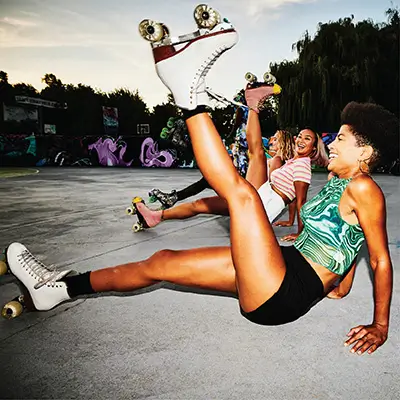
People, Pine says, don’t buy goods, services, or experiences: They buy aspirations. The product is simply the means to the end, and the end is a better person and a better life. That’s why the progression of economic value is always going to lead to transformations. These transformations can be thought of as from/to statements. From sick to well. From unable to skilled. The outcome is the product.
Pine says the way to uplevel a service or experience to a transformation is by encapsulating it. Begin by preparing consumers beforehand, help them to reflect afterward, and then offer ongoing integration. Coaching prepares clients to think about the possibilities and what they really want, while reflection brings into clear focus the impact of the experience. Integration is all about the follow-up. “You haven’t truly transformed until you’ve changed your behavior,” Pine says.
As people come to value more meaningful pursuits, they will inevitably put a premium on their time, the most precious of resources, says leisure historian Hunnicutt. Work will no longer be our main portal for expressing identity, and there will be continued pushback against long hours and return-to-office mandates. Careers, too, will become a means to an end. For millennia, those who think about such things have argued that securing tangible goods is important insofar as it allows societies to cultivate intangible ones: personal and collective actualization (think Maslow’s hierarchy of needs).
Reflecting on his affinity for the culinary and performing arts, Abraham, the Manhattan executive, landed on a conclusion similar to that of Greek philosophers 2,000 years ago: “These activities offer moments to recenter on things that have been important to me since childhood, and to reinforce my thoughts on life and what matters."
Image credits: Dimensions, Jacobs Stock Photography LTD, Molchanovdmitry, Olga Pankova,Thomas Barwick, Klaus Vedfelt, Kar-Tr, Catherine Delahaye/Getty Images, Noko LTD/Getty Images, Nick Dolding, Fortgens Photography, George Rudy, Prostock-Studio, Oscar Wong, Wang Yukun, Thomas Barwick, Yana Iskayeva/Getty Images, Image Broker/Turgay Koca, Ugur Karakoc, Klaus Vedfelt, Max Kegfire, Kilito Chan, Thomas Barwick/Getty Images
