Workforce 2026: Healthcare Industry Insights Revealed
Korn Ferry’s annual survey of healthcare workers reveals what they think about their jobs right now—and why purpose is no longer enough to make them stay.


Healthcare workers are among the most mission-driven across industries, and it’s easy to see why. Their work saves lives.
But too many employers rely on that sense of purpose to absorb their workforce's frustrations with inconsistent pay. Their structures leave career growth to chance and pile on workloads that allow little room for learning or innovation.
Those are three critical gaps our Workforce 2026 survey uncovered, and they put your organization at risk of losing highly skilled employees.
Here’s how each of these healthcare workforce trends affects your people and organizational goals—and what you can do next.


1: Fair Pay Moves Above Purpose
Healthcare employees care deeply about the difference their work makes in patients’ lives. It’s one of the reasons they stay in the field.
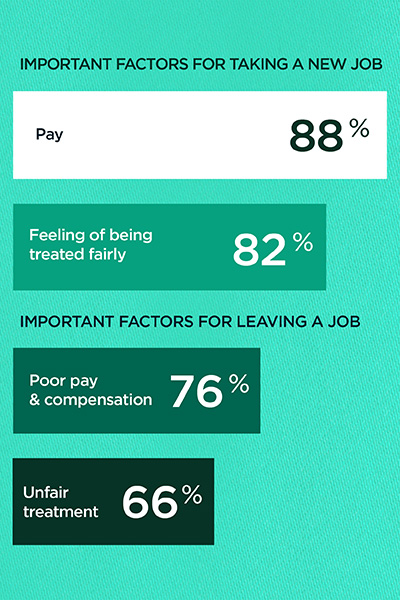
Purpose matters to job candidates, too. But when they're choosing between employers, pay often carries more weight.

But meaning alone won't keep them with your organization. Compensation has to reflect the value of their contributions. If they feel they’re being paid badly or if their job feels too insecure, they’ll leave.
Compensation needs to be applied consistently, whether among men and women in the same roles or between different roles that require the same level of knowledge, training, and experience.
The Big Takeaway
Healthcare organizations can’t rely on an employee's commitment to purpose as a substitute for fair pay. No matter how much they love their career, they’re unlikely to stick around long if they’re paid less than they're worth.
“Purpose shouldn’t mean a discount. People come into healthcare because the work matters, but they stay when an organization proves that they matter too.”
Liz Bickley, COO of Korn Ferry Healthcare
Now What?
Primary care physicians, medical assistants, pharmacists, and every role in between all work under different conditions. The best rewards for them might not be the same, but any difference needs to be fair and have a clear rationale.
Start with a pay equity audit to uncover hidden disparities, such as if one department’s new starters keep outpacing what loyal employees earn.
Design fairness into the system by linking job architecture and promotion criteria clearly to pay, instead of relying on intuition.
Prepare managers to explain how those decisions are made. Employees are far more likely to accept pay differences when you’re transparent about how they are determined.
2: Wanted: Clear Healthcare Career Paths
Physicians and registered nurses often have clearly structured career paths. Healthcare executives have formal succession plans that show what advancement looks like.
But many other roles, from personal care aides to allied health staff, have no defined career path. For some, it takes a supportive manager to spot their potential and point them in the right direction.
That leaves career growth dependent on the luck of having a good manager, when there should be a workforce strategy that outlines clear development paths for all workers.

The Big Takeaway
The cost of a lack of career-path clarity is especially high during healthcare workforce shortages. Many employees have skills that could transfer into adjacent hard-to-fill roles, but no one has mapped the route or shown them what's possible.
When employees can’t picture a future with your organization, leaving starts to feel like the smart move.
“Employees need three things to see a future at your organization. They need visibility into the routes from today’s jobs to tomorrow’s opportunities, access to those routes, and someone who will help them map out the skills they need to learn to get there.”
Liz Bickley, Korn Ferry Healthcare
Now What?
Use strategic workforce planning to connect skills and roles to future business needs rather than just today's vacancies.
Show employees the lateral moves and bridge roles that can take them into areas where the organization needs talent. A scheduler, for example, might be able to develop a path into care coordination.
Make development realistic for frontline staff. Offer programs that fit around patient care. And use technology to reduce the routine admin work that takes time away from learning.
Bring those career paths into regular check-ins. Managers should help each employee understand where they could move next and what skills they need to get there.


3: The 2-for-1 Job Problem
Better outcomes in healthcare come in two ways. The first are major transformations rolled out across the organization, such as the adoption of new tech platforms or changing priorities for teams.
The other way comes through steady improvements in how care is delivered and how work gets done. Frontline employees are often at the forefront of that change. They have a clear view into what’s slowing things down and what could work better.
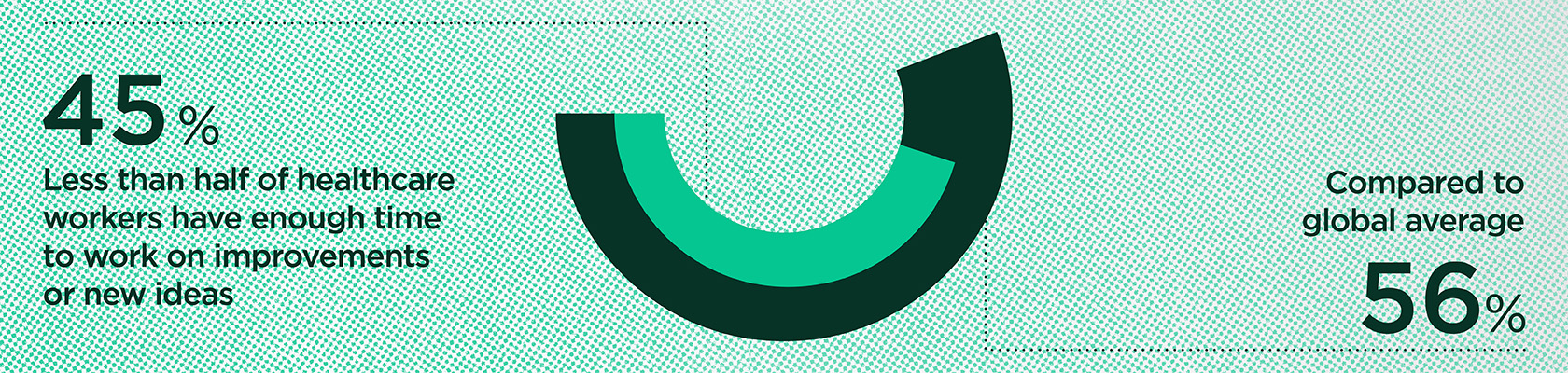
But they barely have time to keep up with their own responsibilities, let alone find better ways of doing things or get to grips with entirely new ways of working.
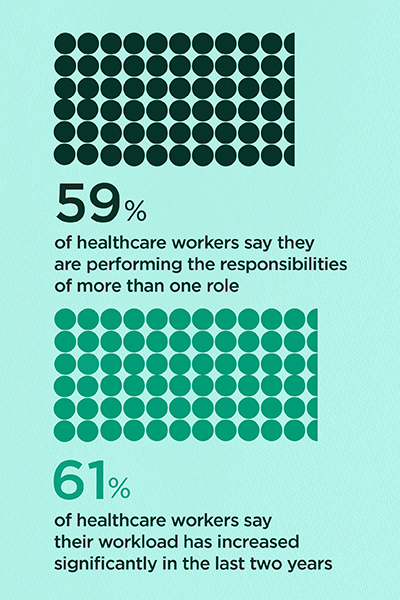
A majority of healthcare workers say they're performing the responsibilities of more than one role, which is impacting patient care and increasing risk of burnout.
That also leaves them without the time and support they need to test new ideas and technology, meaning potential improvements that can impact outcomes are missed.
And when they’re overworked, the training and development they need come to be seen as another burden rather than an opportunity for career growth.
The Big Takeaway
When improvement time isn’t protected, the organization’s transformation initiatives become a source of stress and avoidance. People nod during the meetings but then go back to surviving the shift, with no time to learn the new processes or technologies.
New tools are used inconsistently, and old processes creep back in. That creates confusion and makes the change harder to sustain.
Over time, employees lose faith that the initiative will improve their work, so the organization gets less value from the investment.
"You can't ask people to redesign the plane while they're flying it. Transformation has to be resourced as work, not treated as volunteer labor."
Liz Bickley, Korn Ferry Healthcare
Now What?
Transformation only works when the people delivering it have the capacity to take part. Give people dedicated working time to test ideas, plus the data and authority to act on what they find.
Create cover rather than overtime so people can step away from the floor to learn and test ideas without patients or teammates paying for it. Requiring it to be done during overtime or unpaid time turns improvement work into another source of exhaustion.
Make managers responsible for protecting that time. Keep improvement work on the schedule and adjust workloads around it.


Why Korn Ferry for Healthcare?
Korn Ferry helps healthcare organizations find the right people and develop the workforce strategies needed for long-term growth.
With a dedicated healthcare practice and deep industry knowledge, we work across the full talent journey, from leadership strategy to workforce planning to total rewards.
We serve organizations across the healthcare continuum, including hospitals, health systems, payers, pharmaceutical companies, specialty care practices, and medical device companies.
Our healthcare specialists bring both industry depth and cross-industry perspective to every engagement, working closely with clients to solve complex people challenges.
We work with 10 of the top 10 academic medical centers, 10 of the top 10 managed care and health insurance firms, 20 of the top 20 hospitals, and four of the top five children’s hospitals.
How We Did It
For the third year, Korn Ferry surveyed 1,200 professionals in the healthcare sector to understand how they really feel about work today. The survey included participants from entry-level positions to CEOs across 11 major markets: Australia, Brazil, France, Germany, India, Japan, Saudi Arabia, Singapore, UAE, UK, and USA.
Ready to do More With the Talent You Already Have?
Connect with Korn Ferry to create more capacity for change and keep more of your best people.