The Thinking We Shouldn’t Outsource
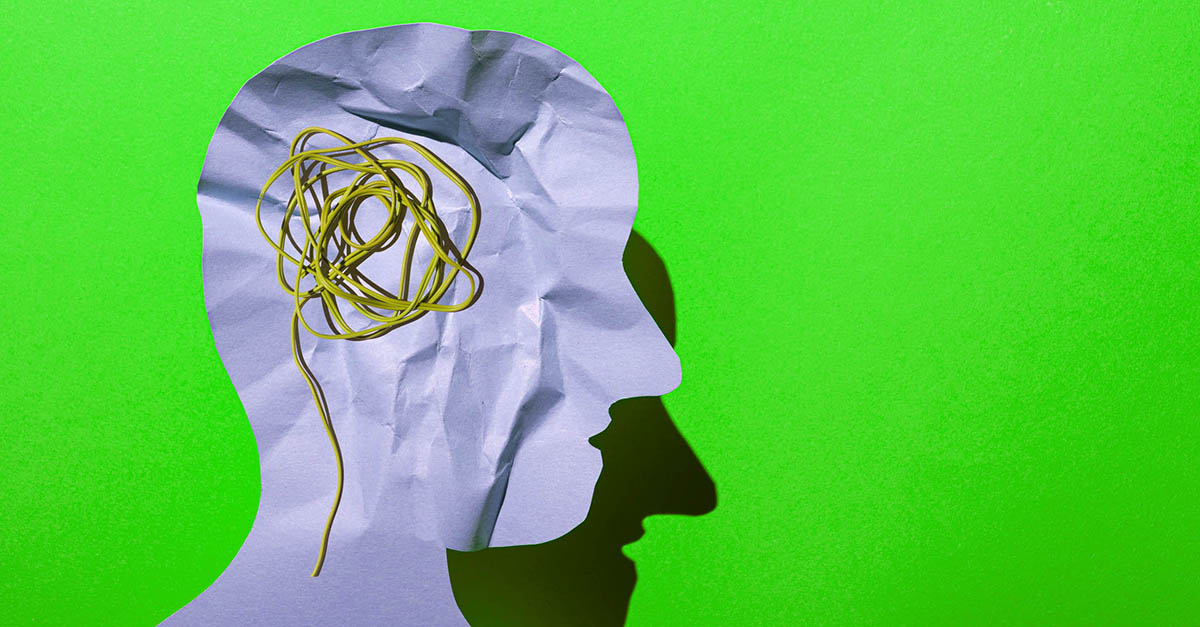
Best-selling author Dan Goleman explains the downsides of relying on AI for every project.
Daniel Goleman is author of the international best-seller Emotional Intelligence and Optimal: How to Sustain Personal and Organizational Excellence Every Day. He is a regular contributor to Korn Ferry.
Sam Altman, the now famous CEO of OpenAI, has spent some time thinking about the downside of the technology his company is leading the charge on. Beyond potential job loss and misinformation, a great issue looms on the AI horizon: cognitive atrophy.
“How are we going to use these tools and make sure that we are stretching our brains more and more and continuing to understand the stuff that really matters,” asks Altman.
In other words, how do we make sure increasingly intelligent technology doesn’t lead to the dumbification of the human race?
Cognitive atrophy was the subject of a 2025 MIT study examining what happens in the brain when people use AI to complete cognitive tasks. Researchers had more than 50 participants write essays using either ChatGPT, Google Search, or no digital tools at all. They then looked at variables such as brain activity, memory recall, essay quality, and the sense of ownership the participants felt around their work. The people who wrote without digital tools showed the strongest and most widespread connectivity in the brain, while those using ChatGPT showed the weakest and also had more difficulty remembering what they had written.
As many of us are coming to learn, the deeper question than whether or not we use digital tools, is how we use them. If AI is used blindly—as a way to avoid thinking or depend on machines to come to new or original conclusions—then cognitive atrophy is a real risk. But if AI is used to spark curiosity or find evidence for an original hypothesis, then perhaps it’s actually a way of growing your own intelligence.
We already know that the brain changes depending on how we use it. Any expert in neuroplasticity will tell you that the brain is like a muscle: The more we practice something repeatedly, the stronger and more efficient the involved neural circuits become. The more we rest or stop using certain abilities, the more likely we are to lose the capacity.
While the MIT study was not robust enough to draw big conclusions from, the findings raise an important question about what happens when we stop practicing the kinds of thinking that AI can now do for us.
In many instances, the assumption is that reducing mental effort is a good thing. After all, why would we spend precious hours doing work that a machine can accomplish in minutes, even if it is good exercise for the brain? In a culture that loves efficiency and optimization, a prized goal is the elimination of unnecessary work and effort.
But just like constantly relying on GPS and online navigation tools can weaken our spatial memory and map-reading abilities, turning to AI for every new project and idea can drastically weaken our ability to be original or creative. Think about learning a language. While looking up a word is much easier than trying to remember it, trying to remember is part of how we actually learn. The same is true of working through a complicated problem, struggling to verbalize an idea, contemplating a question when we don’t immediately know the answer, or discovering halfway through an argument that what we thought we believed no longer quite holds up. The struggle itself is part of what builds our capacity to think.
This becomes important when we consider those just entering the workforce. Someone who has been leading for decades has accumulated thousands of experiences that inform how they think: proposals they struggled to write, conflicts they navigated, rooms they learned to read, arguments they made and later reconsidered and real-life decisions that turned out well or were a total failure. These are the struggles that create not just intelligence, but wisdom. Intelligence gives us the ability to learn, reason, and process information. Wisdom comes from having lived long enough, and paid enough attention, to know what to do with what we know. If AI is doing too much of the thinking, both may be at risk.
A young person entering the workforce today is in a wildly different position than a seasoned leader. If AI writes the first draft, summarizes the research, identifies the argument, proposes the solution, and anticipates the objections, we need to ask what experiences that person is no longer having and whether some of those experiences are precisely how good judgment gets developed in the first place.
Emotional intelligence offers a telling parallel. Our emotional reactions give us data: a racing heart, tightening chest or gut feeling are what underpin emotional self-awareness. This awareness develops partly through learning to pay attention to those signals and understand what they mean.
Over time, leaders develop many ways of knowing. They begin to sense when something is off, when an argument sounds convincing but doesn’t quite hold together, or when a strategy looks good on paper but experience tells them there is another question worth asking. We may call this judgment, discernment, or intuition, but these capacities do not appear from nowhere; they are built through years of paying attention, making decisions, experiencing consequences, and learning from what happens next.
Organizations need to be asking more than how or where AI might make people more productive. Leaders also need to consider what their people need to keep practicing in order to develop the capacities the future of their organizations will call for.
There are many things we should be delighted to hand over to AI, particularly work that consumes time without developing much human capability. But there may be other forms of thinking we need to protect: wrestling with a problem, following our curiosity, making unexpected connections, developing a point of view, and learning to trust our own judgment. The goal is to discern which efforts are unnecessarily difficult and which are difficult because they are doing something important for us by building and strengthening capacities we will need now and later down the line.
Nobody goes to the gym because lifting something heavy is the most efficient way to move it from one place to another. We lift the weight because resistance is what develops strength. As AI becomes part of everyday work, leaders may need to become equally intentional about preserving the forms of cognitive resistance that develop human strength. This isn’t because we want work to be harder, but because some struggle may be the only thing that prepares us for the work that lies ahead.
Co-written by Elizabeth Solomon
Click here to learn more about Daniel Goleman's Building Blocks of Emotional Intelligence.