
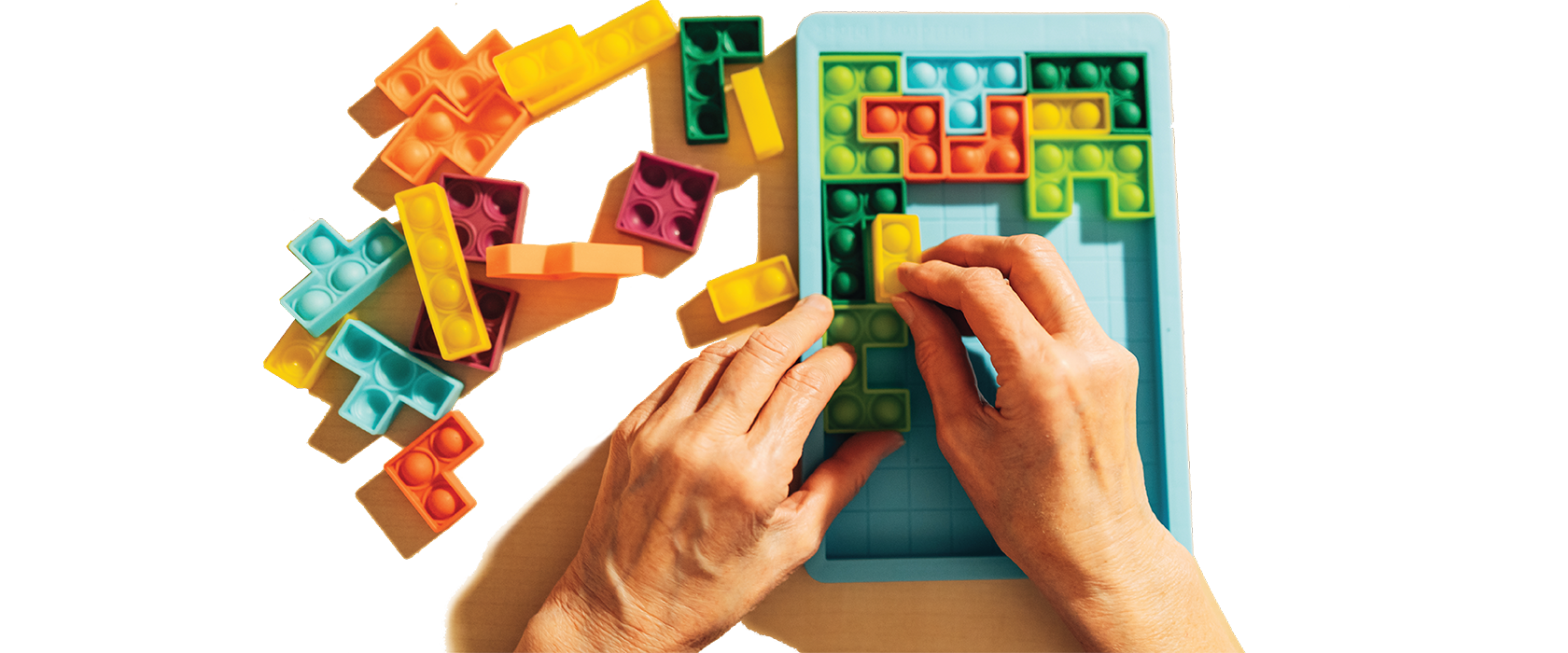

After Lauren Patterson logs off as chief executive officer of the advertising agency she cofounded and puts her two toddlers to bed, she pulls out the LEGO set she hides from the kids. One by one, she clicks the colorful, riveted plastic pieces into place. Currently, she is assembling a three-foot by two-foot replica of the famous Van Gogh sunflowers. “Having the tactile experience of a grandma hobby is a good, like the kids say, 'touch grass' moment,” Patterson says. “It soothes the nervous system and lets my mind relax.”
A “grandma hobby” is any practice that’s performed without technological mediation, often something that doesn’t require rigorous physical or mental effort. It’s a slow-paced, minimal-skill activity, such as crafting, reading, beading, drawing, or solving puzzles. Needlepoint is especially trendy (sales are up more than 200 percent year-over-year). These pastimes, once relegated to seniors and kids, are now emerging as an antidote for terminally online adults of all ages. The explosion of interest in birding, knitting, and breadmaking represents a collective yearning to slow down and to reengage with the physical world.
"It soothes the nervous system and lets my mind relax."
Of course, the irony here is that social media and the internet are driving this trend, with searches for analog hobbies almost doubling this year. There are entire websites and accounts dedicated to grandma, or analog, hobbies. Business executives are posting on LinkedIn about their geriatric pleasures of choice. Work in Progress Wednesday on TikTok elicits tens of thousands of users to post pictures of their unfinished creations—because these pursuits are about a process, not an outcome. But psychotherapist and author Phil Lane says, “We might view these as much more than just empty or unproductive activities—they are actually vital tools for staying healthy.”
Work-related burnout reached an all-time high last year, Lane points out. The constant stimulation and subsequent cortisol dump takes a toll on the nervous system, leading to cognitive impairment, depression, insomnia, and weakened immunity. Meanwhile, digital interfacing has, to an extent, replaced hobbies. These days, we reach for the phone when we’re tired, bored, stressed, or amped. We sit in front of the computer or TV late into the evenings. The problem is the pastimes of the past served not just as entertainment but also to bring people into the present moment and help them to unwind.
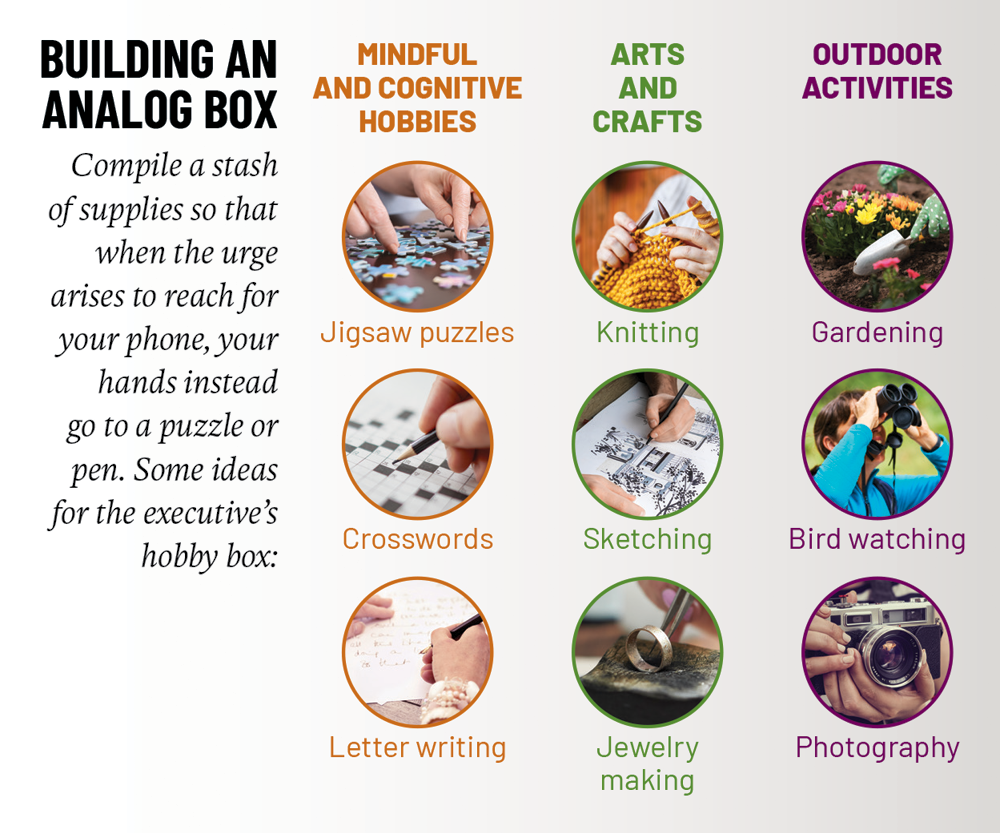
In response, people intuitively began creating analog boxes filled with easily accessible alternatives to scrolling or working that they could reach for instead. It’s a way of redirecting the mind and body. Lane contends it may be more about regressing to a simpler time than jumping ahead to retirement. He likens it to a concept in psychology that involves “adaptive regression in service of the ego,” which essentially posits that creativity and play can be skillful ways of coping and self-regulating. “By allowing ourselves to occasionally let go of the seriousness of life, we are doing our mental health a favor,” he says.
On Patterson’s desk she has a vase filled with pastel-hued flowers, not from the garden but from her childlike interest in methodically snapping together building blocks. “It adds some fun and whimsy,” she says of her LEGO art. “It’s not about launching an Etsy store. It’s just about making LEGOs for the process of doing it. Not everything has to be productive for it to be worthwhile.
