
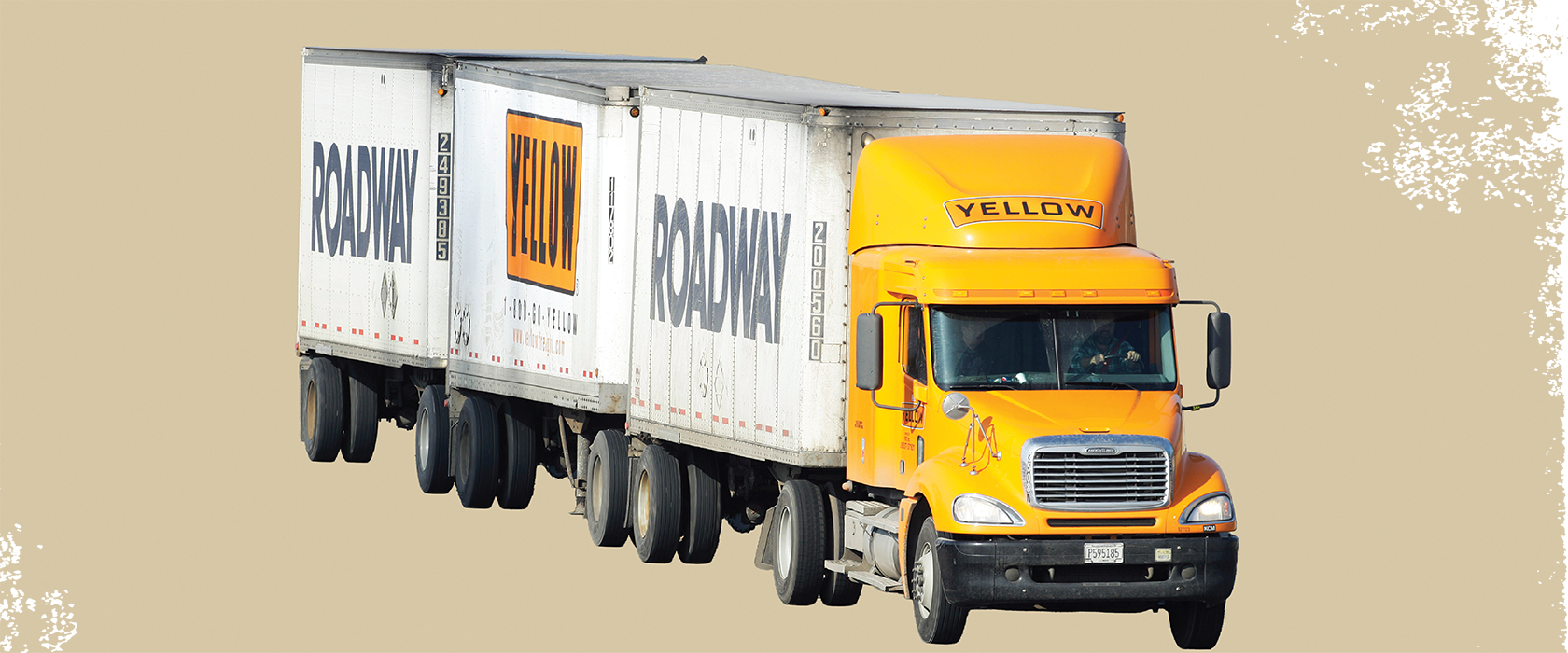
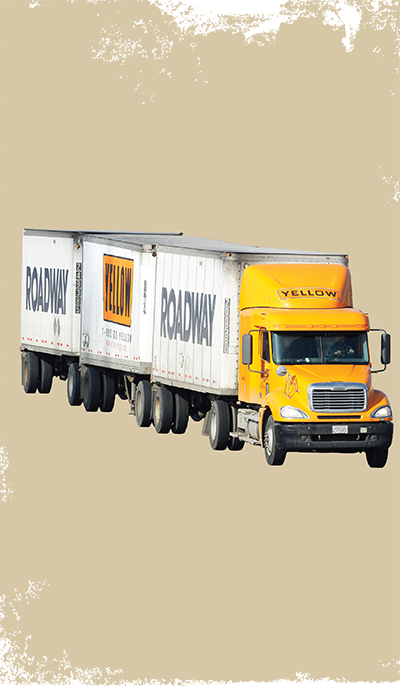
In 2023, when Yellow Corporation, the nation’s third-largest so-called “less-than-truckload” freight company, went out of business, the industry was shaken. Words like “epic failure” were used, and for good reason: The company, with iconic trucking brands like YRC Freight, Holland, and Reddaway, had been traversing America’s highways for 99 years, and its demise cost 30,000 jobs and shut down its fleet of more than 12,000 trucks.
Yellow, formerly known as YRC Worldwide, was considered a fixture in the trucking industry, one that seemed, for much of its existence, too big to fail. Founded in 1924 in Oklahoma City, Yellow became a notable success in part due to its innovative use of technology, according to American Global Logistics, a research firm monitoring the trucking industry. It pioneered the use of satellite tracking and real-time data analysis.
But in the early 2000s, Yellow, whose customers included Walmart and Home Depot, struggled in the new world of e-commerce and faced stiff competition from companies like Amazon and FedEx. Rising fuel costs and a nationwide shortage of drivers added to its woes, as did the subsequent losses of its lower costs and vast freight capacity.
"Experts say Yellow’s demise was a warning to all corporations—not just freight companies."
The less-than-truckload market is focused on the transportation of freight that requires only part of a trailer; it hauls cargo for multiple customers on a single truck. Through growth and acquisition, Yellow, then located in Overland Park, Kansas, peaked at nearly $10 billion in revenue in 2006, behind only FedEx and Old Dominion. But trouble loomed right after the global financial crisis in 2008, and the company, facing heavy debt, narrowly avoided bankruptcy.
Trouble continued as the company remained locked in a long-term and contentious battle with the Teamsters union. In 2020, during COVID-19, it received a $700 million national-security loan—which a congressional oversight committee said was improperly issued because Yellow’s survival was not “critical to maintaining national security.” Finally, the end came when it filed for Chapter 11.
The lesson here? Experts say Yellow’s demise was a warning to all corporations—not just freight companies—to keep control of supply-chain management and avoid incurring potentially disastrous debt while chasing major acquisitions. “One core takeaway is that 21st-century companies need flexibility,” wrote Benjamin Gordon, a leading advisor and investor to supply-chain companies, in a 2023 report on Yellow’s demise. “Firms that lack adaptability will simply be unable to compete with more nimble competitors.”
