

Sometimes the words just leap out at you. You’re reading something and suddenly a phrase opens your mind to a whole new idea. The words, I swear, become bigger on the screen (or page). So it was for me, when I read a recent “Special Edition” weekly message from our CEO, Gary Burnison, in which he observed that AI has created a new phenomenon: the “pleasantly perfect” résumé.
See? The words just leap out at you! Our CEO was talking about résumés that are polished and formatted to a fault, but lack persona or heart. But it occurred to me that “pleasantly perfect” is becoming an epidemic in the workplace in many other ways, too. Like a “pleasantly perfect” team project that meets the stated goal, but never stretches beyond. Or the “pleasantly perfect” staff meeting, where everyone is quick to say “Great job!” or “Love it!” in response to a PowerPoint they may a) never have read, or b) don’t care about. And then there is the “pleasantly perfect” employee, doing her job by making sales phone calls, but with no energy in her voice. She dryly follows a script in her head without listening to the person on the other end of the line.
I won’t go on, but I do propose we start a #PleasantlyPerfect hashtag. As they’ve done with AI-generated résumés, more people are learning that they can go through the motions without fully engaging with the task at hand. They can sit on the sidelines, scrolling through social media or texting, while a clone of themselves acts out their day.
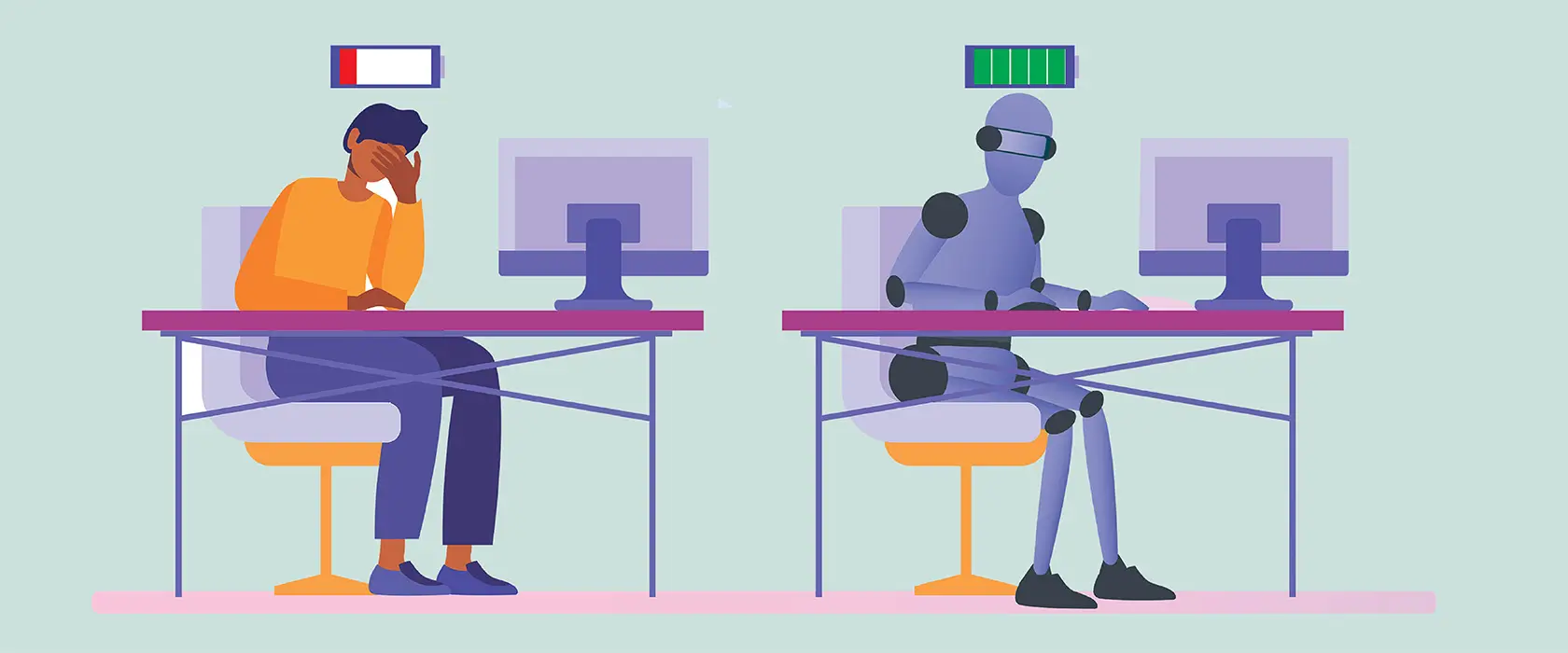
It is a harsh description, I know, and there have been many other recent terms for this, like “quiet quitting” or “coffee badging.” But in most cases, I think, the “pleasantly perfect” trend isn’t employees’ fault. Take away significant raises and most promotions, and fire managers who were serving as mentors, and ultimately, this is what will land in leaders’ laps. And as AI enters the picture, capable of doing so many tasks at lightning speed, those same leaders may wind up with a “pleasantly perfect” workforce, lacking any human spark.
There can be only one solution: Companies need to use AI not to replace humans, but to inspire them. Show them that when workers partner with this technology’s incredible capabilities, the possibilities—critical innovations, hard-to-execute strategies, game-changing products—are endless. And if workers do form this partnership with AI, it will be incumbent upon leaders to restructure their roles and give them more exciting responsibilities.
It’s time for leaders to find the words that will leap off the page and get staffs excited.
