
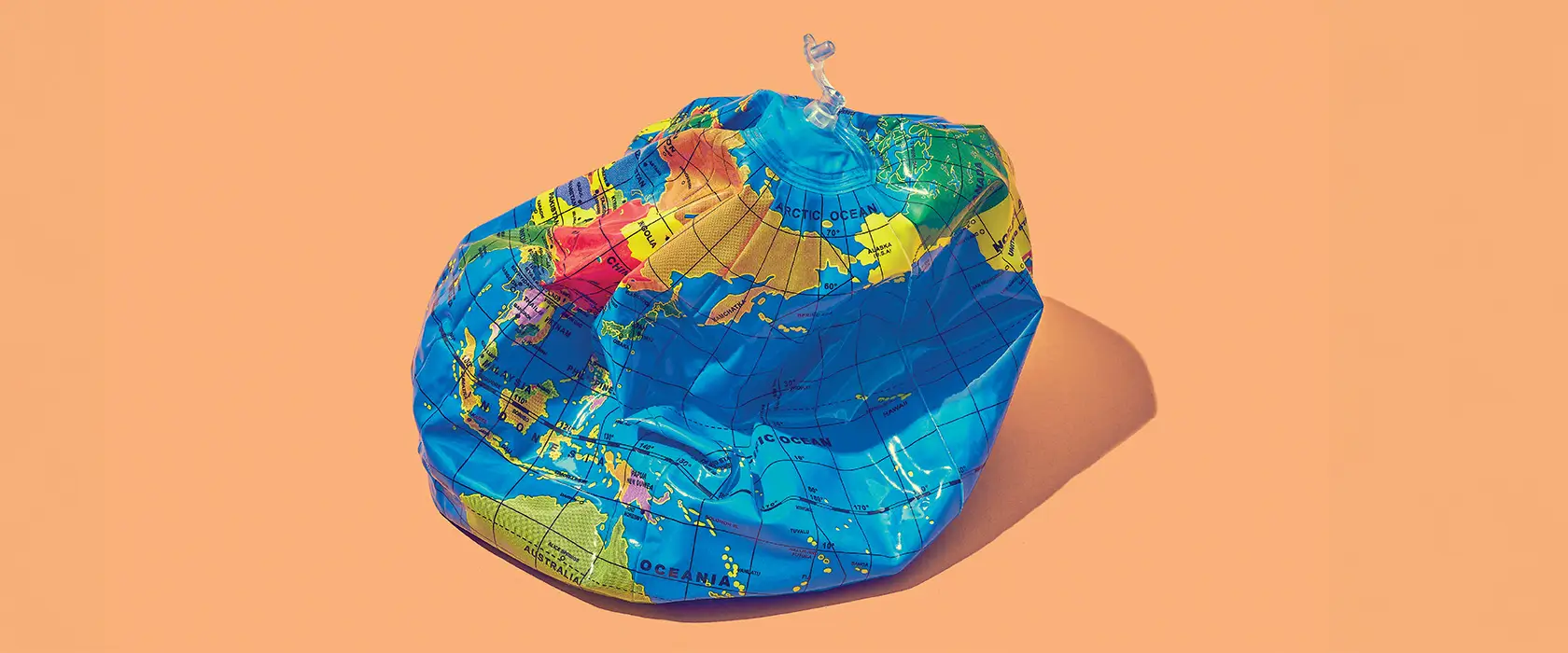

Generally, the world economy grows quickly, lifting more and more people out of abject poverty as time goes on. From 1997 through 2025, average global economic growth was 3 percent annually, says the World Bank. During that time only two years showed negative growth: 2009, during the global financial crisis, and 2020, during the COVID-19 pandemic.
But recently, the world economy has slowed down, a trend that probably will continue. The years from 2023 through mid-2026 show a consistent decline in growth, to below 3 percent. The World Bank projection for 2026 is now set at 2.5 percent growth, with a further decline to 2 percent likely by 2028. This may not seem like much, but spread across the globe, it translates into very slow growth, far below the level seen prior to 2020. It definitely fits the word “stagnation.”
A confluence of events caused the slowdown, says Pete Earle, senior director of research at the American Institute for Economic Research, beginning with surges in inflation and energy prices, which tend to move in lockstep. When energy prices rise, inflation typically increases. Most of what we buy requires energy to produce and transport. This makes almost everything more expensive and takes a bite out of personal earnings. “It’s a global tax on the world,” Earle says.
“The new model is likely to be regional.”
The fiscal hangover from the pandemic hit many countries. The lockdowns during the crisis reduced output and decreased employment, lowering those nations’ income-tax revenues. In turn, smaller tax revenues caused national debt to balloon. For example, the US and leading European countries such as France, Italy, and Spain all have a debt-to-GDP ratio of at least 100 percent. “Financially, we never got over the COVID pandemic,” says Jonathan Fortun, a senior economist in the global macroeconomics department at the Institute of International Finance.
Inflation is also making the cost of debt more expensive. Central banks such as the Federal Reserve, Bank of England, and the European Central Bank (ECB) are all committed to containing inflation. Typically, they increase interest rates to do so. For example, the Fed and the ECB dramatically increased interest rates from less than 1 percent in 2022 to as high as 3.75 percent recently.
But higher rates put pressure on governments to increase taxes on citizens, which further slows economic growth. “To raise rates to deal with higher prices is terrible for much of the Organisation for Economic Co-operation and Development,” says Jay Hatfield, founder, CEO, and portfolio manager at Infrastructure Capital Advisors. The OECD includes the US, Western Europe, and other rich countries.
During the pandemic, the global trade system changed dramatically. Global supply chains built under the World Trade Organization (WTO) began to break down. The WTO had helped reduce tariffs to minimal levels, which made trade easier and cheaper.
Now the supply chains need to be rebuilt, all the while taking on geopolitics, with some countries forming political pacts. For instance, China and Russia seem to be working together. At the same time, tariffs are back in fashion over the last few years. In 2024, the average tariff was 2.5 percent, but by 2025 it jumped to an estimated 18 percent-plus. That tariff increase makes global trade more expensive. “We are far away from going back to the old WTO in Europe, Asia, and the US,” Fortun says.
However, there is good news in the long term. Changes in global trade come and go. The 1930s trade wars eventually ended, and the world economy bounced back. Sooner or later, there’ll be another bounceback, experts say. “Probably the new model is likely to be regional,” Fortun says.
