
The Hunger Games
Food’s nutritional value has dropped sharply. Can new science—and a handheld device—jolt a $10 trillion industry?

September 25, 2026
Imagine this: As shoppers peruse the produce aisle at the grocery store, they keep their smartphones at the ready. When they come to the carrots, they find a multitude of options, each with a slightly different hue and aroma, as well as varying qualities. The shoppers point and shoot, and a spectrometer built into each phone’s camera scans the veggies, revealing the nutritional composition of each carrot, including which has the most vitamins, minerals, and phytonutrients.
THE PROBLEM The nutritional quality of fruits and veggies is down, creating an epidemic of hidden hunger.
WHY IT MATTERS Low nutrition causes a range of health issues and overeating.
THE SOLUTION Use science and tech to reimagine the future of food.
Like many a technological fantasy, this one may not be far off. But regardless of whether it comes to pass, it is a prescient reminder of a stubborn and disturbing problem: What we are eating today isn’t what we used to eat.
Over the last 75 years, fruits and vegetables have gotten bigger, juicier, and more aesthetically appealing. Grain yields have skyrocketed. A massive, complex global network of food producers that can feed more than 8 billion people has arisen, with annual revenues reaching almost $10 trillion. But other metrics have moved in the opposite direction, as the nutritional quality of some supermarket staples trends downward. The reasons for this are manifold and the consequences far-reaching.
“Food is foundational to everything we do and think and who we are.”
Healthcare professionals are raising concerns about a distinctly modern phenomenon known as hidden hunger, a condition that develops when people eat food that is calorie rich but nutrient poor, and one that can lead to deficiencies and disease, as well as overeating. Some experts are saying the quality of the food supply will be the biggest challenge to the well-being of future generations. “Food is foundational to everything we do and think and who we are,” says Mary Purdy, an integrative dietitian and member of the adjunct faculty at the Culinary Institute of America.
But after decades of trying, science and technology may be on the brink of reimagining the future of food. Seed breeders, for one, are using cutting-edge gene-editing techniques to create new takes on common crops, the aromatic likes of which shoppers may already have come across at grocery stores and fine dining restaurants; farmers and biologists are collaborating to better understand the growing conditions that improve nutrient quality; and while large agriculture corporations may not be changing industry practices at the moment, they are quietly investing in emerging technologies that someday might.
“If you talk to most farmers, they agree that improving soil health will make the crop healthier,” says Andrew Smith, chief scientific officer at Rodale Institute, an agricultural research and education nonprofit. “If you talk to doctors, they will agree that eating healthier improves patient health. Now we are making the connection that if we improve the health of soil and what grows in it, humans will be healthier.”
Overfed and Undernourished
Roughly 2 billion people worldwide suffer from hidden hunger. In the United States, 92 percent of the population is below recommended levels of at least one essential vitamin or mineral. Common deficiencies include:

Calcium
More than 40 percent of Americans don't get enough, leading to weak bones and cardiovascular issues.

B Vitamins
The eight varieties that compose the B complex support immunity, metabolism, and brain health.

Iron
The most common mineral deficiency worldwide, especially among women and children, lack of iron can cause extreme fatigue.

Iodine
Eradicated in many places in the 20th century, iodine deficiency is returning as a significant cause of mental impairment.
And then there’s the prospect of putting more power in the consumer’s hands—literally. Though questions certainly remain about real-world reliability, some observers predict that by the end of the decade, new tech on smartphones could allow consumers not only to assess the nutritional content of their food, but also to test for the presence of chemical contaminants or heavy metals. Even air and water quality will be testable in real time. While spectrometers have long been used to measure such things in labs, researchers have now released a design that is magnitudes smaller—small enough to run on a phone—and that will empower consumer decision-making and potentially pressure the market to adapt.
“Once smartphones started coming out, it changed everything,” says Dan Kittredge, executive director of The Bionutrient Institute, which helped design an open-source handheld consumer-spectrometer prototype. “Once pocket ray guns, once truth meters are out—and they become normalized—the impact will be massive.”


The last green revolution took place in the mid-20th century. Prior to the 1940s, crops were grown organically. Then the food shortages and scientific breakthroughs of World War II led to a number of new developments in farming, including chemical herbicides and genetically modified crops that produced higher yields (and were resistant to those chemical applications). The impact was profound: Between 1961 and 2014, the global cereal yield rose more than 150 percent, with wheat production skyrocketing from an average harvest of 1.1 tonnes per hectare, or metric unit of land, to 3.4 tonnes per hectare.
But prioritizing yield has come with downstream consequences. Some industrial farming practices are now being linked to depleted soil health because they reduce nutrient levels. Meanwhile, fast-growing genetically modified crops can’t draw up nutrients from the soil quickly enough to keep pace with their rapid growth. Elevated carbon-dioxide levels are further accelerating plant growth and creating soil imbalances. All of this has led to crops with higher water and carbohydrate content but often less protein and fewer nutrients—a phenomenon known as the dilution effect. So while consumers are paying more for a bigger tomato, they may be getting fewer nutrients (in this case, as much as 25 to 50 percent less). “We have pumped as much efficiency into produce as we possibly can to reap the benefits of weight gain, but it has come with costs,” says Pablo Golfari, market leader of the Industrial practice for Korn Ferry’s Professional Search team in North America.
“The potential to shift agriculture at scale is quite easy.”
It’s hard to say exactly how much nutrient composition has changed. For starters, few studies reach back far enough. Analytical methods have evolved over time. And there are also many variables to control for, because farms use different techniques and reside in diverse climates. But a growing collection of research reveals cause for contemplation. The Broadbalk Wheat Experiment in the United Kingdom has been testing and archiving wheat and soil samples since 1843. It has found that mineral levels remained stable until the mid-1960s, when high-yield cultivars were adopted. Since then, these levels have decreased significantly. Other studies from across the world have found that the nutrient density of a number of fruits, vegetables, and cereal crops has also fallen over the past 80 years. With the exception of phosphorus, most minerals found in the produce we consume, including iron, zinc, calcium, copper, potassium, and magnesium, have declined—in some instances by 5 to 15 percent, and in others by more than 50 percent. In many cases, vitamins A, B, and C have also experienced double-digit slumps. While the USDA releases nutrient averages for produce, those numbers can vary widely.
The good news: Consumers don’t need a study or a spectrometer to tell them what to eat. As it turns out, humans have built in nutrient-monitoring tech—we call them taste buds, noses, and optic organs.
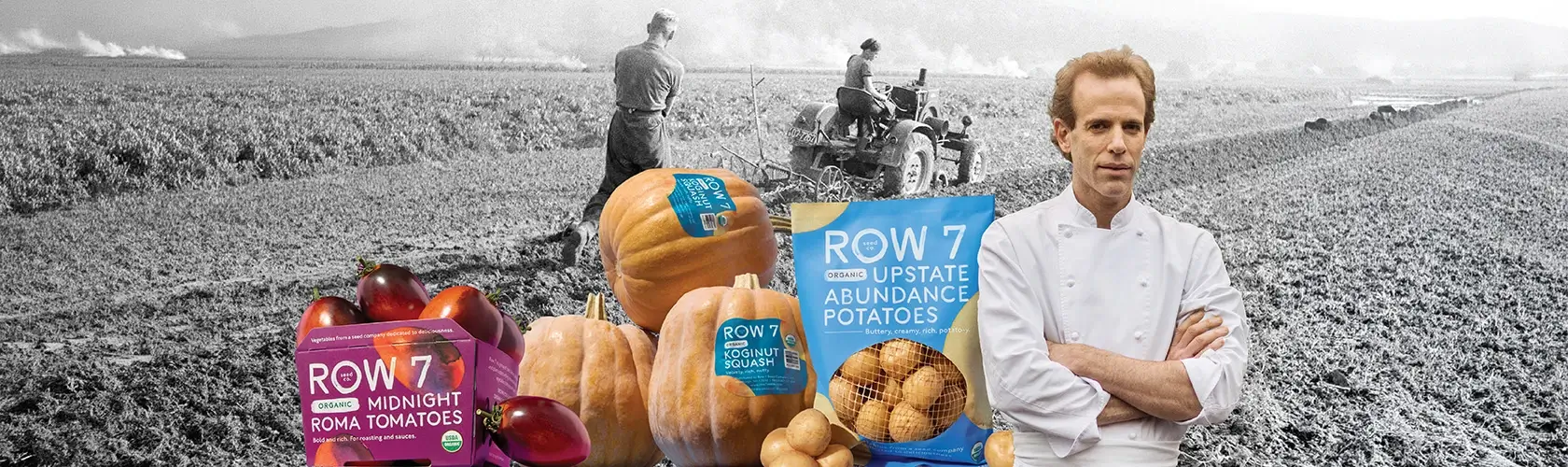

Back in 2009, Dan Barber, the Michelin-starred chef of Blue Hill in New York City, went to a renowned seed breeder at Cornell University to ask if a tastier butternut squash could be designed. Pretty soon, Barber’s pricey tasting menu included a first-of-its-kind creation called the honeynut—a smaller, sweeter, and more carotene-packed version of the stately butternut winter squash. Soon after came the Badger Flame beet and Sweet Garleek.
Then, in 2018, Barber launched Row 7 Seed Company to bring more flavorful and healthier produce to the masses. This year, Row 7 was named one of the world’s 50 most innovative companies. The purveyor has expanded its seed catalog to 22 boutique varieties and has partnered with Whole Foods to sell tinned designer vegetables preserved at peak ripeness. Last year, Row 7 reported that it sold 4 million pounds of fresh produce through large retailers, with sales nearly in the double-digit millions.
When people hear about gene-edited food, they might think of GMOs, the controversial, genetically modified organisms created after World War II by enhancing or deleting existing genes or moving foreign genes from one species to another. These days, seed breeders are using CRISPR technology to selectively modify the molecular structures of plants. Traditionally, it takes an average of eight to 12 years, and sometimes up to 20, to breed a new variety. But with gene editing it can be done in as little as two years. “The genetic approach to return nutrients back to required amounts is the way to go,” says Steve McGrath, a soil scientist at Rothamsted Research in the UK. “If we did it conventionally it would take a very long time. Precision and speed are going to be very important.”
To be labeled as organic in the US and Europe, produce can’t be genetically modified. The UK has relaxed laws for gene editing, and the EU is considering new rules. Meanwhile, the USDA has called for more funding for seed-breeding research. Already the technology is showing promise in a variety of applications.
While some, like McGrath, contend that gene editing is the fastest and most effective path to restoring nutrient density, others are turning their focus to the substrate from which food crops grow. Just a teaspoon of soil contains more microbes than there are people on the planet. Research—and millennia of traditional farming knowledge— suggest that the more microbes and fungi in a plant, the better its health. It’s a symbiotic relationship: Fungal networks called mycorrhizae act as root extensions, transporting nutrients from the earth to the plant. In return, the plant sends carbon it has converted into sugar back into the teeming ecosystem beneath it. An industry of startups are working to create soil inoculants that not only improve nutrient uptake and carbon sequestration, but also have the potential to replace chemical fertilizers and pesticides.
Phyto, Huh?
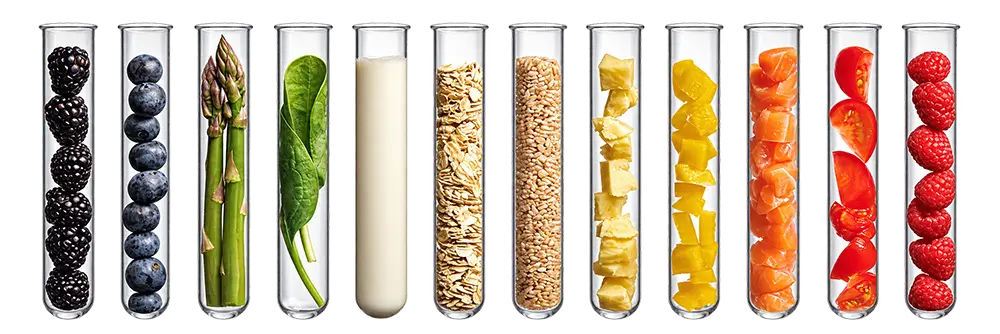
Science is just discovering the vital role that phytonutrients play in human health. Generated exclusively by plants, these compounds are responsible for the vibrant colors, fragrances, and flavors inherent in produce. But what exactly do they do?
- Support vision
- Scavenge disease-causing free radicals
- Protect against memory loss
- Improve immune function
- Make food smell and taste good!
Till or no till. Organic versus conventional. Cover crops. Regenerative. Local. Kittredge emphasizes there is no one answer to these conundrums, because many externalities influence the internal composition of crops. His organization’s research has yet to find a clear link between any particular farming method and nutrient density. He contends that food growers have to once again learn to listen to the land and respond to the unique needs of place, plant, and person.
“The potential to shift agriculture at scale is quite easy,” says Kittredge, who has spent his entire life farming. “We have the technology to transition very rapidly. That’s what’s exciting. It’s a matter of economic incentive and what metrics we’re giving the farmers.”


Just as environmental ecosystems are complex, symbiotic networks of reciprocity, so, too, are markets. The next green revolution won’t happen unless consumers, corporations, and governments collaborate. “It has to be a whole-system approach,” McGrath, of Rothamsted Research, says. Shoppers will need to choose the healthy option. Farmers, he emphasizes, will need to be paid based on nutrient yield, rather than weight and appearance.
While economic incentives may not be there yet, there are signs of shifting public sentiment. From granola-crunching liberals to meat-and-potato conservatives, there is bipartisan demand for governmental policies to regulate crop nutritional quality. Meanwhile, people are starting to think beyond macros as new understanding emerges about the role phytonutrients—found in colorful fruits, vegetables, nuts, and legumes—play in combating disease.
But Purdy, the integrative dietitian, argues that perhaps something even more foundational must change first. “Food has been devalued,” she says. “There is something we’ve lost about gathering around food and eating together. Food is about connection.” What if, she suggests, leaders began by bringing together employees for healthy, delicious, family-style meals? What if, instead of the lab, the next green revolution starts with all of us breaking bread together in the company cafeteria?
Image credits: Gandee Vasan/Stone/Getty Images; Olia Ubiriia/Getty Images; Barber: Daniel Krieger; Row 7 Seed Co; yasindu costa, Klaus Vedfelt/DigitalVision/Getty Images; Voller Ernst / Hermann Fuss/Alamy
