
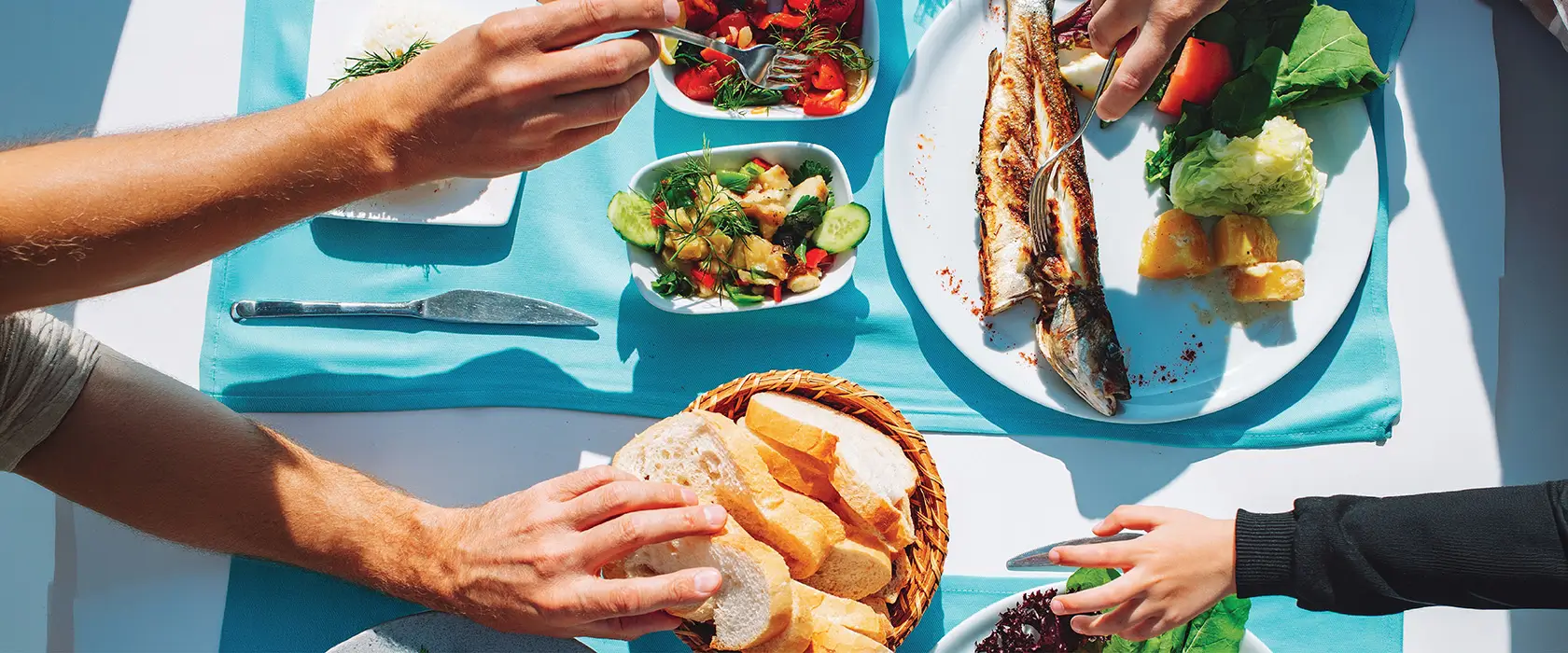

The year 2024 was coming to a close. Amanda Litman and her husband were working demanding jobs, they were parenting a toddler and a newborn, and they were lonely. “It felt like everyone was lonely,” recalls the cofounder and chief executive officer of the political organizing firm Run for Something. “It felt like in order to rebuild our social life, we needed some structure.”
The couple decided they would host dinner at their home every Saturday night for the year ahead. Not only did they uphold their New Year’s intention, but they have kept the tradition going into 2026. “As people came over, we made real friends, which feels so hard to do as a grown-up,” the 36-year-old says.

Sure enough, surveys show social isolation has persisted as a cultural contagion long after the imposed quarantines of the pandemic, with one in five modern workers reporting significant daily loneliness. But people aren’t just looking for more interactions—they’re looking for deeper ones. So enterprising executives like Litman are reviving the age-old practice of gathering around the dinner table, with the support of agendas and spreadsheets, of course. “You can’t improve what you don’t measure,” Litman says. The trend is so strong, some have dubbed this the “hosting era,” with companies emerging that sell specialty wares to dinner hosts, cookbooks popping up with themed meal plans, and social-media influencers offering inspiration.
Litman, who keeps a log of menus and guests, uses her skills as a business leader to intentionally set the tone for the evening, which is relaxed and real. The intended outcome: genuine connection. Some weekends, only one guest makes it, and on others as many as 15 cram into her family’s small Brooklyn apartment. The menus range from tacos or ribs to more ambitious offerings, such as when the couple served pork rolls, disco fries, and salt water taffy in a nod to the Garden State.
After sharing about the experience on Substack, the political operative began to receive hundreds of messages from readers who were inspired to follow suit. But many were unsure how to have people over for a meal. They would ask logistical questions: What did you talk about? How did you invite people? “We’ve lost the muscle of socializing,” Litman says.

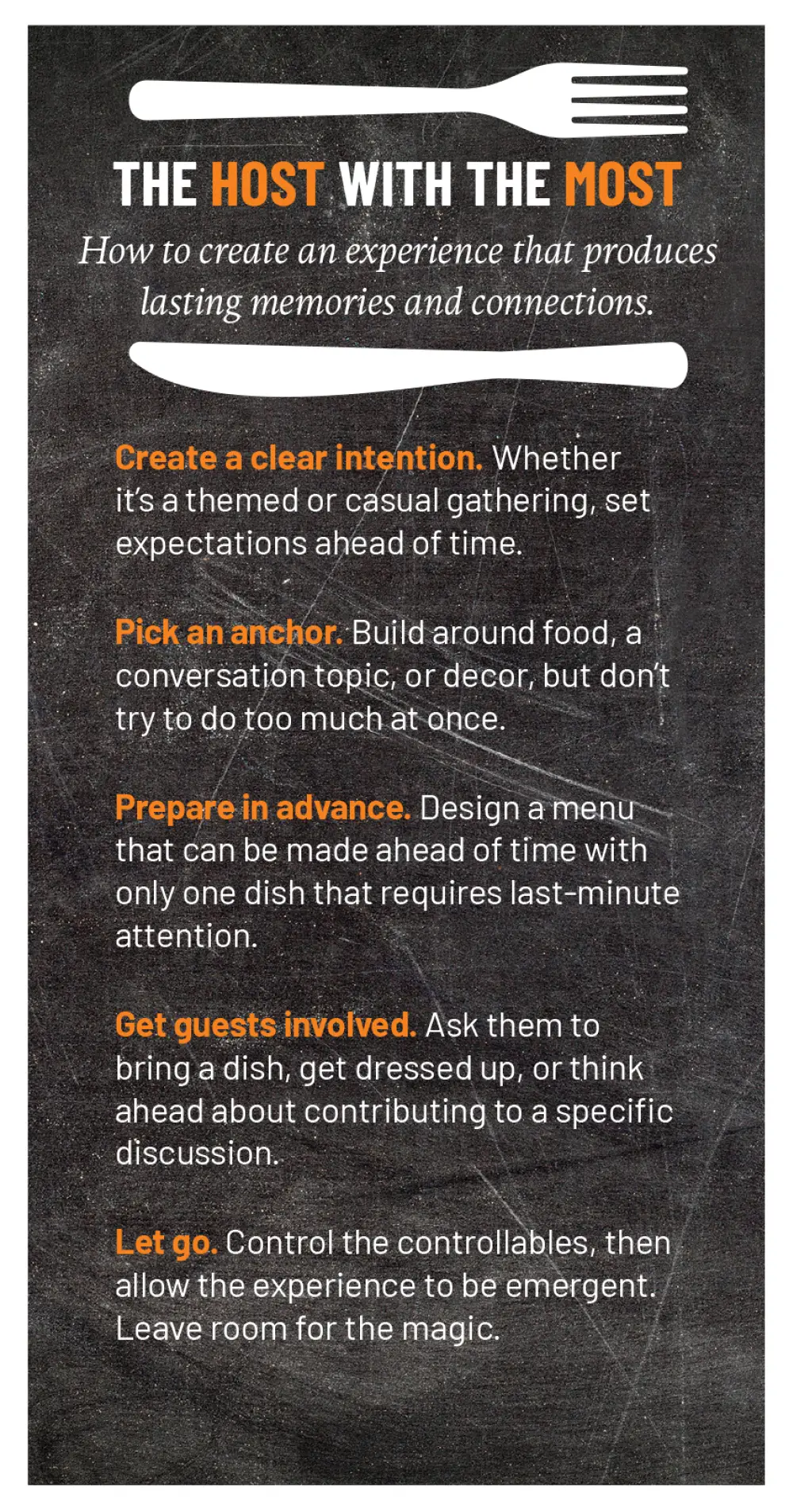
Not all have forgotten the fine art of hosting. Leadership consultant, author, and former CEO of Redken Worldwide Minter Dial has held a dinner party once a month for the last 30 years. Whereas Litman prefers to keep it casual, Dial and his wife strategize every detail, coordinating themes, guests, menus, and, most importantly, topics of conversation. The 61-year-old often sends out prompts in advance for guests to ponder, then serves as MC the night of. He might instruct attendees to bring an object that describes who they are or dress up like a beloved literary character, or simply come ready to discuss beauty in its endless contours. “When it’s not just monotonous small talk, we get to meet and know each other in a different way,” he says.
As a business and thought leader, Dial says sitting regularly around a table with at least half a dozen wildly diverse individuals from different occupations, generations, and demographics has taught him what it means to listen and to empathize. “I get to learn about someone else’s context,” he says.
While he is rigorous in his planning, as a host and leader Dial tries not to be heavy-handed in the moment. “I leave room for the magic to emerge,” he says.
