
Disability ... or Possibility?
Worker disability is on the rise among both older and young workers. Can leaders improve working conditions for everyone?


November 23, 2026
During the pandemic, Ana Oliveira, the chief executive officer of the New York Women’s Foundation, made a decision to go public in a way few at the top ever do. She wasn’t disclosing a scandal or poor performance. Rather, Oliveira, who is now in the process of retiring, divulged… a disability. “It’s really scary for CEOs to own our disabilities, because of the perceptions and prejudices that go with aging,” she says, explaining that scoliosis, a condition that curves the spine, has made it painful for her to sit for long hours and difficult for her to move in certain ways.
THE PROBLEM As the workforce ages sharply, disability among workers is rising.
WHY IT MATTERS Disability limits outcomes for employees and businesses.
THE SOLUTION Create inclusive workplaces that accommodate variability.
Instead of managing her worsening mobility privately, for fear of professional reprisal, Oliveira considered what it would mean to create a more inclusive workplace. She brought in a consulting agency for two years to help her philanthropic organization implement what she calls “a culture of care.” Managers, who are now trained in inclusive leadership, partner with staff to determine the best work arrangements for individual workers, including when, where, and with what tools the job gets done. To do this, though, required making communication channels more robust, so that colleagues could sync up disparate work schedules and styles. Meanwhile, the outfit strengthened personal privacy policies, finding it was critical for people to have autonomy in choosing which details to share about themselves. Oliveira says the efforts have led to more independent and longer-tenured employees. “It’s been liberating for all of us,” she says.
“Difference doesn’t just add another perspective; it changes the way the entire room thinks.”
The question of accommodation is a particularly relevant one right now. The number of ailments that can alter a person’s ability to work is on the rise. According to the Centers for Disease Control, the rate of documented disability has increased by several percentage points over the last decade. Widen the aperture during that period, and an even more ominous outlook emerges: Among working-age adults, there has been an 8 percent surge in multiple chronic conditions, such as obesity, arthritis, and depression. Meanwhile, the rate of autoimmune disorders has jumped by between 30 and 50 percent. Since disability is closely correlated with age, existing musculoskeletal and cognitive conditions, as well as hearing and vision loss, are likely to become more prevalent as the population gets older. Perhaps even more disconcerting, though, is the trajectory of health outcomes for the generations joining the workforce: Chronic conditions in young adults have increased by 25 percent, while cognitive disabilities nearly doubled from 2013 to 2023 and diagnoses of autism in children increased tenfold.
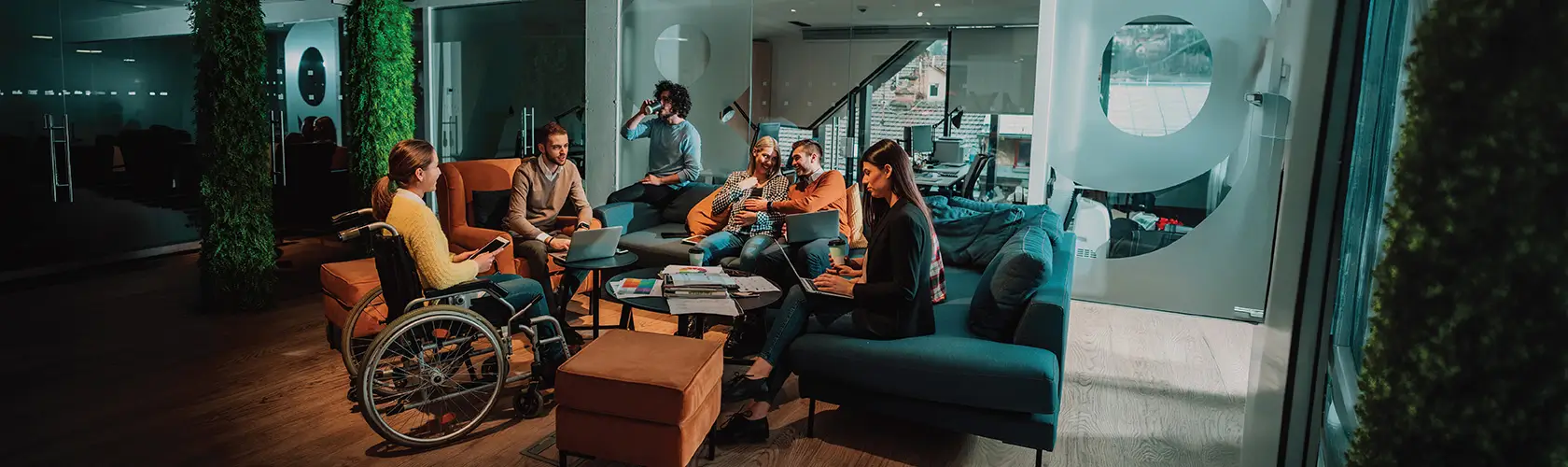
Historically, the organizational response to disability disclosure has been to accommodate the individual’s limitations, without changing how the job is conceptualized. While this fulfills legal requirements, experts say it may no longer be enough to meet the demands of a changing labor market. Forward-looking leaders are shifting to a more accommodating world for all workers—everything from better office lighting and standing desks to more management training on those cognitive issues. It’s a recognition that business has tended to imagine the average employee as an idealized, able-bodied, neurotypical person whose health remains static over a lifetime. “We’re all going to need help at some point,” says Flo Falayi, a Korn Ferry senior client partner, who argues that inclusive leadership “doesn’t lower the bar. It elevates it.”
While many diagnoses are on the rise, part of that has to do with growing awareness. Rather than being dismissed as simply disorganized, for instance, a worker who is chronically late or easily overwhelmed may actually have symptoms of attention deficit hyperactivity disorder. There is also greater recognition that disability can take many subtle forms, with the CDC reporting that 80 percent of workplace disabilities are not immediately obvious. Someone may experience migraines triggered by fluorescent lighting, have a hearing impairment that makes it difficult to participate in meetings, or suffer from chronic pain, triggered by stress, that comes and goes. “People with disabilities are not one big homogenous group,” says David Dwertmann, an associate professor of management at Rutgers School of Business. “There are so many people with so many conditions.”
“We’re all going to need help at some point.”
Persons with disabilities are the largest and most diverse of all minority groups—and the most professionally disadvantaged. According to the U.S. Bureau of Labor Statistics, people with disabilities are twice as likely as their peers to be unemployed. Those who are employed earn significantly less money than their abled peers, studies show, particularly if they have a master’s degree or higher. Other marginalizing factors, such as gender, exponentially increase the pay divide. The outcome of these disparities, researchers say: For fear of impeding the progress of their careers, minorities, including those in higher-level jobs, are less likely to request accommodations. Almost 50 percent of the neurodivergent workforce doesn’t disclose its condition. But that decision comes at a significant cost to the physical and mental health of those working overtime, who must hide what they are afraid may be perceived as a hindrance.
The main concern of organizations around hiring people with disabilities, according to a Department of Labor report, is providing them with accommodations. Firms fret that this will be burdensome for managers and coworkers, or are uncertain about the cost. In fact, a growing body of research shows accommodations generally increase productivity and employee attitudes. What’s more, according to a survey of 781 employers by the Job Accommodation Network, while most accommodations cost nothing, the average expense when they do carry a price tag is $500. “They say it’s expensive to include people,” Oliveira says, “but it’s more expensive to exclude people.” The lack of awareness around the true toll—and return on investment—can lead managers to subtly discourage workers from asking for helpful modifications.
AI and other emerging technology can support workers with limitations in a number of ways:

A variety of apps help neurodivergent workers, such as those with ADHD and dyslexia, by summarizing long emails, breaking down complex tasks, and managing time.

Virtual assistants provide instantaneous descriptions for employees with visual impairments.

Advanced mobility aids and wearables allow individuals to move using visual, audio, or haptic cues.

Communication tools supply real-time captioning, speech-to-text, and sign-language interpretation for those with hearing or speech limitations.
Offices, workplace conditions, and roles are often designed by default for people without any functional limitations. But what begins as a crack in the infrastructure of so-called normality has the potential to become a site of innovation. Take, for example, the ability to blur backgrounds in video calls, which was initially intended to help the hearing-impaired read lips but is now appreciated by anyone with a messy home. Standing desks, used by many who want to avoid sitting too long, were originally a remedy for those with back pain. Audiobooks began as a literary alternative for people with vision loss. The phenomenon even has a name: the curb-cut effect. Curb cuts in sidewalks were originally implemented for wheelchairs, but have since become a boon for parents pushing strollers, delivery drivers directing dollies, and travelers lugging suitcases. “If we rethink accommodations, they become like a lighthouse, signaling when something is inefficiently designed,” says Dwertmann.

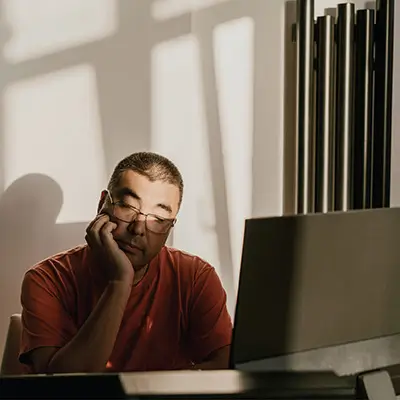
One morning, in 2004, Laurie Henneborn woke up with pain around her eye. It turned out to be optic neuritis—in her case, an early sign of multiple sclerosis. Afraid her capability would be questioned, for 14 years Henneborn didn’t tell any of her colleagues at the international information-technology consultancy where she was a global research lead.
But when her employer launched a company-wide inclusion program that emphasized the importance of employees bringing their full selves to work, Henneborn realized that sharing her reality could help leaders understand why so many employees stay silent, and the immense cost they bear for doing so. “When people have psychological safety and trust in an organization, disclosure becomes a choice rather than a risk,” says Henneborn, who is now a vice president at Catalyst, Inc., a nonprofit that works to improve business outcomes through the advancement of women. Rather than viewing her medical condition as separate from her professional expertise, she now considers it vital to what she contributes. “Living with MS shaped how I lead,” says Henneborn, who also parents a neurodivergent son. “It’s taught me to think differently about human performance.”
But the contributions of persons with different lived experiences go beyond fresh viewpoints. In a recent study of a large German car manufacturer with more than 7,000 employees, Dwertmann came to see that units including people with disabilities generate not just more ideas, but more novel ideas. Other studies have shown ideas generated from multi-abled teams to be more useful, too. “Difference doesn’t just add another perspective,” Falayi says. “It changes the way the entire room thinks.”
Inclusion starts long before employees request accommodations. It begins with how work is designed, how spaces are constructed, and how cultures are created. When leaders prioritize inclusion, research shows, it reduces stigma among supervisors and coworkers, making it more likely that employees will request accommodations. And since humans and circumstances are not static, the conversation needs to be ongoing. “Inclusion is asking whether work is designed in a way that assumes human variability,” Henneborn says.
These days, “technology levels the playing field,” says David Baldridge, a professor of management at Oregon State University who teaches exclusively online because he is deaf. Technology, he says, allows the hearing-impaired to hear with cochlear implants, the visually impaired to see with bionic eyes, and the locomotor impaired to walk with robotic limbs. When Henneborn has an autoimmune flare, she can join a team retreat on a videoconference from her bed. “We can focus on ability now, rather than disability, which means focusing on performance—not how the work is done,” Baldridge says via Zoom.
Other research Baldridge has done shows that workers with hearing loss redefine how they conceptualize career success. They prioritize social contribution, personal growth, and well-being over material achievements. And many, like Henneborn and Oliveira, seek out roles and companies that align with their values.
Of course, AI is the big question mark for the future of inclusion—and, well, everything. Down one road, jobs will become scarcer, and those already on the margins will be pushed further to the fringe. Algorithm-based hiring will exclude anyone with an anomalous résumé. The divergent path, though, leads to a place where human qualities, like the ones developed out of necessity by workers with atypical abilities, will become the most sought-after skills. “We’re at that point,” Falayi says. “There is an opportunity for a change. We must make sure we have the will. The will gives us the way.”
Image credits: Morsa Images/Getty Images, George Hammerstein/The Image Bank/Getty Images, Shock/iStock/Getty Images, Fiordaliso/Getty Images, Velvet R/iStock, Mikimad DigitalVisions Vectors, Circlon Tech, DigitalVision Vectors/Getty Images
