
When the dot-com bubble burst around the millennium, startups like Pets.com, Web-van, and eToys, each of which had raised hundreds of millions of dollars in venture capital, proved to be classic examples of Gertrude Stein’s famous quote about the city of Oakland: There was no there there! Based on shaky or ill-conceived business mod-els, these companies quickly imploded.
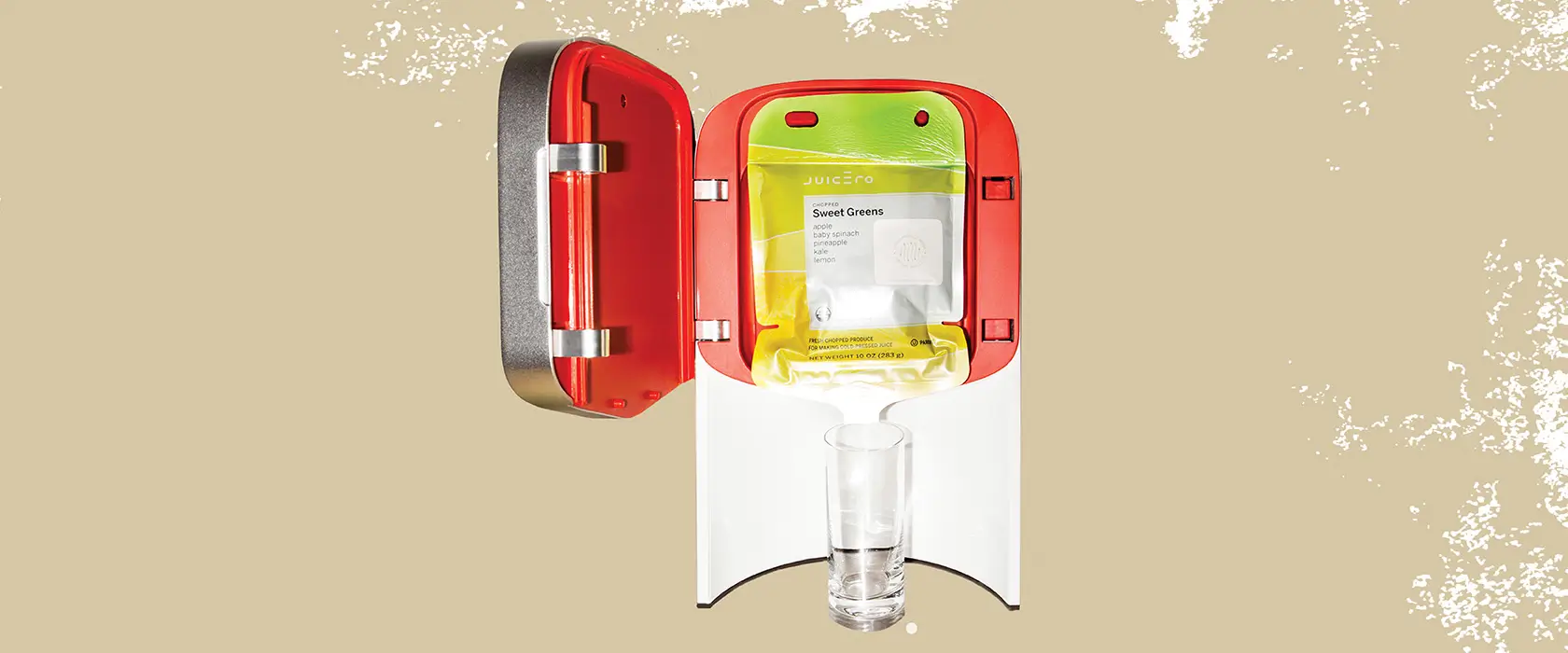
Flash forward to 2016, and one more overfunded example of Silicon Valley excess ar-rived in the form of Juicero, a startup venture built around a $700 Wi-Fi equipped juicer that went from darling to disaster in just 16 months.
The company, founded to much fanfare in 2013 by a health-food expert, promised to bring the joy and bodily benefits of fresh farm vegetables and fruit to an eight-ounce glass of cold-pressed juice on the countertops of America’s kitchens. The impressive-looking machine used packets of fresh chopped-up produce from organic farms, packed by hand by hundreds of workers in the company’s factory. The machine, which came complete with a smartphone app to identify ingredients, squeezed the packets with a mind-boggling four tons of force—and out came a sparkling glass of the fresh juice that was a nationwide craze at the time. “You’re getting this living nutrition,” the founder bragged. “It’s like drinking the nectar of the earth.”
Sensing a growing craze for cold-pressed juices, outfits like Google Ventures, Kleiner Perkins Caufield & Byers, and Campbell Soup invested more than $120 million into the venture. They all believed that cold-pressed juice had the makings of a multibillion-dollar industry and that this slick machine along with its subscription services would generate a massive revenue stream.
Trouble started quickly. When the product was launched in March 2016, consumers balked at the hefty price tag, so Juicero soon lowered it to $400. In April 2017, an article and video that were posted on the Bloomberg News website demonstrated that the packets of produce could be squeezed by hand and spawn nearly the same amount of juice. The high-priced machine was rendered superfluous. The story quickly went viral, and suddenly, Juicero became a laughingstock.
“It was a beautifully built machine that answered a question nobody was asking,” says Patrick McGovern III, a technologist and venture investor in the San Francisco Bay ar-ea. “The market doesn’t reward how hard something was to make. It rewards how much easier it makes someone’s life.”
Within four months, the company suspended operations and began searching for a buyer. When none could be found, Juicero went the way of Pets.com, from Silicon to Death Valley, yet another venture whose results didn’t come close to matching the pre-launch hype.
