
According to press reports, singer Rod Stewart once took out a $6 million insurance policy in case his voice went out. That’s peanuts compared to the $195 million policy David Beckham had for any career-ending injury. And then there was the time Taco Bell bought a $10 million policy to cover the costs of a massive promotion tied to falling space debris.
Yep, the insurance industry has been famous for insuring just about anything for the right premium price. Except, apparently, for AI.
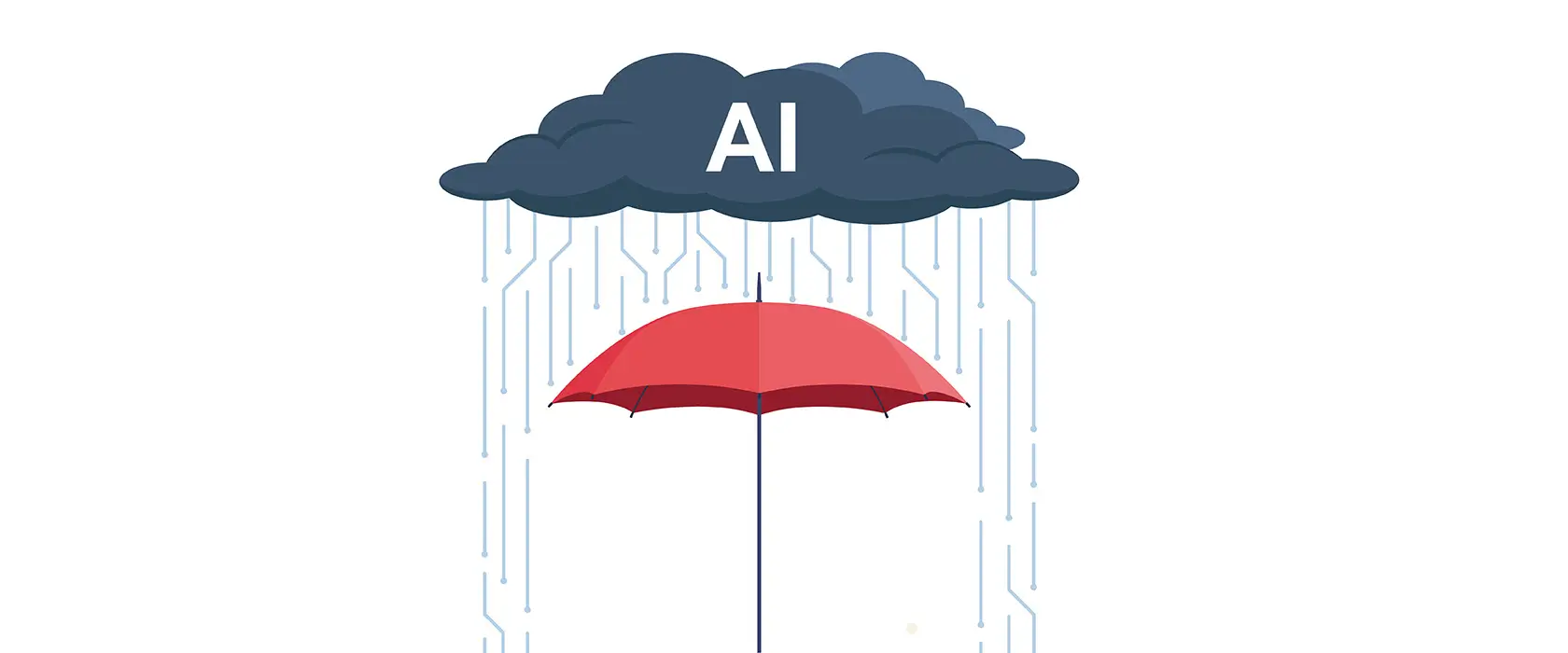
In case you hadn’t heard, insurance companies are seeking to exclude AI-related mis-takes at companies from their usual commercial policies. Currently, insurers will cover a whole range of liabilities. But state insurance commissioners have quietly approved more than 80 percent of carrier requests to exclude AI-related damages from those same policies.
This is one of those enormously big deals that somehow gets very little attention. Just last year, insurers paid out over $100 billion to companies under their commercial poli-cies—more than they did for natural disasters. That means that companies that had coverage were protected from a lot of mishaps. Imagine if they hadn’t been, and CFOs were left to worry all night about unexpected costs?
Actually, they may have some long nights ahead. The liabilities from AI are mind-boggling—think of all the bad and potentially costly advice AI can give someone about a product or, on a large scale, the tales of rogue AI agents hacking into government sys-tems. AI might misread a CT scan or give bum information about a 401(k) investment. Indeed, by one accounting, AI-related lawsuits have already jumped by nearly 1,000 percent in five years.
Of course, if Rod Stewart can get a policy to cover his voice, surely some insurers will offer an AI policy, or include AI protection in standard commercial policies with jacked-up premiums. Already, many companies say they’ll need to pull back on AI use if they can’t insure it affordably.
Insurance, of course, is just the tip of the AI iceberg. We’re truly entering a twilight zone for business, where a once-in-a-generation technology is creating scenarios that con-tinue to come out of nowhere. We don’t really know how many jobs will be replaced or simply aided by AI. We don’t know what its ROI is. We don’t know the limits of the tech-nology itself—whether it will cure cancer or end the human race. All we know is that leaders and workers who accept technological change and all its uncertainties—instead of fighting it—will probably be the ones who have the greatest success. I’d take a policy out on that.
