
Stockholm: The Unicorn Factory
Sweden’s capital may have more unicorns per capita than any other city in Europe. Handing out computers to kids may have played a role.
November 23, 2026
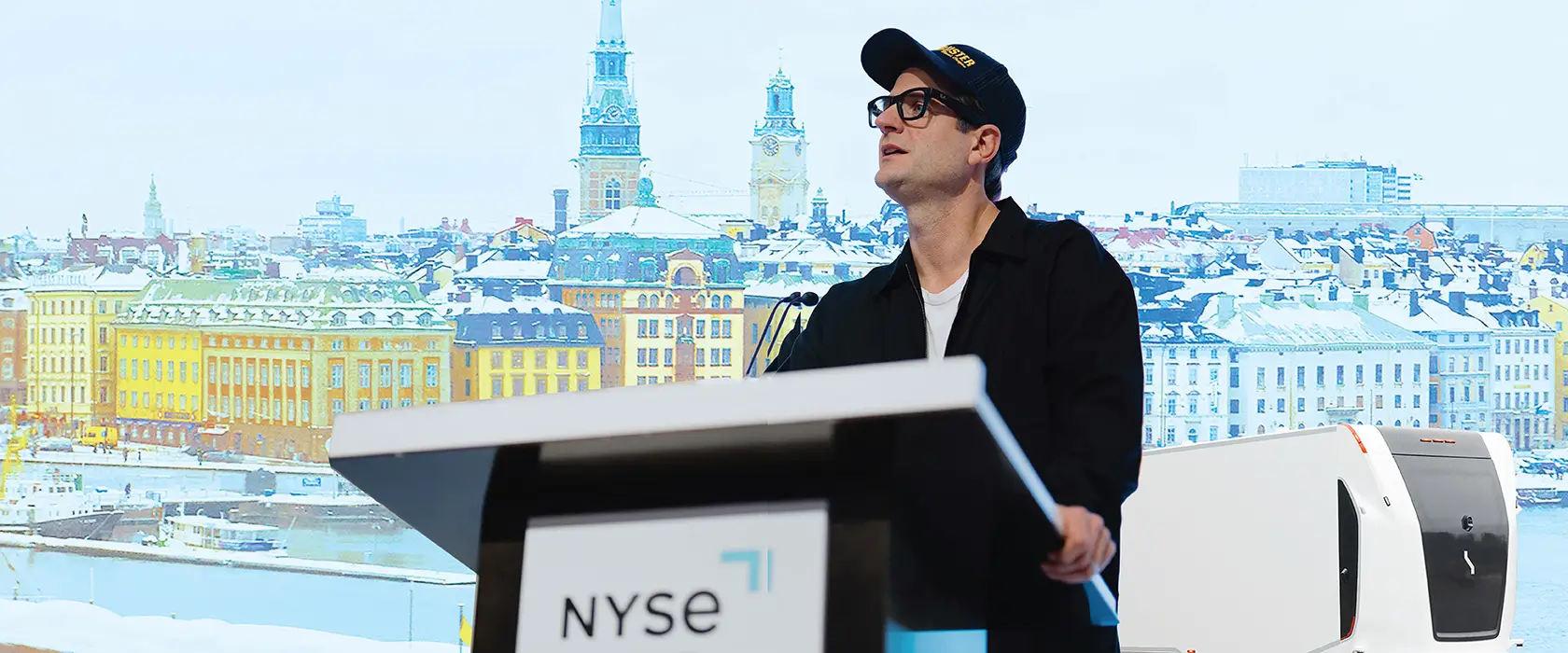
Amid all of Stockholm’s magnetism—its historic quaysides, colorful buildings, and endless cobblestoned streets, all populated by photogenic locals—its tech start-up scene is equally charmed. If you can find it. The offices of its famed unicorn start-ups, like Klarna, Spotify, and the game makers behind Minecraft and Candy Crush, are mostly tucked away a half block from the various main drags, in charmless brutalist buildings that grew out of quick postwar teardowns and stark redevelopment. Gone are the trendy locals enjoying fika (coffee and a pastry) on leafy patios; in their place are men sporting backpacks and sneakers surrounded by concrete and raw brick. Spotify’s puce-colored building consumes half a block. King, the maker of Candy Crush, decorates its windows with animation in an attempt to dress up the situation, but there isn’t much that can hide seven overhead stories of concrete and industrial-metal window gridding.
One block away, a tech start-up community called Epicenter eases the challenges of its own nybrutalism architecture by sitting adjacent to excellent day-drinking options, including an Asian bar with $6 shots, a public house called Captain Jack, and a bistro that has taken it upon itself to decorate the street with lush foliage. One would never guess that this area is home to about three dozen unicorn start-ups, or that Stockholm has more of them per capita than New York, London, or Beijing. “I give a lecture called ‘Stockholm: The Unicorn Factory,’” says Jack Melcher-Claësson, who heads the start-up accelerator at Epicenter, a tech accelerator. Perhaps you’ve heard of these companies: Klarna, Swish, Mojang. Dozens of others are specialty businesses, among them Lovable and Legora (AI platforms); Polarium (sustainable batteries); Zettle (mobile payments, acquired by PayPal in 2018); Tink (banking); Voi (an e-scooter network); Kry (digital health); and Einride (autonomous electric freight). Stockholm start-ups will attract north of $5 billion in investments this year.
“Starting a company here takes an idea, not courage.”
How could all of this happen in a country where the sun goes MIA for half the year? The population is small, just 3 percent of America’s. And if many regions elsewhere have poured capital into huge funds to create start-ups, Stockholm’s municipal fathers have also been generous in relation to the city’s population of one milion (which is a drop in the bucket compared to metro regions of 20 million). Somehow, here sits one of the world’s top tech-innovation hubs, with the receipts to prove it. And that is of no small interest to city leaders across the globe, who have been furiously trying to stir up start-up fever inside their own borders for years. “Stockholm’s success is now self-reinforcing,” says Josefine Heldeborn, senior client partner at Korn Ferry. “AI could be Stockholm’s next act.”
Still, intrepid minds, particularly those with big bankbooks, would like to know what’s next for Stockholm’s most charmed sector—including, most critically, whether it can maintain its success. It’s a city that excels at displaying itself as beautiful and high functioning, but will its tech-dominance era face new threats in today’s shifting business world? Or is the Unicorn Factory just getting started?
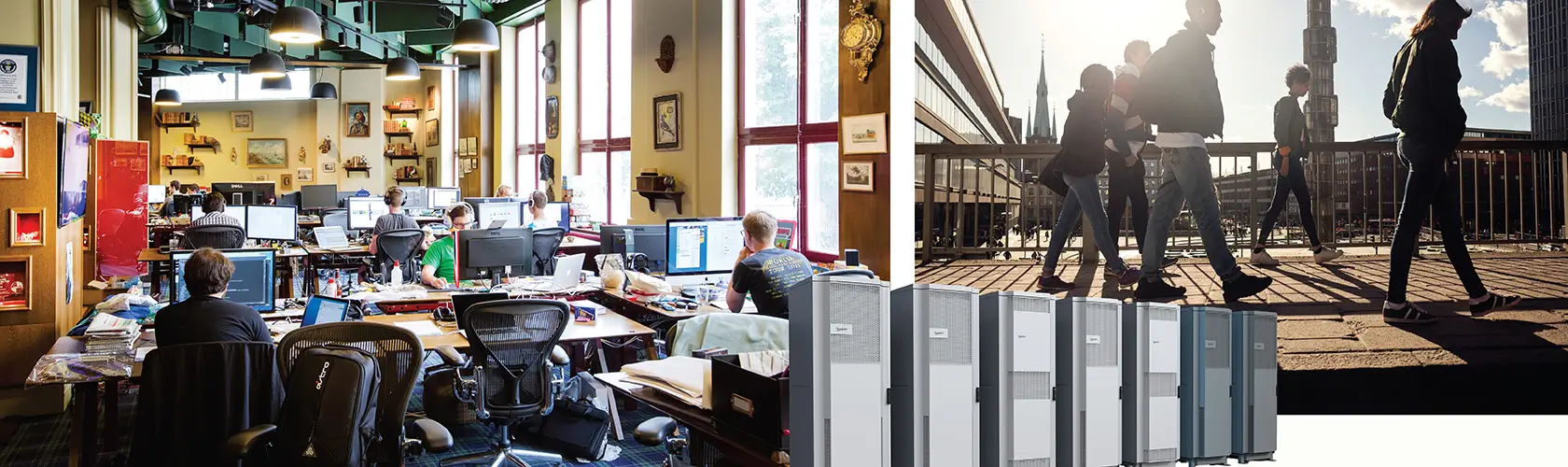

To understand why Europe’s reigning tech hub sits in a Nordic country of 10 million that receives only a few hours of daylight during December, one must return to 1974, when the band ABBA was launched to global fame after winning the Eurovision Song Contest with their performance of “Waterloo.” Immediately thereafter, “every five-year-old who was pretending to be ABBA in their bedroom mirror got to pick an instrument and learn it at school,” says Melcher-Claësson. Sweden’s music-in-the-schools program, kommunala musikskolan, already in existence for over three decades, let families rent an instrument for a nominal fee and funded visits by music teachers to public schools. By the 1980s, over half of Swedish children were playing instruments or singing—learning creative experimentation and trying new things. A formula was born: Provide access to a technology, then wait fifteen years.
That would lead to an even more remarkable move. In 1998, after the country instated a massive network infrastructure, it introduced the Home PC Reform. The program, which allowed workers to lease a cutting-edge computer from employers at bargain-basement prices, put nearly a million desktops in homes across Sweden. Most families had no idea what to do with the newfangled plastic boxes sitting in their living rooms. But during those long, dark winters, curious kids logged onto Internet Relay Chat and began gaming together. Klarna’s co-founder, Sebastian Siemiatkowski, a kid from a low-income immigrant family, began coding at 16, on the machine his mother bought on the day the reform landed.
Start-Up Fever
Stockholm may have the most unicorns per capita, but the competition is fierce. Data-intelligence firm Dealroom ranked tech ecosystems based on several factors, including venture capital raised, enterprise value, and university muscle.

San Francisco — 888 unicorns
PROS: Access to the deepest capital pool on Earth, unrivaled talent density, and a strong development machine
CONS: Sky-high costs, savage competition

Los Angeles — 163 unicorns
PROS: The creator economy, ample access to entertainment, media, and space-and-defense talent, and a lifestyle that recruits itself
CONS: Less available capital, and talent dispersed across a broad sprawl

New York City — 329 unicorns
PROS: Capital everywhere—fintech, media, adtech, health—plus a deep bench of talent that never sleeps
CONS: High costs of living and office space, rampant poaching from the finance industry

Paris — 55 unicorns
PROS: Aggressive state backing, easy access to elite STEM graduates, gateway access to the EU market
CONS: Rigid labor laws, heavier bureaucracy and taxes, and a later-stage market still in its adolescent stage

Stockholm — 36 unicorns
PROS: Founders who mentor and reinvest heavily, all above a state-provided safety net
CONS: An apparatus geared toward producing giants, not midsize companies; a country whose dark and long winters are not a selling point

Toronto-Waterloo — 35 unicorns
PROS: A world-class AI-research pipeline, pro-global-talent immigration rules, and low costs
CONS: Little growth-stage capital, and too many founders and companies moving south
A decade later, Sweden had become home to an extraordinary talent pool of tech-minded young adults who would help to produce the country’s disproportionate share of unicorns. “It’s not a coincidence—it’s structural,” says Melcher-Claësson. “Many of the guys who play games also learn how to program.” Meanwhile, the state offered free university and healthcare, plus a legal right to six months’ leave, with the option to return to their jobs, to those who wanted to try to launch a company. “Starting a company here takes an idea, not courage,” says Melcher-Claësson. The country has a three-year start-up survival rate of 74 percent.
The tendency toward global dominance is also not a coincidence. Swedish founders have to think big. In US start-ups, globalization might be Chapter 3 of the business plan; in Sweden, world dominance is part of the founding assumption, because in most niches, a Sweden-only company would have a built-in cap on its growth. “A home market of ten million might read like a weakness, but it works like a strength,” says Stockholm entrepreneur Anik Devaughn. The long, dark winters lead to a lot of late nights spent dreaming of global expansion. “There’s not much to do but lock in and build,” says Devaughn.
“How could all of this happen in a country where the sun goes MIA for half the year?”
As the aughts began, companies like Skype (2003) and Spotify (2008) emerged, with the latter also helping to train a generation of employees. The first couple of dozen employees of the two companies became fantastically wealthy, but rather than disappear into wealthy enclaves in Montana, nearly all of them, dubbed the “Founder Mafia,” became angel investors, serial entrepreneurs, or executives. Melcher-Claësson estimates that 90 percent of the last decade’s unicorns were founded by people who worked at the previous generation of unicorns. Two decades on, Stockholm is a hub of people who know how to create successful companies.
Stockholm is not a hierarchical place. Titles don’t impress anyone; you can approach a start-up founder on the street. (Imagine trying that with Sam Altman or Elon Musk.) This is partly because locals have typically known each other since their earliest school years, and partly because people here are, on average, three degrees apart: Anyone with an idea can conceivably ask their plumber to ask their mom for Sebastian’s phone number. People tend to dig in and make something, then call others to show them. “It breeds builders, not pitchmen,” says Devaughn.
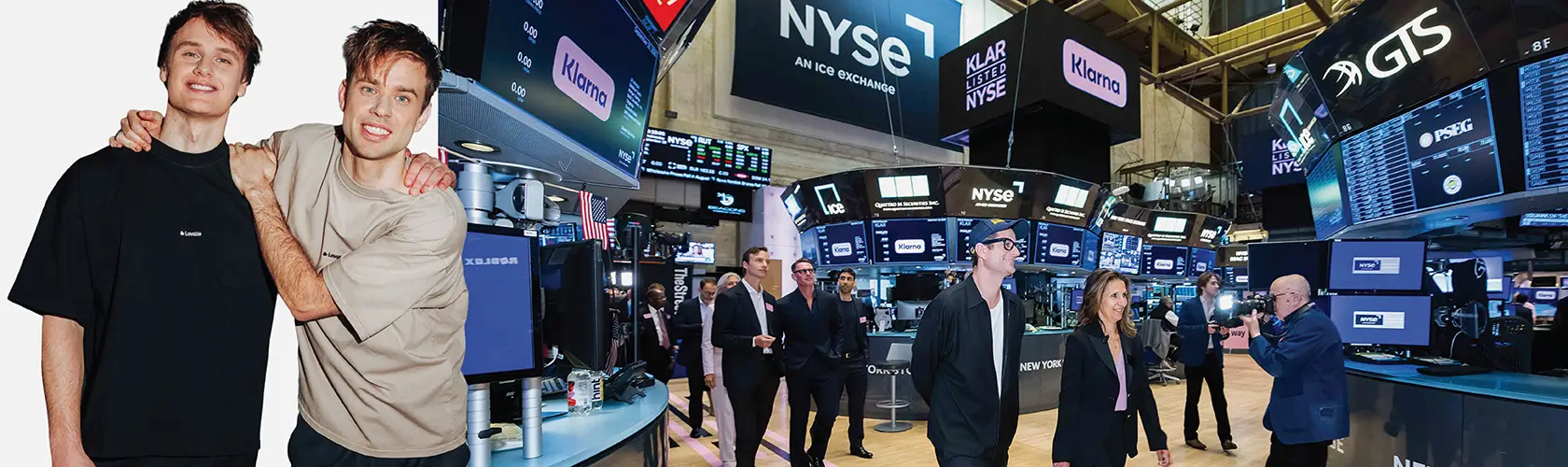

Do these thousands of Swedish builders have an advantage anymore? Is there an
indication that markets are becoming skeptical about Swedish tech success? Isn’t Scandinavia too damn calm to create the sort of innovation that fuels dominance? Is Unicorn Waterloo upon us?
To a visitor, Sweden might seem like an oasis of calm. But just under the surface roils the country’s existential anxiety about losing its foothold. The world population is 8.3 billion. “Most really, really smart people on Earth are not Swedish—that’s just a fact,” says Melcher-Claësson. He thinks a lot about those numbers as AI pushes tech start-ups at epic speed. Tech companies once took seven to ten years to achieve mainstream success; today, they can become household names and world leaders in their field in as little as three years. The reality is that Stockholm’s entire scene teeters on a few fintech and gaming unicorns, some of which are approaching their third decades. It’s a precarious situation.
The fast-moving timeline does not necessarily favor Swedish firms. The country’s business culture prioritizes consensus, and consensus takes time. Unlike an American or Southern European firm, where half the C-suite might disagree with a policy but publicly back it anyway—and, later, expect their own initiative to be backed in return—Swedish leadership teams reach a level of consensus in which no one person is making decisions. That consensus comes through many (many) discussions. It can take years to build, but once Swedish firms have established it, “they move extremely quickly, because people trust,” says Heldeborn. “We hate it, but we love it. Once you get there, there’s enormous support.”
“Swedish companies are also flatter, with less hierarchy and more autonomy.”
Swedish companies also tend to be flatter than companies elsewhere in the world, with less hierarchy and more autonomy. It’s an advantage that many of them, whether large or small, actively aspire to. But that “we” ethos may not play as well when those companies are seeking funding, which often goes to “charismatic, I’m-running-the-show” leaders who are better able to make quick changes, says Devaughn. “The flat culture makes Swedes worse at selling themselves abroad, which leaves real money on the table,” he adds.
For Stockholm’s existing start-ups, the immediate questions are how to avoid losing head count to AI and how to move people up the value chain instead. In a small country and an even smaller industry, employment roles and skills matter greatly. “How do we equip people for those roles, and invest in education and development for them?” asks Heldeborn. The remarkable efficiencies of gen AI mean that tiny groups can create and launch major companies just as easily from a barn in rural Sweden as from an office building in Stockholm. “If a team of twenty can sell globally from anywhere, the last reason to sit in the capital is gone,” says Jonas Karles, cofounder of fintech firm Minna Technologies, which was acquired by Mastercard in 2024. Yet if Sweden already excels at producing fifty-person companies, perhaps gen AI is just the tool they were waiting for?
No one knows what comes next for the Unicorn Factory—least of all the people running it, which is perhaps the most Swedish detail in this article. There is no founder opining on the next decade, and no upcoming forum of billionaires to discuss the topic. There is a formula for Swedish excellence, and that formula—which involves providing the population with access to food, education, healthcare, and technology, and then seeing who locks in and builds—may or may not work going forward. Right now, somewhere in Sweden, a fifteen-year-old in their living room may be building a new AI world model that will be a global household name in 2030. Only time will tell.
Image credits: Spotify, Lovable, Courtney Crow/NYSE, Greens87, Leontura/iStock/Getty Imagees, Melker Dahlstrand/imagebank.sweden.se, Mascot/Getty Images, Polarium
