Back to Work...For What?
As many organizations still struggle to get employees back into cubicles, how will the fierce debate over return-to-office be resolved?
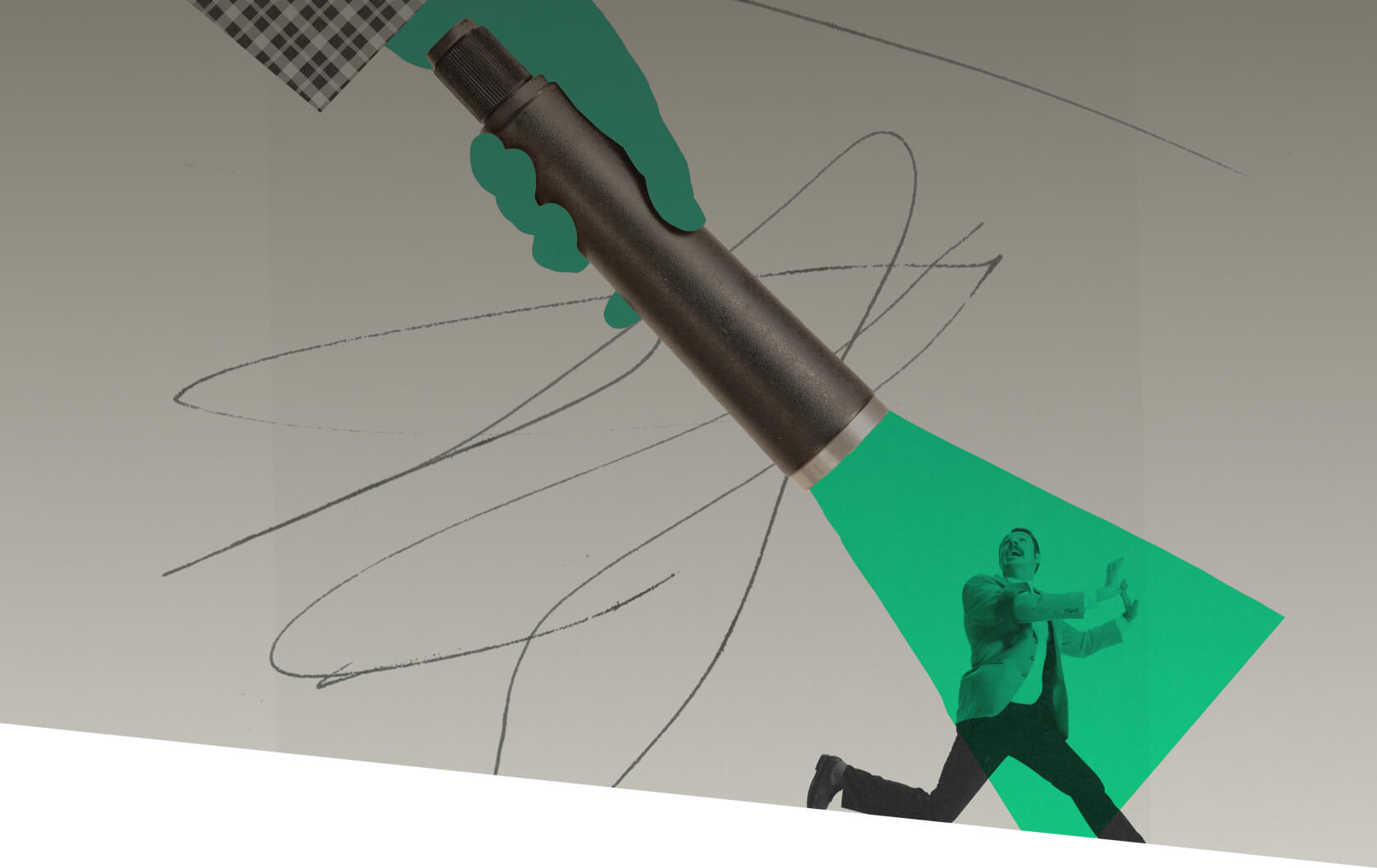
Back to Work...For What?
To read the accompanying article in Korn Ferry’s Briefings Magazine click here: https://www.kornferry.com/insights/briefings-magazine/issue-59/back-to-work
NOTE: While this transcript has been reviewed, it may contain errors. Please review the episode audio before quoting from this transcript.
Rupak Bhattacharya:
Okay. You ready?
Driver:
Yep. All set. Oh, darn. My GPS says 45 minutes to get there.
Rupak Bhattacharya:
What if you take the I-5?
Driver:
No, that's worse.
Rupak Bhattacharya:
Wow, this isn't much fun.
Driver:
I've got a meeting at 10:00.
Rupak Bhattacharya:
Well, I guess you can't Zoom it.
Driver:
I used to be able to. I definitely used to.
[THEME MUSIC]
Jill Wiltfong:
Hi, this is Jill Wiltfong, Chief Marketing Officer for Korn Ferry, and this is briefings our deep dive into the world of leadership. The latest figures show that nearly three out four companies are having a hard time getting people back into the office. They don't think people are as productive at home, but workers are still protesting. In the US nearly half of office spaces are occupied. Seems like no one is happy and it's an issue that isn't going away. Or as we say, "Back to work, for what?" I'm here with Tamara Rodman, a Korn Ferry Senior Client Partner. She works in the practice and hears a lot about the return to office debate. Hi, Tamara. Great to have you.
Tamara Rodman:
Hi, Jill. Thanks for having me.
Jill Wiltfong:
Let's dive into it. Why do CEOs want their people back in offices? The vast majority of them surveyed say that's indeed what they want, despite some really loud reluctance from employees. Tamara, what are the main factors that are driving executives to keep pushing this seemingly unpopular agenda?
Tamara Rodman:
The easy answer is that leaders just don't trust employees to be working if they can't physically see them. But that's an oversimplification. I suspect that for many leaders who aren't used to managing hybrid teams, managing is just easier in person. They can walk over to someone, ask a question and have the answer in the time it would just take to set up a call or send an email on the same subject. Also, frankly, networking and getting to know other people, new people, can feel a little more contrived when you have to do it in a virtual setting. More organic when you're in person.
Jill Wiltfong:
Let's go back to your initial point of, "We don't trust people when we can't see them." Is that an employee issue or is that a leadership issue?
Tamara Rodman:
I would say that's a leadership issue and specifically a lack of setting expectations around what is expected of employees. What does good look like? How is an employee going to be measured and evaluated in terms of work performance? If you don't have clear goals, clear targets, clear expectations set for employees, almost the defacto expectation is, "If you're working and you're successful, it's because I can see you here," and it becomes productivity theater.
Jill Wiltfong:
Tamara, let's talk about leaders because they've got a business to run. They're not tyrants out there controlling the environment just because they can. They've got real work to do, and this is a real issue for them.
Tamara Rodman:
It's really important for leaders to be transparent about that and that it's not... If they're calling folks in, it's not because it's out of just personal preference or whim, but there are real legitimate business demands that can best be met by being physically in person. That is where leaders I think will do right by both the business, their clients, and their employees by being upfront about that and not trying to paint this as something that's intangible.
Vineet Jain:
There is absolutely a direct impact to productivity enhancement when people are together, even if it's not five days a week, but I would say three days a week. Because what you can accomplish doing chalk talk or white-boarding together, can never be substituted with any kind of electronic means of communication, especially on a two-dimensional screen.
Jill Wiltfong:
That's Ignite CEO Vineet Jain speaking from Silicon Valley. He's backed up by the Stanford Institute for Economic Policy Research who found that fully remote work is associated with a drop of 10 to 20% in productivity compared to in-person. It seems like what's at stake here really could be productivity. Tamara, we have all these tools like Zoom and Slack and email to collaborate across great distances. What is it that's making us worse at getting things done? Is it really productivity?
Tamara Rodman:
Despite all of our advances in collaboration technology, it's really hard to keep people's attention, remotely in particular. It is so easy to multitask when you don't even have to break eye contact with your webcam to check your email. People don't even know you're doing it most of the time. Whereas if you are sitting in a room together physically, it's downright rude to spend the whole time on your phone, for example. You may be spending more time in meetings, for example, at home, but we're not getting as much out of them. The other thing I would say too is when you're together in person, you can get people up moving around, taking post-it notes and labeling them moving around on a board, and that keeps energy levels high. It keeps engagement levels high. It's very different than when you're sitting in front of a computer all day by yourself.
Sara Nasa:
When you go from fully remote and then to the office, I'm like, "Why am I doing this? It seems pointless. Five days a week in an office 9:00 to 5:00, it's unreasonable.
Hannah Williams:
We're more productive at home. We're happier at home. We're doing what the company asks of us. So going back in is only really a form of micromanaging.
Jill Wiltfong:
That's paralegal, Sarah Nasa and data analyst, Hannah Williams, who quit their jobs when asked to return to the office and found others that allow them to stay working remotely. But here's the rub. Not all workers want to say goodbye to the office forever. In fact, nearly nine out of 10 employees say that a distinct workplace culture is important for business success. So what's the missing piece that connects the dots? We'll be back after a short break.
[THEME MUSIC]
Jill Wiltfong:
Welcome back. We're speaking with culture change expert Tamara Rodman on the great debate over return to office mandates. Tamara, if as the data says workers are in fact not completely interested in doing away with office spaces, what is it they're looking for in an office experience today?
Tamara Rodman:
Well, the answer to that is going to vary by company and even by individual employee. What I can tell you for the most part they're not looking for is to come into a big, beautiful, empty office space and be one of two people that are joining a virtual video call on opposite ends of a really big room. Really, I think what people want is the chance to socialize a bit, some novelty just to get out of the house sometimes. We also hear from working parents and caregivers that actually the office is a great place to get away and have some time to focus just on work and being with colleagues, for example. But that sense of connection is so important.
Michael C. Bush:
In organizations where employees are happy, what you find is two things for present, trust and respect. Leaders often say, "We trust our employees, we empower our employees." Then when an employee needs a laptop, and this is a true example, 15 people have to approve that laptop.
Jill Wiltfong:
That's CEO of Great Place To Work, Michael C. Bush speaking. The crux of this debate seems to come down to the trust factor he's talking about. Can leaders trust that people are working at home as much as they did at the office? Tamara, how can employees and leaders together build that trust?
Tamara Rodman:
It starts with setting clear, mutually understood expectations. An employee needs to know, "What are the goals that I need to accomplish in order to be seen as successful? How am I going to be measured?" Because if you don't have that by default, the measure becomes, "How many hours am I spending in the week in the office," for example? But if you shift to a sense of, "What are the outcomes that I'm responsible for?" There is nothing more powerful than a manager who says, "As long as you meet your objectives and get your work done and do it well, it is up to you when and where you do that."
Jill Wiltfong:
I'm going to ask you to look into your crystal ball five years from now, who wins this debate? Is it everyone back to their cubicles and 9:00 to 5:00-ing? Are we all tucked away at our home offices clicking at our keyboards? Who wins?
Tamara Rodman:
I would argue it shouldn't be about winners and losers, but more of a collaborative reshaping of what our future looks like in the world of work. But if I have to look into my crystal ball, in one form or another, I would say hybrid's here to stay.
Jill Wiltfong:
Well, Tamara, thank you so much for coming on and having the debate. Sounds like we don't have to hop in our cars just quite yet. But balance may be the key.
Tamara Rodman:
Absolutely. Thanks for having me, Jill.
[THEME MUSIC]
Rupak Bhattacharya:
Hi, I am Rupak Bhattacharya. Thanks for watching and listening. Here's what else is happening in the world of business from Korn Ferry's This Week in Leadership.
News Anchor:
We begin tonight with a significant cyber-attack taking place across the nation and around the world.
Rupak Bhattacharya:
According to a new survey, 36% of C-suite executives now rank a cyber-attack as the most serious risk to their business, rating cyber-attacks ahead of talent issues, and even a recession.
News Reporter:
Well, it's that time of year to start thinking about budgeting, especially as student loan repayments are set to be due.
Rupak Bhattacharya:
After a three-year government reprieve due to the pandemic, borrowers had to start repaying their student loans again, beginning on October 1st. Americans owe about $1.6 trillion in outstanding federal student loan debt, and employers are debating how and at what level they can provide young workers with student loan relief.
Career Coach:
Arguably, the most crucial part of the job search, an interview can make or break an opportunity. The interview begins the minute you walk into the building.
Rupak Bhattacharya:
Finally, in a trend that appears to have started in the UK in-person job interviews are having a slight resurgence. Leaders hope more face-to-face meetings will help companies improve their odds of selecting individuals who can work well with colleagues and clients. For more insights on business and leadership head to kornferry.com/insights.
Jill Wiltfong:
The Executive Producer of Briefings is Jonathan Dahl. Today's episode was produced by Rupak Bhattacharya, Chelsea Starks, Nadira Putri, and Teresa Allan, and edited by Jaron Henrie-McCrea. It contains reporting by Russell Pearlman, Arianne Cohen, and Peter Lauria. Our video segment contains original artwork by Fraser Milton, Haley Kennell, Jonathan Pink, and Sasha Kostyuk. Don't forget to read our magazine available at newsstands and at kornferry.com/briefings. That's it for Korn Ferry's briefings. I'm Jill Wiltfong. We'll see you next time.
Subscribe to series:




Podcast Guest
Tamara Rodman
Senior Client Partner, Korn Ferry
Communications, culture and change strategist and certified executive coach with more than 20 years of experience in helping to inspire behavior change at scale.