The 90-Day Break up
Despite a brutal job market, a small but surprising number of people are leaving their jobs after only a few months. We speak to one of these job jumpers to find out why.
.jpg)
The 90-Day Break Up
NOTE: While this transcript has been reviewed, it may contain errors. Please review the episode audio before quoting from this transcript.
Jill Wiltfong
Hi, I'm Jill Wiltfong, Chief Marketing Officer for Korn Ferry, and this is Briefings, our deep dive into topics that corporate leaders need to care about. It's been a rough job market these past few years. Yes, there was a hiring bump earlier this year, but still, one in four unemployed people has been looking for a job for over half a year. And many who are employed are job-hugging for dear livelihood, even if they deeply dislike their jobs. So it might surprise you to learn that in these tight times, there is a growing cohort of people who are ditching their hard-won jobs just after coming on board.
That's right, last year, 15% of people who started a new role no longer had that job after three months. Pretty significant jump from 6% the year prior. It's a behavior that seemingly boggles the mind and could be a big problem for firms if it keeps up. So today we're going to talk to one of these job jumpers. We'll learn what's behind this growing trend and see if it can be reversed as we try to unpack the mystery of the 90-day breakup.
Before we start, if you're watching us on YouTube, please be sure to like, subscribe, and leave a comment to let us know your thoughts on this topic.
I'm joined now by Sasha Dookhoo, a VP of Public Relations at Modop, a marketing agency. A few years back, she jumped ship from a job after only a few months and, you know, wasn't a great job market then either. So she is here to spill the tea on what exactly happened. Sasha, it's really good to have you on.
Sasha Dookhoo
Thanks for having me, Jill.
Jill Wiltfong
So Sasha, give us a first-person perspective on this. You're at this new job for a few months, usually a time when people are getting to learn the ropes, form new connections, and it can actually be pretty exciting, but you decided to quit. What happened?
Sasha Dookhoo
I know, crazy, right? I think when you've been in the job market for as long as I have, it's easy to tell when something is a fit and something isn't. And by week one, I knew this wasn't a fit. By week one, I was told that my VP, who I'd be working under, was quitting. And they had a bit of antiquated processes that I wasn't really a fan of.
Jill Wiltfong
Well, I think all of those make sense to me. You talk about this growth thing and kind of a lack of development. Was that a big reason why you left the job, or was it about those other things?
Sasha Dookhoo
When there's not a clear path to growth, and when I know I'm looking at what's next for me, and as somebody who wants to grow in their career, and it doesn't look very easy, one, or clear, two, then it's probably not a good fit.
Jill Wiltfong
That's a scene from the movie The Company Men, where Ben Affleck gets laid off from his firm. The other side of this rising rate in 90-day attrition includes those whom companies are deciding to let go. And Sasha, you've actually been on this side of things as well, as a manager who's had to make the difficult decision to cut staff relatively soon after they joined. So you've seen this from both sides. What's been the reason behind those early cuts from your experience? What's typically behind that?
Sasha Dookhoo
As an empathetic leader, you never want to let somebody go, right? We try everything we possibly can. We put folks on PIPs just so we can ensure we're doing our due diligence to keep them as long as we can. And when folks are just faltering and you're getting kind of sloppy work, I think the unfortunate consequence is putting them on a PIP. And then after that PIP, if they haven't met the deliverables and the tasks assigned, then the next final consequence is to let them go.
Jill Wiltfong
Now, the good news is for employees that once they hit the one-year mark at a company, turnover rates decline. They fell to 12.1% last year from 23.7% the year prior. So for people joining a new firm, in your experience, what's the best way to ensure that they make that critical one-year milestone?
Sasha Dookhoo
I think in our remote-hybrid workforce, it's so hard to make connections. So just going the extra mile to do one-on-ones with folks, show your initiative, show your proactivity. I think that goes a really long way in just ensuring your longevity with a company.
Jill Wiltfong
Those relationships are super critical. I do want to end on a positive note that back when you left that job after only a few months, you almost immediately had three new potential jobs lined up. We actually have done an episode on people who, like yourself, always seem to get hired. So leave us with your secret. What do you think you do differently than most folks who have trouble landing a job?
Sasha Dookhoo
It's honestly no secret, Jill. An individual is not looking at your resume. It's a computer system or some software that's processing your resume and looking for keywords. So really, if I had to think of the secret, it's just ensuring you have all the right keywords in for the company and the job that you want to do. If you don't have AI in your resume right now, then that's probably an automatic cut. That's what HR folks and leaders want to see, that you're able to upskill and able to work in this new environment that we live in.
Jill Wiltfong
Sasha, thank you so much for joining me and for sharing your story.
Sasha Dookhoo
It's been a pleasure, Jill. Thank you.
Jill Wiltfong
We've talked about the unorthodox practice of mostly young people bolting from their jobs in less than three months, but it turns out that's not the only thing millennials and Gen Z have started doing that is puzzling leaders. More on that in the second half, so stay with us.
BREAK
Jill Wiltfong
We're back. In the first half of this episode, we talked about the growing trend of the 90-day breakup. And now we move to another phenomenon facing younger workers, which is the millennial midlife crisis, where some, get this, 59% of millennials secretly hope to be laid off. It's incredible.
I'm joined by Kim Waller, a Korn Ferry Senior Client Partner in its Organization Strategy Practice. She has helped many company leaders build a workforce to avoid this very issue. Kim, it is great to have you on.
Kim Waller
Thanks, Jill. Great to be here.
Jill Wiltfong
So that last clip we just played featured YouTuber developer Ezra talking about his secret desire to be laid off, which reflects this broader trend among millennials, with many citing limited growth opportunities as really a key concern for them.
What's interesting is that in 2020, 42% said they had opportunities at work to learn and grow. Here we are now, five years later, 2025. It went from 42% to only 31%. Our first guest actually left a job after only a few months because of this. So Kim, what is happening? Why are we seeing this steep plunge in growth opportunities at companies everywhere?
Kim Waller
Given the volatility in the market, organizations, while they may desire to focus on learning and development, are focusing on the lowest common denominator, what I oftentimes will say is keeping the lights on and keeping the business running, and have put themselves in a position of saying talent development is important, but it's not mission critical right now.
Jill Wiltfong
Not a priority right now, but certainly a problem. Currently, one survey says less than a third of millennials are engaged at work, which is a really low number. And you've said that your son, who actually works for a big tech company, loves it so much. So he's the opposite, right? He loves it so much that he can't wait to visit the firm's local offices, even when he's traveling with you on vacation, which is a dream as an employer.
What is it that your son's company is doing right that so many seem to be missing? Is there something we can learn from?
Kim Waller
We say that you need to come into the office because that's where innovation and really innovative thinking is happening. But is it? And so unless an organization is really fostering a culture where that kind of thing is encouraged in multiple different ways, then it becomes performative. It becomes something that you put on a placard on the wall or on your website, but it's not the lived experiences of employees.
Jill Wiltfong
That's company and community builder Molly Graham speaking out against the corporate ladder, or stairs, as she calls it. And workers seem to agree. One new survey our This Week in Leadership team reported on found that only four in 10 workers want to follow any traditional career path. And 72%, almost three-fourths of them, say climbing the corporate ladder is, quote, “outdated.”
Kim, you've said that some of the issue behind this is that the goals of most workers and leaders today are really vastly different. You've talked about how you don't think leaders who came up at companies climbing those traditional ladders are getting the message about how much the talent world has changed. Can you talk about that a little bit for us?
Kim Waller
Recently, I spoke with someone who is in that millennial group, and she said to me, which jarred me a little bit, “This climbing the corporate ladder is no longer a status symbol.” Now, if your employer is expansive enough that they provide a platform for your multiple identities, if you will, to be manifested in you contributing your talents, then sure. But, you know, “I am accountant level number one, and I'm going to wait and just grind it out until I get to be a lead accountant at a firm,” it's not a status symbol anymore.
Jill Wiltfong
We, of course, can't leave or shouldn't leave AI out of this chat. Companies have spent hundreds of billions on AI over the past few years as the fervor over its potential continues to rise. But you say over-indexing on AI might actually be leading to some of this millennial malaise. How is that?
Kim Waller
I think the over-indexing on AI at the expense of investing in real development and talent development is the mistake. This notion that we're going to focus on AI, we're going to put to the side the development of our people that we have right now. I think it's short term.
Jill Wiltfong
Yeah, yeah, for sure. Leave us with a prediction here. Based on what you're seeing on the ground at companies, will firms be able to course correct on this corporate ladder misalignment or AI leading to discouragement anytime soon? Or are we going to see engagement numbers continue to plummet at firms? Where are you on that?
Kim Waller
I think engagement numbers are going to continue to plummet. And as soon as that inflection point relative to supply and demand shifts, organizations are going to pivot really quickly and begin to double down on why they should be the destination of choice for top talent and how they're developing talent.
I think there are other organizations that are going to do it consistently. And it's the organizations that we all probably could name. They have not departed from it. But I think there's a large number of organizations that will then start to scurry again.
Jill Wiltfong
Kim, thanks for bringing your always brilliant candor and insight to this conversation. Really appreciate it.
Kim Waller
Thank you, Jill. It was a pleasure.
Jill Wiltfong
The executive producer of Briefings is Jonathan Dahl. Today’s episode was produced by Rupak Bhattacharyya and Zachary Dore, and it was edited by Jaren Henry McRae.
It contains reporting by Russell Pearlman, Ariane Cohen, Peter Lauria, and Meghan Walsh. Our video segment contains original artwork by Fraser Milton, Haley Kennel, Jonathan Pink, and Sasha Kotzek. Our web operations are managed by Ed McLaurin.
Don’t forget to read our magazine—available at newsstands and at kornferry.com/briefings.
That’s it for Korn Ferry Briefings. I’m Jill Wiltfong. See you next time.
Subscribe to series:




PODCAST GUEST
Sasha Dookhoo
VP, Public Relations
Mod Op
Sasha is VP, Public Relations at Mod Op, where she leads strategic PR campaigns for AI, enterprise, consumer, and B2B clients. An award-winning PR storyteller with more than 14 years of agency experience, she specializes in thought leadership content development, creative media relations, and storylines that drive meaningful media coverage across digital, print, and TV.
Her industry recognition includes Ragan and PR Daily’s Top Women in Communications Mentor Award, 4A’s MAIPER to Watch, the University of Central Florida Alumni Association’s 30 Under 30, and PR News’ Rising PR Stars 30 and Under.
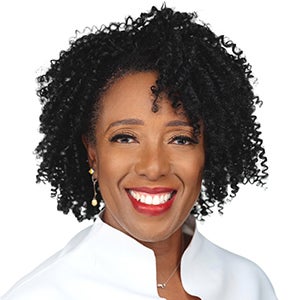
PODCAST GUEST
Kim Waller
Senior Client Partner, North America DEI/Power of All Lead
Korn Ferry
Kim Waller is a Senior Client Partner in Korn Ferry’s Organizational Strategy and DEI practices, based in the Chicago area. She helps organizations move from DEI theory to action through enterprise-wide strategies that drive measurable impact.
With more than 30 years of leadership experience, Kim has advised Fortune 500 companies and large public-sector organizations across technology, financial services, construction, manufacturing, retail, and government. Her expertise spans diversity and inclusion, risk management, organizational change, HR processes, team coaching, and skills development.