The Unstuck Career
Top experts discuss strategies to reverse a career that’s going nowhere fast.

The Unstuck Career
NOTE: While this transcript has been reviewed, it may contain errors. Please review the episode audio before quoting from this transcript.
Jill Wiltfong:
Is your career going nowhere?
Joanne Lipman:
The biggest barrier is fear.
Jill Wiltfong:
What are the risks of changing lanes?
Joanne Lipman:
The whole world is in flux. Search, struggle, stop, solution.
Jill Wiltfong:
Three questions that everyone should ask themselves.
Grant Duncan:
What do I need?
[Jacinda Ardern]:
I will not be seeking reelection.
Grant Duncan:
What do I enjoy?
Joanne Lipman:
Oh, I'd like to be a ballerina.
Grant Duncan:
And what am I good at?
Jill Wiltfong:
Now I should be careful, this will come back to bite me.
[Speaker]:
Hello?
[Speaker 1]:
Hey buddy, you still good to chat about the quarterly projections in my office?
[Speaker]:
Yeah, just running a bit late. I'm stuck in traffic. Great, now I'm stuck in an elevator.
[Speaker 2]:
Four percentage point reduction and the results realized-
[Speaker]:
I can't talk right now; I'm stuck in a meeting.
[Speaker 2]:
4% is a big number, measure it out.
[Speaker]:
Oh, another game night. Another inevitable defeat. I got nothing here.
[Speaker 3]:
No, look, you got stuck.
[Speaker]:
Huh?
[Speaker]:
Oh.
[Speaker 3]:
And with the triple word score, you just won the game.
[Speaker]:
How did you think of that word?
[Speaker 3]:
Oh, come on, all you ever do is say your S-T-U-C-K in your career.
[Speaker]:
Hmm, I guess getting stuck was good for once.
Jill Wiltfong:
Hi, this is Jill Wiltfong, Chief Marketing Officer for Korn Ferry, and this is Briefings, our deep dive into leadership. Is your career going nowhere? Experts say a lot more people than usual say their career paths feel derailed. In some cases, their plans are being thwarted because firms need to shift gears in this economy, or AI now threatens their role. Whatever the reason, if this sounds like you, you're not alone.
According to one recent survey, four in ten professionals claim to feel stuck in their careers at some point. And it's a problem that everyone feels on the corporate ladder, even in the c-suite. So, then, what's the answer? Are there new strategies to reverse a career that's been suddenly or gradually tanking? What are the risks of changing lanes and what are the risks if you don't.
Today, let's explore what people can do to get unstuck in their careers.
Here to speak with me on this is Joanne Lipman, Former Editor in Chief of USA Today and bestselling author of Next!, a book that's all about how to make the next jump in your professional journey.
Hi Joanne, thanks for joining me.
Joanne Lipman:
Hi Jill, it's good to be here with you.
Jill Wiltfong:
Joanne, you've written a whole book on this topic, so you're really the perfect person to ask why, particularly now, are people feeling more stuck in their careers than they were say, maybe, five years ago?
Joanne Lipman:
People are feeling stuck because we're at this moment in time where the whole world is in flux. It's a really frightening time. If you want to make a change and so many people do want to make a change. The biggest barrier is fear. Fear is at a record high at this point because we have the uncertainty stemming from the pandemic. And then you have AI, generative AI, it's turning our world upside down. You have economic uncertainty, you have political chaos and on and on and on, and this is really an unprecedented amount of change of flux that we haven't seen in our lifetimes.
Jill Wiltfong:
Yeah, how much of this Joanne is feeling stuck or really being stuck? How much is this about your mindset versus reality?
Joanne Lipman:
Yeah, a huge piece of this is really your mindset. If you have a current job and you have some stability and you have a salary, it is very, very difficult in an environment like the one we're in right now to take that risk and to take that first step, to move.
So many of us are searching for a new normal after these past few tumultuous years, and we're looking for something different out of work. And as you mentioned, I mean, look, Gallup recently had a poll that found job unhappiness is at a record high. And really interesting research that I found as I was reporting Next! was that if you look at surveys over the last few years during the pandemic, the majority in several surveys, of people who were looking for new jobs were looking outside of their fields. Yeah, what the pandemic did was kind of a great reset for all of us saying, "Wait a second, is this the work that I want to do? Is this the way that I want to live my life?"
Jill Wiltfong:
Well, I assume you recognize that clip, Joanne. It's of course, you, looking fabulous on CNBC. You were there to talk about your book Next! and how people can reinvent their careers. What's the first step that they should take on that path? Where do you start?
Joanne Lipman:
So, what I found is that people who switch careers, they tend to follow a similar pathway. I call it the reinvention roadmap and there are four steps, and almost everyone will go through all four of these steps. Search, struggle, stop, solution. The really key here is how do you get started on that very first step, right? The very first thing you can do is, and this is a psychological term, there's a thing called 'possible selves', which is you imagine your possible selves, which is very different than daydreaming. Daydreaming is like, oh, I'd like to be a ballerina. When you imagine your possible selves, you're actually putting yourself into this identity, like what would it take? What would my day look like? What are the skills I would be doing? How would other people see me? And it's really important because it helps you adapt to that mindset.
Jill Wiltfong:
You also mentioned in your book that people should seek out a, quote, "expert companion" during this process. Tell us a little bit about who those people are and how you can identify them.
Joanne Lipman:
We all need an expert companion, and it is that person who knows you well, who can reflect back to you your strengths, your talents. And the reason it's so important is because we are absolutely terrible at having a realistic sense of who we are. So, your expert companion, I think we all have inner strengths. We have innate talents that come so naturally to us that we don't even recognize them, or if we do recognize them, we just kind of dismiss them like, everybody can do that. It doesn't seem special to us.
[Oprah Winfrey]:
This is the thing about an aha moment, and I love having them where you think you've never thought of it that way before. But an aha really is, think about this, you can't have an aha unless you already knew it. So, the aha is a remembering of what you already knew articulated in a way to resonate with your own truth. So, the aha isn't somebody teaching you something, the aha is somebody helping you to remember.
Jill Wiltfong:
That's celebrated talk show host Oprah Winfrey explaining what an aha moment is. Joanne, when you feel stuck in your job or when you've felt stuck in your job, that's when you really hope for those aha moments, right, to show up and show you that way forward. And you actually looked at the science behind how to make these breakthroughs happen more regularly. Can you talk a little bit about that?
Joanne Lipman:
There's whole neurological research around this where neuroscientists have observed in a laboratory what happens when you have an aha moment. It's your brain doing some work behind your back. It's also the reason why you can never have an aha moment when you were sitting, staring at a computer screen for five hours, it's not going to happen. You actually have to step away.
Jill Wiltfong:
Joanne, it was a pleasure speaking with you today. Tell us again the title of the book and where we can find a copy.
Joanne Lipman:
Sure, the book is called Next! The Power of Reinvention in Life and Work and you can get it wherever books are sold or wherever you buy books online. If you would like to reach me, my website is joannelipman.com.
Jill Wiltfong:
After the break, we'll take a look at what specifically seasoned executives in their later stages of work life can be doing to prepare for their next career step. So, stay tuned for that.
Rupak Bhattacharya:
Hi, and welcome to the break. I'm Rupak Bhattacharya, and here's a quick look at what else is happening in business from Korn Ferry's This Week in Leadership.
[Speaker]:
Every manager will at some point have to manage team members always off sick.
Rupak Bhattacharya:
One quarter of managers now think that workers who call in sick are actually fine and just fibbing according to a new survey. With little guidance from corporate leaders, some managers are actually asking for doctor's notes. Experts say it's a slippery slope from a trust perspective that firms and workers need to address.
[Speaker]:
What's the right balance of work from home versus work from the office?
Rupak Bhattacharya:
Wanna stay employed? A surprising study out of the UK finds that only 16% of companies operating with a fully remote workforce lay off workers, versus 38% of those that have staff fully in office. Experts say firms with people in office bear much higher real estate costs, which may be one cause for more layoffs.
[Speaker 3]:
Some companies are stepping up worker tracking.
Rupak Bhattacharya:
According to one study, eight in ten companies plan to track office attendance in 2024, and 95% say that violators of in-office policies will face consequences. It's the latest example of leaders who are concerned about reduced worker productivity and feel more emboldened by the tightening labor market. But experts say such measures can affect talent recruitment and retention.
For more insights on business and leadership head to kornferry.com/insights, now back to Jill and our episode, "The Unstuck Career".
[Suzy]:
You're going to jump ship. The only question is when? In my opinion, a reasonable timetable for your departure from a job is three to five years. Here's why. The longer you stay at one company, the more hiring managers start to ask, can this candidate adjust to a different culture, a different pace, a different way of doing things? Basically, they're wondering if they can teach an old dog, you, new tricks.
Jill Wiltfong:
With us now is Grant Duncan, Managing Director and Sector Leader for Media, Entertainment and Digital in EMEA at Korn Ferry. He's also the author of a book called “Looking Beyond the Car in Front”, which is all about helping people get unstuck in their careers.
Grant, great to have you here.
Grant Duncan:
Great to be here.
Jill Wiltfong:
Let's switch gears a little bit and talk more about experienced people being stuck in their careers. That last clip we heard was from Suzy Welch, who's this famed, as we all know, business advisor who is married to the late great CEO, Jack Welch. Jumping jobs every three to five years can sound daunting, particularly for that upper echelon role. Do you think it's wise to change lanes so frequently?
Grant Duncan:
Well, listen, I think that the most important thing to say is that a diverse career is important, and I really do mean that. The time to make the decision about a move is when you've done the job, when the mission is complete. Now that could be after three years, but it might be after seven or eight or nine years.
So, I think that's quite important. I think if you leave somehow sort of halfway through, that begs its own questions about, well, why are you leaving? Is there a problem, or you just basically selfish?
Jill Wiltfong:
What if things are going really well where you are? Is there a way to stick around at one place without getting stuck?
Grant Duncan:
In my book, there's one exception to the rule who is a fantastic guy called Alan Jope who went on to become the Chief Executive of Unilever. The lesson he gives us is to be intentional. So, if you are going to stay put, be intentional about getting that diversity I talked about before. The turning point for him actually was he took on the role of General Manager of China, where there'd been five previous general managers that had lasted about a year each. So, it was a graveyard for leaders, and he made an incredible job of that. What came out of that was somebody who was very rounded, very diverse, very rich in experience, and he absolutely attributes that journey to the fact that he then subsequently became the CEO.
[Jacinda Ardern]:
And so today I'm announcing that I will not be seeking reelection and then my term as prime minister will conclude no later than the 7th of February. I know what this job takes, and I know that I no longer have enough in the tank to do it justice, it's that simple.
Jill Wiltfong:
That was former New Zealand Prime Minister Jacinda Ardern giving a surprise resignation speech partway through her second term. Grant, this is perhaps a dramatic example of something you've often talked about, which is that when is the best time to jump to something new? It actually could be when you're at the top of your game where you are. Can you elaborate a little bit on that?
Grant Duncan:
Somewhat counterintuitively, the best time to make the move is when things are going really well. There is a concept in mathematics called the Sigmoid Curve. It's just a way of characterizing growth and decay. As an executive, it's about knowing what your sigmoid curve looks like, and finding that moment when it's right to jump off, and then start at the bottom of a new curve and so you end up sort of moving upwards.
Jill Wiltfong:
You do talk about three questions that everyone should ask themselves in order to know what the right career path is for them. Can you briefly run us through what those are?
Grant Duncan:
What do I need, what do I enjoy and what am I good at? You know, what do I need? Typically, that's defined by things like earning capacity, I've got commitments, I've got mortgages or family or whatever it happens to be. Then there's what do I enjoy? What do I actually really enjoy doing? What do I get pleasure from? And I think the final thing is what am I good at? I think it's absolutely worth having that conversation with yourself, maybe getting some external support and help in terms of really working out what are the competencies, what are the capabilities that you have that you're really good at, that really sort of mark you out as a great executive.
Jill Wiltfong:
I love it, Grant, thank you so much for joining me today, I really appreciate it.
Grant Duncan:
It was my pleasure too.
Jill Wiltfong:
The Executive Producer of "Briefings" is Jonathan Dahl. Today's episode was produced by Rupak Bhattacharya, Nadira Putri, and Teresa Allan, and edited by Jaron Henrie-McCrea. It contains reporting by Russell Pearlman, Arianne Cohen, and Peter Lauria.
Our video segment contains original artwork by Frazer Milton, Hayley Kennell, Jonathan Pink, and Sasha Kostyuk.
Don't forget to read our magazine, available at newsstands and at kornferry.com/briefings. That's it for Korn Ferry's "Briefings". I'm Jill Wiltfong. We'll see you next time.
Subscribe to series:




Podcast Guest
Grant Duncan
Managing Director and Sector Leader for Media, Entertainment and Digital in EMEA
Korn Ferry
With a career spanning both executive search and advertising, Grant brings significant experience from the world of consumer media and content where he has worked with some of the world's biggest companies to build their senior teams. He is also the author of the book “Looking Beyond the Car in Front”.
Podcast Guest
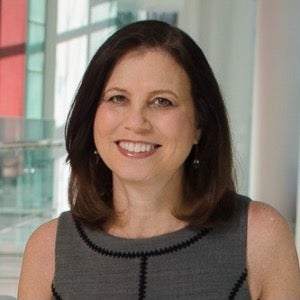
Joanne Lipman
Author & Speaker
NEXT! The Power of Reinvention in Life and Work
Joanne is the bestselling author of the new book "NEXT! The Power of Reinvention in Life and Work," as well as "That's What She Said," about closing the gender gap. She has served as Editor-in-Chief of USA Today, USA Today Network, Conde Nast Portfolio, and The Wall Street Journal's Weekend Journal, leading those organizations to six Pulitzer Prizes.