Back to AI School
Many professionals are heading back to business schools to take courses in AI. But with a price tag of up to $15k, are they worth it?

Back to AI School
NOTE: While this transcript has been reviewed, it may contain errors. Please review the episode audio before quoting from this transcript.
Jill Wiltfong:
Universities are offering their own artificial intelligence courses to help executives stay ahead of the curve.
Ken Kring:
So how good are these programs? This tells you what a transformation we're in.
Jill Wiltfong:
It has to be quite daunting.
Rafael Ramirez:
Training is for dogs and soldiers. When you come to a university, you're here to critically examine the principles.
Jill Wiltfong:
Is it worth it?
Rafael Ramirez:
It's a really good question.
(school bell ringing)
[Neeridge]:
Hey, nice to meet you, I'm Neeridge. Is this seat taken?
[Rick]:
Hey Neeridge, I'm Rick. The seat's all yours. You work at Aardvark Electronics, right? My company, Galactic Food, sent me here.
[Neeridge]:
Yeah, it's funny to be back in school, but I guess we all need to bone up on our AI skills now, huh?
[Rick]:
You said it, buddy. I feel I can't go 10 feet without somebody saying, "Machine learning."
(professor clears throat)
[Professor]:
Hello students. Welcome to Artificial Intelligence for Business Executives. Today we delve into the intricate realms of reinforcement learning and its applications in autonomous systems. This paradigm, rooted in the Markov Decision Process framework, encapsulates the essence of our discussion.
[Neeridge]:
Uh, professor, I don't quite follow you.
[Professor]:
Not to worry. Now let's consider the nuanced challenges posed by function approximation.
[Neeridge]:
Hey, are you getting any of this?
[Rick]:
Heck no. Convergence.
[Neeridge]:
I thought this was an intro class.
[Professor]:
Excuse me, sir, if you have something to say, surely you can share it with everyone.
[Neeridge]:
Something to say? No, I was just telling this.
[Professor]:
Exactly! Please see me after class.
[Rick]:
Ooh, you're in trouble.
Jill Wiltfong:
Hi, this is Jill Wiltfong, Chief Marketing Officer for Korn Ferry. And this is "Briefings," our deep dive into leadership. By the millions, we're all looking to keep up on the hottest new technology of the day, artificial intelligence. Universities all over the globe are offering their own courses to help executives stay ahead of the curve. It's part of an executive education market worth over $40 billion. And much of this growth is due to the rising impact of AI, as business leaders look to avoid getting left behind. Some of the most prestigious universities are charging anywhere from $2,000 up to $15,000 a person for these courses.
But is it worth it? Do executives learn anything of real value, or do these classes simply absorb time and money that could have been better spent elsewhere? Let's jump in as we head back to AI school. And here to speak with me on this trending topic is Ken Kring. As Co-Managing Director of the Global Education Practice at Korn Ferry, Ken is deeply embedded in the world of AI and executive education, no better person to talk to.
Hi Ken. So glad you could be here.
Ken Kring:
Hi Jill. Really glad to be on the show.
Jill Wiltfong:
Let's talk about these executive AI courses. First of all, when did this become common practice across major universities? How long has this been going on?
Ken Kring:
There's a continuity, if you will, over the last decade plus. The last three years or so, it's been a little staggering, just how dramatic the new entries are into related coursework and degree programs in AI, both within higher education but also in industry.
Jill Wiltfong:
Ken, if you were going to take a class on AI, where would you go? Would you go to a company? Would you go to a university? What would be your first stop?
Ken Kring:
I had a fairly long conversation with a former business dean from a top 10 school, and I said, "So how good are these programs?" And she said, "They're not as good as they say they are. They're not good enough yet." I do think that the more, whatever you might call competitive institute that have been doing things longer and better, that have more intellectual resources is probably the place I would go for, you know, a course that was essentially designed to help survey the landscape.
[Ferris Bueller’s Day Off]:
In 1930, the Republican-controlled House of Representatives, in an effort to alleviate the effects of the... Anyone? Anyone? The Great Depression passed, the... Anyone? Anyone? A tariff bill, the Hawley-Smoot Tariff Act, which- Anyone? Raised or lowered? Raised tariffs in an effort to collect more revenue for the federal government. Did it work? Anyone? Anyone know the effects? It did not work. And the United States sank deeper into the Great Depression.
Jill Wiltfong:
Ken, that was a famous scene from the movie "Ferris Bueller's Day Off," showcasing this timeless struggle of sharing knowledge in a classroom setting. What are the challenges top universities face in getting executives from a whole range of different fields to be AI experts? It has to be quite daunting.
Ken Kring:
Instruction is relatively driven by tenure and knowledge creators. They are not always the most relevant or effective at applications and uses of technology or of subject matter. So, there's a little bit of a challenge of getting what is in a university a very distributed instructional model with hundreds of tenure track faculty members up to speed and capable of teaching, to your point, sort of across different functional dimensions, but also across different industry dimensions.
[Jeff Su]:
Moving over to large language models, although there is some overlap, LLMs and GenAI are not the same thing. An important distinction is that Large Language Models are generally pre-trained with a very large set of data, and then fine-tuned for specific purposes. What does that mean? Imagine you have a pet dog. It can be pre-trained with basic commands, like sit, come, down, and stay. It's a good boy and a generalist. But if that same good boy goes on to become a police dog, a guide dog, or a hunting dog, they need to receive specific training, so they're fine-tuned for that specialist role. A similar idea applies to Large Language Models.
Jill Wiltfong:
That's YouTuber Jeff Su summarizing part of an online course on AI that's currently being offered for free by a major tech company. Ken, we've so far focused on universities, although you did mention there are companies who are offering these types of things as well. What are your thoughts on these kinds of company-sponsored types of courses that are out there?
Ken Kring:
This tells you what a transformation we are in. I don't think we have ever seen anything like this in the history of, you know, industry in the broad, under the broadest definition. AI will, you know, is a metaphor for the democratization of knowledge and information. And I think that that means it's, we're going to see support for education and the uses of AI, sort of across different industry sectors, both in company as well as with resources.
Jill Wiltfong:
I think it's a great, it's a great way to say it. Ken, thank you so much for all your perspective. I appreciate you coming on today. Next, we're going to hear from a professor who says AI courses have the potential to become the valley of death, yikes. More on that right after the break.
Rupak Bhattacharya:
Hi, and welcome to the break. I'm Rupak Bhattacharya, and here's a quick look at what else is happening in business from Korn Ferry's "This Week in Leadership."
[Narrator]:
Why you should turn down a promotion.
Rupak Bhattacharya:
A whopping 51% of employees will happily stay in a role they like, even if there's no possibility of career advancement, according to a new report. Many say it's a sign of the times as workers shift priorities, but it leaves firms needing new ways to boost engagement.
[Narrator]:
Return-to-office mandates don't make a company more money.
Rupak Bhattacharya:
A new study from researchers at the University of Pittsburgh suggests that return-to-office mandates don't change a firm's profitability or valuation. It's a surprising result, since other research suggests in-person work increases productivity.
[Narrator]:
Fortune Magazine revealing the World's Most Admired Companies this year.
Rupak Bhattacharya:
The 2024 edition of Korn Ferry and Fortune's World's Most Admired Companies is out. Out of nine attributes used to rank firms, soundness of financial position was cited most often by executives, edging out quality of products and quality of management. For more insights on business and leadership, head to kornferry.com/insights.
Now back to Jill and our episode, "Back to AI School."
[Back to School, lecturer]:
So, let's start by looking at construction costs of our new factory.
[Back to School, student]:
What's the product?
[Back to School, lecturer]:
That is immaterial for the purposes of our discussion here, but if it makes you happy, let's say we're making tape recorders.
[Back to School, student]:
Tape recorders. Are you kidding?
[Back to School, lecturer]:
Okay, fine. Then let's just say they're widgets.
[Back to School, student]:
What's a widget?
[Back to School, lecturer]:
It's a fictional product. It doesn't matter.
[Back to School, student]:
Doesn't matter, tell that to the bank.
Jill Wiltfong:
With us now is Rafael Ramirez, Professor of Practice at Oxford University's Saïd Business School. Rafael, great to have you.
Rafael Ramirez:
Thank you for having me.
Jill Wiltfong:
That last clip that we just saw was from the movie "Back to School," starring Rodney Dangerfield. It echoes some of the complaints that students have had about AI courses not being specific enough to their particular industries. And you've even given a really colorful name to the lack of applicable skills gained in some of these classes. You call it 'The Valley of Death'. How can universities avoid getting stuck in that valley, Rafael?
Rafael Ramirez:
It's a really good question. Many of the faculty in business schools, and universities in general, have never really worked in an organization other than a university. Many do not know the intricacy of what the student does before she comes to the classroom, and after she comes to the classroom, and how she got to the classroom in the first place. So, they might teach them a skill, AI or otherwise, which is perfectly rigorous and correct, but not specific to their individual context.
Jill Wiltfong:
So, is that how you avoid then this valley of death, is you make it really applicable? And then tell me also what the benefits are of doing university training versus company training. What can you do for executives that company training can't?
Rafael Ramirez:
So, to start with we don't only do training, we do education. You know, training is for dogs and soldiers. And yes, you can be trained, but when you come to a university, you're here to critically examine the principles behind what makes the material that you're being trained on work well, and under what circumstances, current and future, might that technique that you're being trained on no longer be fit for purpose.
[Sal Kahn]:
But I think we're at the cusp of using AI for probably the biggest positive transformation that education has ever seen. And the way we're going to do that is by giving every student on the planet an artificially intelligent, but amazing, personal tutor. And we're going to give every teacher on the planet an amazing artificially intelligent teaching assistant.
Jill Wiltfong:
That's Sal Kahn, Founder and CEO of Khan Academy, speaking about how AI will impact education. Rafael, I love this because I do think education is in need of some pretty significant reform, personally. Do you think that there is a future where we may not even need a classroom anymore, and we'll all be learning AI skills from our own personal AI tutor in the comfort of our homes? Is it going to get to that level?
Rafael Ramirez:
Well, it's already gotten to that level. I mean, you can get the skills that one teaches in an MBA from YouTube these days, without even going to AI. But you don't get the
network of co-learners and the feedback of peers the way you do in a classroom here the way you would if you're sitting on your living room looking at YouTube videos on how to do marketing and accounting and business plans.
Jill Wiltfong:
Rafael, before you go, let's just ask the question that we started with. Are these AI courses worth it? And if they are, who do you think is going to get the most value from them?
Rafael Ramirez:
If learning is about being competent at doing a recipe that is easy to do. I just learned, for example, to make sourdough bread. You know, I can do the recipe. But it's so much better to have three or four other people that said, "Yeah, that's what that video says. But you know, I did it with this flour and it worked a lot better, and I didn't put that much water in it." And if you have a community of learners with different points of view, you're going to be better educated than if you do it on your own. It's not as to whether the AI course is worth it or not, it's how the AI course is being designed and how many different and contrasting points of view are brought to bear about it, both by a variety of participants, and a variety of points of view among the faculty. That would make the answer to your question straightforward.
Jill Wiltfong:
Rafael, this was a great discussion. Thank you so much for being here today.
Rafael Ramirez:
My pleasure and come back to Oxford and meet us anytime you want.
Jill Wiltfong:
The Executive Producer of "Briefings" is Jonathan Dahl. Today's episode was produced by Rupak Bhattacharya, Nadira Putri, and Teresa Allan, and edited by Jaron Henrie-McCrea. It contains reporting by Russell Pearlman, Arianne Cohen, and Peter Lauria.
Our video segment contains original artwork by Frazer Milton, Hayley Kennell, Jonathan Pink, and Sasha Kostyuk.
Don't forget to read our magazine, available at newsstands and at kornferry.com/briefings. That's it for Korn Ferry's "Briefings". I'm Jill Wiltfong. We'll see you next time.
Rafael Ramirez:
Well, I can tell you the weather is even more rubbish here than in Florida.
Subscribe to series:



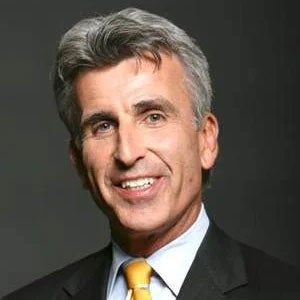
Podcast Guest
Kenneth Kring
Co-Managing Director, Global Education Practice
Korn Ferry
In his three decades of executive search consulting, Ken has recruited more than 400 senior-level executives and board directors for leading institutions in the education, non-profit and private sectors with a specific emphasis on supporting organizations with an education mission.

Podcast Guest
Rafael Ramirez
Professor of Practice at Saïd Business School
University of Oxford
Rafael is the first Professor of Practice at the University of Oxford. He directs the award-winning Oxford Scenarios Program, and he is Academic Director of the Oxford Networked Strategy Lab. As a researcher and advisor, Rafael has worked extensively with NGOs, corporations, inter-governmental organizations, governments and think tanks.