Work in the Age of Ageism
Older workers say they look for ways to mitigate biases against them, but still worry about their future.

Work in The Age of Ageism
NOTE: While this transcript has been reviewed, it may contain errors. Please review the episode audio before quoting from this transcript.
Jill Wiltfong:
Between the ages of 50 and 59, half of workers will lose their jobs.
Loretta Barr:
Sometimes the obstacle is themselves.
Joe Seldner:
Everybody here is young. You're not young. What makes you think that you'll fit in?
Loretta Barr:
Be honest about it. Be comfortable with answering the tough questions.
Jill Wiltfong:
That dreaded response of "You're overqualified",
Loretta Barr:
Oh, my goodness, they're just telling me I'm old.
[The Intern movie]:
Did not realize you were 70.
Joe Seldner:
The other mythology is you're going to cost too much. You'd be surprised at how cheap I am.
[Job Seeker]:
Mirror, mirror on the wall, who's the best job candidate of them all?
[Mirror]:
You are indeed a candidate, but not the candidate.
[Job Seeker]:
I'm summa cum laude from Columbia. I'm in the top 1% of LinkedIn and I have over 30 years of management experience.
[Mirror]:
That is all true but there are six candidates who are 1,000 times better than you, or at least 1,000 times younger.
[Job Seeker]:
Hey, isn't that ageism?
[Mirror]:
I'm a mirror, sue me.
[Job Seeker]:
Okay, well, what should I do?
[Mirror]:
I see a possible solution.
[Job Seeker]:
What is it? Should I get another degree? Add more to the skills section of my resume?
[Mirror]:
No, dye your hair, do Botox. And of course, plastic surgery.
[Job Seeker]:
Maybe I ought to stop taking advice from a mirror upon reflection.
Jill Wiltfong:
Hi, this is Jill Wiltfong, Chief Marketing Officer for Korn Ferry, and this is "Briefings," our deep dive into leadership. If you are in your 50s, odds are you could soon be heading straight off a career cliff. A new study shows that at some point between the ages of 50 and 59, half of workers will lose their jobs. Some of these workers are voluntarily stepping away, but the vast majority are being laid off, pushed out, or pulled away by health concerns or caregiving responsibilities. What's more, if you're not steadily employed in your 50s, your chances of working in your 60s go way down. Only 1/3 of those not working regularly in their 50s will find a job in the next decade. Even though ageism is illegal in many countries, anywhere from four to six in 10 workers say they've experienced it.
So today we want to talk about the problem, why it's worse now, and the clever ways people are combating what we call work in the age of ageism. Today let's start with someone who has some firsthand experience around this issue. And I'm not just talking about myself, Joe Seldner, a stellar writer, and producer who is in his 70s and who also happens to be in the job market.
Hi Joe, thanks for joining me.
Joe Seldner:
Thank you for having me. I appreciate it.
Jill Wiltfong:
You bet. So, Joe, you've got a mind-blowing resume, and we won't share it all, but you were a speech writer for the governor of New Jersey, a creative executive to Tom Hanks. You ran global licensing for the Ripley's Believe It or Not brand. I think you even sold a feature film to Paramount Pictures. So, to top it off, you were recently a fellow at the Stanford Distinguished Careers Institute. I mean, the list goes on and on and I don't want to sound too glib, but given all of that, shouldn't the offers just be pouring in?
Joe Seldner:
Well, I would've thought so. And you know, my question to myself is why aren't they pouring in? You know, the thing about my resume that came across is I've done a lot of different things. I haven't held one job at one company for 30 years and kind of progressed up the ladder. And I think when you jump around to different things, it makes you, I think, maybe more interesting, but sort of less directly appealing in the job market, especially as you get older.
Jill Wiltfong:
So, why do you want to keep going before we get into some of the details on maybe why they're not pouring in and why do you even want to keep going? And maybe we start there. Why, why keep working?
Joe Seldner:
It's a good question. Part of it is just economic reasons. I need to make money. I have a decent amount of money, but not a ton. And the bigger part is I like the creative world. I like working with people with ideas. I like molding clay into something recognizable, significant and interesting. And that's always been something I like to do for the last 50 years.
[The Intern movie – Interviewee]:
Okay, Benjamin, now I'm going to ask you one of our more telling questions for all our interns. So, I want you to like, this is the one I really think about. Okay? And take your time. Where do you see yourself in 10 years?
[The Intern movie – Robert De Niro]:
When I'm 80.
[The Intern movie – Interviewee]:
Yeah, sure. Yeah, whatever. Wait, did not realize you were 70. That question just doesn't work for you, does it? Should we just scratch that one and just move on?
Jill Wiltfong:
That's a scene from the 2015 box office hit "The Intern" starring Robert De Niro. It's funny, but it's also wrong. Joe, you've mentioned not wanting to play a victim here, but it sounds like you've lived some of this. Talk to us about some of the ageism, age discrimination that maybe you've experienced yourself or heard about from others.
Joe Seldner:
You know, there's questions that you get like, well, do you think you'll fit into... I mean, I was at Stanford for a year and Stanford's in the middle of Silicon Valley. So, there's questions that you get about, well, do you think you'll fit into the culture? Which is kind of, you know, it's code for everybody here is young. You're not young. What makes you think that you'll fit in? And the good answer to that is because I fit into multiple cultures in many places for the last 50 years, including in the last 10 years when I've already been kind of an old guy. The other mythology is you're going to cost too much. And my answer to that is you'd be surprised at how cheap I am. I need to make some money but that's not the driving force.
Jill Wiltfong:
Joe, for you, when did you first notice that you were being treated differently? Did it start in your 40s, in your 50s, later than that? When did you start to see that change?
Joe Seldner:
So, I'm trying to think, when I was writing speeches for the governor, yeah, I was already I think in my 50s then. And you began to just recognize that the younger people, in a political office, everybody's young and you begin to know that people, they're not hanging out with you very much. They're not asking you for your opinion very much.
[Mika Thompson]:
The length of your job history can absolutely be a dead giveaway on your resume. And you want to make sure that you avoid this by not going back 10 to 12 years. So, as an example, let's say you have a job on your resume from back in 1991. Obviously, they can easily do the math and figure this person may be, or you may be around this age.
Jill Wiltfong:
That's a tip from Mika Thompson who runs a resume writing YouTube channel. Joe, her advice is to not share your past too far back, which can be good advice, but as we said before, Joe, you've got a pretty amazing past. When you hear that, what's your reaction?
Joe Seldner:
Some of the really interesting things that I did were a long time ago. I mean, I worked for Tom Hanks in the late 1980s. I want to be able to share that I worked for Tom Hanks because it's something people are interested in, but I can't pretend that I worked for him five years ago because that's not true.
Jill Wiltfong:
With age does come a lot of benefits. What do you think is the best part about being at a later stage in your career?
Joe Seldner:
Yeah, just letting stuff roll off your back I think is a very important part of being older and wiser. And I just think that being able to interact with people who are 10, 20, 30, 40 years younger than you are is a real treat and something that you obviously don't get to do until you've lived all those years.
Jill Wiltfong:
Thank you so much for coming on, sharing your experience with us. I think it'd be a shame for people to pass up your talent and what you can offer. Now that we've heard about this issue firsthand from your perspective after the break, we're going to speak to a seasoned career coach on the dos and don'ts that senior job seekers should be aware of. So, stay tuned for that.
Rupak Bhattacharya:
Hi, I am Rupak Bhattacharya and welcome to the break. Here's a look at what else is happening in business from Korn Ferry's "This Week in Leadership."
[Interviewee]:
We are hearing more and more about the trend of unretiring.
Rupak Bhattacharya:
More people are unretiring and returning to the workforce. According to a new survey,
12% of retirees aged 62 to 85 plan to go back to work this year while 1/4 have already done so. Experts say the return can add to the experience levels firms are looking for but can also create pipeline blockages for younger employees trying to move up.
[Interviewee]:
Is the sense that this is a healthy realignment kind of at the unicorn end of the spectrum? Or is this a slump?
Rupak Bhattacharya:
Last year, Britain debuted a mere six new unicorns, meaning startups with a value of at least $1 billion. That's way down from the UK record-breaking 38 new unicorns in 2021. Experts say the decline caused by a drying up of venture capital over the last two years threatens the country's dream of becoming a global tech powerhouse.
[Interviewee]:
One interesting thing about the job market right now is that it is strong, but the hiring rate is low.
Rupak Bhattacharya:
Despite fewer job openings now than a year ago, a recent survey found that more than 40% of workers across several top sectors say they will seek a new position this year. Experts say the mismatch between openings and seekers means networking is now more important than ever.
For more insights on business and leadership, head to kornferry.com/insights. Now back to Jill and our episode "Work in the age of Ageism."
[Narrator]:
Financial Analyst, May Lee, began working for the State of California in 1943. What technology did you start with when you were working with numbers?
[May]:
The old Chinese abacus.
[Narrator]:
An Abacus.
[May]:
Yes. And then from there, I went to the comptometer, the 10 key adding machines, got a calculator and then we went into a computer.
[Narrator]:
Lee, now 100, officially retired in 1990 when her pension became higher than her salary, but she returned soon after. She's paid part-time, but has volunteered some 31,000 additional hours.
Jill Wiltfong:
With us now is Loretta Barr, an Executive Career Coach at Korn Ferry. She's worked with a number of clients in the latter half of their career and is here to offer her perspective. Loretta, thanks for joining me.
Loretta Barr:
Thank you, Jill.
Jill Wiltfong:
Loretta, that clip that we just heard featured former financial analyst May Lee who is now over 100 and still, believe it or not, working. If anything, I think it shows that people even well over 50 still have a lot to offer the working world. Has that been your experience and is it something that firms need to consider when they're hiring?
Loretta Barr:
I think that firms should. These days, I hear of so many examples of people who retire, they get bored, they go back, and they want to do some work.
Jill Wiltfong:
What do you think, Loretta is the biggest obstacle for your over 50 clients in getting work? What are they really struggling with?
Loretta Barr:
Sometimes the obstacle is themselves. They have already talked themselves into believing that they're going to struggle with finding work because they're older, competing with younger people in the marketplace. And so, my goal is to help them begin to see the benefits that they bring to the role, that experience. There's still a need for experience out there. And not to worry if they have a little gray hair and the other people do not, but to really have a belief in the skills that they bring.
[The Curious Case of Benjamin Button movie]:
It's never too late or in my case, too early. Be whoever you want to be. There's no time limit. Stop whenever you want. You can change or stay the same. There are no rules to this thing. We can make the best of the worst of it. I hope you make the best of it.
Jill Wiltfong:
Loretta, that was a clip featuring Brad Pitt in the movie "The Curious Case of Benjamin Button". It's, for those of you who haven't seen it, a movie about a man who is born old and grows younger with time. And don't we all wish that were the case, Loretta?
Loretta Barr:
Yes. Yes.
Jill Wiltfong:
All right, so short of that, because I don't think that's going to happen any time soon, are there some specific strategies that you recommend for job seekers that are really wanting to appear relevant?
Loretta Barr:
Keep learning, keep learning new techniques, new tools, new systems. And you know, the fact that many of us now can work remote also helps them not having to worry about going out and dealing with traffic and things like that that might make them uncomfortable, but just to keep learning.
Jill Wiltfong:
Do you hear, because I hear it from my friends, these folks who get into jobs and they start interviewing and then get that dreaded response of "You're overqualified". What does that mean?
Loretta Barr:
It used to be, when you hear overqualified, the first thing, the first buzz that goes up is that oh my goodness, they're just telling me I'm old. I would say bypass it. If you get the dreaded "You're overqualified" you can say, well, that does mean that I'm qualified and here's the pivot that I'm making. Be comfortable with answering the tough questions. You're going to get the question, why are you wanting this job? You need to be prepared for it. You're going to get the question, you worked at this company for 20 years, why are you making a change now? Be honest about it. If it was because of a layoff, say that. If it was because you want to make a career pivot, say that as well.
Jill Wiltfong:
Perfect. Loretta, thank you so much for joining me today. Really sage, good advice that hopefully a lot of people will take to heart.
Loretta Barr:
Thank you, Jill. It was a pleasure speaking with you.
Jill Wiltfong:
The Executive Producer of "Briefings" is Jonathan Dahl. Today's episode was produced by Rupak Bhattacharya, Nadira Putri, and Teresa Allan, and edited by Jaron Henrie-McCrea. It contains reporting by Russell Pearlman, Arianne Cohen, and Peter Lauria.
Our video segment contains original artwork by Frazer Milton, Hayley Kennell, Jonathan Pink, and Sasha Kostyuk.
Don't forget to read our magazine, available at newsstands and at kornferry.com/briefings. That's it for Korn Ferry's "Briefings". I'm Jill Wiltfong. We'll see you next time.
Loretta Barr:
Oh, you graduated that year? I was born that year.
Subscribe to series:



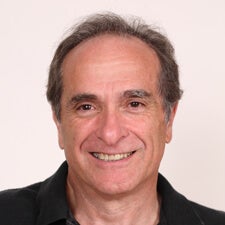
Podcast Guest
Joe Seldner
Writer/Producer, Founder, Senior Poverty Prevention Project
Stanford University
Joe has more than 35 years of experience in journalism, entertainment, and non-profits. He began his career as a journalist, earning a Pulitzer Prize nomination, then moved to the entertainment world, at Columbia Pictures, then as creative executive for Tom Hanks, and later producing the HBO film “61*” and other independent projects, and starting the news department for the largest cable TV company in the country.
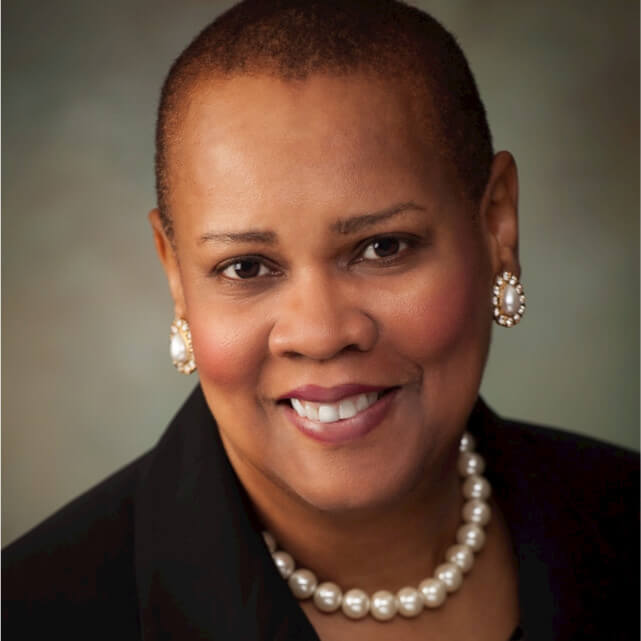
Podcast Guest
Loretta Barr
Leadership & Career Executive Coach
Korn Ferry
Connecting clients in the areas of learning, leadership development, career, executive coaching, DE&I, and talent development. Loretta applies best-practice approach, introducing methodologies, creating processes and frameworks, contributing innovative ideas for measurable success.