How Deep Can the Wellness Well Go?
As the definition of corporate wellness can be broad, companies must decide if they can afford everything, or risk being labeled as

How Deep Can the Wellness Well Go?
NOTE: While this transcript has been reviewed, it may contain errors. Please review the episode audio before quoting from this transcript.
Jill Wiltfong:
What is going on with corporate wellness right now?
Dennis Deans:
They've got to make a decision as to whether or not they invest in a very expensive weight loss drug. This is not a position that companies want to be in.
Jill Wiltfong:
Is it all talk?
Ronnie Goetzel:
You can't really yoga mat yourself out of a toxic work environment. Roughly eight out of 10 companies say they've got a wellness program, but often times what that means is they've checked the box.
Jill Wiltfong:
Please tell me this isn't the end of free massages at work.
[Doctor]:
Good to see you again. I have the results from your blood work.
[Patient]:
Oh, awesome. I've been really looking forward to getting them, because I think I made some really positive changes this year, thanks to my company's wellness program.
[Doctor]:
Oh really? What do they do?
[Patient]:
Well, they have a great new snack bar, and if you push your way past the fruit, you can find some amazing chips. Then there's the monthly 100-meter walks.
[Worker]:
Yes!
[Patient]:
And the coolest part is we do 30 seconds of yoga breath work every first Tuesday of each quarter.
[Workers]:
Ooh.
[Doctor]:
Ah, well that might actually explain your readings here.
[Patient]:
What do you mean?
[Doctor]:
Well, your blood sugar is elevated, your vitamin D levels are way below the norm. And if your cholesterol goes any higher, it might actually make a decent SAT score. Not too great for a 40 something guy.
[Patient]:
Oh man, this is triggering my anxiety all over again. How do I fix this?
[Doctor]:
Well, we could start with a sleep study to see if you need a sleep apnea machine, a therapist for the anxiety, and I'd like to get you on Ozempic to bring that weight down.
[Patient]:
Gosh, do you think my company's going to pay for all that?
[Doctor]:
I don't know. But don't they call it a wellness program?
Jill Wiltfong:
Hi, this is Jill Wiltfong, Chief Marketing Officer for Korn Ferry, and this is Briefings, our deep dive into leadership. You remember, right? The company yoga class, the free healthy snacks in the cafeteria? Oh yes. Corporate wellbeing programs were once all the rage, but today there's a new phrase spreading around the internet, wellbeing washing. It seems some firms may no longer be walking their talk. One UK study found one in three people say their companies were guilty of hyping employee wellness without actually backing it up. As usual, there's a complicated story behind this. Companies and even employees themselves have discovered that truly trying to improve worker health involves tackling some high-ticket items like sleep, mental health, even obesity. But can they afford all of this? So today, let's look into where wellness stands right now and ask the question, how deep can the wellness well go?
Today we're joined by Dennis Deans, Korn Ferry's Vice President of Global HR. Given his ongoing dialogue across a range of high-level HR leaders, if anyone can speak to what's happening in the world of wellbeing, it's Dennis. Dennis, really great to have you on today.
Dennis Deans:
Hey Jill. Thanks. Really glad to be on the show.
Jill Wiltfong:
Dennis, just thinking about all of this is enough to give me a crick in my neck. Please tell me this isn't the end of free massages at work. Do tell us what is going on with corporate wellness right now. What's the trend?
Dennis Deans:
Companies are at a crossroads these days and I think it's really important to recognize that what the employee is looking for and what the employer can afford could be two very different things. It's even further complicated by the fact that we're trying to figure out and balance our return to office strategy, which often adds additional complexities. What is relevant for an employee working from home is not necessarily that's relevant or needed for an employee that's in the office. So being able to balance those two with the anticipated return is critically important.
Jill Wiltfong:
As we said before, true wellness can mean a lot of things to different people. For example, employees today are asking firms to cover a weight loss drug that can cost up to $18,000 a year per person. Similarly, we know sleep is very important for long-term wellness, but sleep apnea machines are a $6 billion market. Do you think, Dennis, companies should be expected to provide services at that kind of level?
Dennis Deans:
If it's a matter of a company being in a position where they've got to make a decision as to whether or not they invest in a very expensive weight loss drug or they put resources and investment towards another wellbeing program, I mean, this is not a position that companies want to be in. So, making that informed decision and being able to use the feedback from our employees to make this decision is going to be critically important.
[Ronnie Goetzel]:
We're sick and tired of talking to TV screens and doing things virtually. We want to be together with our friends, with people. We like doing things that are mentally healthy as well as physically healthy. I don't believe it can be done through a smartphone alone. I think we need to be physically present with one another to enjoy one another and be mentally and physically healthier.
Jill Wiltfong:
That's Ron Goetzel, a Senior Scientist and Director of the Institute for Health and Productivity Studies at the Johns Hopkins Bloomberg School of Public Health. He's speaking about the impact of hybrid work schedules on wellness. Dennis, tell us what you're hearing. Has it become even more challenging or has increased flexibility actually helped with worker wellbeing?
Dennis Deans:
Yes, it's actually yes to both. On the flexibility front, virtual and hybrid colleagues have, for the most part, figured out that they can be effective and productive employees while at home. On the flip side of that, as I mentioned, it could be difficult to assess the needs of these employees without the right feedback channel, feeling disconnected and out of touch are common in these environments. And couple this with concerns over career advancement, you run the risk of a disengaged employee.
Jill Wiltfong:
Dennis, thank you for coming on and for joining us. As we say, there is no easy answer. It's a very important topic and I'm sure the debate will linger on for some time to come.
Dennis Deans:
Oh, thanks so much for having me. And you're right, if it were easy, we probably wouldn't be talking about it.
Jill Wiltfong:
After the break, you heard him in our last clip, but now we'll be speaking face to face with Ron Goetzel, the legendary thought leader in workplace wellness. We'll hear what companies can do to promote wellbeing without breaking the bank. So, stay tuned.
Rupak Bhattacharya:
Hi, I am Rupak Bhattacharya and welcome to the break. Here's a quick look at what else is happening in business from Korn Ferry's This Week in Leadership.
[Newscaster]:
We're seeing some landmark merger activity. M & A volume is up.
Rupak Bhattacharya:
As leaders struggle to create organic growth, they're turning to an old strategy, buying it. In total, deal activity in the US is up 130% through February to $288 billion. With the exception of last year's fourth quarter, it's the most activity in the first two months of any quarter since the start of 2022.
[Announcer]:
What it takes to be a woman who leads.
Rupak Bhattacharya:
A new Korn Ferry analysis shows seven out of 10 women say they are engaged and enabled by their firms, which is the same percentage as men. But when it comes to how firms enable them to reach their goals, only 63% of women say their companies are doing a good job recruiting and developing them for leadership roles.
[Announcer 2]:
A growing number of companies are offering a four-day 32-hour week, but with five days of pay.
Rupak Bhattacharya:
Back in 2022, 61 British companies began a six-month long experiment with a four-day work week with positive results. Nine out of 10 companies continued with the practice, with workers having a better sense of wellbeing and half the companies claiming lower quit rates. Some leaders, however, question how this will affect innovation within firms. For more insights on business and leadership, head to kornferry.com/insights. Now back to Jill and our episode: 'How deep can the wellness well go?'
[Yoga teacher – Forgetting Sarah Marshall movie]:
It's really important in this pose that you arch your back and keep it flat at the same time.
[Yoga student – Forgetting Sarah Marshall movie]:
I feel like those are opposing ideas.
[Yoga teacher – Forgetting Sarah Marshall movie]:
No, they're not, because you're arching your back up while it's flat. Okay, that's good. Yeah, sweat it out. Sweat out all the toxins from this morning.
Jill Wiltfong:
With us now is Ron Goetzel, a Senior Scientist and Director of the Institute for Health and Productivity Studies at the Johns Hopkins Bloomberg School of Public Health. Ron, it is a pleasure to have you with us today.
Ronnie Goetzel:
Well, Jill, it's a pleasure being here. Thanks for the invitation.
Jill Wiltfong:
That last clip was a comedic yoga scene from the movie Forgetting Sarah Marshall. Ron, earlier we talked about some of the trending but cost intensive aspects of wellbeing support such as weight loss drugs and sleep apnea machines. But are there other things firms can do on the wellness front like yoga that don't have such a hefty price tag?
Ronnie Goetzel:
Well, the short answer is you can't really yoga mat yourself out of a toxic work environment. Employers think that if they just give people certain perks, yoga mats or subscriptions to fitness centers, that'll solve their problem. But if you think about
it, think about your job. Let's say you're working long hours, you have your boss yelling at you, you've got deadlines that are unreasonable, people around you don't like working there, and that kind of spills over to you. You're exposed to too much heat, too much cold, too much noise, COVID, toxic fumes, you name it. And so, saying, "Well, we've got a program here. We've got yoga over here, we've got a climbing wall there," isn't really going to solve that larger problem, which is a toxic work environment.
Jill Wiltfong:
I know you've got some stock performance data on wellness and how important that is. Is it all talk or are there true numbers behind the importance of not fostering toxic workplaces?
Ronnie Goetzel:
So, there have been about a half a dozen studies that have been conducted looking at the performance of companies that have best practice health and wellbeing programs and their stock performance over many years. One of these studies that we authored in the Journal of Occupational Environmental Medicine focused on winners of the C. Everett Koop Award. Now the C. Everett Koop Award is one that's been around for 30 years. It's given to organizations that can document with clear data that their programs have improved population health, their employee health and wellbeing, but also have had positive business results measured in a variety of ways from medical costs,
absenteeism, workers' comp, employee reputation, employer reputation. And we looked at companies that won it over about a decade or so and looked at their stock performance versus the S&P 500, Standard and Poor's 500. And what we found that was that even a small portfolio of companies that won the award publicly traded outperformed the S&P 500 by a ratio of three to one.
Jill Wiltfong:
That's unbelievable results and really good news I think for workers and for communities to know that you've got real proof that this stuff can work. Over one in three employees, despite that, do accuse companies of kind of this wellbeing washing. Do you think that's because companies are trying to save money and looking to cut corners? Do you just think maybe people don't yet understand the value of wellbeing programs? What do you think is at the heart of that?
Ronnie Goetzel:
Well, if you look at the data, these are national surveys, roughly eight out of 10 companies say they've got a wellness program. But oftentimes what that means is they've checked the box. Really what's important in the success of these programs is building and sustaining a culture of health and wellbeing. So, you kind of know when you walk in the door that this is an organization that really cares about me as a human being, as a contributor to this organization, and leadership that supports that. So, it's not just, I say it in meetings, but I actually have a budget, I've got resources.
Jill Wiltfong:
Do you think more and more employees are really looking for wellbeing places that are more balanced or do you think it's just a moment in time? Do you see this being really a lasting important issue that employees are going to be looking for?
Ronnie Goetzel:
I think it is and actually much more so with younger generations of employees. There are some surveys done just in the last year or so by Gallup where they asked the Gen Zs and the younger millennial and Gen Xs and I don't even know all the various categories, but younger employees looking for jobs. You know, what is it that you want in your job? And number one of course was pay, benefits, and things like that. Of course, number two was an employer that cares about my health and wellbeing, that provides me with those services, those resources. And also, there's a work-life balance.
Jill Wiltfong:
Ron, thank you so much for the inspiring chat. Thank you for coming on. I think we're going to have to have pizza to celebrate all this great conversation. I appreciate it. Have a good day.
Ronnie Goetzel:
Alright, you too. Take care, Jill.
Jill Wiltfong:
The Executive Producer of "Briefings" is Jonathan Dahl. Today's episode was produced by Rupak Bhattacharya, Nadira Putri, and Teresa Allan, and edited by Jaron Henrie-McCrea. It contains reporting by Russell Pearlman, Arianne Cohen, and Peter Lauria.
Our video segment contains original artwork by Frazer Milton, Hayley Kennell, Jonathan Pink, and Sasha Kostyuk.
Don't forget to read our magazine, available at newsstands and at kornferry.com/briefings. That's it for Korn Ferry's "Briefings". I'm Jill Wiltfong. We'll see you next time.
If only the digital comm strategy were that simple. We'd be good.
Dennis Deans:
Oh my God, yeah. Get in line, right?
Subscribe to series:



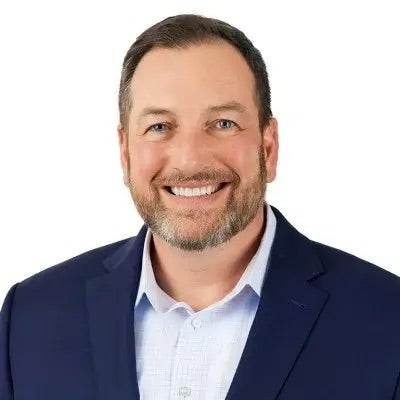
Podcast Guest
Dennis Deans
Vice President of Global HR
Korn Ferry
Dennis currently has HR responsibility for Korn Ferry’s North American businesses as well as the Global Consulting and Digital businesses where he partners with the global and regional business leads to bring strategic HR thought leadership and practical HR solutions to our many employees-focused

Podcast Guest
Ron Goetzel
Senior Scientist & Director
Johns Hopkins Bloomberg School of Public Health
Dr. Goetzel studies the relationship between employee health and well-being, medical costs, and workplace productivity. He has published well over 200 peer-reviewed articles and book chapters and frequently presents at international business and scientific forums.