Fire Your Boss
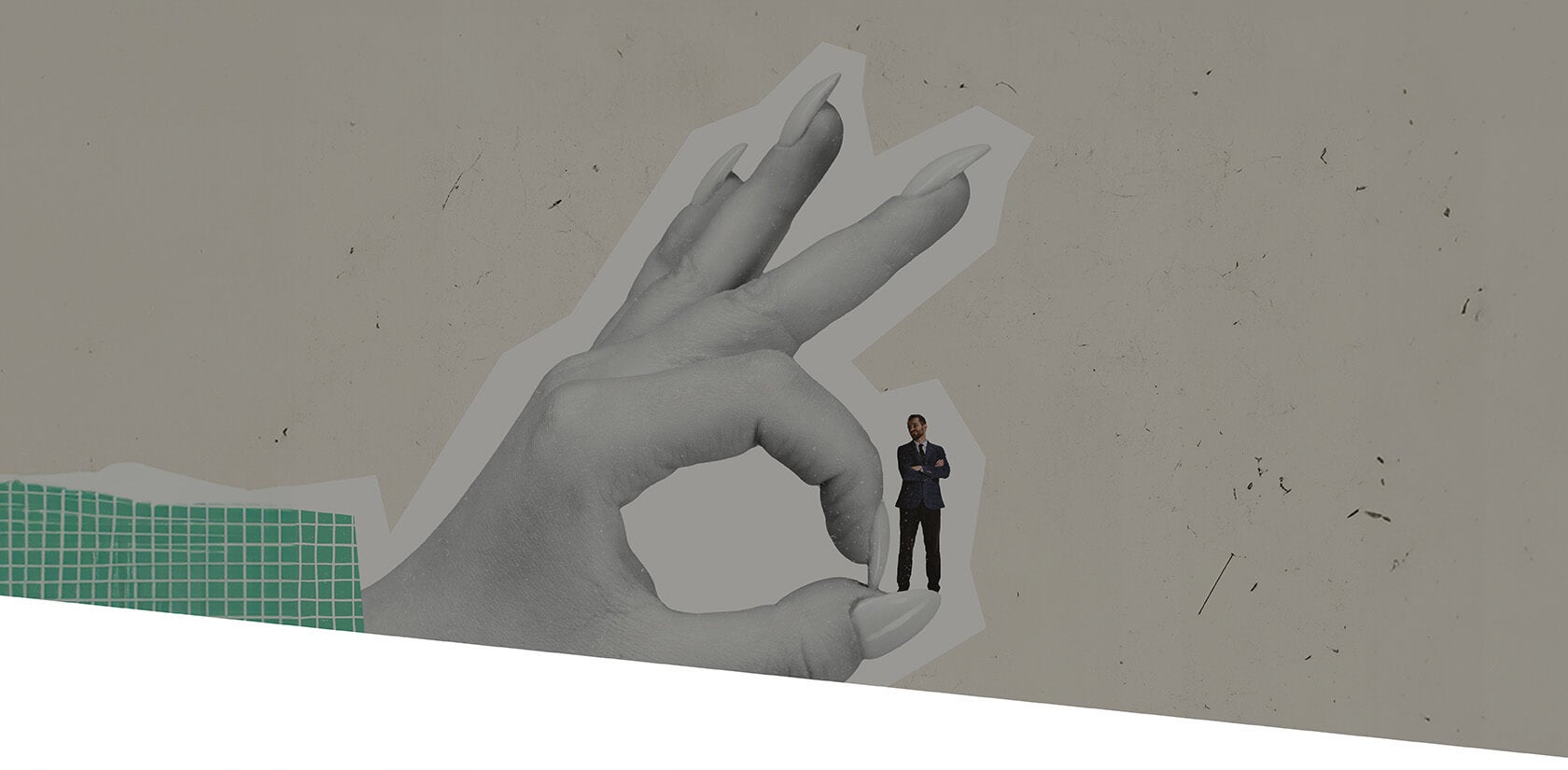
A third of workers say they’re currently dealing with a toxic leader—and two thirds of them are actively job-hunting. But is quitting the right answer? Two experts discuss this perennial issue.
Fire Your Boss
NOTE: While this transcript has been reviewed, it may contain errors. Please review the episode audio before quoting from this transcript.
Jill Wiltfong:
You may have a toxic boss.
[Colin Farrell as Bobby Pellit – ‘Horrible Bosses’ movie]:
Three hours late. What's the deal?
Alma Derricks:
Fundamentally, they lose sight of the balance.
Jill Wiltfong:
What would be your advice for people that may be sitting in the same situation?
Alma Derricks:
You always have to have plan B floating in the background that you can activate.
Jill Wiltfong:
Good people do get unfairly labeled as bad bosses.
Avigail Lev:
If they can't disagree with things, it puts them in a very bad position. If they are a psychopath, you should just get a new job.
[Boss]:
So, guys, we came up short last quarter. I need ideas to grow the business. It's just that simple.
[Employee]:
Maybe we could expand our market into Asia?
[Boss]:
You know, I just had a thought. We should expand our market into Asia. Gosh, come on guys. I can't be the only one coming up with ideas here.
[Employee]:
Hey, boss. I had an idea to help us make our numbers this quarter, maybe even for the next year. What do you think about expanding into Asia?
[Boss]:
You're still not hearing me. We need to make bigger moves. Things like... Like moving into Asia. That's the kind of thinking I need from you, but right now, I seem to be doing the thinking for you.
Jill Wiltfong:
Hi, I am Jill Wiltfong, Chief Marketing Officer for Korn Ferry. And this is "Briefings," our deep dive into topics that corporate leaders need to care about.
Unprofessionalism, credit stealing, unreasonable expectations, if your manager is regularly checking one or more of these boxes, you may have a toxic boss. The problem isn't new but today, an astounding 1 in 3 workers say they're currently dealing with a toxic leader, and 6 in 10 of them say they're actively job hunting as a result.
Poor managers are, of course, a problem for companies keen to keep top performers from running out the door. But let's also spare a thought for the beleaguered bosses here. They often have their own exacting bosses and executive mandates to meet that employees just may never know about. It seems like it's time to take a good look at bad managers, so if you're a worker currently in the clutches of one, you might just be wishing you could "Fire Your Boss."
Before we start, of course, if you're watching us on YouTube, please be sure to like, subscribe, and leave a comment just to let us know your thoughts on this topic. I'm joined today by Alma Derricks, a Senior Client Partner in Korn Ferry's Culture, Change, and Communications Practice. She's had her share of bad bosses, and helps companies, of course, avoid the same in the work that she does every day. Alma, thank you for being here.
Alma Derricks:
Thank you, Jill. Great to be here.
Jill Wiltfong:
So, let's define this, just so we're all on the same page. What in your mind are the key characteristics of a bad boss
Alma Derricks:
I think the number one thing is a bad boss just simply loses the red thread between their own personal self-interest and the business of the organization. You know, at some point, everyone is still trying to manage their career, and as you said, they have to deal with bosses on top of them. So, bosses' bosses are an issue. But fundamentally, they lose sight of the balance. And so, they can be quite talented, but some people just aren't talented as people managers.
Jill Wiltfong:
At some point, right, these bad bosses were once at the bottom of the totem pole. So, somebody had to promote them, kind of pluck them into these leadership roles. Why don't organizations catch these toxic workers in the first place, so that those types of promotions just never happen?
Alma Derricks:
You know, I think Steve Jobs said it best, that A players hire A players, B players hire C players, and so on down the line. And then Guy Kawasaki called this the "bozo explosion." You know, one antidote that I don't think companies take enough time to think about for their organizations, and it's not something that you can apply globally, but really thinking seriously about what a good individual contributor path might be in that organization. You know, there are kind of mythologies about, you know, as you move up the ladder in an organization, that you should have X number of direct reports. And I think that we've gotta question that a little bit more.
[Colin Farrell as Bobby Pellit – ‘Horrible Bosses’ movie]:
Three hours late. What's the deal?
[Jason Sudeikis as Kurt Buckman – ‘Horrible Bosses’ movie]:
I was at your father's funeral.
[Colin Farrell as Bobby Pellit – ‘Horrible Bosses’ movie]:
Uh-huh. Mmm-hmm. Well, maybe that excuse would've fallen when my dad was here, but I'm in charge now.
[Jason Sudeikis as Kurt Buckman – ‘Horrible Bosses’ movie]:
That excuse wouldn't make any sense if your dad was still here.
[Colin Farrell as Bobby Pellit – ‘Horrible Bosses’ movie]:
Whoa! In my office, now.
Jill Wiltfong:
That was Colin Farrell being an absolutely horrible boss to Jason Sudeikis in the aptly named movie, "Horrible Bosses." Alma, let's ground this in real life. Tell me about your worst boss experience. You said you've had a few.
Alma Derricks:
Oh, great.
Jill Wiltfong:
What made that person so particularly bad?
Alma Derricks:
It's funny, Jill, I actually had one of my best bosses and one of my worst bosses in parallel at the same time, in one of my first jobs. I was originally hired by the good boss who was one of the up-and-coming superstars in the company. About a few months later, another person came in and they assigned me to help support this other boss, the bad boss, who immediately was cool to me. You know, there was something wrong. And at first, I thought it was because maybe it's because he inherited me, he didn't hire me. And so, I sort of realized that and tried to do everything I could to put him at ease and make him feel comfortable. But as it turns out, he had a lot of insecurities underneath the hood.
Jill Wiltfong:
You've talked about, with me in the past, engineering a move to switch bosses within the same company as well, when you've had a bad experience. It's not always easy to do that, right? Those types of moves take some careful navigation. For others who may find themselves in a position with a bad boss right now, how did you navigate that kind of switching of bosses, and what would be your advice for people that may be sitting in the same situation?
Alma Derricks:
A few months prior to that, and I hadn't been in the organization that long, I had made contact with another division VP, and we met during an informational interview, and he was kind enough to just say at the end, "Hey, I would love to work with you in the future if you have interest. You know, I just like you." And I said to him, "Were you serious about wanting me on your team? That might come in handy right about now." And of course he wanted to know why, and I explained. And he said, "Absolutely, you could start on Monday." And so, I think what you take away from it, like you said, what you learn over time is that you always have to have kind of a plan B floating in the background that you can activate.
[Keir Dullea as Dave – ‘A Space Odyssey’ movie]:
Open the pod bay doors, Hal.
[Douglas Rain as Hal – ‘A Space Odyssey’ movie]:
I'm sorry, Dave. I'm afraid I can't do that.
[Keir Dullea as Dave – ‘A Space Odyssey’ movie]:
What's the problem?
[Douglas Rain as Hal – ‘A Space Odyssey’ movie]:
I think you know what the problem is just as well as I do.
[Keir Dullea as Dave – ‘A Space Odyssey’ movie]:
What are you talking about, Hal?
[Douglas Rain as Hal – ‘A Space Odyssey’ movie]:
This mission is too important for me to allow you to jeopardize it.
Jill Wiltfong:
That is a scene from the legendary movie, which is my least favorite movie, I must admit, "2001: A Space Odyssey," where the AI system, Hal, suddenly becomes the boss. And it turns out, he is not so great at it either. Alma, here is a really shocking truth, one-third of employees across all age ranges say they've received better career advice from AI than they have from their managers. So, what do you think? Could AI one day do a better job than humans, at actually managing employees?
Alma Derricks:
I think it's fair to say that a computer can be more objective, can be more dispassionate, isn't affected by the same sorts of underlying biases that we've been talking about. But you can't replace great management, and I think it should be a wakeup call to managers to think that they could just be, you know... You could cut them out of the equation and replace them with a computer. It's a wakeup call to how much more they need to develop that skill. And again, it's a separate skill from functional skill.
Jill Wiltfong:
So, all of this talk about bad bosses, let's cleanse the palette a little bit and flip the script. Can you leave us with what's the kindest thing a boss has ever done for you?
Alma Derricks:
Yeah, it's interesting, I've had such long friendships with some of my bosses, probably the best bosses and not so much with the bad bosses. And I think what they have in common is, you know, they were always mentors, they were always coaches and teachers. And so, I think one of the greatest kindnesses is the gift of that feedback when we're past the situation, we're past the annual meetings, we're past anything where it matters, but to really spend the time to give me feedback, good and bad, on things that they saw in real-time, because they sit in a unique position. And I found that to be very kind, very gracious, and invaluable to my development as a manager.
Jill Wiltfong:
Well, I have found our time together to be very valuable, so I really appreciate you joining us today.
Alma Derricks:
Thank you, Jill.
Jill Wiltfong:
We've looked at what to do if you're dealing with a toxic manager, but after the break, we'll take a dive into the psyche of these so-called bad bosses and get their side of the story.
Rupak Bhattacharya:
Hi, and welcome to "This Week in Leadership." I'm Rupak Bhattacharya, and here's a quick look at what else is happening in business.
[Announcer]:
The NCAA is taking a major step toward paying college athletes.
Rupak Bhattacharya:
In a new ruling that sent shockwaves through college sports, the NCAA settled three antitrust lawsuits by agreeing to allocate $22 million in a revenue-sharing deal with athletes. The revenue-sharing doesn't go into effect until 2025, so how colleges will decide who gets paid and how much still remains to be seen.
[Employee]:
If you've often found yourself bored at work, you're not alone.
Rupak Bhattacharya:
TikTok users flooded the platform with some 200,000 #BoredAtWork hashtag videos, making it one of the most popular hashtags. Though the #BoredAtWork hashtag dates to 2020, experts say leaders should be troubled by its recent explosion, because it coincides with the entry of Gen Z workers into a dysfunctional job market.
[Employee]:
How can we know, not just think, that hybrid working actually works?
Rupak Bhattacharya:
A review conducted out of the UK found that working from home can make employees more efficient and, in most cases, healthier. The catch, as many as 4 in 10 British workers think their chances of promotion within a company would be hindered by working remotely.
For more insights on business and leadership, head to kornferry.com/insights. Now back to Jill in our episode, "Fire Your Boss."
[Robert Sutton]:
One reason I call this the toxic tandem is there's a lot of evidence that when you put people in positions of power, a whole bunch of things happen to make them insensitive jerks. When you give people power over others, they tend to focus more on their own needs and concerns, they focus little attention on the needs of others, and they act like the rules don't apply to them.
Jill Wiltfong:
With us now is Avigail Lev, a Psychotherapist and Executive Coach who's here to give us a peek inside the minds of bosses. Thanks for joining us today.
Avigail Lev:
Thanks for having me. I'm happy to be here.
Jill Wiltfong:
So that last clip was from Robert Sutton, a Stanford University professor and author of "Good Boss, Bad Boss." He seems to suggest that perhaps it's not bosses that are necessarily bad, but that even a seemingly good person who gains power is quite susceptible to becoming a bit nasty here and then. Would you agree with that?
Avigail Lev:
Well, there's some interesting research around that, like the Stanford Prison experiments, the Milgram studies, but it's actually a little bit more nuanced. It's not that any person would be susceptible to abusing power, but that there are certain conditions that would make us more likely to abuse power. So, if we're dehumanizing others or if there's a strong authority figure telling us what to do, we're more likely to then abuse power.
Jill Wiltfong:
In the last couple of years, over half of managers have reported feeling burned out in their roles. One example of how this could happen is a manager having to enforce difficult marching orders from their boss, and then taking all the blame for it from their workforce. Do you think perhaps for this and for other reasons, that sometimes good people do get unfairly labeled as bad bosses? Do they just have bad tasks?
Avigail Lev:
I think middle management has it the hardest because you have people above you that are creating the regulations and what needs to be enforced. And depending on what they could... If they can't disagree with things or have more negotiations around that and they're just enforcing it down, it puts them in a very bad position.
[Dr. Ramani Durvasula]:
One of the most maddening patterns of the narcissistic relationship is the blame-shifting. Even when they get caught in something, a lie, a betrayal, or some other form of bad behavior, instead of taking responsibility or owning up to it, they will deflect blame and say everything from people out to get them, this is a witch hunt, or that they lied to you to protect your feelings because you're sensitive.
Jill Wiltfong:
That's clinical psychologist Dr. Ramani Durvasula describing what blame-shifting looks like. Is it possible that sometimes, employees are guilty of this and in fact, the problem may be stemming from them and not the boss? And if so, is there some kind of self-assessment or something that people can do just to kind of gut check themselves and make sure it's truly the boss and not them who has the issue?
Avigail Lev:
Yeah, I mean, anybody's capable of blame-shifting, especially if you have some narcissistic traits. Is it possible that employees do it? Of course. They have less power, is not as bad if an employee's doing that as opposed to if a boss is doing that. One interesting self-assessment that I have on my website is the schema questionnaire. It's a questionnaire that measures core beliefs. If you take the schema questionnaire and you score very high on an entitlement schema, you're more likely to be doing some blame-shifting because when you have a core belief of entitlement, it's very difficult to take accountability or responsibility.
Jill Wiltfong:
Let's say the boss is genuinely horrible. What is your best tip for how to deal with them from a psychological perspective? What do you do?
Avigail Lev:
Yes, if they are a psychopath, you should just get a new job. But if they're horrible, but they have empathy, then there's many different things that you could do. You would wanna be thinking about what are their core beliefs? Like, is this person coming from perfectionism? Are they feeling inadequate? Do you just need to give them some flattery and make them feel more secure? Do you need to just make them feel like it's their ideas? Is it that... You have to kind of assess or hypothesize why they are behaving horribly, and then try to use effective communication, I love nonviolent communication, to negotiate and come from a place of your values, and think about their values, and use effective communication strategies to negotiate a different dynamic.
Jill Wiltfong:
Fascinating topic, and so interesting to kind of get in and kinda under the hood of people and how they tick, and leaders and how they work. So, appreciate the insight and all of your examples and knowledge sharing today. Thank you for being here. It was really wonderful to have you on.
Avigail Lev:
Thank you for having me. It was a lot of fun.
Jill Wiltfong:
The Executive Producer of "Briefings" is Jonathan Dahl. Today's episode was produced by Rupak Bhattacharya, Nadira Putri, and Teresa Allan. And it was edited by Jaron Henrie-McCrea. It contains reporting by Russell Pearlman, Arianne Cohen, and Peter Lauria.
Our video segment contains original artwork by Frazer Milton, Hayley Kennell, Jonathan Pink, and Sasha Kostyuk.
Don't forget to read our magazine, available at newsstands and at kornferry.com/briefings. That's it for Korn Ferry “Briefings”. I'm Jill Wiltfong. See you next time.
Jill Wiltfong:
You gotta show 'em off. I know, I know. I'll lean this way a lot when she talks.
Subscribe to series:




Podcast Guest
Alma Derricks
Senior Client Partner,
Korn Ferry
Alma empowers customer-facing teams to be agile, insightful, and engaged, focusing on Gen Z perspectives. With over 25 years of experience, she has launched innovative ventures across media, entertainment, and technology for brands like Verizon, NBCU, and Amazon. She seamlessly blends business innovation with cultural insight as a strategic consultant, speaker, and board advisor.

Podcast Guest
Avigail Lev
Psychotherapist & Executive Coach
Avigail specializes in business, leadership development, and organizational structure. Coauthor of three relationship-strengthening books, she applies evidence-based practices to promote happier, more fulfilling lives. Passionate about uncovering core beliefs that impact team effectiveness, she fosters meaningful workplace environments through research-based interventions and off-site events enhancing executive collaboration.