The Imposter CEO
Uncertain times, uncertain leaders? 71% of US CEOs say they have imposter syndrome. A CEO and performance expert crack this confidence crisis.
The Imposter CEO
NOTE: While this transcript has been reviewed, it may contain errors. Please review the episode audio before quoting from this transcript.
Jill Wiltfong:
"The Imposter CEO."
What in your opinion is causing so many CEOs to feel like imposters?
Mark Arian:
CEOs are stretched beyond their training, beyond their capacity, and ultimately beyond their comfort level.
Jill Wiltfong:
What causes a lack of confidence in the first place?
Nate Zinsser:
Give you a reason to believe in yourself. Here's what I'm striving for. Here are the key priorities. This is where I'm going for today.
[Host]:
Okay, audience, it's time to play "Find the Imposter CEO." Each of our three CEO contestants will go down the line and tell us why they are in fact a real deal CEO. Those of you in the audience, click your in-seat button when you think you've hit on the imposter and our meter will light right up.
Okay, let's hear from our first CEO. Tell us about yourself.
[CEO 1]:
Well, gee, I run a large company. I mean like a really big multinational corporation. I'm really focused on bottom line growth. People sometimes say my middle name is EBITDA.
[Host]:
Some doubters in the audience, but, okay. CEO number two, tell us what's your biggest challenge right now?
[CEO 2]:
Well, there are so many, but I'd say the biggest issue for our firm over the past few years has been keeping costs down in our supply chain.
[Host]:
Apparently spoken like a true CEO. And finally, CEO number three. What are you most proud of at your company?
[CEO 3]:
We listen to our employees' need for total flexibility. Come and go whenever you want, four-day work week, remote full time, whatever floats your boat.
[Host]:
Even if it means a 20% drop in productivity?
[CEO 3]:
I can live with that.
[Host]:
Oh goodness, folks, I've heard some doozies in my time, but it looks like we just broke the meter.
Jill Wiltfong:
Hi, I am Jill Wiltfong, Chief Marketing Officer for Korn Ferry. And this is "Briefings," our deep dive into topics that corporate leaders need to care about.
"I'm underqualified. I don't deserve to be here. I'm a fraud." These are the ruminations of imposter syndrome, and believe it or not, 71% of US CEOs say they have it according to Korn Ferry's newly released 2024 global workforce study. And they're not alone. Among Indian CEOs, that number grows to 73%. This is compared with only 47% of employees overall who claim to experience it. In fairness, the current crop of CEOs is facing a near unprecedented number of challenges simultaneously. They need to drive top-line growth, build culture, figure out the role of artificial intelligence, map out how and where employees work, and much more all at once. But we assume the top boss is given the job in the first place because they have what it takes to cope better than most. So today, let's find out what's really behind these lumps in leaders' throats as we investigate "The Imposter CEO."
Before we start, if you're watching us on YouTube, please be sure to like, subscribe, and leave a comment to let us know your thoughts on this topic.
I'm joined today by Mark Arian, CEO of Korn Ferry's Consulting Practice. And what better person to ask about CEOs than a CEO? Mark, thanks for coming on the show.
Mark Arian:
You're welcome, Jill.
Jill Wiltfong:
85% of CEOs said their professional experiences and career progression give them confidence that they can do the job. So now I kind of sit here scratching my head. What in your opinion is causing so many CEOs to feel like imposters despite knowing that they do have the experience to get the job done?
Mark Arian:
What you're seeing is that CEOs are saying they're well equipped to run the business, and they've had the training they need to run that business. What you alluded to earlier is what's stretching them beyond what their comfort level is. And that's the horizontal requirements of the job and things that are kind of unprecedented. You've mentioned AI, but there's also work-from-home and hybrid work, and excess commercial real estate, and a potential white-collar recession that many believe is coming or is in place already.
Wars, which you alluded to, it's not so much that there's a war, but CEOs are asked to opine and take a side on the war. CEOs are stretched beyond their training, beyond their capacity, and ultimately beyond their comfort level.
Jill Wiltfong:
A record 1,914 CEOs left their roles last year, which is a 55% increase from the year prior. How much of a role do you think self-doubt may be having and playing into this extremely high quit rate?
Mark Arian:
I think it is, and I think it's accentuated by the fact that all of the pressures that we talked about that are stretching people horizontally are happening at the same time. In the past, you'd hit one or more of these things sequentially, but to have them all happen at the same time is something that CEOs are not only not prepared for but leaves them in a situation where their discomfort is really extreme.
[Jeremy Irons as John Tuld – ‘Margin Call’ movie]:
And, Mr. Sullivan, what does your model say that that means for us here?
[Zachary Quinto as Peter Sullivan – ‘Margin Call’ movie]:
Well, that's where it becomes a projection. If those assets decrease by just 25% and remain on our books, that loss would be greater than the current market capitalization of this entire company.
Jill Wiltfong:
That's a scene from the movie "Margin Call" that takes place during the 2008 financial crisis when many white-collar professionals lost their jobs.
You've spoken about a current near recession for white-collar positions in which companies have significantly pulled back on hiring for senior level roles. Do you think having fewer senior level staff members means CEOs are maybe no longer getting the support they need to effectively manage their workloads?
Mark Arian:
I think senior level hiring has been challenging for some period right now, and there may be some element of that where the CEO is, you know, being stretched even further. And that's certainly a possibility. As well, there's a time constraint on CEOs. And so, for a CEO to find the time as well to equip themselves with horizontal leadership skills is as much a problem as the level of support they're getting from other senior leaders, if that makes sense.
Jill Wiltfong:
Tell me, what would be your advice to CEOs who are a bit overwhelmed by the pressure of the job today? What would you say?
Mark Arian:
I do think it starts and stops with equipping oneself with the requisite skills to get the job done. So, finding the time in a perform and transform, you know, environment to equip oneself and one's leadership team to help you, to your point, so that you can manage horizontally, so that you do learn the skills that can be deployed quickly and efficiently is really critical. And I think CEOs are hearing that message.
[Domhnall Gleeson as Calen – ‘Ex Machina’ movie]:
Hi. I'm Caleb.
[Alicia Vikander as Ava – ‘Ex Machina’ movie]:
Hello, Caleb.
[Domhnall Gleeson as Calen – ‘Ex Machina’ movie]:
Do you have a name?
[Alicia Vikander as Ava – ‘Ex Machina’ movie]:
Yes, Ava.
[Domhnall Gleeson as Calen – ‘Ex Machina’ movie]:
I'm pleased to meet you, Ava.
[Alicia Vikander as Ava – ‘Ex Machina’ movie]:
I'm pleased to meet you too.
Jill Wiltfong:
That's a scene from the movie "Ex Machina," where a man is tasked with determining whether an AI-powered robot is capable of actual consciousness. The movie is sci-fi, Mark, but this stat from a recent survey is not. 43% of US, UK, and Dutch business leaders say that AI could one day take over a CEO role.
Mark, what do you think of that? Could AI do your job one day?
Mark Arian:
I don't think so. CEOs who know how to deploy and use AI effectively and are comfortable are going to take the jobs of those who don't. I think you're gonna see a really strong movement towards incorporating AI and AI capabilities into all kinds of aspects of running the business, but there are specific capability sets that I don't think AI is in place to be able to deliver that require a human touch.
Jill Wiltfong:
Of course, since you are a CEO, I can't let you go without asking do you ever experience imposter syndrome, self-doubt?
Mark Arian:
So, the horizontal skills that we're talking about are things that I taught, I deployed, I work on, and it was the vertical skills that I had to learn. So for me, the challenge has been quickly running a large consulting business to get up to speed and be able to keep pace with my finance counterparts on the vertical side of the house. But yes, I have felt like an imposter in that regard early in my tenure.
Jill Wiltfong:
It's no imposter now. You're the real deal. And I really appreciate you coming on today and talking with us.
Mark Arian:
Thank you, Jill.
Jill Wiltfong:
So, we've just looked at what's rattling CEO nerves. After the break, we'll be exploring the keys to building confidence with a performance expert who helped football star Eli Manning win two Super Bowls. So, stay tuned and let's see what we can learn.
Rupak Bhattacharya:
Hi, and welcome to "This Week in Leadership." I'm Rupak Bhattacharya. And here's a quick look at what else is happening in business.
[Narrator]:
Return to office mandates.
Rupak Bhattacharya:
One quarter of top corporate leaders and nearly one fifth of HR executives say they hope RTO mandates lead to voluntary turnover. Experts say it reflects a shift in the thinking of leaders. Where once they feared losing talent because of RTO mandates, now they're enforcing them so people will leave.
[Narrator]:
The unemployment rate.
Rupak Bhattacharya:
New data shows the current unemployment rate for workers age 20-24 is higher than it was before the pandemic. One possible reason is that for many managers younger workers have unrealistic expectations around advancement and flexibility, which now makes them less than ideal job candidates.
[Narrator]:
The rising tide of pay transparency.
Rupak Bhattacharya:
Despite a greater movement for pay transparency, 61% of compensation professionals believe most employees don't understand their company's current reward strategy. And only 45% of firms have formal plans in place for items like retention offers. Leaders are advised to be clear around pay policies or they risk not being competitive.
For more insights on business and leadership, head to kornferry.com/insights. Now, back to Jill and our episode "The Imposter CEO."
[Mila Kunis as Lily – ‘Black Swan movie]:
Rough start, huh? Must have been pretty humiliating.
[Natalie Portman as Nina Sayers – ‘Black Swan movie]:
Get out of my room.
[Mila Kunis as Luly – ‘Black Swan movie]:
See I'm just worried about the next act. I'm just not sure you're feeling up to it.
Jill Wiltfong:
With us now is Dr. Nate Zinsser. He's the former director of West Point's Performance Enhancement Program and the author of "The Confident Mind." So, it's safe to say he knows a thing or two about how to build confidence. Nate, thanks for joining me.
Nate Zinsser:
Thank you so much for inviting me in. This is indeed a pleasure.
Jill Wiltfong:
So that last clip was a scene from the movie "Black Swan," where Natalie Portman plays a ballerina who literally collapses on stage under the pressure of her performance.
You've worked with so many different types of people, including elite athletes, top level executives, and even ballerinas. What causes a lack of confidence in the first place?
Nate Zinsser:
In my experience, it's been the accumulated repeated messaging that we received from parents, teachers, coaches, authority figures that we have to constantly pay attention to our weaknesses, our imperfections. And we're given that message with the mistaken understanding that that's how we will be able to perform at our best.
Jill Wiltfong:
In your book, you write about mining your past, which is kind of what you're talking about here, right, for evidence of success now in order to build a mental bank account. Can you walk me through how that works, and how does that relate or add to your confidence?
Nate Zinsser:
If your confidence is a sense of certainty about yourself, and that's how I understand it, then building up that sense of certainty by selectively mining certain experiences from your past that provide a little energetic boost that give you a reason to believe in yourself. If we mine those experiences from our past and basically create a body of evidence or a mental bank account, and then we add to that the right kind of self-referential statements in the present, and add to that the constructive visions of the futures that we want, we have a sense of certainty that we can rely on when we step into our respective performance arenas. Whether that's a boardroom, a swimming pool to race, a tennis court to play, or an operating room to conduct a lifesaving surgery.
[Commentator]:
Any point in the game where you thought, "We could be in trouble?"
[Eli Manning]:
No, you know, just stay positive, and I knew offensively we were moving the ball. We just weren't getting touchdowns.
[Commentator]:
How's it feel to win this Super Bowl in the building that your brother built?
[Eli Manning]:
You know what, it just feels good to win a Super Bowl.
Jill Wiltfong:
That's former New York Giants quarterback Eli Manning speaking after having won Super Bowl XLVI. You've actually worked extensively with Manning and wrote that in the beginning of that season he received a lot of media pushback for having the confidence to say he was at the same level as Tom Brady. What's funny is that he ended up beating Brady's Patriots to win that Super Bowl.
We've talked about looking for past evidence of success to build up confidence. Tell me how you used future visualization with Eli to help him land that big win. How big of a role was that?
Nate Zinsser:
For Eli Manning, he had to have a great recollection of all the times in his past career that he had led his team to a fourth quarter comeback to win. And he would visualize that thinking he's in Lucas Oil Stadium in Indianapolis, and the lights are on, and the heat is on, and this is how I am operating during this kind of situation. And he had to do that through dozens, and dozens, and dozens of different future scenarios for the game.
Jill Wiltfong:
Nate, can you give us an example of maybe how you've helped a CEO, someone in business, use visualization to really get past maybe a place where they were stuck?
Nate Zinsser:
I have worked with a number of CEOs, both with startups and established companies, to identify what are my key objectives for say a quarter, what are my necessary required behaviors to achieve each of these objectives? And then we will record that list into a customized MP3 audio file with a somewhat inspirational music background. And that tool is something that the CEO listens to daily.
Jill Wiltfong:
That's great advice. Nate, thank you so much for being here today. Appreciate you.
Nate Zinsser:
Thank you for the opportunity, and my best to all your viewers.
Jill Wiltfong:
The Executive Producer of "Briefings" is Jonathan Dahl. Today's episode was produced by Rupak Bhattacharya, Nadira Putri, and Teresa Allan. And it was edited by Jaron Henrie-McCrea. It contains reporting by Russell Pearlman, Arianne Cohen, and Peter Lauria.
Our video segment contains original artwork by Frazer Milton, Hayley Kennell, Jonathan Pink, and Sasha Kostyuk.
Don't forget to read our magazine, available at newsstands and at kornferry.com/briefings. That's it for Korn Ferry “Briefings”. I'm Jill Wiltfong. See you next time.
Jill Wiltfong:
It was probably me. It was probably me. I had my Gmail open.
Mark Arian:
I'm gonna blame Jill anyway.
Jill Wiltfong:
You should blame me. You should blame me.
Subscribe to series:




Podcast Guest
Mark Arian
CEO
Korn Ferry Consulting
Mark is a former Managing Principal at EY and Global Practice Leader at AON, Towers Watson, and Hewitt Associates, specializing in strategy, human capital, and organizational effectiveness. He is an attorney, serves on Private Equity Boards, and is a noted media commentator.
Podcast Guest
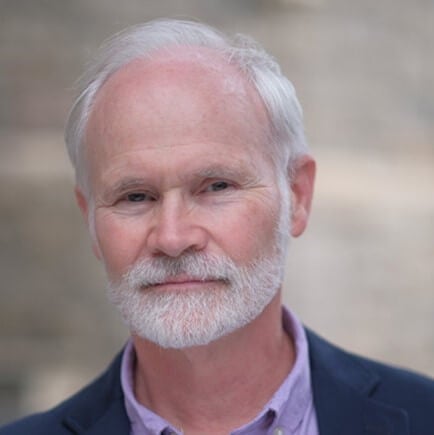
Dr. Nate Zinsser
Author
The Confident Mind
Nate is a leading expert in human performance psychology with over thirty years of experience. He consults with top organizations, contributes to major publications, and directs a renowned program at the U.S. Military Academy. His latest book is The Confident Mind.