Auto Sector: Need a Charge?
US EV sales declined 15% earlier this year and driverless cars still seem a distant dream. Two experts share how firms can accelerate progress.
Auto Sector: Need a Charge?
NOTE: While this transcript has been reviewed, it may contain errors. Please review the episode audio before quoting from this transcript.
Jill Wiltfong:
Does the auto sector need to charge? What went wrong with electric vehicles?
Brad Marion:
The EV transformation, it's been an evolution. What didn't materialize was consumer demand.
Jill Wiltfong:
This issue really applies across industries.
Sarah Jensen Clayton:
Be okay with subcultures. There's very little room for ambiguity. We all stand to benefit.
Jill Wiltfong:
Let's buckle up.
[EV – Electric Vehicle car]:
Been a rough few months, feels like just yesterday customers couldn't get enough of us EVs, and now I don't get so much as a test drive from them anymore.
[Autonomous – self driving car]:
You think you got it bad? Try being autonomous. I was hyped up as the car of the future for over a decade, but still no takers. I'll never get off this lot.
[Hybrid car]:
Hey fellas, how's it going?
[EV – Electric Vehicle car]:
Hey, hybrid.
[Autonomous – self driving car]:
How's it going?
[Hybrid car]:
I wonder who's going to be the lucky owner to whisk me away today. I just feel so blessed to have the best of all worlds, you know, internal combustion and electricity, all in one insanely cool frame, you know what I mean? Ooh, I think that's my new owner calling me over. Toodles, fellas.
[Autonomous – self driving car]:
Oh, well I suppose this is my lot in life.
Jill Wiltfong:
Hi, I am Jill Wiltfong, Chief Marketing Officer for Korn Ferry. And this is "Briefings", our deep dive into topics that corporate leaders need to care about. When Henry Ford first introduced the assembly line, it was the beginning of a long and prosperous age of innovation for the automobile industry. Think of all the high-tech safety and design features that have come since. Everything from radar for lane assisting, to GPS systems, to my favorite, air-conditioned seats. But in recent times, some of the industry's coolest plans have pretty much stalled. Remember the self-driving car? It arrived with great promise, but still hasn't worked out enough for the public to use. And now there are electric vehicles. Consumers first wanted them, but are increasingly nervous about how well they charge, and if there are even enough charging stations. It's not the industry's entire fault, but many are asking if something has happened to the industry's ability to innovate? Let's buckle up and drive into this issue and ask the question, does the auto sector need a charge?
Before we start, if you're watching us on YouTube, please be sure to like, subscribe, and leave a comment. Thanks to everybody who has joined us so far. I think we're double the subscriber rate. So let us know your thoughts on this topic. I'm joined today by Brad Marion, Global Sector Leader of Korn Ferry's Automotive Practice. He works with some of the world's biggest car companies and has his finger on the pulse of what's going on right now.
Brad, thank you for coming on the show.
Brad Marion:
My pleasure, Jill.
Jill Wiltfong:
So, let's start by talking about EVs. Things seemed to be going so well for the sector. And then earlier this year, the firm that owns half the US's EV market share had to lay off 10% of its global workforce amid declining sales. What went wrong with electric vehicles?
Brad Marion:
I think it's been an evolution, Jill. The automakers put a stake in the ground many years ago and said, "The EV transformation is going to happen." They began investing their money to back that up. The government incentives, you know, certainly were strong to move in that direction. What didn't materialize was consumer demand.
Jill Wiltfong:
Brad, we know these firms do a tremendous amount of research on consumer demand before releasing and promoting new products. What caused some of them to miss forecast EV demand?
Brad Marion:
Exploring consumer preferences to move from a sedan to an SUV, to a pickup truck is completely different than asking them to predict the probability of them changing technologies completely. And I think as consumers have become more aware of what's involved in owning and operating an EV, they become increasingly uncomfortable.
[Back to the Future movie]:
Hey doc, you better back up, we don't have enough road to get up to 88.
[Back to the Future movie]:
Roads? Where we're going, we don't need roads.
[Back to the Future movie]:
My DeLorean?
Jill Wiltfong:
That's an iconic scene with an iconic line from the movie "Back to the Future". Brad, in keeping with our theme of auto innovation, we don't have flying cars yet, but what about driverless ones? As I mentioned at the top, some really big auto makers poured billions into autonomous driving, but then pulled the plug. What makes these companies believe that there's no future profitability or consumer demand for self-driving tech?
Brad Marion:
I think the confidence that autonomous vehicles will be a viable, real alternative for any of us as consumers is dropped dramatically. I think we will see that technology become prioritized in Ubers, Lyfts, last mile delivery, commercial vehicles, in selected route applications that are, you know, well-defined and under control, I think there will be progress on autonomous vehicle technologies.
[Alex Koster]:
Why don't we see those software dream cars on the road? If we look at the automotive companies, they obviously have managed to get cars on the road for more than a hundred years. But this step here requires so much new technology, understanding, data, and ability to innovate fast, that it is a huge step forward for them. And they have about 15 million people working directly in the industry globally, plus another 50 to 100 that are in adjacent industries. And many of them we will have to change, retrain, get into the new world.
Jill Wiltfong:
That software engineer Alex Koster talking about the massive shift in skillset that millions of auto industry workers will have to undergo in order for cars to evolve into the fully AI powered machines that we've been talking about that many anticipate. Brad, you've mentioned that when big car companies have tried to import talent from the tech sector, it often hasn't worked out. Why is that so challenging?
Brad Marion:
The strands of DNA that make up the entity and the culture of the automotive companies and the industry are just so much different than the tech sector. One's long cycle, one short cycle one, one is massive capital investments and regulatory implications, and the others much lighter because of the different strands of DNA. And you know, the success story of transplanting that sort of talent is just not very good.
Jill Wiltfong:
We can end on an optimistic note, because I've heard you mention before that there are some exceptions to this rule, where a major automaker does kind of successfully bring in a senior level person from a tech company. In some of the examples that you can think of and it's one notable one I can think of for sure, why do you think that ended up working out so well where most don't?
Brad Marion:
In this particular case, it happened to be someone who had their early career experience in the automotive industry and then had left, gained some tech sector experience and came back. So, I think there are exceptions that certainly exist. Given the technology evolution within automotive, I think that, you know, technology will continue to be a driving force for the automotive industry to remain competitive and attractive to consumers.
Jill Wiltfong:
I love the dynamic that while there is a lot slowing down, there is a lot still pushing ahead at a pretty good clip and it'll be an interesting industry, I think, for all of us to follow. Thank you, Brad, for coming on today, really appreciate your perspective.
Brad Marion:
My pleasure, Jill.
Jill Wiltfong:
As you can see, building a culture of technological innovation within a legacy company is no easy task, but it's something that firms across many industries, not just automotive, are now being challenged to do. When we return, we'll talk to a culture expert about the key to getting this critical step just right. So, stay with us.
Rupak Bhattacharya:
Hi, and welcome to This Week in Leadership. I'm Rupak Bhattacharya, and here's a quick look at what else is happening in business.
[Narrator]:
I'm working two jobs at the same time.
Rupak Bhattacharya:
Half of Americans now carry month to month credit card debt, a likely reason that the number of them with two taxable full-time jobs has nearly tripled since 2014. While second jobs do pose a risk to performance, experts urge leaders to be empathetic and seriously consider approving second jobs for talented, hard to replace staffers.
[Narrator]:
People are quitting jobs that they just started.
Rupak Bhattacharya:
More than half of UK workers report quitting their job within the first six months. The main reason, a belief that the position is completely different than how it was advertised. Other causes cited were badge management, a toxic workplace, and unrealistically high employer expectations.
[Narrator]:
Fake it till you make it.
Rupak Bhattacharya:
New figures show that 58% of managers fear that workers lacking enough to do are essentially faking work, and that 32% of employees regularly do fake work. But here's the catch, some 37% of managers and leaders also admit to faking work sometimes.
For more insights on business and leadership, head to kornferry.com/insights. Now, back to Jill in our episode, Auto Sector: Need a Charge?
[Daniel Quaid – In Good Company movie]:
You're Carter Durier?
[Topher Grace – In Good Company movie]:
Yes, and it's a pleasure to meet you.
[Daniel Quaid – In Good Company movie]:
The Carter Durier that's come in to run ad sales?
[Topher Grace – In Good Company movie]:
That's correct.
[Daniel Quaid – In Good Company movie]:
How old are you?
[Topher Grace – In Good Company movie]:
I'm 26 years old.
[Daniel Quaid – In Good Company movie]:
26, and you're my new boss?
Jill Wiltfong:
With us now is Sarah Jensen Clayton, who leads Korn Ferry's Culture Change and Communication Practice. Sarah, great to have you here.
Sarah Jensen Clayton:
Thanks, Jill, good to be here.
Jill Wiltfong:
So that last clip was from the movie "In Good Company", and it featured that kind of awkward culture clash we find happening quite often within firms. In the first part of this episode, we talked about how legacy car companies are struggling to build a more innovative, EV oriented culture within their organizations. But as we know, this issue really applies across industries. Surveys show that between 50 and 75% of all post-merger integrations fail on a account of cultural conflicts, which is surprising to me. What do you find that leaders often miss when they're trying to make these sweeping changes to their company culture?
Sarah Jensen Clayton:
Be okay with subcultures. Subcultures are not bad, right? So, a business unit that is focused on electric vehicles is going to have a very different business strategy than a legacy auto manufacturer.
Jill Wiltfong:
Let's dig into this subculture thing, I find this pretty interesting. So, you've talked about this notion that you need to allow sometimes these subcultures to flourish, because that's what drives innovation, but the caution of doing that without creating this counterculture. It makes a lot of sense, but what are the practical steps that people can take to make sure that you don't create this kind of massive rift within your firm?
Sarah Jensen Clayton:
There's another message that is critical, which is, we all stand to benefit from this acquired organization. So, there's something in it for you, right, as we have come to understand why this organization is successful, what their secret sauce is.
[Dan Seewald]:
One of the things that I felt very strongly about when I built an innovation culture at a large organization was that we often thought about it as a program. But programs live very short lives, on average they live about two to two and a half years. But brands live on much longer. So, if you want to change a game, you have to invest in building an innovation brand, not just an innovation culture or even your innovation purpose.
Jill Wiltfong:
That's Dan Seewald, he's the Founder and CEO at Deliberate Innovation, speaking about how firms need to create a brand of innovation so that they can sustain growth in the long term. Sarah, your team actually developed a model called MASS, M-A-S-S, to kind of help achieve that kind of company-wide, long-term mindset shift that Dan is talking about. And you've even discovered that all it really starts with is changing the mindset of just 10% of the company. Tell me how that works?
Sarah Jensen Clayton:
The MASS model is just in acronym, very simple, and it stands for mindsets, abilities, structures, and systems. And if we want to change behavior, or change behavior at scale, which is culture change, then we really have to align those four elements so that they're all promoting the same things. And like you said, research shows that if we can get 10% of the population to be kind of converted and to be embracing these new behaviors, then change will go viral.
Jill Wiltfong:
So, I can't let you go without touching on the rise of remote work, which has thrown a major curve ball in the works when it comes to culture, among many other things. In the US as an example, 16% of firms are fully remote, and many employees, they may even be overseas, they're nowhere near an office. How do leaders need to think differently now when it comes to driving a culture of change with a workforce that they might never see in person?
Sarah Jensen Clayton:
You've just got to be that much clearer on your behavioral expectations. Your cultural profile, your culture blueprint, your values, whatever they are, those need to be codified in a mantra, a manifesto, a culture code so that there's very little room for ambiguity.
Jill Wiltfong:
Thank you so much for your tips and your feedback. It was really good to have you on today.
Sarah Jensen Clayton:
Thanks for having me.
Jill Wiltfong:
The Executive Producer of "Briefings" is Jonathan Dahl. Today's episode was produced by Rupak Bhattacharya, Nadira Putri, and Teresa Allan. And it was edited by Jaron Henrie-McCrea. It contains reporting by Russell Pearlman, Arianne Cohen, and Peter Lauria.
Our video segment contains original artwork by Frazer Milton, Hayley Kennell, Jonathan Pink, and Sasha Kostyuk.
Don't forget to read our magazine, available at newsstands and at kornferry.com/briefings. That's it for Korn Ferry “Briefings”. I'm Jill Wiltfong. See you next time.
Subscribe to series:



Podcast Guest
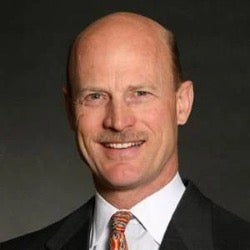
Brad Marion
Global Sector Leader, Automotive
Korn Ferry
Brad has been leading the firm’s Automotive Sector within the Global Industrial Market for the past 20 years. He has led global relationships with many automative companies, having done CEO and Board-level work with them.

Podcast Guest
Sarah Jensen Clayton
North America Leader, Culture & Change
Korn Ferry
Sarah leads the firm’s Culture & Change capability in North America. She takes a people-centric approach to transformation to improve organizational performance and align culture in support of business strategy.