Are You Coming to the Office?
Even though more firms are requiring workers back to the office, building owners still have over one trillion dollars in loans coming due. Two experts discuss how they might foot the bill.

Are You Coming to the Office?
NOTE: While this transcript has been reviewed, it may contain errors. Please review the episode audio before quoting from this transcript.
Jill Wiltfong:
Over $1 trillion in commercial real estate loans coming due. Why aren't people a little more worried?
Francis Saele:
There are rocks that haven't been turned over yet. I think this is a natural evolution.
Jill Wiltfong:
Is there a potential upside?
Dan Pulver:
In a word, it's adaptability. It's just not economically feasible to watch jobs disappear by the hundreds of thousands of people.
Jill Wiltfong:
Are you coming to the office?
Building Owner:
Hello? Who is this?
[Debt Collector]:
This is the debt collector speaking. You seem to owe a payment.
Building Owner:
Sorry, can't talk right now. I'm in the middle of dinner.
[Debt Collector]:
It's me again. We really need to talk.
Building Owner:
I'm work meeting. You'll have to wait.
Building Owner:
Okay, okay. What is this payment you keep calling about?
[Debt Collector]:
Oh, it's just an overdue amount on that office building you own.
Building Owner:
Listen, people are coming back to the office, but not enough. I need more time to find tenants.
[Debt Collector]:
Um, that's not my problem. Just pay the bill and I go away.
Building Owner:
Okay, fine. How much is this bill for anyway?
[Debt Collector]:
Just 50 million.
Building Owner:
Really? Uh, how many zeroes is that?
Jill Wiltfong:
Hi, I'm Jill Wiltfong, Chief Marketing Officer for Korn Ferry, and this is "Briefings," our deep dive into topics that corporate leaders need to care about. It sounds a little like a catastrophe in the making. Some big-name firms are requiring workers to be back full-time and making headlines for it. But occupancy data shows that huge numbers of workers still aren't coming on most days. That means, of course, that rents will sooner or later dry up for building owners who have over one trillion, trillion dollars in commercial real estate loans coming due over the next two years. So, what's at stake? Well, just about everything. If the big real estate firms can't recoup their income and their loans can't be repaid, which then means banks could seriously struggle along with city revenues, and ultimately, the entire workforce would feel the brunt of all of that. Yet despite the possibility of doom and gloom, there are many, from real estate to Wall Street, who think there's still a way to thread the needle to a solution. It all comes down to, are you coming to the office?
Before we start, if you're watching us on YouTube, please be sure to like, subscribe, and leave a comment to let us know your thoughts on this topic. I'm joined today by Francis Saele, Managing Principal and Founder at Mortevita, a workplace and corporate real estate consultancy. Francis has spent decades tracking the ups and downs, and there are a lot of them on the commercial real estate market. Thank you, Francis, for joining me today.
Francis Saele:
Great to be here, Jill. Thanks for the invitation.
Jill Wiltfong:
You bet, let's get right to the elephant in the room. Why isn't everybody, assuming this is going to be another major financial collapse in 2008, it was a far bigger scope, but we all remember the domino effect that a troubled market can have. Why aren't people a little more worried?
Francis Saele:
Well, it's a good question, really. And to some extent, there are rocks that haven't been turned over yet, and they're about to come. And I think the hope, of course, is that with interest rates hopefully dropping in the near term, that that will help on the refinancing of some of these properties, and we can kind of muddle through it. But increasingly over time, I think people looking at the problem have sensed that even small adjustments in rates, half a percent, a percent, aren't going to make that big a difference in terms of the overall finance ability of a market, which has actually increased by 5% in the last year or two.
Jill Wiltfong:
There are, of course, some tactics that real estate firms are using to mitigate the situation. They're reevaluating their banking relationships, possibly extending debt maturities and securing further working capital. What are you seeing as the most effective countermeasures that firms are going for right now?
Francis Saele:
Well, the most effective measure is to get tenants, and that really is the biggest problem. But the bottom line is that the initial data on rollovers of leases suggest that tenants are renewing, but they're renewing for much less space, upwards of 20%. Now, 20% is not being renewed, if you extended that to the entire office inventory, that's a billion square feet that is no longer needed. And our sense is that as technology evolves and as hybrid working evolves, that likely, there will be even less actual office space needed going forward.
[Billy Magnussen – ‘The Big Short’ movie]:
Well, my firm offers ninja loans. No income, no job. No, I just leave the income section blank if I want. Corporate doesn't care. These people just want homes, you know. And they go with the flow.
[Steve Carell – ‘The Big Short’ movie]:
Good for you. Your companies don't verify?
[Max Greenfield – ‘The Big Short’ movie]:
If I write a loan on Friday afternoon, big bank is going to buy it by Monday lunch.
[Billy Magnussen – ‘The Big Short’ movie]:
Yeah, same here.
Jill Wiltfong:
That's a scene from the movie, "The Big Short," where two circa 2007 real estate agents give us a glimpse into the seemingly reckless residential real estate market of that period. By contrast, Francis, today, we're seeing a more clear-headed approach to a potential crisis. For example, one of the world's largest commercial property firms has big plans to turn its increasingly vacant malls into mini cities, which have this mix of residential and retail space. And of course, the pace of change has been slower than anticipated, but you have said we're increasingly moving away from central business districts and more towards central living districts outside of major cities. Tell me more about that. I find that fascinating.
Francis Saele:
Well, I think this is a natural evolution of where people are wanting to be. In the past, they had to go to the downtown area to get the work done, and everything else came secondary to that. Today, that's not necessary. And clearly, many malls and retail properties are well-located. They're easily identified, and they have very good demographics of people living around them. But retail has changed quite a bit. Half of retail or more is online. So, what is needed now is a somewhat different retail situation, but at the same time, you can also inject other components of activities in terms of entertainment, restaurants, living apartments, condos, those kinds of things.
Jill Wiltfong:
Before you go, give me a prediction. Have we bottomed out? Is an average of 60% occupancy in the U.S. our new normal, or do you think we're going to see even more dramatically declining figures in the next year or two?
Francis Saele:
Well, I think from this point forward, any change is going to be slow. It's not going to be a one or two-year wonder. My own prediction is that we will see more vacancies than in the past. So over time, remember the use case for the buildings that were built were designed around everybody coming together five days a week in one place. That is a dead use case. So, what is being attempted today is to adapt these buildings to be more in line with what is needed now for collaboration and in-person gatherings. But oftentimes, those buildings are not in the right place. It's a big commute. Who wants to come in and commute an hour and a half for a one-hour meeting?
Jill Wiltfong:
Okay, well, thank you so much for coming on and for your insights today.
Francis Saele:
I thank you very much, Jill.
Jill Wiltfong:
Now that we've looked at the nuts and bolts of the kerfuffle and commercial real estate, let's take a closer look at return to the office itself and why companies are still having such a hard time with it. Stay with us.
Rupak Bhattacharya:
Hi, and welcome to this Week in Leadership. I'm Rupak Bhattacharva, and here's a quick look at what else is happening in business.
[Jill]:
More retirees are unretiring.
Rupak Bhattacharya:
Last year's unretirement trend is being taken to a whole new level, with about 13% of retirees planning to return to work next year. Experts say that even though bringing back retirees could possibly cause disruptions to succession pipelines, retirees could also serve as mentors and coaches who help transfer crucial institutional knowledge.
[Speaker]:
But how do we develop the next generation of leaders?
Rupak Bhattacharya:
In a trend known as conscious unbossing, nearly three in four Gen Z workers say they'd rather be individual contributors than middle managers. Workload stress and work-life balance have been cited as key factors behind this, and leaders would be well-advised to make management more attractive to avoid a future hole in the middle of the organizations.
[Speaker]:
Nobody is using your chatbot.
Rupak Bhattacharya:
Nearly three quarters of consumers said they didn't trust chatbot's advice and information on finance. Experts say financial firm leaders should look to address this level of mistrust as soon as possible, given the industry's current aggressiveness in deploying chatbot technology.
For more insights on business and leadership, head to kornferry.com/insights. Now, back to Jill and our episode.
[Bruce Ratner]:
Biggest issue is that work has changed, and that's not going to, that does not look like it's likely to change. Three days a week as opposed to five days a week. The real power problem is people not coming to work. And when you have that, if you will have a company where only, you know, we got 49% occupancy as opposed to vacancy, it's not coming back.
Jill Wiltfong:
With us now is Dan Pulver. As a Korn Ferry Senior Client Partner in its real estate practice, over the last few years, he's been intimately involved with helping company leaders deal with empty office space. Dan, it's great to have you here.
Dan Pulver:
It's great to be here, Jill. Thank you for inviting me.
Jill Wiltfong:
That last clip, Dan, was former New York real estate developer, Bruce Ratner, talking about how we're never going back to the way things were. And a recent survey of CEOs might agree, only 34% of them envision employees back in the physical workplace five days a week in the next three years, which is an actually notable decrease from 62% who felt that way last year. Do they need to give up on this? Do they need to let this one go?
Dan Pulver:
Yeah, I don't think that leaders should or necessarily need to give up on return to office, but I also think that we need to be focused on the future versus trying to live in the past. The physical office is going to continue to play a very critical role in enabling collaboration and engagement, but for many organizations, the idea of trying to get back to a pre-2020 arrangement is just no longer realistic or practical.
Jill Wiltfong:
Companies have certainly tried everything, right? To draw people in. Everything from free lunches and dinners, which is the carrot, right, to the stick approach, like withholding promotions. But nothing does seem to really solve it. What can they do differently to make this in-office experience, this balance that you talk about?
Dan Pulver:
Unfortunately, there's just no silver bullets here, and I think we're all aware of some very visible examples of pretty significant backlash when you just use the stick. As it relates to the carrot, a good rule of thumb that I like is that amenities and offerings are really most impactful when they offset the cost of coming to work. And that could be the economic cost, it could be the time cost, eliminating the need to make multiple stops to and from the office. And for a lot of organizations that are large enough to have the economies of scale to justify it, things like onsite healthcare and childcare can make a really big difference.
[Mark Cuban]:
Now, we're introducing machine intel, you know, artificial intelligence, machine learning, deep learning, neural networks, et cetera. And what that enables is the automation of automation, right? And so, the people who were writing software, particularly at the lower end, unless you're doing these advanced things, they're gone. That's bad news for employment, and it's bad news for people who are disrupted.
Jill Wiltfong:
That's investor and entrepreneur Mark Cuban with a stern warning about how AI will shift the workforce. Dan, this of course relates to real estate as well, because that could create an even more dramatic decline in occupancy rates as fewer workers are even needed for roles. Is that another factor that leaders should be preparing for in the near term, or do you think that transition is still a few years off?
Dan Pulver:
Yeah, look, Gen AI is going to change how we work in ways that we are just starting to fathom. And there I think is going to be a variety of impacts. Job displacement for sure. But I also think there could be new job creation and increased productivity. There's also a really important role that policy plays here, and it's just not economically or politically feasible to watch jobs disappear by the hundreds of thousands in the short term. So, I think the one thing that's going to be a certainty is that re-skilling has to be a part of the conversation as employees adapt and acquire new skills, like data analysis, problem solving, and just general collaboration with AI.
Jill Wiltfong:
You've also talked about how the traits of successful leaders have to drastically change, and they've had to drastically change over the past few years. But even now, 75% of leaders say their companies have not adopted best practices regarding what we're talking about here, this remote work issue. What do you think makes the top 25% of leaders who are doing it right stand out?
Dan Pulver:
Yeah, in a word, it's adaptability. And I would tell you, I'm actually a little bit more skeptical of the 25% who claim that they have it all figured out. Being open to change, seeking to understand the diversity and the preferences of your workforce, those are really important skills for leaders to have. Interestingly, one of the most important developments that we've seen over the last couple years has been the adoption a very longstanding marketing technique in applying the idea of customer personas to the workforce. When it's done carefully and thoughtfully, it provides a really good framework for, you know, both understanding and engaging with employees in a more targeted and effective manner.
Jill Wiltfong:
Nice. I'd like to close on a potential silver lining here. You do a lot of work in the sustainability space. Is there a potential upside here in terms of using less office space long term, meaning less energy wastage, via buildings and commutes and creating more attraction for Gen Z employees, nearly half of whom have already changed or planned to change jobs or industry because of climate concerns? Is there something here that's really magical in terms of sustainability in the future there?
Dan Pulver:
Well, I think it's a great place to close on, and I do think that there's a real silver lining here. So, despite the political backlash on ESG, the underlying mega trend toward decarbonization remains a theme. And anywhere between 25 to 35% of combustion-related emissions come from construction and operations in the built environment. So, there's a real opportunity to move the needle. I think the one challenge that we're going to run into is building occupancy rates can have an effect on energy consumption, but it's not a straight line. And even when occupancy is low, energy waste can still occur because you have heating and cooling systems that are still running even with fewer people in the building, particularly with a lot of older buildings that are just less resilient and experience more of that with greater fluctuations in temperatures. But that said, there's a lot of interesting new technologies on the market that help organizations to utilize different occupancy-based control strategies, which just help them to run more efficiently and more sustainability.
Jill Wiltfong:
Well, it makes sense that no one has really resolved it because of all the things you've pointed out. It is not a black and white issue. There's a lot to consider. So, thank you so much for a very enlightening conversation. Appreciate it.
Dan Pulver:
It was my pleasure.
Jill Wiltfong:
The Executive Producer of "Briefings" is Jonathan Dahl. Today's episode was produced by Rupak Bhattacharya, Nadira Putri, and Teresa Allan. And it was edited by Jaron Henrie-McCrea. It contains reporting by Russell Pearlman, Arianne Cohen, and Peter Lauria.
Our video segment contains original artwork by Frazer Milton, Hayley Kennell, Jonathan Pink, and Sasha Kostyuk.
Don't forget to read our magazine, available at newsstands and at kornferry.com/briefings. That's it for Korn Ferry “Briefings”. I'm Jill Wiltfong. See you next time.
Dan Pulver:
Well, I’d say if I had a free lunch for every time I’ve had this question, I’d be very well fed.
Subscribe to series:




Podcast Guest
Dan Pulver
Senior Client Partner, Real Estate & Sustainability
Korn Ferry
Dan’s practice focuses on CEO and board succession in addition to a broad range of executive and officer-level placements across investment, development, ESG, acquisitions, operations, finance, capital raising, and other functional disciplines.
Podcast Guest
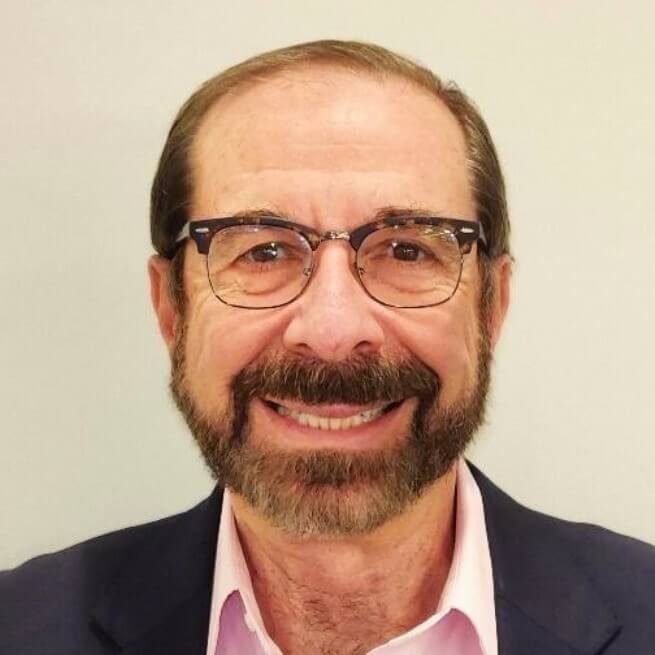
Francis Saele
Managing Partner & Founder
Mortevita
Francis is an accomplished senior-level corporate real estate and workplace executive with a diversified global background. During his career, he has held leadership positions in corporate real estate, speculative office and industrial development, and built a start-up real estate corporate services business acquired by CBRE. He has also worked for the Newmark Group, Accenture, and Goldome, FSB.