Training Tug of War
US firms spent nearly $102 billion on training last year, yet 7 in 10 leaders say there is a skills gap. A panel of experts explores firms' training tribulations.

Training Tug of War
NOTE: While this transcript has been reviewed, it may contain errors. Please review the episode audio before quoting from this transcript.
Jill Wiltfong:
We're in beautiful Charleston, South Carolina, a special inaugural live episode of the show. "Training Tug of War."
Eileen Rivera:
It's definitely nuanced.
Jill Wiltfong:
How do you balance all of that?
Iktimal Daneshvar:
If I didn't see you getting trained, then you are not trained.
Jason Woods:
We do have a lot of access to training, it's how we get them there.
[Instructor]:
Okay, class, welcome to your cybersecurity training course. I know you've all been anxious to learn about this important subject. Please open your textbooks to chapter one. Now, there's a lot here, as you can see, and technically, we should be starting on page 10, but I'm going to ask you to go ahead and jump to page 40.
[Student]:
Sir, the chapter seems to end there. There's just a box.
[Instructor]:
Yes, now class, I'm going to ask you to go ahead and please check the box.
[Student]:
Ehh, but we haven't read any of it.
[Instructor]:
I understand. Now, if you will, let's please move on to chapter two.
[CEO]:
How's the class going?
[Instructor]:
Fantastic, everyone has...
[CEO]:
Oh, gosh, looks like we have a major data breach.
[Instructor]:
Really?
[CEO]:
Can I get a show of hands of which students can help?
[Student 1]:
Ummm...
[Student 2]:
Uhhh...
[Student 3]:
Hmmm...
Jill Wiltfong:
I am Jill Wiltfong, Chief Marketing Officer for Korn Ferry, and also the host of Korn Ferry's "Briefings" podcast, which is our deep dive into topics that corporate leaders need to care about. Today, we are on the road, a special inaugural live episode of the show. So, thank you to all of you for being here today. Appreciate that. And we'll be taking your questions as we go. So hopefully we'll get some of your thoughts as we go along here too.
Before we get started, a quick show of hands from all of you. We just saw this video on training, I want to know how many of you have ever taken a corporate training course. All right, everybody's hand is raised, right? As you would imagine, so a pretty solid number. Now, tell me this, how many of you, while taking that class, have thought "I might rather be doing something else"? And for those of you listening and watching, also, all the hands are raised. So, I have news for you. Just like you're not alone in this room, you're not alone in this world.
At a time when having an AI-savvy workforce couldn't really be more critical, interesting that less than a quarter of employees said that they're using their company's AI skills training programs. It's not like companies aren't trying their absolute best as well, right? So, US firms, just in the US, spent nearly $102 billion on training last year, a 10% increase from two years prior. So today I am joined by three experts that we're going to talk to today to talk a little bit about corporate training. They're all in talent acquisition fields and deal a lot with not just identifying great talent but bringing them into the organization and onboarding them. And we're going to talk a little bit about what is going wrong, but also what's going right, because a lot of things at the firms that these folks are attached to are doing some things that are right, that we can all learn from. And we're calling this, this "Training Tug of War."
So let me introduce our guests. We've got first Jason Woods, in the center, Director of Talent Acquisition for the US and Canada at Honeywell. Next we have Eileen Rivera. Hi, Eileen. Vice President of Global Total Rewards and Talent Acquisition at Biogen. And then last but certainly not least, we've got someone joining us from Korn Ferry, Iktimal Daneshvar, she's our Vice President of Recruitment Process Outsourcing, based out of EMEA. Does a lot of work in the Middle East. So, it'll be interesting to get not just kind of a US perspective, a global perspective, but also talk a little bit about a thriving emerging market in the Middle East and kind of what's happening there. Very good to get all of your thoughts today, so thank you for joining us.
Let's start out, and we'll scroll up a little bit here. We're going to start with some questions, and Eileen, maybe the best thing to do is start with you. Talk a little bit about your training programs today. Kind of how do you address corporate development? Talk about what you're doing.
Eileen Rivera:
My colleagues, and our teams, and really, we talked about this a lot, is our HR leadership team said, we kind of need to revamp this and rethink how we do this. And said, okay, we can probably meet 80 to 85% of what people need through some broad-based programs. And then brought a lot of our cohort programs, slimmed them down, brought them in-house, so that we could be much more nimble with what are the topics that we need to be addressing, you know, in the moment. We also got our leaders to be much more engaged in it. So not only were the people who were in those programs seeing our leaders, but they were hearing from them, what is that, you know, how are the leaders thinking about this in order to be successful?
Jill Wiltfong:
Jason, I'm curious with you guys, are you finding the same thing? It feels like with a lot of us, we're trying to do so much. This notion of kind of focusing on trying to do fewer things really well. Do you see that happening at Honeywell or is that maybe something unique to Biogen?
Jason Woods:
We have an accelerator platform. That's where we kind of house all of our training, and it helps our employees. A lot of them use individual development plans, or IDP is what we call 'em, to really kind of make their course through how they want to grow their career within Honeywell. And there's a wide variety of training available on the accelerator.
[“The Hudsucker Proxy” movie]:
You punch in at 8:30 every morning, except you punch in at 7:30 following a business holiday, unless it's a Monday, then you punch it at eight o'clock. Punch in late and they dock ya!
This goes to seven, Mr. Mutuszak.
Incoming articles, get a voucher. Outgoing articles, provide a voucher. Move any article without a voucher and they dock ya! Take this up to the secretarial pool on three, ASAP!
Letter size, a green voucher. Folder size, a yellow voucher. Parcel size, a maroon voucher.
Hey, kid, this is for Morgatross, chop, chop! Wrong color voucher, and they dock ya!
Jill Wiltfong:
That is Academy Award winner Tim Robbins in "The Hudsucker Proxy" being trained, or maybe more accurately, being told what not to do so his pay doesn't get docked. The scene illustrates the point that even if you do have training, and you manage to get people to show up, that training still has to be, Eileen, as you said, meaningful, right? in order to be effective. One survey has only 12% of organizations fully grasping how their employees prefer to learn. And I imagine really surrounding that is a challenge in and of itself. Jason, I'm curious, at Honeywell, what's been done to kind of surround the approach to training and try to customize that in a way that your employees really favor.
Jason Woods:
The individual development plans, really, it kind of helps folks kind of make their journey, and really directs them to, you know, to all different types of training. 'Cause we do have a lot of access to training, it's how do we get them there, right?
Jill Wiltfong:
Yeah, that's interesting. So, Iktimal, I'm curious, it's got to be a big challenge for companies. We all do well by scale, right? And by having a kind of consistency and a few things people can choose from. So, you want some choice, but probably not too much choice. But then this is a world of agency where the more choice the better, and people kind of know where they want to go and need the roadmap. But how do you balance all of that as members of bigger corporations?
Iktimal Daneshvar:
It is difficult to manage because, like my colleagues have rightfully said, people learn differently. What we have seen interestingly is the introduction of podcasts as a training method with some of our clients. So, again, particularly with the more younger generation that actually want to listen as they're doing other activities or driving into work, and not just sitting in the traditional online training course or face-to-face training course. And so, companies have had to think differently about that.
[Anne Hathway – “Devil Wears Prada” movie]:
My name is Andy...Andrea, but everybody calls me Andy.
[Meryl Streep – “Devil Wears Prada” movie]:
I need 10 or 15 skirts from Calvin Klein.
[Anne Hathway – “Devil Wears Prada” movie]:
Okay, what kind of skirts do you...
[Meryl Streep – “Devil Wears Prada” movie]:
Please bore someone else with your questions. And make sure we have Pier 59 at 8:00 AM tomorrow. And remind Jocelyn, I need to see a few of those satchels that Mark is doing in the pony. And then tell Simone, I'll take Jackie if Maggie isn't available. Did Demarchelier confirm?
[Anne Hathway – “Devil Wears Prada” movie]:
Did Marshally...
[Meryl Streep – “Devil Wears Prada” movie]:
Demarchelier, did he...get him on the phone.
[Anne Hathway – “Devil Wears Prada” movie]:
Uh...uh...okay.
[Meryl Streep – “Devil Wears Prada” movie]:
And, Emily... That's all.
Jill Wiltfong:
That is obviously a scene out of "The Devil Wears Prada," a very popular movie where an employee brand new to the company, in the world of fashion as well, embarks on this difficult period of training under this icon, right? It does raise the question in my mind of whether it's better to hire somebody completely new for a role and train them, or is it better to kind of take someone from within a company and shape and mold and kind of move them up the ranks? One study said that 7 in 10 companies is expecting to kind of increase their ability to kind of move people up through the company. So, I think there's a focus on that. Maybe Iktimal, we start with you. Where do you kind of fall on this, this balance of bringing in new people, developing people from within? How do you think about that?
Iktimal Daneshvar:
Can I say it's a mixture of both?
Jill Wiltfong:
Yeah, I think you can, I think you can.
Iktimal Daneshvar:
And I think it has to be. Look, I think, when we talk about skills retention and like the lifecycle of skills, they don't last as long as they did before. So there has to be a continuous amount of upskilling and reskilling of your current employee base to keep them relevant. But there's going to be some new skills that you're going to have to bring into the organization far quicker than it will take for you to train those people because it's an immediate need, or it's a niche.
Jill Wiltfong:
I'm curious, Eileen, how much do you guys think about bringing in talent from within your industry versus just completely going outside your space, right? This notion of kind of cross pollination and taking people from other industries and bringing them in to really give you a fresh perspective. Is that something that you see people focusing on?
Eileen Rivera:
That, I think, is really role dependent. I mean, technology is one of them, right? I mean, bringing people in from the Googles and the Microsofts to, you know, a biotechnology company, there's some really beneficial things you can learn from that, particularly when you think about, you know, analytics and a number of different areas. Even thinking about how do you speed up research and development. But I can't bring somebody in to do that, you know, where I need a PhD for a certain role, or an MD, or whatnot.
Jill Wiltfong:
And that's probably a good note, right? Just to be really open, be in touch with our people, and really kind of sort it out as we go. Questions from the audience. You've all been sitting here for a while with us. You're all dealing with the same kind of learning and development and onboarding issues. Anything on your minds that we can talk about?
[Audience Member]:
So, the question that's kind of weighing on my mind is the credibility of the bot, right? So, if you think about leadership development training, if you think about subject matter experts, people who have PhDs, who are the trainers, who are, you know, kind of teaching the individual who's on the other end, will it ever replace like, you know, the individual who's got years and years of experience, as opposed to a robot who's basically just, 'cause when you use ChatGPT and different things like that, you still have to fact check and you still have to kind of apply your own kind of checking to the information that you're receiving. Where do you see that falling in as far as the, you know, the learner actually taking it seriously and giving it the credibility that somebody who has the subject matter expertise would have?
Jason Woods:
I think it still has a way to mature, right? So, it's, as we're having to feed it, that's how it learns. Just like we do, we learn the same way, right? But, you know, I think this technology is emerging and it's going to continue to change. So that's, I think, really where we have to be. It's very immature right now.
Eileen Rivera:
The tools can inherently take a lot of data and spit back out to you something quicker than most humans can. And so, from that standpoint, I think there's a level of credibility to the data that's pretty robust. And that, I think for the most part, to your point, we still have to fact check, but, you know, it feels pretty reliable. But it's never going to be able to stand up and say, "Well, when I was in this situation, this is what happened and this is what I learned from it." And that's the piece that I think, I don't know how that will ever get built into it.
Jill Wiltfong:
Iktimal, I'm going to end with you. So, as you're dealing with various companies and kind of guiding and steering them, what's your advice on this space? Do you jump in? Do you hold back? What do you do?
Iktimal Daneshvar:
I think if you don't jump in, you're going to be behind the curve. So, you have to embrace it.
Jill Wiltfong:
Yeah, I love it. Thank you all for being here and sharing your perspectives. I really appreciate it. For those of you watching or listening to our podcast online, be sure to stick around for "This Week in Leadership." And bye for now from Charleston!
Rupak Bhattacharya:
Hi, and welcome to "This Week in Leadership." I'm Rupak Bhattacharya, and here's a quick look at what else is happening in business.
[Narrator]:
More sick days.
Rupak Bhattacharya:
The average number of sick days taken has grown 15% in five years, an increase that cuts both ways. On the one hand, it reflects the fact that employees are making better work-life balance decisions. But, on the other, it represents a threat to corporate productivity, which may rely on people not using all of their sick time.
[Narrator]:
How to deal with your enemies at work.
Rupak Bhattacharya:
Six in 10 employees admit to having a work nemesis. Experts say that while healthy rivalry can motivate employees to excel, it can often devolve into something worse. Instead, they encourage professionals to focus on elevating their own game, and even consider collaborating with their supposed foe.
[Narrator]:
What if we let AI do the thinking?
Rupak Bhattacharya:
With 20% of large companies investing up to $50 million per year in AI, technology professionals say a day may soon come where AI starts making major strategic decisions. The challenge, they say, will be for firms to maintain stakeholder trust at a time when just 67% of employees and 30% of customers trust a given company.
For more insights on business and leadership, head to kornferry.com/insights.
Jill Wiltfong:
The Executive Producer of "Briefings" is Jonathan Dahl. Today's episode was produced by Rupak Bhattacharya, Nadira Putri, and Teresa Allan. And it was edited by Jaron Henrie-McCrea. It contains reporting by Russell Pearlman, Arianne Cohen, and Peter Lauria.
Our video segment contains original artwork by Frazer Milton, Hayley Kennell, Jonathan Pink, and Sasha Kostyuk.
Don't forget to read our magazine, available at newsstands and at kornferry.com/briefings. That's it for Korn Ferry “Briefings”. I'm Jill Wiltfong. See you next time.
Iktimal Daneshvar:
And so, what we've been seeing in the Middle East in particular is a 360-degree change to how they treat learning and development. So, it's been a change in policy.
Jill Wiltfong:
Sometimes we make commitments but it's hard to actually see the impact.
Subscribe to series:




Podcast Guest
Eileen Rivera
VP of Global Total Rewards & Talent Acquisition
Biogen
Eileen is sitting on the forefront of shaping Biogen’s organizational culture through the people hired every day. She is leading a team of over 50 talent acquisition experts and overseeing approximately 8,500 annual hires.
Podcast Guest
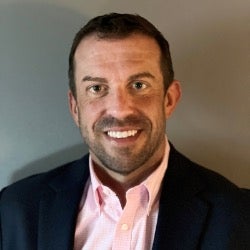
Jason Woods
Head of Talent Acquisition, US & Canada
Honeywell
Jason leads the Talent Acquisition department for US & Canada, managing a team of 150+ recruiting professionals, 8 direct reports, Recruitment Process Outsourcing (RPO) partners, and internal resources including DE&I, University & Early Career Recruiting, Marketing/Branding, and TA Operations.

Podcast Guest
Iktimal Daneshvar
VP of RPO, EMEA
Korn Ferry
Iktimal brings more than 21 years of experience working with many of the world’s leading companies to re-engineer and reimagine their Talent Acquisition strategy, systems and processes.