I Forgot
With 12% of retirees expected to come out of retirement this year, experts discuss how to address potential memory challenges in their workforce.
I Forgot
NOTE: While this transcript has been reviewed, it may contain errors. Please review the episode audio before quoting from this transcript.
Jill Wiltfong:
What can go wrong in the workplace when memory starts to slip?
[Robert De Niro as Ben – ‘The Intern’ movie]:
Class of '65.
[Interviewer – ‘The Intern’ movie]:
What was your major, do you remember?
Jill Wiltfong:
Memory lapses happen to the best of us as we get older. 12% of retirees are expected to come out of retirement, but what about the medical side?
Charles Falcone:
We've pushed the envelope a little bit right now.
Toni Lam:
For executives, the acute pressures have an effect on their immune system.
Jill Wiltfong:
What are we discussing again?
[Robot]:
Welcome employee #7567821. It's time for your monthly memory audit. Please repeat the following action items in order. Check the supply chain costs. Follow up with the sales associates. Schedule a production meeting. File a report to IT.
[Employee]:
Uh, check the supply chain costs. Follow up with the sales associates. Schedule the production meeting and file a report to IT.
[Robot]:
Good job. You remembered perfectly. Now try this one. Graph the deal flow output, transition the software systems, establish the security protocol, email assignments to all junior managers, post the social media guidelines, meet the CFO to discuss budget allocation.
[Employee]:
Oh, forget this.
[Robot]:
You forgot. Forgot.
Jill Wiltfong:
Hi, I am Jill Wiltfong, Chief Marketing Officer for Korn Ferry. And this is "Briefings," our deep dive into topics that corporate leaders need to care about.
Do I have a meeting now? Hmm, who's it with and what are we discussing again? Memory lapses like this happen to the best of us as we get older, but could this be a bigger issue than expected for companies, given today's aging workforce?
Globally, tens of thousands of people turn 65 each day. And in the US, 12% of retirees are expected to come out of retirement and back to work this year.
To be fair, many employees wrongly assume that memory dysfunction is the norm in workers over 60. After all, mild impairment was found in only 8.4% of people between the ages of 65 and 69. Nevertheless, companies must balance organizational needs and safety in a workforce that may be facing at least some decline in mental capacity. After all, conflating names, missing meetings, or forgetting key details can be a serious hindrance to productivity. It's a sensitive topic and difficult to address head on, but today, let's try to find out what exactly is going on when your coworker or your boss says, "I forgot."
I'm joined today by Rubab Jafry O'Connor, a distinguished service professor of management at Carnegie Mellon's Tepper School of Business, who's witnessed industry leaders struggling with serious memory loss.
Rubab, thanks for joining me.
Rubab Jafry O’Connor:
Thanks for having me.
Jill Wiltfong:
So it may be obvious to ask why brain function is so important at work. So let me ask this from the opposing angle here. What can go wrong in the workplace when memory starts to slip?
Rubab Jafry O’Connor:
What could go wrong is like you could become unproductive, you could become ineffective, inefficient. You start making blunders. You start forgetting about the meetings, like you said in the beginning, right? You start forgetting about your responsibilities or some of the deadlines. It's also possible that you start losing respect of your coworkers, your direct reports, your bosses.
Jill Wiltfong:
You've said having too many responsibilities might hamper our recall function. And one study found that managers have 51% more responsibilities than they can handle effectively. Do you think offloading some of their memory functions to their direct reports can be a helpful solution here?
Rubab Jafry O’Connor:
Definitely. I think if managers delegate their work properly, two things can happen. One thing is that they're empowering the other employees, their direct reports, which is great, which is great for their development, for their growth, but also, they're also avoiding that potential boredom, that potential burnout, which can cause memory issues to them down the road.
[Interviewer – ‘The Intern’ movie]:
Where'd you go to school?
[Robert De Niro as Ben – ‘The Intern’ movie]:
I went to Northwestern.
[Interviewer – ‘The Intern’ movie]:
Hey, my brother went to Northwestern.
[Robert De Niro as Ben – ‘The Intern’ movie]:
Probably not at the same time.
[Interviewer – ‘The Intern’ movie]:
Probably not. He graduated in 2009.
[Robert De Niro as Ben – ‘The Intern’ movie]:
Class of '65.
[Interviewer – ‘The Intern’ movie]:
Wow. What was your major, do you remember?
Jill Wiltfong:
That's a clip from the movie, "The Intern," where Robert De Niro has to deal with a comically ageist question during a job interview.
Rubab, we know that at least some reporting of mental decline is the result of younger people's biased perceptions. Last year, 1/4 of employees over 50 say they experienced age-related remarks at work over a six-month period. It feels like this kind of thing shouldn't be occurring with such frequency in today's workplace. So how can companies do better here?
Rubab Jafry O’Connor:
What if I flip this around? Okay? And what if I say, what about the biased perceptions of older people about the younger people's memory? Okay? I see younger people forgetting, I teach younger people, right? To answer your question, I would say this, that the organizations, they need to evaluate people's work based on the quality of their work and not based on the age of the work.
Jill Wiltfong:
And in fact, roughly 5% of the population experiences cognitive difficulties, as you're saying, at a much younger age. So given that memory lapses may be an issue for the entire workforce, what do you think firms can do to help everyone stay on top of things mentally? Do you have some tips for people?
Rubab Jafry O’Connor:
I would say, first, encourage employees to find a fine balance between work and family. Another suggestion is creating strong work culture and creating strong functional teams, so there is less stress for people. There's less toxicity in work, right? When the work environment is toxic, that's going to affect our physical health and it's going to affect our mental health.
[Hoz]:
Let's face it. The thing we really want out of AI is a personal assistant, a thing with a brain the size of a planet, so we can dump everything we need to remember into it. It would always be there ready to serve like a genie. It wouldn't forget things or have an attitude, only toilet breaks or holidays. Luckily, some scientists inhabit the same reality as the rest of us.
Jill Wiltfong:
That's AI YouTuber, They Call Me Hoz, speaking about the rise of AI assistants who can do that annoying memorizing thing for us. Rubab, you take a slightly different view on this though. You've actually banned the use of AI in your classroom and say it might create more hindrances for our mental capacity down the road. Can you elaborate on that?
Rubab Jafry O’Connor:
I am not opposed to AI, okay? AI is our future. That's a personal secretary. You know, we need some information. We are looking for that. Yes, we can use AI. But for my purposes, It does not work in my class. Brain is just a muscle, and if you don't exercise it, brain doesn't care. And then what's gonna happen down the line, it's going to cause the memory issues.
Jill Wiltfong:
Rubab, thank you for coming on. Really appreciate your perspective today.
Rubab Jafry O’Connor:
Thank you.
Jill Wiltfong:
So we've talked about the organizational side of memory decline in the workforce, but what about the medical side? We'll get into what's actually happening inside our brains after the break. So, stay with us.
Rupak Bhattacharya:
Hi, and welcome to This Week In Leadership. I'm Rupak Bhattacharya, and here's a quick look at what else is happening in business.
[Colleague 1]:
What are some signs you're actually being underpaid?
Rupak Bhattacharya:
56% of US professionals are dissatisfied with the money they make. With salaries down from their peak levels, experts urge leaders to look at other levers like flexible work policies, strong recognition programs, and education and development opportunities to increase satisfaction in their workforce.
[Colleague 2]:
What about if the employee just doesn't want to come in?
Rupak Bhattacharya:
One in five full-time workers admitted to not obeying their company's RTO policies, but experts counsel that even if disciplinary measures may be necessary for flagrant violations, the focus should largely be on productivity.
[Colleague 3]:
You still feel underappreciated.
Rupak Bhattacharya:
3/4 of employees say they feel undervalued at work, with 44% saying they felt completely unacknowledged by their employers. It's yet more proof that in this era of hybrid and remote work, there is a greater need for leaders to go the extra mile in authentically connecting with employees and recognizing their efforts.
For more insights on business and leadership, head to kornferry.com/insights. Now back to Jill in our episode, I Forgot.
[Julianne Moore as Alice – ‘Still Alice’ movie]:
Who can take us seriously when we are so far from who we once were? Our strange behavior and fumbled sentences change other's perceptions of us, and our perception of ourselves. We become ridiculous, incapable, comic. But this is not who we are. This is our disease.
Jill Wiltfong:
With us now is Charlie Falcone, Korn Ferry's Director of the Physician Leadership Institute. He's joined by Toni Lam, who is Korn Ferry's Global Leader for The Academic Medicine Practice. Charlie is also a trained physician and a former faculty member of Harvard Medical School. And Toni has a PhD in biological sciences. So if anyone can give us some clarity on the medical side of memory, it's these two.
Thank you to both of you for joining me today.
Charles Falcone:
Thank you, Jill.
Toni Lam:
Thank you, Jill.
Jill Wiltfong:
So that last clip was a scene from the movie, "Still Alice," where Julianne Moore plays a linguistics professor struggling with early onset Alzheimer's disease. Charlie, let's start with you. Alzheimer's is, of course, the most extreme scenario of memory loss, but nearly 40% of people will experience some form of memory loss after turning 65. Tell me, how exactly does memory work in the brain? Talk us through that.
Charles Falcone:
That is very complex and involves multiple parts of the brain, whether it's the hippocampus, whether it's the prefrontal cortex, whether it's walking and standings that involve things around the cerebellum and other areas of the brain that become involved in this very complex mission that we call memory. We think of memories as being somewhat simple. Reality is, incredibly complex.
Jill Wiltfong:
What's happening in the brain for those who are struggling with even mild memory issues? What's going on up there?
Charles Falcone:
So there are normal changes that are going to occur. We just get older. We develop small scale inflammation in the brain, or we'll have a small injury in the brain, or folks will have less in the way of particular blood flow to areas of the brain.
Jill Wiltfong:
Okay, and Toni, maybe you can get into a little bit of this. Your PhD was specifically in immunology, and you've mentioned that studies have found links between the immune system, which Charlie mentioned a little bit too, with inflammation and those sorts of things, and decline in mental function. Can you share how that works? What's the connectivity there between your immune system, and maybe memory and recognition?
Toni Lam:
One of the immune responses that's quite natural and normal is inflammation. And it's the body's way of defending against injury or infection. And what happens within our nervous system, you know, when this happens, it could lead to neuroinflammation. When a neuro-inflamed response is overreactive, it could lead to pathological states such as Parkinson's, Alzheimer's, multiple sclerosis, and other neurodegenerative disorders.
[Sabine Doebel]:
Lately, executive function has become a huge self-improvement buzzword. People think you can improve it through brain-training iPhone apps and computer games. I'm here to tell you that this way of thinking about executive function is all wrong. Brain training won't improve executive function in a broad sense because it involves exercising it in a narrow way outside of the real-world context in which we actually use it.
Jill Wiltfong:
That's cognitive scientist, Sabine Doebel, talking about how quick fixes like brain teaser apps might not be so helpful in managing executive function. Toni, for professionals struggling with executive function challenges like forgetfulness, you've suggested that might be a great time to work with a coach. Can you elaborate on how a coach might be helpful in this instance?
Toni Lam:
For executives, the acute pressures that they face will have an effect on their immune system, their nervous system, other parts of the body. You know, partnering and working with either a coach or perhaps a team of individuals that can serve as your council to provide guidance and ensure that information that you are using or evaluating to make a decision, either for your company or for your team, may be one avenue.
Jill Wiltfong:
Charlie, leave us with a 30,000 foot perspective on all of this. Memory isn't the only thing required to excel at work, obviously. And even though memory may decline with age, experience increases at the same time. Do you think our current work culture might be forgetting the value of experience and is a little too focused on memory, and some of these other executive functioning issues?
Charles Falcone:
You're absolutely right. We've pushed the envelope a little bit right now with regard to being younger, being more innovative, being more energetic, oftentimes, at the expense of the importance of bringing adaptability and resilience, and maturity to a role. A workforce that combines the excitement of, frankly, youth and innovation with the wisdom, knowledge, and experience of an older generation in skill and group of individuals, frankly, that continue to get older, I think, is vitally important to the future of our workforce as a whole.
Jill Wiltfong:
Sounds like a great recipe for success to me. That inclusion, that diversity, it's a winning way forward. Thank you, Charlie and Toni, for being here today. Really appreciate your perspective.
Charles Falcone:
Thank you.
Toni Lam:
Thank you, Jill.
Jill Wiltfong:
The Executive Producer of "Briefings" is Jonathan Dahl. Today's episode was produced by Rupak Bhattacharya, Nadira Putri, and Teresa Allan. And it was edited by Jaron Henrie-McCrea. It contains reporting by Russell Pearlman, Arianne Cohen, and Peter Lauria.
Our video segment contains original artwork by Frazer Milton, Hayley Kennell, Jonathan Pink, and Sasha Kostyuk.
Don't forget to read our magazine, available at newsstands and at kornferry.com/briefings. That's it for Korn Ferry “Briefings”. I'm Jill Wiltfong. See you next time.
All right. Don't say interesting. It's going on my computer.
Subscribe to series:



Podcast Guest
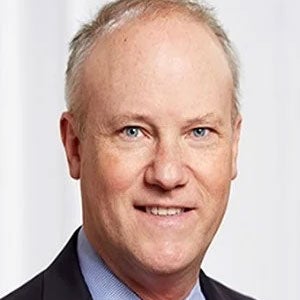
Charles Falcone
Global Leader, Academic Sector, Director, Physician Leadership Institute
Korn Ferry
With more than 30 years of clinical healthcare and executive search/leadership advisory experience, Charlie is known for providing deep insights for his clients and also serving as a strategic advisor to them.

Podcast Guest
Rubab Jafry O'Connor
Distinguished Service Professor of Business Management
Tepper School of Business, Carnegie Mellon University
Rubab has created and teaches a unique three-year leadership development course sequence called Business Leadership Endeavor to undergraduate business students. Her research interests include transformational leadership, student development, confidence, and public speaking.

Podcast Guest
Tonika Lam
Global Practice Leader, Academic Medicine, Senior Client Partner, Healthcare Services
Korn Ferry
Tonika's consulting work is focused nationally on academic health systems and medical centers, NCI-designated comprehensive cancer centers, research institutions, biopharma, and non-profit, professional associations and organizations.