The Fuss About Trust
Only 2 in 3 employees highly trust their employer. Two experts discuss the unique ways firms are restoring faith in leadership.
The Fuss About Trust
NOTE: While this transcript has been reviewed, it may contain errors. Please review the episode audio before quoting from this transcript.
Jill Wiltfong:
What's gone wrong with trust and what companies can do to fix it?
Dennis Baltzley:
How do you navigate or how do you lead in the low trust world? Do you go first or do you make people earn it?
Jill Wiltfong:
What kinds of things are you doing to build trust?
Steve Taplin:
It really comes down to action. As a leader, you've got to be able to admit if you're wrong. We're all human.
Jill Wiltfong:
The fuss about trust.
Steve Taplin:
Good luck with that.
[CEO]:
Okay, everyone, it's all about trust now. Just fall back into your colleague's arms.
Come on, Frank. I'm the CEO, don't you trust me?
See? That wasn't so bad, right?
Jill Wiltfong:
Hi, I am Jill Wiltfong, Chief Marketing Officer for Korn Ferry, and this is Briefings, our deep dive into topics that corporate leaders need to care about.
Trust is the unseen force that greases the wheels of all business, but lately, that force seems to be dwindling. Only two in three employees highly trust their employer according to one survey, and another study found that fully a fourth of US professionals said they don't believe their employer trusts them. The harsh reality is there may be some truth to both these stats. Many bosses have become frustrated with employees who, they say, are consistently disengaged, balk at in-office work requirements, or continually demand bigger titles and higher pay, and now seven in 10 employees are being digitally monitored in some way, up 30% from before the pandemic, but how much trust does that monitoring show from employers? So, listen, any decline in trust is no small matter as it can threaten an organization's reputation, productivity, and profitability. One organizational study from Korn Ferry even found that 22% of the difference in financial performance over a five year period was correlated with trust in leadership. So, today, let's look at what's gone wrong with trust and what companies can do to fix it as we get to the bottom of The Fuss About Trust.
Before we start, if you're watching us on YouTube, please be sure to like, subscribe, and leave a comment to let us know your thoughts on this topic. At last count, we've now tripled our subscriptions in the year since we started this, so thank you for your support.
I'm joined today by Dennis Baltzley, a Korn Ferry Senior Client Partner and its Global Head of Leadership Development Solutions. He spent a lot of time helping company leaders build and rebuild trust within their organizations. Dennis, thank you for joining me today.
Dennis Baltzley:
Hey Jill, it's been a while. It's good to see you.
Jill Wiltfong:
Good to see you, too.
So, before we get into how to build trust, it might be helpful to actually define what exactly trust is. You've said there are three kinds of trust. Can you briefly walk us through what those are?
Dennis Baltzley:
Rob Cross's research, I think, is pretty powerful here. It says, look, there's three kinds of trust. If trust is going to create friction, it'll come up in one of three ways. First is competence-based trust. Do I believe you can do what you say? If I don't, I'm gonna be in your stuff, I'm gonna be micromanaging, I'm gonna be all over it. Second is this idea of benevolence-based trust. Do I believe you stand for something greater than your own interests and needs? And if I don't, then I'll be suspicious coming in, and I'll check all the time. And then, third is this idea of integrity-based, or sometimes called promises-based, trust. It's just, do you do what you say?
Jill Wiltfong:
So, now that we know what trust is and kind of the three different ways it manifests itself, I'd love just a temperature check on where we stand right now as a society. You've mentioned we're currently living in a low trust world. Talk about what you mean by that.
Dennis Baltzley:
This is one of the big macro trends that we face today. People don't trust big pharma, they don't trust big tech, they don't trust banks, they don't trust government, and so the question becomes, how do you navigate or how do you lead in a low trust world, right, because the features of that world are less harmony, less consensus, your constituencies are further apart, less common ground. It also means, whether you're a project manager or you're an executive, you have got to be good at working in tension and conflict for those very reasons.
[Charlie Sheen as Bud Fox – ‘Wall Street’ movie]:
I thought that you were gonna turn Blue Star around, not upside down!
[Michael Douglas as Gordon Gekko – ‘Wall Street’ movie]:
Well, you're walking around blind without a cane, pal. A fool and his money are lucky enough to get together in the first place.
[Charlie Sheen as Bud Fox – ‘Wall Street’ movie]:
But why do you need to wreck this company?
[Michael Douglas as Gordon Gekko – ‘Wall Street’ movie]:
Because it's wreckable, all right?
Jill Wiltfong:
That's a scene from the film "Wall Street", where the infamous Gordon Gekko betrays the trust of his young protégé.
Dennis, confrontations like this one that we just saw are the result of tensions, right, that were often kind of long-simmering but remained unseen. So, help us see a bit better. What are some early warning signs that trust is breaking down at the workplace between bosses and employees? How can we recognize that?
Dennis Baltzley:
I think you don't have to look much further than Kübler-Ross, if you look at the change curve. If you think about people early in the curve, they show up with avoidance, right? So, denial is the first part of the change curve. So, people that are quiet in the meetings, silence, plus that second stage is anger, so if you see the frustration and irritation, "Hey, why can't we get X," and, "If Y would just do their part in this," right, you're hearing that frustration and anger. And then, finally, as you know, the low point of the change curve is depression, and that's this idea of overwhelmed and helpless. "Oh, there's too much going on. I can't keep up, I'm just exhausted."
[John Hurt as Winston Smith – ‘1984’ movie]:
April 4th, 1984. I think to the past or to the future, to an age when thought is free, from the age of Big Brother, from the age of the thought police.
Jill Wiltfong:
That was a scene from the movie "1984", which features a dystopian world where people are granted absolutely no trust whatsoever by their leaders. Dennis, this is, thankfully, still a far cry from reality at most firms, but what's your best advice to leaders who are looking to avoid such a bleak outcome? What should they be doing to nurture, proactively nurture, trust?
Dennis Baltzley:
I'm gonna give us all like five things to ask. The first is, do you extend trust? Do you go first or do you make people earn it? The second, do you know your own triggers? It's hard for you to self-regulate if you don't know what kind of thing sets you off. Number three is, can you do an honest self-assessment and can you regulate bad news? When you hit bad news, can you handle it? Fourth is, do you have the tools to handle really difficult conversations with skills? You have got to be able to handle tension and conflict. And then, finally, are you bringing the energy to your team? So, I don't mean, are you an extroverted, loud, you know, lots of hand gestures kind of leader. I mean, do you generate energy in that team? Do you treat others as people? Do you show an interest in what they're interested in? Do you connect their interest to the work they're doing? Those are all things that energize people. Those five things are money in the bank for building trust.
Jill Wiltfong:
Very well said. Well, your opinions are always ones I know that I can trust. So, thank you for your time and your insights and just the simplicity with which you kind of explain what is quite nebulous and sometimes really hard to wrap our heads around. Really appreciate it.
Dennis Baltzley:
So good to see you.
Jill Wiltfong:
All right, we've looked at trust broadly from the company and employee perspective. Up next, we speak to a CEO and learn how he's dealt with specific challenges around building trust within his own firm. So, stay tuned.
Rupak Bhattacharya:
Hi, and welcome to This Week In Leadership. I'm Rupak Bhattacharya, and here's a quick look at what else is happening in business.
[Speaker 1]:
Let's talk about boomerang hires.
Rupak Bhattacharya:
Roughly 15% of workers today are so-called boomerang employees, who have left and returned to a company. The research suggests this is generally beneficial for firms, and researchers advise that the one-year mark is the best time for companies to formally reach out to sought-after, exited employees to pitch them on returning.
[Speaker 2]:
We get to work half days.
Rupak Bhattacharya:
A new survey finds that knowledge workers spend 4.9 hours per day in productive work. That's actually an improvement over past studies, which estimated only two to three hours. Experts say the survey's results underscore how employees have been able to adjust to remote work and achieve a work-life balance that still allows them to be productive.
[Speaker 3]:
How do tariffs work, and what do they mean for the economy?
Rupak Bhattacharya:
A study of 1,300 global CEOs finds that they see supply chain disruption as the number-one threat to growth in the next three years, and with more tariffs potentially on the horizon, experts expect to see more supply chain and manufacturing facilities cropping up close to home.
For more insights on business and leadership, head to kornferry.com/insights. Now, back to Jill and our episode, The Fuss About Trust.
[Robin Williams as Sean – ‘Good Will Hunting’ movie]:
Trust, very important in a relationship, and why is trust the most important thing in making a breakthrough with a client?
Jill Wiltfong:
With us now is Steve Taplin, CEO of Sonatafy, a company that connects software developers with firms needing IT help. Steve, thanks for coming on.
Steve Taplin:
Jill, thanks so much for having me.
Jill Wiltfong:
So, that last clip featured the late great Robin Williams talking about the importance of trust in our favorite movie, one of our favorite movies, "Good Will Hunting". Steve, we spent the first part of this episode talking about trust from a 30,000-foot view, so it's really great to be getting a little more granular here with you. And what's interesting to me is just like 16% of US companies, your company is fully remote, and you have said that creating cohesion in that kind of environment is at least twice as hard, which makes sense to me. So, what kinds of things are you doing to build trust in a workforce that, really, rarely meets face to face?
Steve Taplin:
We facilitate that through regular meetings, but things like game days, things like doing awards, prizes, we'll have quarterly all-hands meetings, but we'll do other things. We actually will have networking meetings, where you're switching every three minutes, so you're meeting other people.
Jill Wiltfong:
Can you think back on your experience at a larger firm? Are there practices that you think those larger firms can adopt from firms like yours when it comes to fostering trust and building these relationships?
Steve Taplin:
It really comes down to actions. Where I got frustrated in the corporate world was, and whether it was a town hall, a quarterly meeting, or regular communication, come off, talk about the company values, how great they are, get off the call, and they're acting the exact opposite. Not just coming off sincere, but having their actions match it is my biggest advice.
[Francis]:
What if trust is broken? What if your CEO is caught on video disparaging an employee? What if your employees experience a culture of bias, exclusion, and worse? What if there's a data breach and it feels an awful lot like a cover-up than seriously addressing it? But there's a word about me that I should share. My favorite trait is redemption. I believe that there is a better version of us around every corner, and I have seen firsthand how organizations and communities and individuals change at breathtaking speed.
Jill Wiltfong:
That's Francis Fry, a Professor of Technology and Operations Management at Harvard Business School, speaking about how trust can be broken, but also redeemed. Steve, you've spoken about the lengths that you go to, to be transparent with your company's employees, but despite your best efforts, you've faced a moment when one employee felt they hadn't been given enough notice about a change in, I think it was a healthcare plan. How did you address that challenge when that arose, and was that an opportunity for you for redemption?
Steve Taplin:
As a leader you gotta be able to admit if you're wrong or if you react poorly to a situation. We're all human. We did have a situation with a team member, where we switched our health insurance plans. They felt like they were caught off guard and were very upset. I personally got on the call with my HR team, and we kind of went through the timeline of, they were notified 90 days before. We had a side-by-side comparison of the old insurance to the new and why we thought the new was better and provided more advantages and just walked them through it, and also let them know where it was actually the situation where we couldn't stay with the previous health provider. He was very appreciative that we took the time to address his concerns with him.
Jill Wiltfong:
You have also said that trust starts at the top, of course, and how leaders act will determine the level of trust that they receive back, but a recent Korn Ferry study found that seven in 10 CEOs feel imposter syndrome. What's your advice to leaders who may be struggling to live up, maybe, to their own ideals, ideals that they may even preach to their workforce?
Steve Taplin:
You gotta be genuine. You have to, you know, weigh the factors of what stockholders need to hear, what boards need to hear, what your team members need to be hearing, and be genuine and, you know, follow through. And that doesn't mean you can't be aggressive or motivational or opportunistic, but you gotta be able to point out when things change or you were just flat out wrong.
Jill Wiltfong:
Very sage advice, I think, Steve. Thank you so much for coming on today and sharing your story and your examples. Really, really appreciate it.
Steve Taplin:
Well, this was fun.
Jill Wiltfong:
The Executive Producer of "Briefings" is Jonathan Dahl. Today's episode was produced by Rupak Bhattacharya, Nadira Putri, and Teresa Allan. And it was edited by Jaron Henrie-McCrea. It contains reporting by Russell Pearlman, Arianne Cohen, and Peter Lauria.
Our video segment contains original artwork by Frazer Milton, Hayley Kennell, Jonathan Pink, and Sasha Kostyuk.
Don't forget to read our magazine, available at newsstands and at kornferry.com/briefings. That's it for Korn Ferry “Briefings”. I'm Jill Wiltfong. See you next time.
You're gonna get all of our résumés now.
Subscribe to series:



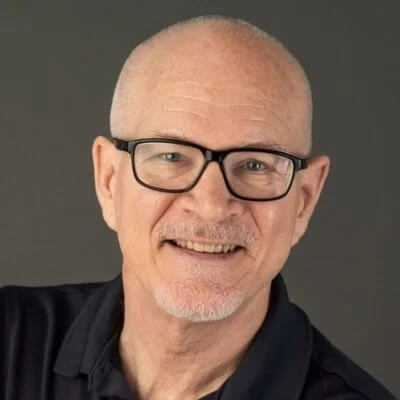
Podcast Guest
Dennis Baltzley
Global Head
Leadership Development Solution, Korn Ferry
Dennis is a senior leadership expert with 20+ years of experience in executive coaching, leadership development, and culture transformation. He has led leadership academies and advised multinational organizations on senior team effectiveness and talent strategy.
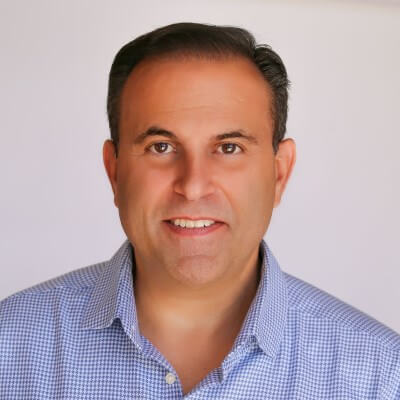
Podcast Guest
Steve Taplin
CEO
Sonatafy
Steve is a seasoned entrepreneur and CEO with over 20 years of experience in tech innovation and software development. He has founded and scaled over 30 companies and shares his expertise in Forbes and Entrepreneur on strategy, leadership, and business growth.