Beware of the Black Swans
Seismic, nerve-shattering events seem to be occurring with more frequency. Two experts discuss the new skillsets leaders need to meet the moment.
Beware of the Black Swans
NOTE: While this transcript has been reviewed, it may contain errors. Please review the episode audio before quoting from this transcript.
Jill Wiltfong:
Black swan events, a rare, unpredictable event that can completely disrupt the world as we know it.
Miriam Nelson:
These shocks they're larger than life. They're hitting us from all directions.
Jill Wiltfong:
Why do leaders have such a hard time predicting them?
Didier Sornette:
Systems evolve progressively, mature, mature, mature, and then.
Jill Wiltfong:
Beware the black swans.
Hi, I'm Jill Wiltfong, Chief Marketing Officer for Korn Ferry and this is "Briefings," our deep dive into topics that corporate leaders need to care about. Here's a riddle for you. What do you call a rare, unpredictable event that can completely disrupt the world as we know it? If you guessed a black swan, give yourself a pat on the back. The term was popularized two decades ago by the famous essayist, Nassim Nicholas Taleb, who wrote that business leaders shouldn't be fooled into thinking that just because they'd never experienced a seemingly impossible, massively disruptive change that they never would. Fast forward to today and it seems like between the COVID pandemic, multiple international wars, and colossal trade conflicts, those supposedly rare, massively consequential events are now happening just about every year. And it's got leaders on edge as you can imagine, with four in 10 CEOs claiming to feel unprepared for market shocks in 2025. The question we want to examine today is whether black swan events require a special set of leadership skills, the kind where intuition, courage, faster than usual decision making is required. We've got two experts to discuss handling sudden crisis events and whether more are in store as we heed the warning to beware the black swans.
Before we start, if you're watching us on YouTube, please be sure to like, subscribe, and leave a comment to let us know your thoughts on this topic. With us now is Miriam Nelson, a Senior Client Partner in Korn Ferry's assessment and succession practice, who spends a lot of time determining which leaders may have the skills needed to deal with these dramatic shifts in business and what specifically those skills are.
Miriam, it's great to have you here.
Miriam Nelson:
Thanks, Jill, so great to be here.
Jill Wiltfong:
Let me first get a baseline temp check from you. Business leaders have of course faced some big shocks over the past few decades, but how is the pace and intensity of change in the past few years markedly different than maybe what we've seen prior?
Miriam Nelson:
These shocks, and that's a really good word for it, are more frequent and they're larger than life. They're hitting us from all directions. I think about the interconnectedness of everything we're doing now. Something happens somewhere else in the world, whether it be something about the environment, whether it be economic, political instability, any number of things that are happening and we feel it.
Jill Wiltfong:
Mm-hmm, you have a background in industrial psychology and have talked about how this kind of constantly changing environment can even alter a leader's body chemistry and thinking. Tell me more about that.
Miriam Nelson:
One of the things is our cortisol levels actually increase. So, it can impair our cognitive functioning. If you've ever felt that fight or flight reaction, sometimes you want to like go to it, run to that situation or that shock, and other times you want to run away. That's the flight piece of it. So, I think it's important to think about not only do we recognize these things, but something's happening in our body, something's happening in our brains, and we need to deal with it.
[Cate Blanchett in the ‘Don’t Look Up’ movie]:
That the comet is still whole.
[Flight Director in the ‘Don’t Look Up’ movie]:
We've got four misfires and sync was off. It's still intact.
[Mark Rylance in the ‘Don’t Look Up’ movie]:
What was that?
[Flight Director in the ‘Don’t Look Up’ movie]:
We've got four misfires and the sync was off.
[Mark Rylance in the ‘Don’t Look Up’ movie]:
Okay. We're all fine, everyone's fine. It's going to be all right. If you'll excuse me, nature calls. I'm just going to go to the restroom for a moment.
Jill Wiltfong:
That's a scene from the movie, "Don't Look Up," featuring possibly the ultimate black swan event where a comet crashes towards earth. The CEO in this scene thinks it's a good idea to try and mine the comet for its precious minerals, but it all goes south very fast. Miriam, the sweeping events of today are a big test for leaders, and in your assessment of work, you're actually looking for people who can pass this kind of test like we just saw. So, tell me, what trait or skillset does a leader need above all else to effectively navigate these huge shifts, these black swan moments?
Miriam Nelson:
It's really helpful, number one, to have leaders who are going to seize the future, not just deal with it, but seize the opportunity. So that's seizing the ambiguity where there's no playbook. Have the confidence, number two. So, confidence is about believing what I do is a direct line to the outcomes, to have that volition. Number three, I always have to go to agility. So, agility is knowing what to do when you don't know what to do. And then resilience. So, while they're seizing this opportunity, they need to stay in the game and that's very hard to do.
Jill Wiltfong:
Miriam, you've said that on the positive side of things that major shocks to the system can sometimes force leaders to be more innovative. And you even have an example of how that worked out for one company during the COVID crisis. Talk a little bit about that one.
Miriam Nelson:
I remember very vividly a few days after COVID hit us in March, I was coaching a leader for a major retailer and we could all remember toilet paper. They got their supplier to repackage in different quantities, in smaller quantities, to make toilet paper go farther. And they were able to get toilet paper to the shelves in record time and really make their customers happy. And it really did result in increased revenue for them because they brought more people to the stores in short order and we all needed things back then. So huge, huge benefits.
Jill Wiltfong:
Well, Miriam, it is a difficult topic, but lots of bright spots in your stories and thoughts here today that helped kind of give us I think all a framework to digest all of this a little bit. So, thank you, thanks for joining me.
Miriam Nelson:
Thank you, Jill.
Jill Wiltfong:
After the break, we'll talk to a leading researcher and expert on risk management about why so many of these so-called black swan events are actually what he calls dragon kings and why that's potentially good news for leaders. Stay with us.
Rupak Bhattacharya:
Hi and welcome to "This Week in Leadership." I'm Rupak Bhattacharya, and here's a quick look at what else is happening in business.
[Speaker]:
Everyone's talking about tariffs.
Rupak Bhattacharya:
If too many tariffs go through, experts say workers are likely to experience some serious collateral damage in the form of lower raises and bonuses, additional layoffs, and hiring freezes. The problem for employers is that top talent could leave for higher paying roles, leaving behind a workforce of lower paid, but marginal performers.
[Speaker]:
Skills are like the currency of the workforce today.
Rupak Bhattacharya:
Despite the current AI fervor, a survey of the 15 hottest job skills shows a growing demand for people-driven skills. Sure, AI literacy topped the list, but the list skews heavily towards skills that technology can't replicate, like conflict management, public speaking, stakeholder management, and customer engagement.
[Speaker]:
Promise and perils of advanced AI.
Rupak Bhattacharya:
According to a new survey, about 1/4 of firms are using AI for reward applications. However, experts say that while it will enable management to make better pay-related decisions, AI's impact on rewards will be felt less around pay, and more around retention and upskilling. For more insights on business and leadership, head to kornferry.com/insights. Now back to Jill and our episode.
Didier Sornette:
We developed a theory called dragon kings. Dragon kings represent extreme events which are of a class of their own. They are special. They're outliers. They are generated by specific mechanisms that may make them predictable, perhaps controllable.
Jill Wiltfong:
We're back talking about the increasing frequency of seismic events in the world that have the power to offend business. And with us now is Didier Sornette, co-dean of the Institute of Risk Analysis, Prediction, and Management at Southern University of Science and Technology in Shenzhen, China. Didier has dedicated his career to accurately predicting crises of all kinds. So, the perfect guest for this discussion. Didier, thanks for joining me.
Didier Sornette:
It's my pleasure.
Jill Wiltfong:
That last clip that we saw featured you from a TED talk where you shared your theory of dragon kings, which as I understand it, critically differs from the back swan theory in that dragon king events have some degree of predictability. And you in fact argue that many of the events we've seen all the way from the 2008 financial crash to COVID to the current trade war are in fact dragon kings. So then tell me this, if these crisis events are indeed predictable, why do leaders generally have such a hard time predicting them?
Didier Sornette:
Well, because of the prevalent linear thinking, I would say. In order to be able to predict a dragon kings, you need to understand that systems evolve progressively, mature, mature, mature, and then there's an abrupt rupture. And this requires really nonlinear thinking to understand that, you know, when you boil the frog progressively in the proverbial pan, she gets accustomed to this increasing water and then she doesn't jump. The leaders are similar to that, right?
Jill Wiltfong:
Okay. You have said that since 1980, economies have become more vulnerable to frequent and severe crises across various domains. Why is that? What changed after 1980?
Didier Sornette:
I would say a responsible household, you would expect that income should be above consumption at the aggregate level, which it was until around 1980. And it's very interesting to see actually a crossing after this time where consumption at the aggregate level become larger than income. So, it means that there's a really a change of regime where essentially the American people started to live above your means systematically, and it has increased to a degree what we see in the economic data, which can only be compensated by debt. And this leads of course to leverage and instability.
[Russell Crowe in the ‘Master and Commander: The Far Side Of The World’ movie]:
- Right, lads. Now I know there's not a faint heart among you, and I know you're as anxious as I am to get into close action, but we must bring him right up beside us before we spring this trap. That will test our nerve. And discipline will count just as much as courage. The Acheron is a tough nut to crack. More than twice our guns, more than twice our numbers. And they will sell their lives dearly.
Jill Wiltfong:
That's a scene from the movie "Master and Commander: The Far Side Of The World," where Russell Crowe as a ship's captain prepares his crew for a battle against a warship with technology that was previously unknown to the British Navy. It's a potential 19th century dragon king situation and Crowe's character handles it deftly. Didier, you've often used the French phrase, which I will butcher, but I will try. Which means governing is the art of predicting. So, what can business leaders do to be better predictors of these seemingly cataclysmic events?
Didier Sornette:
I've not seen any crisis that does not come through a preparation phase, which has tell sign. So, the first advice I would say is for leaders is to actually watching and develop a risk management system, maybe a financial or crisis observatory inside the company to measure subtle weak signals and to develop a culture of trend measurement, change of trends, and so on. Those very successful leaders are those who worry all the time and look at telling signs about the potential crisis that are looming.
Jill Wiltfong:
Finally, and I'm a little afraid to ask this, but I think I do need to ask, since you literally dedicate your career to building mathematical prediction models, is there any chance we might get a break from these crisis events in the future? Or are they only going to increase in frequency as you look at your models? What do you see there?
Didier Sornette:
Unfortunately, the world I think is more and more connected and leading towards more entrenching fragility. So we see more frequent and more severe crisis actually. 25 years ago already, where we're looking at all the data from demographics, global GDP, and global financial market, and we predicted that this acceleration associated with the four industrial revolution would culminate in the around 2050, between 2030 to 2070, and will lead to a fundamental unique regime shift, a new world order. So essentially the message to leaders and to managers is to get prepared.
Jill Wiltfong:
All right, Didier, thank you so much. Really fascinating discussion and appreciate you coming on and sharing your wisdom.
Didier Sornette:
It's my pleasure.
Jill Wiltfong:
The Executive Producer of "Briefings" is Jonathan Dahl. Today's episode was produced by Rupak Bhattacharya, Nadira Putri, and Teresa Allan. And it was edited by Jaron Henrie-McCrea. It contains reporting by Russell Pearlman, Arianne Cohen, and Peter Lauria.
Our video segment contains original artwork by Frazer Milton, Hayley Kennell, Jonathan Pink, and Sasha Kostyuk.
Don't forget to read our magazine, available at newsstands and at kornferry.com/briefings. That's it for Korn Ferry “Briefings”. I'm Jill Wiltfong. See you next time.
(Jill speaks in French)
Oh god, (speaks in French).
Subscribe to series:




Podcast Guest
Didier Sornette
Co-dean of the Institute of Risk Analysis, Prediction & Management (Risks-X)
Southern University of Science and Technology
Chair Professor at SUSTech (Southern University of Science and Technology), Shenzhen, China and dean of the Institute of Risk Analysis, Prediction and Management, Academy for Advanced Interdisciplinary Studies, Southern University of Science and Technology, Shenzhen, 518055, China (since September 2019).
Podcast Guest
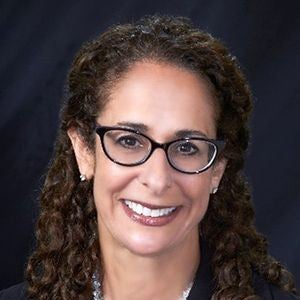
Miriam Nelson
Senior Client Partner, Assessment & Succession
Korn Ferry
Miriam Nelson serves on the leadership team for Korn Ferry’s North America Assessment and Succession Practice with a particular focus in the consumer and financial services industries.