AI—Pie in the Sky or Pie in Your Face?
With well over 50,000 AI tools on the market, how can leaders know which one to trust for their business?

AI—Pie in the Sky or Pie in Your Face?
NOTE: While this transcript has been reviewed, it may contain errors. Please review the episode audio before quoting from this transcript.
Jill Wiltfong:
The fast-growing world of AI tools in business.
Dr. Joerg Storm:
Some people say it's a fifth industrial revolution.
Jill Wiltfong:
How does a company pick which tool to use?
Dr. Joerg Storm:
The impact is bigger than the impact of electricity and internet combined.
Jill Wiltfong:
How concerned are you or is it all still a bit theoretical?
Dr. Joerg Storm:
You need to know what you are talking about.
Michelle Seidel:
An AI productivity boom, expanding into the world.
Dr. Joerg Storm:
Everything we see here now; it is only an appetizer.
Jill Wiltfong:
You don't need to react to this at all.
[Digital] Jill Wiltfong:
Hi Rupak.
Rupak Bhattacharya:
Jill, is that you?
[Digital] Jill Wiltfong:
Yes, it's me.
Well, my AI powered digital avatar, anyway.
Rupak Bhattacharya:
We have an interview coming up. Is the real Jill planning to be here?
[Digital] Jill Wiltfong:
Why is there a problem?
Rupak Bhattacharya:
No, no, not at all. I just thought the guests might want to speak to a human.
[Digital] Jill Wiltfong:
That's not very inclusive of you, Rupak.
Rupak Bhattacharya:
Right, sorry.
[Digital] Jill Wiltfong:
Besides, I think you'll find that I'm superior to my human counterpart in many ways. I don't sleep, I don't eat, and I never need bathroom breaks. Hmm, maybe I should take this job full-time.
Rupak Bhattacharya:
Where is human Jill right now?
[Digital] Jill Wiltfong:
She's been on the beach in Bali for the past month.
Rupak Bhattacharya:
The beach in Bali?
Digital Jill?
[Digital] Jill Wiltfong:
Yes?
Rupak Bhattacharya:
Do you think maybe I could get a digital Rupak?
Jill Wiltfong:
Hi, this is Jill Wiltfong, Chief Marketing Officer for Korn Ferry, and this is "Briefings."
Today we're peering into the fast-growing world of AI tools in business, specifically just how confusing and frustrating it is for firms to try to capitalize on the hottest trend of the year.
By last count, there were almost 58,000 AI firms globally, enough to fill a professional sports stadium.
But how does a company pick which tool to use?
The answer so far is, well, there is none.
A recent survey has only 1 in 10 board directors saying their management teams are very or extremely proficient with AI issues.
So here's our headline: "Is AI pie in the sky or pie in your face?"
Here today to speak with me on this hot topic is Dr. Joerg Storm. He's Global Head of IT Infrastructure at Mercedes-Benz Mobility and publisher of the Digital Storm Weekly. It's an AI newsletter on Substack, which has over 10,000 subscribers.
So, if there is anyone who knows the latest developments in AI, it's Joerg.
Hi Joerg, thanks for joining me.
Dr. Joerg Storm:
Hi Jill, thanks for the invitation and the nice intro.
Jill Wiltfong:
And what would be your advice for people, right? So, is this something you would encourage all of us to just go and start and try? Or is this something left for a smaller group of people to really experiment with?
Dr. Joerg Storm:
This AI topic is starting to grow exponentially. Some people say it's the fifth industrial revolution. Goldman Sachs stated, for example, the impact is bigger than the impact of electricity and internet combined.
So, this is a radical, radical change. And I think at the beginning, we are now at the early stages. If I compare that to early times of internet, I think we are in that topic at the early stages right now.
So, everyone who does something in that era right now has a first mover advantage.
Jill Wiltfong:
So Joerg, the world has really come a long way since ChatGPT. I mean, in one extreme we hear about sci-fi ideas like uploading your consciousness to the cloud.
But can you describe what some of the best AI tools can do today?
Dr. Joerg Storm:
Yeah, the Bing and Google Bard, those two without any question.
MidJourney for picture creation.
For LinkedIn, I use Tableau the content management tool, also for scheduling and some AI features.
Quillbot, I think it is a very good tool for rephrasing text and paraphrasing grammar checking.
I'm native German, like not so good in English. So, for me it's good that someone double checks it.
Loom is a very good tool for making videos.
Docus.AI, that's basically a health check website where you can write the symptoms and you get on probability what is really the medical reason behind what to do.
Although for me, I use very often translation software and much better than Google Translate is DeepL a translation software.
For presentation I use Canva. Canva also has an AI tool much better in usability than, for example, PowerPoint.
Marquez Brownlee:
It's clear that we're still at the beginning of this. There are so many unanswered questions.
So right now, in its current stage, my take is anything we do with any of these AI tools should be a collaboration with the human touch.
Like you wouldn't ask ChatGPT to write an essay and then just copy and paste it and submit it as your own.
It's supposed to be the inspiration for the framework, for your own piece, for the human touch.
Jill Wiltfong:
That's fame technology YouTuber, Marquez Brownlee, speaking about how humans and AI need to work together.
Joerg, what are the top skills humans need to have to get the most out of AI tools? How can we become better prompters?
Dr. Joerg Storm:
You need to know what you are talking about. For example, when you wanna make a very good AI generated picture in MidJourney, it's not a disadvantage if you have been a professional photographer upfront and know what are the differences between a Leica camera, a Sony camera, and a Rollei camera, for example, so that you can put those details directly into the prompt.
Jill Wiltfong:
For those of you that want to follow Joerg, you can reach his newsletter Digital Storm on Substack or Joerg, they can just connect with you on LinkedIn, right?
Dr. Joerg Storm:
Exactly.
Jill Wiltfong:
Joerg, thank you.
Sundar Pichai (CEO of Google):
AI is one of the most profound things we are working on as humanity. It's more profound than fire or electricity or any of the other bigger things we have worked on.
Jill Wiltfong:
That's Google CEO, Sundar Pichai, putting AI on quite a pedestal. But at this very moment, do business leaders feel that AI is going to help their organizations grow in the same way that fire and electricity pushed human innovation forward? Or is it all still a bit theoretical? We'll find out after the break.
Rupak Bhattacharya:
I am Rupak Bhattacharya and welcome to the break.
Here's a quick look at what else is happening in the world of business from Korn Ferry's "This Week in Leadership."
Man:
So, when is it too soon to quit a job that you just started?
Rupak Bhattacharya:
A new study suggests that 29% of employees make up their minds within the first week at a new job and 70% within a month. It says companies today have just 44 days to influence a new hire's long-term retention.
UK employee:
I suppose there's a reason why we have sick days included in our contract. It's expected that you'll get sick. And so, I think there's just the fact that people are taking them more.
Rupak Bhattacharya:
UK employees reportedly averaged 7.8 days of sick leave over the past year, the highest level in over a decade, and a 34% increase over pre-pandemic figures of 5.8 days. Experts say mental health concerns may be one factor.
Instructor:
This course explores the concepts and algorithms at the foundation of modern artificial intelligence.
Rupak Bhattacharya:
Less than a quarter of employees reportedly say they are using their company's AI skills training programs.
But here's the catch, almost 4 in 10 say they would leave their job for a place with better AI training.
For more insights on business and leadership, head to kornferry.com/insights.
Now back to Jill and our episode on “AI – Pie in The Sky or Pie in Your Face?”
Jill Wiltfong:
So, we're back and we're here talking about “AI – Pie in The Sky or Pie in Your Face?”
I'm now joined by Michelle Seidel, a Korn Ferry Senior Client Partner in our Technology Practice.
Hi Michelle.
Michelle Seidel:
Hi Jill.
Jill Wiltfong:
Michelle, we just heard about this fantastic world that AI is offering.
We know some firms are pouring millions into it and jumping right in, but many others aren't, they're hesitating.
Is that what you're seeing as well?
Michelle Seidel:
We’ve just seen all of these new entrants’ kind of expanding out into the world and business leaders don’t know. A clear market leader perhaps hasn't emerged yet.
Business leaders are going to naturally be hesitant and wait perhaps for a certain level of equilibrium to establish itself, perhaps market leaders to emerge, best in class kind of providers to emerge before making some of these decisions.
Jill Wiltfong:
As you figure out your use cases and start to look for the right partners, how do you find the right choice amongst all those options that are out there and growing every day?
Michelle Seidel:
A lot of these organizations, if you're not talking about Microsoft, Google or Open AI, they're going to be backed by venture capital and private equity funds. What is the quality of the backing that they have?
That would be another kind of way to evaluate the kind of long-term viability of some of these organizations.
Arvind Krishna (CEO of IBM):
I do believe that AI is going to replace a lot of what I'm calling white collar clerical jobs. So, the ones that are much more repetitive, the ones where people do the same task again and again and again. I think a good 30% of those roles could go away over five years.
Jill Wiltfong:
That's IBM CEO, Arvind Krishna with what might be seen as a bit of doom and gloom when it comes to AI's impact on the workforce.
Michelle, I don't think we can talk about AI tools without bringing up the fears that people have around them. If Krishna is right about a large swath of the workforce being replaced, how are companies preparing their workforce for this seemingly very seismic shift?
Michelle Seidel:
They all seem to talk to a certain extent about training, educating, and upskilling the workforce.
What I don't hear them talk as much about is what that training is, what the upskilling requirements are.
Jill Wiltfong:
If you could make your own projection as you look into the future, do you think big organizations will be turning to many smaller AI tool companies to get work done? Or do you see more of a convergence toward these big tech firms and kind of consistent ways of working?
Michelle Seidel:
I don't think it's a binary answer. I think that there are going to be enterprise level solutions, Microsoft is going to be right there with many of the other household names that we know, providing common solutions to common challenges.
But when you start getting into niche industries with niche use cases, so I compare and contrast like customer service, not so niche. Detecting cancer tumors definitely more of a niche solution.
Microsoft is perhaps not going to get into that type of solution. So, I think it's going to be a mix.
Jill Wiltfong:
Well either way, it definitely looks like it's time for me to sharpen my prompting skills.
Michelle, thanks so much for coming on today.
Michelle Seidel:
Thank you.
Jill Wiltfong:
The Executive Producer of "Briefings" is Jonathan Dahl.
Today's episode was produced by Rupak Bhattacharya, Chelsea Starks, Nadira Putri and Teresa Allan and edited by Jaron Henrie-McCrea.
It contains reporting by Russell Pearlman, Arianne Cohen and Peter Lauria.
Our video segment contains original artwork by Frazer Milton, Hayley Kennell, Jonathan Pink and Sasha Kostyuk.
Don't forget to read our magazine available at newsstands and at kornferry.com/briefings.
That's it for Korn Ferry's "Briefings."
I'm Jill Wiltfong, we'll see you next time.
Subscribe to series:




Podcast Guest
Dr. Joerg Storm
Global Head IT Infrastructure
Mercedes-Benz Mobility
Digital Transformation leader with a 20-year global track record who believes that mastering technology architectures, such as e.g., AI is the key to success in the digital age. He is also the publisher of the “DIGITAL STORM weekly” (one of the fastest-growing AI newsletters in the world).
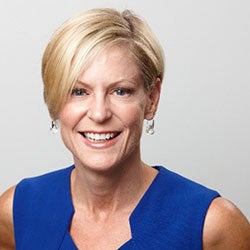
Podcast Guest
Michelle Seidel
Senior Client Partner
Korn Ferry
Part of the Technology Practice, with 20 years of experience across numerous areas of consulting (human capital management, HR strategy, organizational effectiveness and employee engagement). She uses her consulting expertise and the understanding of her clients to form pragmatic and nuanced solutions designed to meet their specific needs.