The Genius of Gen Z
Older generations have taken issue with Gen Z at the workplace, but perhaps it's senior employees that need to change. Two experts discuss.

The Genius of Gen-Z
NOTE: While this transcript has been reviewed, it may contain errors. Please review the episode audio before quoting from this transcript.
Jill Wiltfong
Gen Z hasn't had it easy when it comes to how they're viewed in the workplace. Define the Gen Z workforce.
Mark Beal
Gen Z works to live, they work smarter, not harder.
Jill Wiltfong
What are you seeing there on the ground?
Iktimal Daneshvar
Gen Z want things to be engaging. They want it to be visually appealing, and they want it to be instantaneous. They want to work for organizations that add value to the world, and that means something, and that's gonna have some sort of impact.
Jill Wiltfong
The genius of Gen Z.
Jill Wiltfong
Hi, I'm Jill Wiltfong, Chief Marketing Officer for Korn Ferry, and this is Briefings, our deep dive into topics that corporate leaders need to care about. Gen Z hasn't had it easy when it comes to how they're viewed in the workplace, and survey after survey has spoken to that. There's the one where three in four managers claim Gen Z is the most challenging generation to work with or another where the majority of managers say Gen Z's expectations are unreasonable. But what if everyone else is getting it wrong? and Gen Z is getting it right? In the workplace, they pushed for things like mental health days, a closer connection with purpose and flexible working hours like no other generation before them. And while some may balk at these preferences, the plain fact is within a few years, they'll comprise nearly a third of the workforce. After all, it's worth remembering that we were all the new workers on the block at some point, and our seemingly radical ideas soon became par for the course as we got more senior. So today, perhaps it's time we flip the script and take a look at where the workplace is inevitably headed as we explore the genius of Gen Z. Before we start, it's our 50th episode, and we're proud to say that we've more than tripled our YouTube subscribers in less than two years. on YouTube, be sure to hit that subscribe button to stay up to date on the latest in thought leadership, and be sure to stick around there’s Cake! But first with us now is Mark Beal, an assistant professor of practice at Rutgers University, who's written multiple books on Gen Z, and recently gave a TED Talk titled, Introducing Gen Z, the New Transformers. So truly a perfect guest for today's discussion. Mark, thanks for joining me.
Mark Beal
Jill, thank you very much for having me.
Jill Wiltfong
So I am a fan of frameworks and you've talked about two main pillars that define the Gen Z workforce. Tell me about that.
Mark Beal
So there's two generational pillars that are clashing now in the workplace. Gen X are like myself. We live to work. We live to go into that office and work five, six, seven days a week. That's not Gen Z. Gen Z works to live. They work to earn that salary and travel the world, pursue their passions, launch a side hustle. So that's a critical kind of, again, clashing. And the second one is, again, Gen Xers, Boomers, older millennials, we work harder, not necessarily smarter, right? We take pride in the number of hours it takes us to accomplish the mission, accomplish the task, the number of hours we spend at the office. Gen Z is the complete opposite, right? They work smarter, not harder. So they're leveraging AI, they're leveraging latest technologies, latest platforms to get to the same finish line. But they want to see how can we do it efficiently?
Jill Wiltfong
Three in four of CEOs expect employees to return to a traditional in-office schedule within the next few years. As you know, of all age groups, this is the most unpopular among Gen Z, but leaders say that in-person apprenticeship is exactly what they need right now, more than any other group. What do you think about that?
Mark Beal
So Gen Z arrived at the workplace during this thing called the pandemic, right? It was a time when everyone overnight went from working in an office to working remotely. They've been working and living and going to school remotely and virtually and all those ways. they've proven they can accomplish whatever it is they have to accomplish. They can do it from their favorite beach, their favorite mountain with a laptop and a phone. However, they do value what I call H.I., what I call human interaction. And so they're not necessarily not looking to go into a workplace or not interacting with their colleagues and coworkers. But I think they're looking for that balance, which I think is healthier of that idea of, let's go in a day a week, two days a week, three days a week. But do we necessarily need to go in five days a week?
[Brad Pitt in the ‘Moneyball’ movie]:
Been on the job long,first job in baseball?
[Jonah Hill in the ‘Moneyball’ movie]:
It's my first job anywhere.
[Brad Pitt in the ‘Moneyball’ movie]:
Wow. Congrats.
[Jonah Hill in the ‘Moneyball’ movie]:
Thank you.
[Brad Pitt in the ‘Moneyball’ movie]:
First job. Whose nephew are you? Why does Mark listen to you?
[Jonah Hill in the ‘Moneyball’ movie]:
I don't think, I don't think he does very often.
[Brad Pitt in the ‘Moneyball’ movie]:
He just did.
Jill Wiltfong
That's a scene from the movie Moneyball where senior manager Brad Pitt grills a young Jonah Hill to learn about a revolutionary new way of assessing Major League Baseball players. I think it's a great example of a senior leader reaching out to learn from a junior employee, but it doesn't seem to happen maybe often enough. A study from last year found that 40% of workers over age 55 hadn't spoken to a Gen Z-er at work in a year, which is astounding. Mark, what can companies do to encourage leaders to connect with and really listen to their younger workers?
Mark Beal
Empower what I call your ZEOs, those individuals who just hired or graduated a year or two or three or four ago, right? They may not have as many lessons learned in case studies, but they actually do know quite a bit. And so there are companies out there who recognize this and they'll create think tanks or incubators of their ZEOs. Give them some sort of mission, some sort of task. Maybe it's that, maybe it's just that thing that the leaders have been putting off because they just don't have time. Well, give those ZEOs a chance to explore it. Maybe they can come up with a great solution. Maybe they can come up with an entirely new business unit or business idea, whatever it might be.
Jill Wiltfong
Speaking of leaders, your ZEOS, which I love, I'd love your thoughts on this, what I think is quite fascinating, stat. seven in ten Gen Z workers say they'd rather be individual contributors than middle managers. It's part of a trend called conscious unbossing. But when I was coming up, our whole goal was to kind of move up the stack, right? So why do you think that's changed so drastically for Gen Z? Are there not enough incentives? Did they simply just not care about being leaders? What gives here?
Mark Beal
So this generation, which in many ways is unprecedented, right? I believe they're an unprecedented generation of content creators, right? They are the first generation of those, it wasn't my quote, but that learned to swipe before they wiped. They really value the individuality of the issue. And so I think even as they approach the workforce. Yes, they're part of a bigger unit, part of a bigger team, but there's something about the individual path.it is breaking, I think, some rules, some rules that have been in play for a long time, whether written or unwritten rules. But I think they see it as this is my journey. I'm going to take my path. I'm going to kind of go where I want to go and also set my own rules along the way.
Jill Wiltfong
One of the things that you'll often hear this group talk about too is purpose. And I want to end by talking about that because it's a word that comes up a lot in connection in particular with Gen Z. Nine in ten of them say having a purpose is important to their overall wellbeing. But purpose can sometimes feel vague as a concept. You teach Gen Zers almost exclusively. So what's an example of a purpose driven work decision that you've seen one of your students make.
Mark Beal
You know, I've taught thousands of students, including thousands of Gen Z-ers who've gone on to graduate in that work. I do call them the purpose generation. I had a student who graduated and went directly into corporate communication. So she's working for a Fortune 500 company and she's doing again, public relations, communications, content marketing, all great. But as she said three years in, I really don't feel like I'm contributing at all, like purposefully. So she took, in essence, the exact same job with a city-wide hospital system, had no experience at all in healthcare, and now she says, I'm doing the same thing I love, but I'm doing it in a way that I'm contributing to an actual community, a city community. I'm contributing to nonprofit programs. And I've got more stories like that. But the point is they may like what it is they do, media buying, public relations, but they kind of want to do in a way that they feel at end of the day, I've contributed in some way positively to the world, to society, to community.
Jill Wiltfong
I love it. Thank you so much for coming on. Appreciate it.
Mark Beal
Thank you, Jill
Rupak Bhattacharya
Hi, and welcome to this Week in Leadership. I'm Rupak Bhattacharya, and here's a quick look at what else is happening in business.
Voice 1
A wave of fake job seekers.
Rupak Bhattacharya
One survey found that by 2028, 1 in 4 job candidates globally will be fake, in large part, thanks to a preponderance of AI tools. The candidate's motive in these cases is often to get a job that they're unqualified for, or in the worst case scenario, to try to steal company data and resources.
Voice 2
Struggling with this thing called conversations and talking.
Rupak Bhattacharya
Korn Ferry's Workforce 2025 Report found that nearly half of Gen Z workers say communication and teamwork training is an issue with older colleagues, but only 27% of Baby Boomers see a problem. To help mend the awkwardness,a whole field of experts is emerging to teach different generations soft skills and even how to interact.
Voice 3
George What a prompt engineer does.
31,000 workers across 31 countries were surveyed and asked what new roles their companies were considering adding in the next 12 to 18 months. Turns out the once popular prompt engineer was second from the bottom, at the top of the list AI coding, AI data interpreting, and AI security.For more insights from this week in leadership,head to kornferry.com/insights. Now back to Jill in our episode, The Genius of Gen Z.
[George Clooney in Up In the Air movie]
Great. Listen, I admire your zeal, and I think you have some very good ideas, but you know nothing about the realities of my industry. You can set up an iChat, but you don't know how people think.
Jill Wiltfong
We're back talking about the impact Gen Z is having on the workplace. And with us now is Iktimal Danishvar, Cornferry's Vice President of Recruitment Process Outsourcing in EMEA. Iktimal has lots of firsthand experience working with the youngest generation of workers, given that roughly 70% of the Middle East workforce is under 40. So it'll be great to get her perspective here. Iktimal, thanks for joining me.
Iktimal Daneshvar
Thanks for having me, Jill.
Jill Wiltfong
That last clip featured a scene from Up in the Air, where George Clooney condescends to a younger employee at the firm for having solid tech skills, but poor interpersonal ones. In reality, eight in 10 managers have criticized Gen Z for lacking adequate soft skills like effective communication. But in their defense, nearly four in five Gen Z employees said those skills can really only be gained by watching more seasoned employees over time. So Iktimal, what are you seeing there on the ground? Are soft skills truly the issue that managers make them out to be or do you see Gen Z kind of quickly learning the ropes with time?
Iktimal Daneshvar
I think both of those statements are true, Jill. I think that there is an issue. know, Gen Z definitely can be criticised for some of the lack of softer skills that they have, whether that be communication, as you pointed out, or adaptability or emotional intelligence or flexibility. There's definitely a gap there. But Gen Z rightfully argue that you can only learn that in the workplace. So they need to be able to witness that they need to stretch assignments, they need to mentorship, they need to be able to witness that in order to gain the skills. So both of those statements are true. It is an issue but can only be fixed on the ground and not in a classroom.
Jill Wiltfong
Of course, the clip also highlights the younger generation's proficiency with technology. And you've talked about how even LinkedIn is no longer the most popular platform for recruiters in the Middle East, which is surprising to me. What technology platforms are people using to reach Gen Z workers over there? And do you think it's a taste of what's to come for the global workforce in general?
Iktimal Daneshvar
Yeah, it's social media. So if we have a look at Saudi, for example, the average age of Saudis is 29 years of age. So that's an average age countrywide, let alone professional. So it is a very young country and they're not going to be on LinkedIn. They want to be on TikTok and Snapchat and Instagram. And that is what employees are having to do to able to attract young people. And they use those platforms because Gen Z want things to be engaging. They want it to be visually appealing and they want it to be instantaneous. They want to be able to click through and then scroll through different job adverts and company profiles.
[Sylvester Stallone in Creed movie]
You see this guy here staring back at you. Yeah. That's your toughest opponent. Every time you get into the ring, that's who you're going against. I believe that in boxing, and I do believe that in life okay?
Jill Wiltfong
That's a scene from the movie Creed where Sylvester Stallone as Rocky Balboa, the former boxing champion mentors, Michael B. Jordan, who plays the next generation of champion. Iktimal, even though Gen Z is bringing some considerable talent, you have said that mentorship will be key for them to develop to their full potential. And there's an interesting international component to how companies are doing it in the Middle East. Tell me more about that.
Iktimal Daneshvar
Yeah, so it's not just mentoring within organisations, it's sending their young people to international locations to get visibility on how people do it elsewhere. Again, we're talking about a very young country and a very young population. So they're sending them on international assignments where they learn not only softer skills, but technical skills as well.
Jill Wiltfong
Yeah, it's a really good idea. Of course, reverse mentorship also has a place. And since we're talking about the genius of Gen Z in this episode, let me end by asking you this. What's the most valuable thing that you've personally learned from Gen Z after all the time that you've spent working with and around them?
Iktimal Daneshvar
One is more around mental health. They place such a high importance on their mental health and their emotional wellbeing and the work-life balance that I think that we probably learn a bit from that. And the second is around purpose-driven work. When you speak to young people, they want to do something more than just turn up and do what their job description says. They want to work for organizations that add value to the world and that means something and that's going to have some sort of impact. And I think that's quite admirable.
Jill Wiltfong
Some really good lessons learned. Iktimal, a real pleasure to get your firsthand perspective today. Thanks for being here.
Iktimal Daneshvar
Thanks for having me.
Subscribe to series:



Podcast Guest
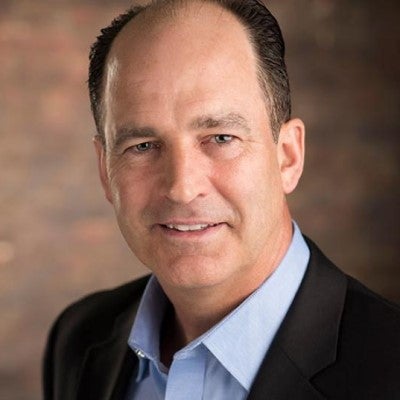
Mark Beal
Assistant Professor of Practice
Rutgers University School of Communication and Information
A 30-year public relations and marketing professional, Mark Beal is a Generation Z thought leader who has authored four books on Gen Z including ZEO, Introducing Gen Z, The New Generation of Leaders, and teaches public relations and integrated marketing communication at Rutgers University.
Podcast Guest
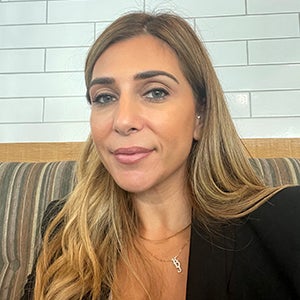
Iktimal Daneshvar
Vice President, Recruitment Process Outsourcing (RPO)
Korn Ferry
Iktimal Daneshvar brings more than 21 years of experience working with many of the world’s leading companies to re-engineer and reimagine their Talent Acquisition strategy, systems and processes.