Can We Please Not Talk Politics?
A quarter of workers have seen conflicts at the office over politics. Two experts discuss navigating a political minefield with colleagues—and clients.

Can We Please Not Talk Politics?
NOTE: While this transcript has been reviewed, it may contain errors. Please review the episode audio before quoting from this transcript.
Jill Wiltfong:
Nearly half of workers surveyed said they were uncomfortable discussing their political views at the office. Would having any kind of policy actually work today?
Louis Montgomery Jr.:
It would be just incredibly difficult to enforce. Half the people feel one way, half the people feel the other way.
Jill Wiltfong:
How would you generally advise them to answer questions.
Cheryl Snapp Conner:
You want to be politically involved without being divisive. All of your audience matters. They may have different opinions themselves.
Jill Wiltfong:
Can we please not talk politics?
(bright music)
Jill Wiltfong:
Hi, I am Jill Wiltfong, Chief Marketing Officer for Korn Ferry. And this is "Briefings," our deep dive into topics that corporate leaders need to care about. Hey, whose side are you on in the current geopolitical dispute? What are your thoughts on the government's latest tariff policy? Did you vote red or blue? If the thought of answering these questions at work makes you uneasy, you're not alone. Nearly half of workers surveyed said they were uncomfortable discussing their political views at the office, but despite that, it's still happening. With almost a quarter of workers saying they've seen conflicts at the office over politics. This used to be a topic firms just told workers to avoid, but in these increasingly polarized times,keeping politics out of the workplace is posing a bigger and bigger challenge for company leaders keen to build culture and boost business. Trickiest of all for them perhaps is when a prized client demands their take on a hot button political issue. So today, let's look at what smart leaders and companies can do to navigate the many political minefields out there. As we ask the question, can we please not talk politics?
(bright music)
Jill Wiltfong:
Before we start, if you're watching us on YouTube, please be sure to like, subscribe, and leave a comment to let us know your thoughts on this topic. With us now is Louis Montgomery Jr. A principal at Korn Ferry's HR Center of Expertise. Lewis works with many HR leaders across several industries and is intimately familiar with the challenges they're facing around the very sensitive issue of politics. Lewis, thanks for joining me.
Louis Montgomery Jr.:
Jill. Thanks for having me.
Jill Wiltfong:
So Louis, the obvious solution in the past might have been for companies to have a clear policy around this, but it turns out just 8% of companies have policies on political expression at work. Why is that? And would having any kind of policy actually work today?
Louis Montgomery Jr.:
Yeah, I think there's several reasons why organizations don't have policies. First of all, it would be just incredibly difficult to enforce. I mean, we live in a society that values free speech to a certain extent. And so to tell people that you can't talk about something that is all around us would be very, very problematic. So I think that's the probably the principle reason.
Jill Wiltfong:
So let's dig into that a little bit. So this notion of staying mum, there are of course times when employees require a timely response from leaders on a certain social issue, which can be critical for maintaining company culture. How should leaders determine when to speak up and when not to? How do you make that choice?
Louis Montgomery Jr.:
It's really about balance. I mean, there are things that happen in our society that are so large and so important that it's important for leaders to speak on, you know, things like, you know, terrorism. When, obviously when George Floyd was murdered. I mean, those are situations where... Or people expected their leaders are gonna speak out. But there are just so many other instances where you've just gotta be very careful because again, as you've mentioned that our politics today has become so contentious and people are 50/50 and it's just easy to damage relationships. So there's some major issue that needs to be discussed, you know, and or if there's something that is directly related to one's business, I think clearly that's the time when an organization should speak out.
Gary Vee:
I have 15 million followers on TikTok. I've been doing this every single day for 18 years, and anybody on here can literally, who've never been on TikTok or been followed in your life, could set up a TikTok after this, post something. They could get more views on that than anything I've done in my career.
Jill Wiltfong:
That's businessman and social media influencer Gary Vee talking about the power of social media to amplify a message. Leaders of course, know this with one study finding seven out of 10 Fortune 100 CEOs having at least one social media account. And 48% post at least once a month. Of course, social platforms are also exactly the forms where communication can go viral in all the wrong ways. So, Louis, what guidelines would you give to leaders around how and when to use social media? Is it ever wise to respond to political questions, for example, that are posed there?
Louis Montgomery Jr.:
Yeah, I think generally not, again, unless it meets those criteria that we talked about before where it's a big societal issue where the leaders say, we absolutely must respond, you know, or it's something related to individual's business. But for use for brand amplification, encouraging people to seek out an organization, social media can be very, very valuable. Again, especially for younger generations.
Jill Wiltfong:
You have said that it is entirely appropriate if leaders choose to make assertions about how government policy is affecting, as you said earlier, company operations and being very specific around that. For example, maybe the tariffs on business. So why or what makes that kind of comment okay?
Louis Montgomery Jr.:
Yeah, well, I think organizations frequently talk about business operations and they talk about risks. To talk about tariff policy or some other large geopolitical thing. How it might affect one's business is entirely appropriate because what you're doing, you're signaling to your employees, one, that this is something that we need to be very, very conscious of. You're also signaling to your stockholders that this is an issue that we are aware of, and are looking for ways in which to mitigate those kinds of risks.
Jill Wiltfong:
Let me end by asking you this. When it comes to discouraging political discourse in office and the conflict it can cause, you've said that rather than leaders creating overarching guidelines, having a strong chain of command where managers talk to their specific teams is often the best strategy, can you elaborate on that?
Louis Montgomery Jr.:
Sure, organizations frequently have meetings of team members, and I think those are times in which to reinforce important messages, to share information that the company wants to share. Leaders may opine on situations that may be happening outside of the organization as to how they may be having an effect on the organization. But at the same time, I would discourage at the same time talking about politics because again, it's very easy to get it wrong. I mean, half the people feel one way, half the people feel the other way. So if you take a position, there's a chance that you may be disincentivizing and or offending some people frankly.
Jill Wiltfong:
All right, Louis, thank you so much for coming on. You've probably helped stop some heated arguments before they even got started, so appreciate that.
Louis Montgomery Jr.:
Thanks for having me.
Jill Wiltfong:
We've explored handling sensitive communication inside a company, but what do leaders do when it's a client or investor asking the political questions? When we return, we'll talk to a PR pro and find out. Stay tuned.
(bright music)
Rupak Bhattacharya:
Hi and welcome to This Week in Leadership. I'm Rupak Bhattacharya, and here's a quick look at what else is happening in business.
[Reporter]
How much did CEO packages decline.
Rupak Bhattacharya:
With the market seeing one of its greatest slumps in decades, CEO pay may also be taking a big hit. Equity makes up about 70% of a typical CEO's rewards package. And experts say market volatility may have firms rethinking how they pay top bosses and CEOs themselves may try staying on the job longer to recoup lost value.
[Reporter]
When you look at the healthcare system, we don't have a lot of tools.
Rupak Bhattacharya:
In a new Korn Ferry survey of 345 physician executives, a shocking 0% of respondents said their organization's technology strategies are at the leading edge of innovation. Healthcare experts say if innovation doesn't accelerate, inefficiencies around things like staffing, billing, and electronic records will continue to grow.
[Reporter]
Dividends aren't just about handing out cash. They also serve as a messaging mechanism.
Rupak Bhattacharya:
Despite economic uncertainty, dozens of firms have raised their dividends. These decisions to increase financial payouts are largely seen as an aggressive move to try to attract and retain investors who might otherwise be deterred by plunging or highly volatile share prices. For more insights from This Week in Leadership, head to kornferry.com/insights. Now, back to Jill in our episode, Can we please not talk politics?
(bright music)
[Scene w/ Julie Roberts character Anna Scott and reporters in Notting Hill]
- Final questions, please. Yes, lady there.
- Is your decision to take a year off anything to do with the rumors about Jeff and his present leading lady?
- Absolutely not.
Jill Wiltfong:
We're back talking about what company leaders can do to avoid being in the hot seat over politics. And with us now is Cheryl Snap Conner, CEO of SnapConner PR. She's helped many Fortune 500 company leaders navigate the complexities of public communication. So she knows a thing or two about what to say to whom and when. Cheryl, thanks for joining me.
Cheryl Snapp Conner:
Yeah, I'm glad to be here.
Jill Wiltfong:
That last clip featured a scene from "Notting Hill," where Julia Roberts faces some uncomfortable questions from the press. Company leaders these days are similarly being put on the back foot over political questions from clients. So Cheryl, how would you generally advise them to answer questions from valued clients who are pressing for a political stance?
Cheryl Snapp Conner:
Those clients deserve an answer. They deserve to be heard. On the other hand, you want to be politically involved without being divisive. So I think the important thing is to know at all times and be ready to communicate your vision. Communicate what you stand for, communicate the principles you stand for, and then speak to the issues that you believe in as opposed to taking politically aligned positions with a party, even on a particular bill you can be very clear about when you're speaking for yourself or on behalf of your company, but just keep in mind that all of your audience matters and they are vast. They may have different opinions themselves.
Jill Wiltfong:
Okay, you've also said that in general, when you're thrown a question that you'd rather not answer directly, it's useful to use a technique that you call bridging. Tell me a little bit about what exactly bridging is and maybe give me an example or two of how that works.
Cheryl Snapp Conner:
Remember, it's bridging, it's not evading, that's a problem. But bridging would be, for example, stepping back to the 20,000 foot view. This issue is important for these reasons. We could go this way, we could go this way. These are the pros and the cons, which is why we've chosen to go this way. And these are the pros and cons we experience as a result. If it's a pointed question or a question where it's hammering you and somebody's going down an alley and you can't interject and answer the question you like among the ones offered, you can put up your hand and say, "Wait a second, I'd like to respond to that, that's an important point." But make certain that you are controlling what you want to respond to, not letting yourself be badgered or up against a wall.
[Scene w/ Robert Downey Jr. character Tony Stark who announces he is Iron Man to reporters in the movie IronMan]
- It is one thing to question the official story and another thing entirely to make wild accusations or insinuate that I'm a superhero.
- I never said you were a superhero.
- Yeah, the truth is. I am Iron Man.
(audience clamors)
Jill Wiltfong:
That's a scene from the movie "Iron Man," where Robert Downey Jr. is Tony Stark, intentionally goes off script to reveal that he is in fact Ironman. Of course, when leaders go off script in real life, the consequences can sometimes be a bit disastrous. So Cheryl, what would you say to leaders most often? What do they most often get wrong about speaking publicly that maybe can cause them to blunder? Are there some consistent kind of watch outs?
Cheryl Snapp Conner:
Speaking off the cuff is a problem, not thinking before speaking or just reacting in frustration because they forget, any words that come out of their mouth are on the record and are representing the company and are potentially a headline. So we all make that mistake, but it happens. They pick up the phone and say, I did this one time and I didn't realize the reporter was on a three-way call when said it. Imagine what kind of a headline that would've made. I was a spokesperson, not the CEO, but still, we have to be careful who's in the room, who's listening. Are these words that I'm pleased to see in print and am I winging it or do I have a real answer if I'm winging it, back up. There are ways to just control that as well.
Jill Wiltfong:
Okay, so let's say that a leader does say the wrong thing maybe by accident. What are the first steps they should be taking to kind of fix their own and their firm's reputation?
Cheryl Snapp Conner:
They need to go directly to two people, their legal counsel and their PR counsel, and whatever happens after that, those two parties are handing glove. So get that feedback about what should happen and when, because even more problems happen when somebody jumps in too quickly trying to resolve something went wrong and inadvertently makes it even worse.
Jill Wiltfong:
When it does come to receiving tough or even intrusive questions. So kind of back to that because we know that happens, you do say, leaders should bear in mind that the most noble possible motive for the person asking that question. So don't, I guess, assume bad intentions, right? And answer it from that perspective. I find that really interesting. Can you give me an example of what that might look or sound like?
Cheryl Snapp Conner:
Somebody stands up at the audience, he looks like Colombo and he says, you know, Mr. Norta,your stock has gone down by 10 points this morning. Can tell me what that has done for your personal wealth? And, you know, look at him and say, "I appreciate your concern. We're doing fine." And then bridge to the message about where the company stands, what has happened, what are the responses and where it's going to go from here. If you repeat the question back, that would be another way to really understand the motive of the person and assume a good one.
Jill Wiltfong:
Very good, well, Cheryl, really appreciate you coming on today and sharing your thoughts with us, thank you.
Cheryl Snapp Conner:
Thank you.
(bright music)
Jill Wiltfong:
The executive producer of "Briefings," is Jonathan Dahl. Today's episode was produced by Rupak Bhattacharya and Zachary Dore. It was edited by Jaron Henry-McCrae. It contains reporting by Russell Perlman, Arianne Cohen and Peter Lauria. Our video segment contains original artwork by Fraser Milton, Haley Kennel, Jonathan Pink and Sasha Kostyuk. Don't forget to read our magazine available at newsstands and at kornferry.com/briefings. That's it for Korn Ferry "Briefings." I'm Jill Wiltfong. See you next time.
(bright music)
Jill Wiltfong:
Avoid being in the hot seat over politics. And with us now, John. All right, he's sufficiently muted.
Subscribe to series:




Podcast Guest
Cheryl Snapp Conner
Founder and CEO
SnappConner PR and creator of Content University™
Cheryl Snapp Conner is founder and CEO of SnappConner PR and creator of Content University™. She is a speaker, author and national columnist on business communication and PR and is the author of “Beyond PR: Communicate Like a Champion in the Digital Age.” The Board of Advisors organization has named Cheryl one of the Top 20 Entrepreneurs to Follow in 2025.
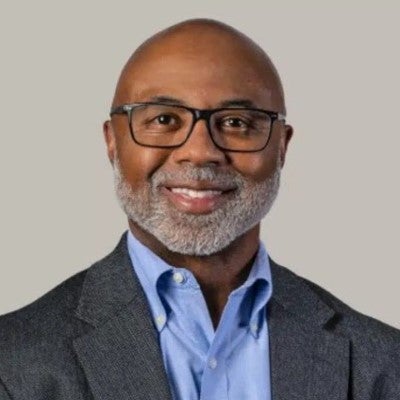
Podcast Guest
Louis Montgomery Jr.
Principal, HR Center of Expertise
Korn Ferry
Through his decade’s long executive search experience, he has successfully placed Human Resource and DEI Leaders, Board Members, and other Corporate Officers, in a variety of sectors including Industrial, Consumer, Healthcare/ Life Sciences, Financial/ Professional Services, Technology, Trade Associations, National Non-Profits and in Higher Educations.