Legacy: Leave It or Lose It
Experts say long-tenured CEOs may hinder the innovation required for business to grow.

Legacy: Leave It or Lose It
NOTE: While this transcript has been reviewed, it may contain errors. Please review the episode audio before quoting from this transcript.
Jill Wiltfong:
Hi, I’m Jill Wiltfong, Chief Marketing Officer for Korn Ferry, and this is Briefings, our deep dive into topics that corporate leaders need to care about.
You’ve probably seen all the headlines—how CEOs are leaving in record numbers. Some are leaving of their own accord, some are forced out by boards or activists. We dedicated a whole episode, in fact, on the pressures CEOs face. But today we thought it might be interesting to talk about the opposite problem that persists in some firms. The CEO, who just won’t leave.
The issue seems to be particularly acute for older leaders, with one study finding that succession rates for those aged 64 and older dropped by 8% last year. On balance, despite all the exits, that other CEO are making CEO tenure has nudged up in the past two years. There may be good reasons some CEOs overstay their welcome, but too often, it can slow down a firm’s progress—as well as the career paths of those waiting in the wings.
So, let’s take a look at the issue of CEO legacy: Will they leave it or lose it?
Before we start, if you’re watching us on YouTube, please be sure to like, subscribe, and leave a comment to let us know your thoughts on this topic.
I'm joined today by Janet Feldman, a Senior Client Partner in Korn Ferry’s CEO Succession Practice. She works very closely with company leaders and has some deep insight into their comings and goings. So, Janet, thank you so much for joining me today.
Janet Feldman:
Thanks for having me, Jill.
Jill Wiltfong:
Take me into the psyche of the moment. What’s causing leaders to hang on to the top job a bit longer these days compared to previous years?
Janet Feldman:
The first dilemma I would call the "safe hands dilemma." They’ve worked hard. They’ve built this legacy. They’ve built the organization. They poured a lot into it. And they really want to feel like they can hand it off to a pair of safe hands. And these days, with all the geopolitical dilemmas, technological, environmental—it’s hard to know what that safe pair of hands looks like.
The other dilemma is that they haven’t done adequate life planning for themselves. A lot of times, they’ve poured so much into their work lives that they haven’t thought about what’s after this act.
Jill Wiltfong:
Are there some early warning signs that a CEO may have stayed on a bit too long? Things the CEO, board members, or leadership team should keep an eye out for?
Janet Feldman:
One is there's a code out there—people saying we need “modern leadership.” That’s become a code for: there’s stagnation in the C-suite. I think boards can be complicit. They like the steadiness of longstanding relationships that they have with CEOs, and they don’t often ask difficult questions about whether a new leader is needed. There’s also a cultural piece—leaders stay too insular. The better the culture, the more insular they stay.
I think they need to change out members of the C-suite regularly.
Jill Wiltfong:
That was a scene from a movie adaptiation of Shakespeare’s King Lear, where Sir Anthony Hopkins as King Lear willingly abdicates his throne in favor of his three daughters. So, Janet in the business world, it seems leaders aren’t quite as willing maybe to let go. So, tell me when a company has a CEO who’s overstayed, how do they manage that transition without ruffling feathers or causing too much disruption? Should they be setting CEO term limits maybe right off the top, like they do for board of directors? Are there other things that happen to help mitigate the risk and disruption?
Janet Feldman:
It’s a bit like a Rubik’s Cube. You have to move the pieces around them. You need to be rigorous in developing the pipeline and creating rotations to show off the capabilities of those around them. That also helps solve the “safe hands” dilemma—because the CEO sees that maybe these people can take over, bring in new ideas, shake things up in a way that helps us all.
Jill Wiltfong:
You’ve had a lot of experiences, and I'd love to hear some of those personal experiences. Have you ever had to talk to a leader about stepping down and if so maybe give us a sense on how those conversations have gone.
Janet Feldman:
It’s about talking to them about what they might do afterward—what boards they could serve on, how they might create a portfolio life. And we often talk up their successors. When we’re brought in to develop successors, it’s a chance to help the CEO see and read between the lines—that they’re some topics that they may not be equipped to really take forward.
Jill Wiltfong:
So before you go, I want to touch on a major consequence of leaders staying too long. You mentioned a link between our Korn Ferry Institute data showing as much as 50% of Gen Z workers say they’re disengaged, and this trend of overstaying CEOs. That there is a potential connection there? Tell me a little bit more about that.
Janet Feldman:
One of the things that younger people—especially with five generations in the workforce—are looking for development and growth. If people stay in roles too long, they are occupying a seat that someone else should be occupying for development purposes. That creates a pipeline issue all the way down. You risk losing high-potential talent, and in today’s competitive market, they have options.
Jill Wiltfong:
It’s challenging—it’s people, personalities, personal needs, and fears, all coming into play. Thank you so much for giving us your insider take. We’ll definitely keep watching this and see where it heads.
Janet Feldman:
Thank you, Jill. Appreciate the time.
Jill Wiltfong:
We’ve looked at what companies can do when leaders don’t leave. After the break, we’ll talk to a former CEO who did step away on his own and hear his thoughts on how to do it the right way.
— [Segment break] —
Jill Wiltfong:
We’re back, talking about CEOs overstaying their welcome. And with us now is Paul Laudicina, former CEO at Kearney and author of the Wall Street Journal bestseller Roadmap to a Brighter Future. Paul, thanks for joining me.
Paul Laudicina:
Great to be with you Jill.
Jill Wiltfong:
So we just saw a clip of Nelson Mandela giving one of his final speeches. He famously chose not to run for a second term—relinquishing power for what believed was the greater good. When you were CEO, your firm also had a two-term limit. I’m told a few partners wanted you to change the charter so you could stay for a third, and you said, “No thanks.” That is not an easy thing to do, so what caused that decision?
Paul Laudicina:
After a while, one invariably grows stale in the role. Even if you’re performing well by conventional standards. The fact of the mater is a CEO role—especially in today’s convulsive changing environment—requires strong peripheral vision. That peripheral vision tends to gets dulled over time, especially when one is an incumbent in a leadership position at any time.
Jill Wiltfong:
It must be hard to go from being on top to figuring out what’s next. I imagine for many, the phone stops ringing or slows down from ringing the day after they leave c-suite. What’s the best way for a leader to avoid falling into that kind of mental lull?
Paul Laudicina:
You have to prepare in a very intentional way for what comes next. Take time to understand your unique purpose and how it can be applied to your next chapter in life is very important. It is also difficult for a CEO running in the fast lane to stop and think about the future when you are captivated and captured by the present.
Jill Wiltfong:
We just saw a scene from Flaming’ Hot, the story of how a janitor and a CEO helped innovate the now wildly popular Flaming’ Hot Cheetos snack. Paul, you’ve talked about how innovations like that come from companies having what you call strong peripheral vision. But that’s something that I imagine can often be hindered with long tenured leaders. Elaborate on that a little bit for me.
Paul Laudicina:
I think the longer that someone is in the CEO role, the easier it is to fall prey to the so-called hidden traps of decision-making where because we’ve done it this way in the past, it worked, so we’ll keep doing it. That kind of thinking doesn’t hold up in a time of continuous and pervasive change. Because things that relate to the theory of business are in a steady state of change. And so the longer one’s in the role, the more difficult it is to be aware of those changes and the more important it is for one to build in the kind of diversity o input that comes when there’s a change in leadership.
Jill Wiltfong:
So given all of this, let’s end on what’s your best advice to avoid the problem of lingering leaders? Is it setting term limits, annual board reviews? What do you think is the answer here?
Paul Laudicina:
Well I think the board need to be clear during recruitment: this is not a lifetime position. There should be, I think, important thresholds where there is a review of both the CEO performance to be sure, but also the company’s performance and future dynamics. So, I think getting the terms of reference right at the beginning are exceedingly important. And being sure that the CEO you recruit understands that he or she needs to have an open mind about why having a refreshed HR resource pool where you move people up the chain including evacuating the office of the CEO is something that happens in the most competitive and dynamic of corporate environments.
Jill Wiltfong:
I love it. It’s a bold move; we’ll see if others follow. But it certainly worked out for Kearney and a lot of other companies employing that approach. Really good having you on today to get that perspective.
Paul Laudicina:
My pleasure.
Jill Wiltfong:
The executive producer of Briefings is Jonathan Dahl. Today’s episode was produced by Rupert Bhattacharya and Zachary Dore. It was edited by Jaron Henry McCray and includes reporting by Russell Pearlman, Ariana Cohen, and Peter Lauria.
Our video segment features original artwork by Fraser Milton, Hailey Kendall, Jonathan Pink, and Sasha Kostek.
Don’t forget to read our magazine—available at newsstands and at kornferry.com/briefings.
That’s it for Korn Ferry Briefings. I’m Jill Wiltfong. See you next time.
Subscribe to series:



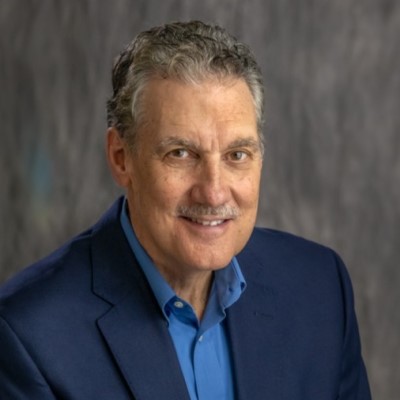
Podcast Guest
Paul Laudicina
Chairman Emeritus
Kearney
Paul A. Laudicina is chairman emeritus of Kearney and founder of the firm's Global Business Policy Council (GBPC). He currently hosts the "Coronavirus: A world transformed" podcast. He served as A.T. Kearney's managing partner and chairman of the board from 2006 to 2012, taking on this role after the firm regained its independence through a management buyout. During his tenure, he guided A.T. Kearney through an extraordinary turnaround, recording consistent double-digit growth and expanding its global footprint by 30 percent to include offices in nearly 40 countries.

Podcast Guest
Janet Feldman
Senior Client Partner, CEO & Executive Development, Top Team Global Steering Committee
Korn Ferry
Janet Feldman is an accomplished senior executive, leadership consultant and thought leader, specializing in the development of top teams, enterprise leaders and their next generation successors. A member of the CEO Succession Practice, Ms. Feldman is a co-developer of Korn Ferry’s Chief Executive Institute, Executive to Leader Institute©, Top Team Effectiveness and LeaderSuccessionTM solutions.