Mortal Leadership
Many professionals now appear to be staying in their roles longer than ever, including a host of CEOs and board directors. Could how we deal with death be connected to how we put off job transitions or retirement? Two experts discuss.

Mortal Leadership
NOTE: While this transcript has been reviewed, it may contain errors. Please review the episode audio before quoting from this transcript.
Jill Wiltfong: Hi, I am Jill Wiltfong, Chief Marketing Officer for Korn Ferry. And this is "Briefings," our deep dive into topics that corporate leaders need to care about. I wanna talk to you about death. Yeah, death. So, you may be thinking, that's a little off topic for a podcast on corporate leadership. But is it?
Experts point to a very real connection between modern societies' inability to handle death and our professional incapacity to embrace workplace transitions. Interesting, right?
So, that starts with retirement, and the fact that we have a record number of Baby Boomers hanging onto jobs that others need. One survey found that a third of workers now plan to retire older than age 70, or never.
It also includes a host of CEOs and board directors who are overstaying their welcome. In fact, we recently did an episode on CEOs. And in the case of the directors, the tenure now often exceeds 10 years.
And it's not just older professionals who are seemingly hanging on for dear life. The once carefree Gen Zers now say they wanna stay with one company for seven years, more than double the average reported by workers overall.
Such reluctance to move on, of course, leads to transitions that get unnecessarily messy. Relationships turn toxic, business suffers, innovation and growth are stifled.
But some say if we can learn to end life with more grace, we will be better able to handle life's multitude of transitions, including those in the workplace.
So, today, let's try and learn how we can all leave well.
Jill Wiltfong: I’m joined today by Roger Philby, global lead of Korn Ferry’s People Strategy & Performance practice. He’s worked with numerous executives through various stages of their careers so has lots of firsthand experience with the difficulties people face in making career transitions. Roger, great to have you here.
Roger Philby: Great to be here.
Jill Wiltfong: Roger, I want to start by asking you about this connection between death and the difficulty people have with workplace transitions. You’ve talked about how something called Terror Management Theory might explain what’s going on in the psyche of most professionals. Tell me more.
Roger Philby: Terror Management Theory is kind of cool, I think. And it suggests that when faced with your own mortality, people tend to cling onto things harder that give them identity and significance. I think Terror Management Theory explains a lot about how executives feel. So actually, career transitioning, when you put it in the mind of Terror Management, this theory feels like a rehearsal for dying, not leaving a job.
Jill Wiltfong: You’ve spoken about how it can be problematic when people can get too comfortable in their roles. What does “too comfortable” look like in the workplace and why is that such a bad thing?
Roger Philby: When someone becomes too comfortable, they stop learning, they stop growing. They might even stop listening. They get into a place where it’s no longer about growth or impact. And that’s when they’re not only not bringing their best, but they might also be blocking someone else’s growth too.
Jill Wiltfong: That’s a scene from the movie “Meet Joe Black,” in which Brad Pitt as Death has come to take Anthony Hopkins who plays a CEO keen on keeping his company’s legacy intact despite his impending demise. Roger, as we said at the top, a third of workers now plan to retire older than age 70—or never, so it seems many professionals are facing a similar dilemma around letting go. You’ve suggested one possible solution that you’ve seen work at a client company is setting a mandatory retirement age. Talk a bit about why you think that system works so well?
Roger Philby: I think setting a mandatory retirement age is a really humane policy, because it takes the burden of letting go off the individual. Like, it's there, right? You know it's going to happen. So it reframes the exit as part of a natural rhythm of leadership, right? Not a failure, or a fall from grace, or "you just stayed too long, pal." But actually, a purposeful date at which you can start planning. I think boundaries create freedom. So by defining an endpoint, you actually free the leaders.
Jill Wiltfong: What about those younger workers whom we mentioned now want to cling to a job longer and who may not even have any ambition to move up the corporate ladder at all. I’m talking about the so-called “conscious unbossing” trend, where nearly three in four Gen Z workers say they’d rather be individual contributors than middle managers. What’s your best advice to motivate that section of the workforce to step out of their comfort zone?
Roger Philby: We have to tap into what motivates our younger people. And what motivates our younger people is impact, influence, creativity. So, if we reframe the role of a leader into, this is a place where you can have impact, you can have influence, and you can be truly creative. And we help them co-create that. So, it's not a job description, it's about outcomes and impact. We go to sort of an expectation of them, which is, I think, the problem some of my generation have, into, actually, our job is to inspire them to move. I think their view is, I don't need a promotion to move, I need a mission.
Jill Wiltfong: I’d like to end by returning to why this matters so much. You’ve talked about how something you call “organizational compression” could spell disaster for companies if they don’t figure out how to better transition their workforce forward. Tell me more.
Roger Philby: The longer I stay in a role, the more comfortable I get. And the more of the role below I do, right?
Jill Wiltfong: Yeah.
Roger Philby: And we see this all the time in organizations. And I'm always challenging leaders on—if you are a leader, your job is the next two to three years. Why are you worrying about today's figures? You know, the people below you should be worrying about that, and they should, you know, and so forth.
And so, if I'm a leader and, you know, I'm on the C-suite, and I'm looking at today's trading figures, I'm actually doing the job of the person below. If I'm doing the job of the person below, the job of that person is they're doing the one below, and you get this compression.
And my view is that if you can start removing some of the compression, you'll release productivity in the workforce.
Jill Wiltfong: Roger, thanks so much for coming on and sharing your thoughtful insights with us.
Roger Philby: Thanks, Jill. The more we normalize these conversations about transition, the more we create cultures that make space for people to grow—and let go—gracefully.
Jill Wiltfong: We’ve looked at what companies can do to help workers transition better. After the break, we’ll talk to a bereavement therapist on lessons in letting go that can be applied to the professional world. Stay tuned.
Jill Wiltfong: We’re back talking about the connection between death and our inability to cope with workplace transitions. With us now is Elizabeth Schandelmeier, a Grief, Loss and Bereavement Therapist who has helped countless people deal with the ultimate transition from life to the hereafter. We’re going to pick her brain to see what lessons we can learn to help us with the smaller transitions we all face in the course of our professions. Elizabeth, great to have you on.
Elizabeth Schandelmeier: Thanks for having me.
Jill Wiltfong: That last clip was from Shakespeare’s famous “to be or not to be” soliloquy is from the play Hamlet, where Kenneth Brannagh as Hamlet muses that the fear of what comes after death gives us pause. Elizabeth, your work with grieving clients is of course far more weighty than a career transition, but you’ve said that almost every fear we have boils down to a fear of death. What do you mean when you say that?
Elizabeth Schandelmeier: Sure, so that is a thought that comes from Ernest Becker's Terror Management Theory, which basically describes the existential fears that we have of our own mortality. When we are experiencing this existential anxiety, it really leads to our journey for seeking purpose and meaning in our life. And, you know, our identity and how we place ourselves in our career, in our life, in our family, in our community, in the world around us. And so, when that is disrupted, it can really lead to some crisis moments for folks.
Jill Wiltfong: You’ve talked about how when people are in a state of fear about what comes next, they shut down their creative self and stop thinking about future possibilities. How would you coach say, a seasoned executive, to shift from a state of fear to a more positive outlook on their life after work?
Elizabeth Schandelmeier: So, I think a part of it is, is recognizing, you know, what are we actually afraid of? When you stop to really sort of dig into what's behind that fear with a person who is actually dying, it's almost never a fear of death itself. It's almost always a fear of either what it feels like to die, or whether or not there will be a legacy. How will people remember them? Will they continue to exist in the world once their physical presence is gone? So, if a person is transitioning out, out of a very important critical role, what is the legacy that you can leave to ensure that you have really left your thumbprint, your personal thumbprint on that organization? You know, can you create a mentorship program that bears your name? Or, you know, dedicate a building that has your name, or whatever it might be.
Jill Wiltfong: What would you say to the leader who's afraid to take that next step forward because of what they might miss out on? What are some words that can help them reframe that process?
Elizabeth Schandelmeier: When we're thinking about how and why we're important in the world, certainly, our workplace is a huge part of that. But starting to think about the legacy that we can leave for the folks that are not a part of our workplace. How can we start being more involved? How can we start being more significant to the people who have supported us all along? Maybe our family, maybe our community, maybe our friends. Who have been the people who have supported me, and helped, and enabled me to get to this position? And what parts of me have they missed out on because I have been so involved in this organization? How can I bring those parts of myself to the people that I love and care about? And really starting to transform your sense of significance and importance away from an organization and into the people in your life who value you the most?
Jill Wiltfong: I love it. It's a beautiful way to kind of reframe and get excited about what's next, which is—
Elizabeth Schandelmeier: Absolutely. The best part of life, right?
Jill Wiltfong: Thank you so much, it has been great to have your truly unique perspective on this topic. I really appreciate you coming on.
Elizabeth Schandelmeier: Thank you so much.
Jill Wiltfong: The Executive Producer of Briefings is Jonathan Dahl. Today's episode was produced by Rupak Bhattacharya and Zachary Dore. And it was edited by Jaron Henrie-McCrea. It contains reporting by Russell Pearlman, Arianne Cohen, Peter Lauria, and Meghan Walsh. Our video segment contains original artwork by Frazer Milton, Hayley Kennell, Jonathan Pink, and Sasha Kostyuk.
Don't forget to read our magazine available at newsstands and at kornferry.com/briefings.
That's it for Korn Ferry Briefings. I'm Jill Wiltfong, see you next time.
Subscribe to series:



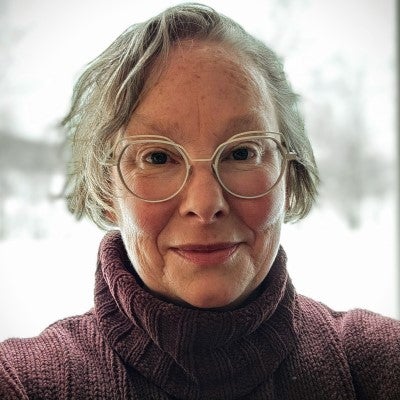
Podcast Guest
Elizabeth Schandelmeier
LCSW, APHSW-C, FT
Nationally recognized grief expert and therapist Freelance
Elizabeth Schandelmeier, LCSW, APHSW-C, FT, is a nationally recognized grief expert and therapist, celebrated for her compassionate work with individuals and families navigating death, dying, grief, and loss. With extensive experience spanning direct clinical practice, program development, and global education, she empowers both professionals and the public through her profound insights and innovative approaches to bereavement.
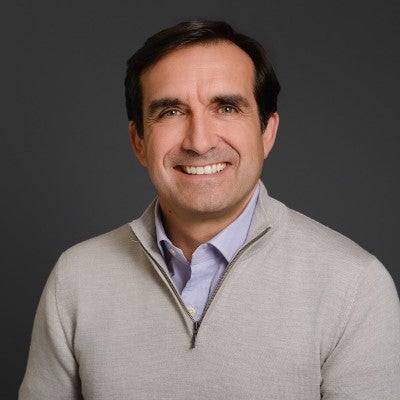
Podcast Guest
Roger Philby
Global Lead, People Strategy & Performance Practice
Korn Ferry
Roger Philby is the UK Head of Consulting and Global Leader of Korn Ferry’s People Strategy & Performance Practice, based in London. He advises C-Suite leaders across the FTSE100 and Fortune 500 on their most pressing talent challenges, whilst defining the vision and direction of Korn Ferry’s approach to People and Talent Strategy.
With a background in industry, before joining Korn Ferry, Roger started an award-winning, global organizational consulting firm in 2003, existing to PE in 2024. His industry experience covers 30 years across Energy, Utilities, Technology, Financial and Professional Services, across 61 geographies.