Is There a Doctor in the House?
In this episode, three experts break down how innovation, technology, and leadership are key to unlocking transformation.
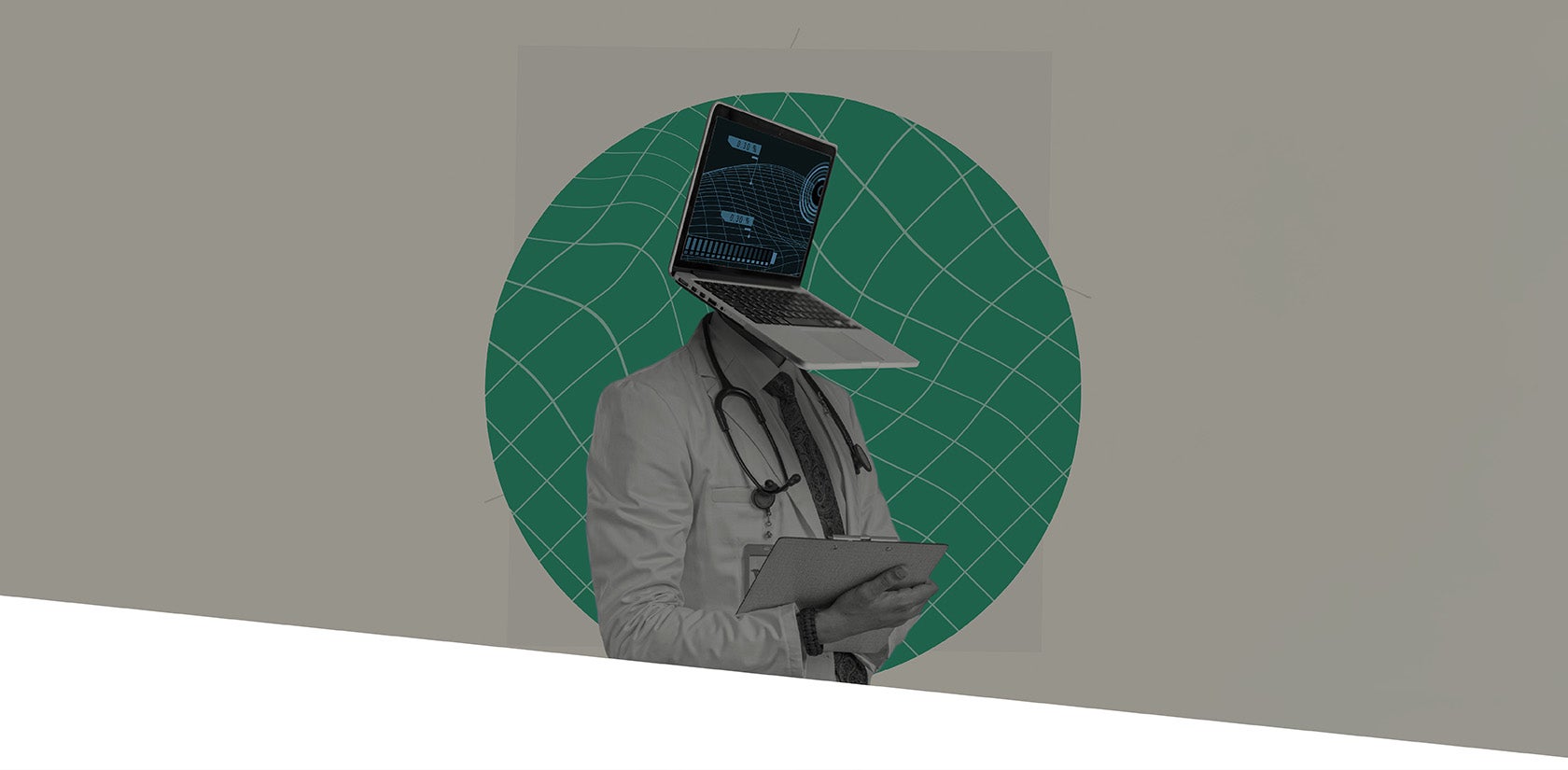
Is There a Doctor in the House?
NOTE: While this transcript has been reviewed, it may contain errors. Please review the episode audio before quoting from this transcript.
JILL WILTFONG (Host):
Hi, I’m Jill Wiltfong, Chief Marketing Officer for Korn Ferry, and this is Briefings, our deep dive into topics that corporate leaders need to care about.
If you’ve ever needed to see a doctor urgently, you may be familiar with the unsettling experience of having to wait weeks or even months before one becomes available. In most industries, when the labor supply can’t keep up with demand like this, technology usually steps in to fill the gap.
But a Korn Ferry survey of 345 physician executives discovered a shocking reality to the contrary: 0% — zero percent — of respondents said their organization’s technology strategies are at the leading edge of innovation.
Of all industries, this lack of high-tech rigor is most disturbing in healthcare, perhaps because doctors and nurses, after all, are trying to save or extend lives. Wouldn’t we want their methods to be as high tech as possible?
So today, we’ll look at why it’s such a bear to get this industry more up to speed — both to treat and even see patients. We’ll also explore what medical leaders can do to solve this clinical conundrum that affects so many, because sooner or later, we all end up asking: Is there a doctor in the house?
Before we start: if you’re watching us on YouTube, please be sure to like, subscribe, and leave a comment to let us know your thoughts on this topic.
With us now are Jim Vincoli, Vice President in Korn Ferry’s Global Healthcare Practice, and Charles Falcone, Director of Korn Ferry’s Physician Leadership Institute. Both of them work extensively with medical institution leaders to solve their most pressing problems.
Great to have both of you on the show today.
JIM VINCOLI:
Thanks, Jill.
JILL WILTFONG:
Before we dive into the specifics of this issue, Jim, set the stage for us. On the one hand, healthcare tends to operate on really slim margins, at around 3%, so reluctance to adding a big technology expense is understandable. But on the flip side, the cost of doing nothing, I imagine, could be far worse — in terms of lost revenue from patients perhaps going unseen.
So where do physician executives stand on this issue of integrating more tech solutions?
JIM VINCOLI:
Yeah, Jill, you know, we surveyed 345 physician executives, as you’d mentioned, across the U.S. health systems, and the message really was clear: it’s patients first and technology second.
Physicians are 100% on board with technology, but only if it genuinely improves patient care and supports those delivering it. But this implementation isn’t just about efficiency — there’s more to it. It’s about really reigniting what many physician respondents stated as the joy of practicing medicine.
JILL WILTFONG:
Burnout has been cited as a really big reason why roughly 35% of physicians surveyed said they’re likely to leave their current roles in the next five years. Charlie, you began your career as a physician yourself, and you’ve said that one reason for the increasing burnout has been that many of the doctors who came into medicine in the ’80s and ’90s have been supplanted by physicians who view themselves as kind of nine-to-five employees for private equity health systems. Unpack that a little bit for me.
CHARLES FALCONE:
If you look at the misalignment between values and daily work, and what physicians want out of their careers now versus perhaps what physicians were thinking when they truly viewed it as a calling, it has changed tremendously.
I’m not here to say that a lot of physicians aren’t in it for the right reason, but the way we think about the daily work — the way we think about what it is to be a practicing physician — has shifted. We’re seeing levels of burnout, dissatisfaction, and disengagement that we simply hadn’t seen before.
[Dr. Victor Montori, Endocrinologist & Co-Founder of the Patient Revolution Initiative – clip]
As people get processed through, they become a bit of a blur. We don’t see them in all their biology and their backstory. Our response then is to their common characteristics: “Here’s the treatment we give people with diabetes, here’s the treatment we give people with hypertension.” But the job is not to care for people like you. The job is to care for you.
JILL WILTFONG:
That was Dr. Victor Montori, Endocrinologist & Co-Founder of the Patient Revolution Initiative talking about how the quality of patient care often devolves into a one-size-fits-all strategy. Of course, inserting better technology into this process might help — and healthcare workers seem to agree, with one study finding that 85% of healthcare professionals worldwide believe organizations need to invest in new or better technology to improve patient outcomes.
So, Charlie, in talks with physician executives, what are they doing to move the needle forward on technology?
CHARLES FALCONE:
You know, a lot of physicians I work with — whether advising them or working with clients in general there’s still hesitation, this trepidation, to accept the fact, frankly, that healthcare has changed.
Technology will change the way we think about how we’re delivering healthcare, and I think it’s going to help change care for the better. But through those developments of cultures of innovation, we’ll be thinking about the way we do things in a very different way, and that’s going to cause stress.
We talked earlier about burnout and other challenges. Technology is a big part of that, because anytime you bring in new technologies to an organization, there’s going to be a lot of learning that goes along.
JILL WILTFONG:
Looking at the leaders themselves, we’ve talked a little about blending. A growing number of healthcare systems are merging roles too, right? The Chief Medical Officer role now merging with the Chief Operating Officer role.
And Jim, you’ve said that having the Chief Medical Officer in the C-suite is critical when it comes to furthering tech innovation. Why is that?
JIM VINCOLI:
Eighty-eight percent of physician executives in our survey said they want a larger seat at the executive table. That combined Chief Medical Officer–Chief Operating Officer role is intriguing, because if a physician leader isn’t at the table, tech decisions can get too far down the road without that clinical voice.
Charlie and I have seen systems invest in technology that looks great on paper but doesn’t really translate to the bedside. The physician leader bridges that gap. They’re the only one in the room thinking deeply about both clinical and operational excellence. And in that sense, the clinical leadership team can help vet whether a tool will actually improve care or just add to the noise.
JILL WILTFONG:
Jim, Charlie, really good to have you both on today to talk about this issue. It really will affect all of us at some point or another. So — a healthy, good discussion.
JIM VINCOLI:
Thank you.
CHARLES FALCONE:
Great. Thanks, Jill.
JILL WILTFONG:
We’ve looked at the lack of tech innovation largely from the healthcare systems’ perspective. After the break, we’ll speak with an expert from the Association of American Medical Colleges to see how it’s impacting the physician side of things. So stay with us.
[Segment: This Week in Leadership with Rupak Bhattacharya]
JILL WILTFONG:
We started this conversation talking about the lack of technological innovation in healthcare. Now let’s focus on the people who are feeling the greatest burden in all of this, Doctors. Joining me to discuss is Michael Dill, Director of Workforce Studies at the Association of American Medical Colleges. Michael, thanks for being here.
MICHAEL DILL:
Oh, thanks for having me. It’s a pleasure to be here.
JILL WILTFONG:
That las clip we just saw feature the late Robin William in “Patch Adams”. Giving an impassioned speech about the quality of medical care that doctors should be giving. But with nearly half of physicians experiencing some form of burnout it does seem a little easier said than done. Earlier, we referenced our study finding that 0% of physician executives said their organization’s technology strategies are at the leading edge of innovation. Do you feel that better tech integration could help ease maybe at least some of this burden?
MICHAEL DILL:
Do I feel that it could? Yes. Whether or not it will remains to be seen. There are a lot of people throwing AI at everything to see what sticks, and that’s not really the best approach.
I’ve seen at least one good study that showed that the use of AI — specifically ambient AI during visits to help take notes — does help reduce physician burnout, and that’s a huge, huge thing.
I haven’t seen the follow-up research that tells me how good the notes taken by the ambient AI are in the long run. Overall, I want to see more data and research before I say anything definitive about it.
JILL WILTFONG:
You have said that this burnout is actually causing many doctors to kind of just to switch. Like that’s the level, I think of discomfort they’ve got. So they’re switching from full-time to locum tenens, effectively making them contractors, right, with greater flexibility over their hours. But who also may be more costly for hospitals. So is more locum tenens a trend that you expect to continue? And just like this technology there’s a downside to that. Are there any downsides to this in your view? Like disruption to patient-doctor relationships. Are there risks that you see here?
MICHAEL DILL:
I think it's likely we will see more of that in some specialties more than others, but we will definitely, I think, see more of that, at least for a little while. And yes, it creates problems. You do see reduced coordination and less integration of the teams of folks with whom you work. If you think about it, just makes sense. You know, if you're working on a team of folks, working with them, day in and day out over extended periods of time, is going to lead you a place where you work together better, more efficiently, and usually producing higher quality outputs as well, regardless of your profession. And so you're going to see, you know, that happening less if you've just got, temps coming in and coming out, and it increases costs. Of course, it does.
[Dr Jesse Ehrenfeld, president of the American Medical Association, talking about the current physician shortage crisis]
While the physician shortage is a crisis today, there is reason to believe it's going to get a lot worse unless we take immediate actions to address it. Consider that nearly half of all practicing physicians in the US today are over age 55 getting close to retirement, and while medical school applications are up and some new schools are coming online, it can take a decade or more to educate and train a physician.
JILL WILTFONG:
That's Dr Jesse Ehrenfeld, president of the American Medical Association, talking about the current physician shortage crisis, Michael, as Dr Anfield hints at here, and as you've said, contrary to what some may think, the production of new physicians is actually increasing, but it's just not fast enough. What are some of the solutions currently being explored to fill the gap faster?
MICHAEL DILL:
The first thing that I'll mention shouldn't come as a surprise, which is we're trying to train more physicians. We definitely need to do that. We're also looking at ways to incorporate other healthcare team members. You've good examples of that are nurse practitioners and physician associates, who can take on a lot of the care that needs to be provided, tasks associated with the care that needs to be provided, et cetera, and free up physicians time. Technology Solutions are being tried. How effective they are being in sort of addressing the shortage is up in the air. I would say, how would you say?
JILL WILTFONG:
Are you feeling bullish or bearish on our ability in the next, let's say, 10 years, to kind of sort out this, this technology issue, and improve care.
MICHAEL DILL:
I am, cautiously optimistic that we will find some ways to deploy technology to help. But I want you and everybody else to keep in mind that healthcare is fundamentally a human to human interaction. That's just the nature of any caring right. Without enough people to do that caring, you're never really going to solve the problem. And so we definitely need to focus more on the people than the technology in terms of finding long term sustainable solutions.
JILL WILTFONG:
Michael, thank you so much for shedding your light and bringing your perspective on this issue. Really appreciate your time.
MICHAEL DILL:
Thank you very much. It’s been a pleasure.
JILL WILTFONG:
The executive producer of Briefings is Jonathan Dahl. Today’s episode was produced by Rupak Bhattacharyya and Zachary Dore, and it was edited by Jaren Henry McRae.
It contains reporting by Russell Pearlman, Ariane Cohen, and Peter Lauria. Our video segment contains original artwork by Fraser Milton, Haley Kennel, Jonathan Pink, and Sasha Kotzek.
Don’t forget to read our magazine—available at newsstands and at kornferry.com/briefings.
That’s it for Korn Ferry Briefings. I’m Jill Wiltfong. See you next time.
Subscribe to series:



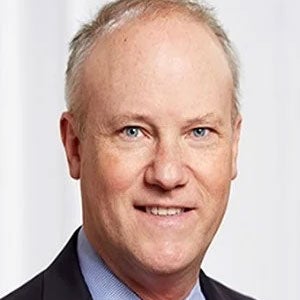
Podcast Guest
Charles M. Falcone
Global Leader, Academic Sector, Director, Physician Leadership Institute
Korn Ferry
Dr. Charles ( Charlie) Falcone is based in Chicago and is the Global Leader of the Academic Sector overseeing the academic medicine academic health and higher-education practices. He also is the Director of the Korn Ferry Physician Leadership Institute.
With more than 30 years of clinical healthcare and executive search/leadership advisory experience, Charlie is known for providing deep insights for his clients and also serving as a strategic advisor to them. Charlie has performed over 500 searches specializing in recruiting senior C-level leaders for academic and non-academic health systems for CEOs, deans, presidents, chairs, chief medical officers and board-level assignments as well as health-related associations and societies.

Podcast Guest
Jim Vincoli
Vice President, Client Solutions
Korn Ferry
Mr. Vincoli serves as Vice President in Korn Ferry’s Global Healthcare practice, based in the Atlanta office. Jim brings over two decades of physician and advanced practice recruiting experience, delivering holistic talent strategies that help healthcare organizations solve staffing challenges, increase access to care, and build a stronger, more resilient workforce.
Jim specializes in innovative, agile, end-to-end recruiting solutions—scaling from 10 to hundreds of providers—that adapt to the evolving demands of all healthcare sectors, including academic medical centers, integrated delivery networks (IDNs), critical access hospitals, payers, and not-for-profit health systems. His expertise spans provider recruitment at both clinical and leadership levels, along with succession planning strategies designed to secure top-tier talent. Offering both short-term and long-term partnerships, Jim provides a fresh, results-driven approach to clinical recruiting that helps organizations meet immediate staffing needs while building sustainable workforce pipelines for the future.

Podcast Guest
Michael Dill
Director of Workforce Studies
Association of American Medical Colleges (AAMC)
Michael Dill is Director of Workforce Studies at the Association of American Medical Colleges (AAMC), where he manages a research and data analytics group with an extensive portfolio of original research, data collection, and dissemination activities focused on the United States' physician workforce. His team's work helps policy makers at all levels meet the nation’s growing physician workforce needs.