AI: The Recruiter's New Best Friend?
Despite companies investing over a hundred billion in AI recruitment this year, seven in 10 firms are still reporting difficulties in hiring for roles.

AI: The Recruiter's New Best Friend?
NOTE: While this transcript has been reviewed, it may contain errors. Please review the episode audio before quoting from this transcript.
JILL WILTFONG:
Hello, everyone. I’m Jill Wiltfong, Chief Marketing Officer for Korn Ferry — and this is Briefings.
Actually, a special live episode of the Briefings podcast, brought to you live from Nashville, Tennessee. We’re really excited to have you here, so thanks for joining us remotely.
We’ve also got a room full of people with us — very exciting to have a live audience today. You’ll get a chance to hear from some of them and their questions as well.
In a moment, I want to start with a quick show of hands of people in the room — and you can play along at home if you’d like.
How many of your firms would you say have AI integrated into the recruiting process today? Raise your hand if it’s happening in some way, shape, or form.
Pretty close to half — maybe even more — of the audience have their hands raised, which isn’t surprising.
Companies are actually projected to spend — we’ve got our CFO here, he probably knows this too — over a hundred billion dollars this year alone to make that vision come true.
So that leaves us with this hundred-billion-dollar question: with all that artificial help, why are nearly seven in ten organizations still reporting difficulty recruiting for roles?
The experts we’ve talked to say the problem isn’t AI — it’s how humans are using AI. Right? So, as I said, always our fault. Why is it always our fault? But done right, AI really could become the recruiter’s new best friend.
JILL WILTFONG:
I want to introduce our panelists. We’ve got three wonderful, brave people here with us today:
- Brian Ackermann, who heads up Korn Ferry’s AI Strategy and Transformation
- Marny Riddling, Vice President of Talent Acquisition at Cox Enterprises
- Shenaz Waples, Group Executive of People and Culture at Colonial First State
Thank you all for being here today.
MARNY RIDDLING:
Thanks for having us.
JILL WILTFONG:
So, Marny, I’m going to start with you. How would you say AI has already changed the recruiting process in your organization — or has it?
MARNY RIDDLING:
It has, in a couple of different ways. I think it’s changing how our recruiters recruit, but also how candidates approach the organization.
When you think about AI in recruiting, people often focus on the tools — is it a timesaver, or does it create a better experience? But AI is also changing our process because candidates are leveraging it — to beef up their resumes, rewrite their cover letters, even generate responses.
So our recruiters are having to develop more discernment, figuring out how to navigate the “deepfakes” of candidate viability.
JILL WILTFONG:
Yeah, it’s a big change for us — a big culture shift, really. Shenaz, what about you?
SHENAZ WAPLES:
What we’re trying to do is create “talent champions.” Right now, we’re selecting people across the organization who can help us influence AI adoption.
The exam question we put out was simple: send us a one-minute video and tell us why you should be a champion.
What we found was that a lot of applicants used AI tools to create their videos — and in some, you couldn’t even see the human behind it.
We had to go through another level of filtering to find out: who are the real people behind all this?
JILL WILTFONG:
Brian, what are you seeing?
BRYAN ACKERMANN:
Just building on Marny’s comment about candidates using AI to fake interviews — it’s almost like there’s a cold war going on between recruiter and candidate.
We’re seeing the resurgence of proctoring and ID verification before interviews. And for certain high-profile or high-risk roles, we’re seeing a reinvention of the in-person interview — literally bringing people back in front of human recruiters to take technology out of the equation.
[MOVIE CLIP CUE]
JILL WILTFONG:
What a good movie. I love that movie. Certainly, nothing ever goes wrong in the recruiting process, right — whether it’s human or tech.
Let’s talk a bit about process. Shenaz, how do we ensure that the right candidates get selected as we shift more and more to AI screening?
SHENAZ WAPLES:
My perspective is that AI should augment the human, not replace it.
I actually asked ChatGPT and Claude, which I use often, “Can AI test for empathy?” The response was: Machines can do, but they can’t feel. Humans can feel.
So today, no — AI can’t replicate empathy. But it can help us test for it. And that’s so important when, for example, you’re sitting down with a widow worried about her finances — her life savings. You want someone who can truly provide empathy and guidance. That’s not something AI can do.
JILL WILTFONG:
We recently did some research assessing leaders’ readiness to embrace this shift to AI. It turns out only 9% of leaders had the behavioral and experiential capacity to really do so. Does that surprise you, Brian?
BRYAN ACKERMANN:
No, not at all. When I talk to clients — especially leaders — the first thing I ask is: Who’s using it?
This technology is visceral; you don’t really understand it until you use it yourself. Once leaders begin experimenting, their mindset shifts. Creativity kicks in. Ideas start flowing.
So, the key is: leaders have to use AI in their own work to begin embracing it in their organizations.
JILL WILTFONG:
Is there one place in the recruiting process where you would never want AI to replace a human?
MARNY RIDDLING:
For me, it’s the engagement session — the kickoff. There’s a real skill in having a recruiter sit down and truly understand what a hiring leader needs.
That’s about nuance — understanding team dynamics, compatibility, cultural fit. Those are things AI can’t credibly replace. That part of recruiting will always need a human touch.
JILL WILTFONG:
This could go to any of you — but do you think candidates know when they’re in an AI experience? And does it matter?
SHENAZ WAPLES:
For us, the moment that really matters is when they actually start the job.
There’s often a gap between offer acceptance and start date — and we’ve seen younger cohorts accept multiple jobs, only starting one.
So we’re thinking deeply about how to keep candidates engaged between offer and start date. That’s where AI can be incredibly useful — sending nudges, sharing culture messages, making new hires feel welcome before they even walk into the building.
[MOVIE CLIP CUE]
JILL WILTFONG:
I remember that movie — he’s walking through a mall, and it recognizes him by his eyes. “Hey John, want that belt you looked at yesterday? Have a Guinness!”
That’s our world now. The future is here.
So as AI reshapes recruiting, what excites each of you — and what concerns you?
MARNY RIDDLING:
What excites me is that AI feels like the for me the Oprah show, you know when everyone in the studio audience gets the car or the robe whetever. I feel like AI is the you get an assistant, you get an assistant, you get an assistant!
That’s exciting personally and professionally. But my concern is that people might start opting out of certain interactions because they can lean on AI. They’ll lose those moments of human connection — which are key to building culture.
JILL WILTFONG:
Brian, I have a big question for you to end on — like Nostradamus here. If you could look ahead five years, what do you think the recruiter’s role will look like?
BRYAN ACKERMANN:
Please — check back in five years!
I’m excited about AI because, as researcher Ethan Mollick said, “Everybody really is now the smartest person in the room.” That unleashes incredible innovation.
But I’m also focused on elevating those human moments — the ones that make the difference in someone’s career and an organization’s success.
My hope is that in five years, AI helps us focus candidate pools at the intersection of what companies need and what drives people’s purpose — leaving the human recruiter to handle the moments that truly matter.
That could be five months away — or may never come — but it’s certainly an exciting time.
JILL WILTFONG:
Thank you all for being here — and thanks for being a good audience, and we’ll move onto the the next thing!
The executive producer of Briefings is Jonathan Dahl. Today’s episode was produced by Rupak Bhattacharyya and Zachary Dore, and it was edited by Jaren Henry McRae.
It contains reporting by Russell Pearlman, Ariane Cohen, Peter Lauria, and Meghan Walsh. Our video segment contains original artwork by Fraser Milton, Haley Kennel, Jonathan Pink, and Sasha Kotzek.
Don’t forget to read our magazine—available at newsstands and at kornferry.com/briefings.
That’s it for Korn Ferry Briefings. I’m Jill Wiltfong. See you next time.
Subscribe to series:



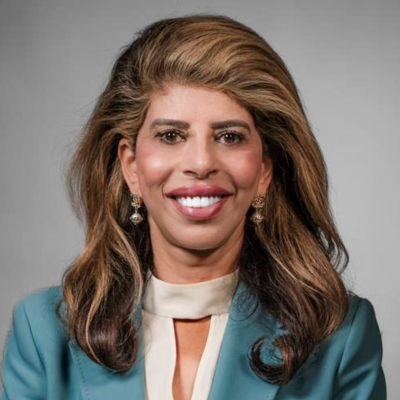
Podcast Guest
Shenaz Waples
Group Executive of People and Culture
Colonial First State
Shenaz is currently the Group Executive, People & Culture at CFS, overseeing all aspects of human resource management. This includes accountability for culture, leadership capability, learning & development, talent acquisition, business partnering, performance management & reward, and internal communications.

Podcast Guest
Marny Ridling
Vice President of Talent Acquisition
Cox Enterprises
Marny Ridling is the vice president of Talent Acquisition at Cox Enterprises. In this role, Ridling leads all areas of talent acquisition for Cox Automotive, Cox Communications, and Cox Enterprises including sourcing and recruiting from early careers to executive search, strategy, technology & operations and third-party search. Ridling is an accomplished HR professional, with more than 25 years of experience in compensation, talent management, HR business partnerships, HR systems, HR shared services and talent acquisition.

Podcast Guest
Bryan Ackermann
Head of AI Strategy & Transformation, Managing Partner, Assessment & Succession, Leadership & Professional Development
Korn Ferry
Mr. Ackermann brings over thirty years of experience to the firm. He leads globally Solutions providing individual insight via assessments and multi-raters, and all leadership, professional development and training solutions in Korn Ferry’s Consulting and Digital lines of business. Prior to this role, Mr. Ackermann was the Chief Information Officer of Korn Ferry, responsible both for the corporate enterprise as well as client facing technology teams.