Shopping Spree? Or Crime Spree?
With ongoing retail crime posing a threat to holiday sales, three experts explore what companies can do about it.

Shopping Spree? Or Crime Spree?
NOTE: While this transcript has been reviewed, it may contain errors. Please review the episode audio before quoting from this transcript.
Jill Wiltfong:
The holiday shopping season is in full steam, but losses from retail theft have more than doubled. How bad is it out there?
Craig Rowley:
Definitely a big city issue. Folks who are involved in theft are more aggressive and more violent.
John Long:
Which is really forcing retailers to rethink protecting their stores.
Jill Wiltfong:
What's happening on the employee side?
David Levenberg:
The best thing they can do is be a good witness, safety is number one, and the safety of customers is also a high priority.
Craig Rowley:
It impacts profitability, big time.
Shopper:
So, hey, I have to stop in here for some last-minute holiday gifts.
Partner:
Last minute? You've had our wish list for three months.
Shopper:
Be right back.
Hi, I need some ladies’ leather gloves.
Assistant:
Hmm, well, I don't see anything out front, let me just get the store manager,
Shopper:
The manager, but why?
Manager:
Hello, I hear you'd like to purchase gloves. Follow me.
Shopper:
Okay.
Manager:
It's back here. Just down here. But just through here.
Shopper:
I don't understand.
Manager:
One more level. And.
Shopper:
You have to go into a vault to get one pair of gloves?
[Computer]:
Retina scan initiating.
Manager:
Well, yes, sir. I assume you've seen the headlines.
[Computer]:
Access granted.
Manager:
This is 2023, we can't be too careful.
Jill Wiltfong:
Hi, this is Jill Wiltfong, Chief Marketing Officer for Korn Ferry, and this is Briefings, our deep dive into leadership. The holiday shopping season is in full steam, but will a wave of retail crime keep shoppers away from stores?
Losses from retail theft have more than doubled since pre-pandemic days, reaching 112 billion last year. This is on top of sales dipping at the beginning of the fourth quarter, so it's been tough going for retailers.
We've all seen or read about thieves swiping aisles full of merchandise, as fearful customers and employees look on, perhaps never to return. Is there anything retailers can do, especially for a jittery workforce? And what can consumers expect going forward, a shopping spree or a crime spree?
Here today to speak with me on this important issue are John Long and Craig Rowley, both Senior Client Partners in Korn Ferry's Retail and Consumer Markets Practices.
Hi, gentlemen, thanks for joining me.
John Long:
Great to be here, Jill.
Craig Rowley:
Nice to be here, thank you.
Jill Wiltfong:
Craig let's start with you. Tell me, how bad is it out there? What's reality?
Craig Rowley:
Well, Jill, we've always had theft in retail. What's different today is that the retailers are reporting that the folks that are involved in theft are more aggressive and more violent than in the past, especially those involved in organized retail crime. And you mentioned earlier, sales are a little bit tough with retail turnover and retail loss prevention being at one point a half percent or thereabouts, it impacts profitability big time.
Jill Wiltfong:
Craig, now not everyone may have seen what we've seen on the news. For those that aren't as familiar with it, can you talk a little bit about the types of crimes that you've been seeing and hearing about?
Craig Rowley:
Well, the crimes fall into a couple of buckets. First and most distressing is the mob crime where people come in 10, 20 people with masks and breaks cases and steal things and then run back out the door.
But at the same time, you have individual folks, I saw one recently where a gentleman came in with a 50-gallon tub on wheels and just took his arm and scraped stuff right off the counter into the tub and out the door he went.
Jill Wiltfong:
Craig, thank you for those examples, it helps kind of bring this to life. Do you see this more as a big city issue? Is it happening everywhere? Give a little context as to what parts of the world these things are happening in.
Craig Rowley:
Yeah, Jill, it's definitely a big city issue, particularly on the coasts, Los Angeles, San Francisco, Portland, Seattle, New York, but also Houston and Chicago. But for the majority of America, we can go shop and it's safe and a sound and there's nothing new other than the fact that shoplifting's always been around.
Jill Wiltfong:
Is it more high-end stores, John, or is this happening kind of across the board?
John Long:
We're seeing both, we're certainly seeing at high-end stores, high ticket items being taken, but we also are seeing in drug stores and in mass retailers, a lot of low end items being taken as well, which is really forcing retailers to rethink how they account for that type of theft and how they think about protecting their stores from that type of theft.
Narrator:
A man in a British Columbia superstore is filming an alleged shoplifter, trying to leave the store with a cart full of merchandise.
[Cameraman]:
Are you gonna pay for that?
[Shoplifter]:
Huh?
[Cameraman]:
You gonna pay for that?
[Shoplifter]:
Yeah.
[Cameraman]:
When?
[Shoplifter]:
Huh?
[Cameraman]:
You gonna pay for it?
Narrator:
He's dismissing the man filming, but there's someone else he's going to have to face and she means business. The woman, who claims to have seen the man shoving roast beefs into his backpack earlier, rips the man's mask off.
[Cameraman]:
Come on, bud.
Narrator:
While the man filming grabs the cart full of goods.
[Cameraman]:
Come on, (beep).
[Employee]:
Get out.
Narrator:
Thus, thwarting the alleged would-be thief.
Jill Wiltfong:
That clip is from A&E's show "Customer Wars". We know customers are upset, but let's talk about the impact on employees. They can't go or really shouldn't go pulling masks off of people, and I assume companies are telling them not to go after shoplifters to avoid themselves being harmed. How is all of this affecting them, Craig? What's happening on the employee side?
Craig Rowley:
Well, you're absolutely right, 40% of retailers don't allow any employee, including loss prevention from stopping somebody as they go out the store. For employees, it's a couple of things, the first is just the frustration of knowing how your store is being hurt. The second, and particularly as we get into the mob level, the danger.
Remember, earlier, we said they're increasingly aggressive and violent. It makes people uncomfortable, makes customers uncomfortable.
Jill Wiltfong:
John, what do you hear from corporate leaders about all of this? Are they putting more emphasis on their online business? Are they adjusting their forecasts in any way as a result of this?
John Long:
Retailers in general need to meet the customer wherever they are, and so, whether it's online or in stores, they're gonna accommodate their customers and they're not gonna try to push them into one channel or the other.
Kyung Lah:
At this store, frozen food is controlled with a cable lock, fake eyelashes locked behind plexiglass, along with lotion and nail polish. At another grocery store, $14 bags of coffee, under lock and key.
Jill Wiltfong:
That's CNN's Kyung Lah reporting on how some stores have turned to keeping merchandise locked up. It seems like that would require a lot more employees to help customers get what they need in time before they do decide to just opt out completely. How have these lockup measures made staffing stores more difficult?
John Long:
Well, and that certainly is the trade off, right? It really is that dynamic of figuring out whether or not it's appropriate to lock something away and discourage theft, but also potentially discourage sales. And then if you have to try to mitigate that by having another salesperson on the floor, that's gonna increase your costs again.
Jill Wiltfong:
Craig, what else are you seeing? What are other ways in which stores are trying to thwart theft?
Craig Rowley:
Well, stores are investing, both in technology and equipment and in people, to address this issue, technology is obvious, as John pointed out. Actually, I was in a mall in an airport last week where they have a store where you have to put your credit card in to get in the store to open the door up, buy your stuff, and then it takes out automatically, and they have just one clerk in the store now, and you automatically take care of yourself. So, it's both a theft deterrent, but also a labor issue.
Jill Wiltfong:
John, Craig, thank you for being here. Coming up after the break, in big cities now, crime fighting appears to be in the hands of many stores. We speak to a retail security expert on how company leaders can best serve shoppers, but also, importantly, workers, in this peak holiday time.
Rupak Bhattacharya:
Hi, and welcome to the break. I'm Rupak Bhattacharya, and here's a quick look at what else is happening in the world of business from Korn Ferry's 'This Week in Leadership'.
[Speaker 1]:
What if we could flip the script and have a four-day weekend and a three-day work week?
Rupak Bhattacharya:
Wouldn't a three-day work week be nice? Maybe, maybe not. Key corporate leaders are saying that AI's first impact on companies won't be to cut jobs, but rather reduce the time people are needed down to three days a week.
[Speaker 2]:
A significant decline in the number of job openings.
Rupak Bhattacharya:
Job openings fell significantly in October, reaching their lowest level since March 2021. There were 8.7 million job openings in October, down noticeably from 9.3 million in September. That means there are still plenty of jobs available, though employees may now have slightly less flexibility when it comes to job hopping.
[Speaker 3]:
You've decided that it's time to move on from your current job, and in your exit interview, you're asked, "Why are you leaving the company?"
Rupak Bhattacharya:
According to a recent poll of 1,500 British employees who quit in the past half decade, 55% didn't get an exit interview. Experts wonder whether this is a sign that some firms aren't paying enough attention to their company's culture. In the end though, employees did have the last word, the same survey found that nearly seven in 10 provided feedback on public review websites.
For more insights on business and leadership, head to kornferry.com/insights. Now, back to Jill and our episode "Shopping Spree or Crime Spree?"
Erica Zucco:
An organization of hundreds of Washington retailers is pushing for new federal legislation to crack down on organized retail crime and a statewide task force that's working to combat organized retail crime is expected to meet later this month to continue work on these efforts.
Jill Wiltfong:
We're back and we're talking about retail crime. I'm now joined by David Levenberg, owner of Center Security Services. He advises retailers on how to secure their stores. David, thanks for joining me.
David Levenberg:
Thanks for the invitation.
Jill Wiltfong:
You bet, David, that clip we just played was from Erica Zucco of KING 5 News, talking about retailers' desire for federal action on this issue. As it stands now, it seems different laws around the US have made it harder for some store owners to take action against crime. From your view, what's the best way that retailers can work with law enforcement officials in the current climate?
David Levenberg:
Probably the best way is to find out if there is a organization called ORCA in their vicinity. ORCA stands for Organized Retail Crime Association, and these are groups that are sometimes headed up by local police departments, sometimes federal and state law enforcement, and they partner with retailers to address the organized retail crime issues.
[Interviewer]:
What are some examples of things that people have shoplifted from this store?
[Christa Johnson]:
It's luxury handbags, perfume and sunglasses, and also luxury clothing items. These girls stole over $10,000 in handbags and I chased them into the alleyway and they dropped the items and they fled in a getaway car.
Jill Wiltfong:
That's store owner, Christa Johnson, describing the in-store crime she's had to deal with. David, we've mentioned earlier that employees are often told not to engage with shoplifters, given that, what do you advise store workers to do when they're face-to-face with a theft situation?
David Levenberg:
Probably the best thing they can do is be a good witness, if they are able to record any video, we've seen lots of videos on YouTube of these large-scale thefts. Make sure they get as much of a description as they can, physical descriptions, vehicle descriptions, license numbers, if possible, tattoos, anything unique about the individuals perpetrating the crime is probably the best thing that they can do.
Jill Wiltfong:
Yeah, it's a great note. Are there any particularly effective, newer technologies that you've seen that you're advising retailers to take a look at?
David Levenberg:
Yeah, there's a couple, as a matter of fact, there's technology that can be implanted, a chip, for example, implanted into an electronic tool that unless it's deactivated at the point of sale, the tool will not work. So, they can steal it, but they can't operate it. Another technology is a company called Gatekeeper, which has a locking mechanism on shopping cartwheels or flatbed wheels, for example, at Lowe's or Home Depot. So if the technology detects that the items were not paid for, it will actually lock up the wheels before the suspects get to the exit.
Jill Wiltfong:
Well, David, thank you so much for joining us, sharing your expertise and sharing those really concrete steps that I think all of us can use, whether we're just observing and witnesses or we're in the retail space, in management somewhere and taking some more tech-enabled, kind of proactive approaches, thanks so much for being here.
David Levenberg:
Thank you very much.
Jill Wiltfong:
Here's wishing everyone out there a safe shopping, a joyful holiday season, and a happy new Year, thanks for being here.
The Executive Producer of "Briefings" is Jonathan Dahl. Today's episode was produced by Rupak Bhattacharya, Nadira Putri, and Teresa Allan, and edited by Jaron Henrie-McCrea. It contains reporting by Russell Pearlman, Arianne Cohen, and Peter Lauria.
Our video segment contains original artwork by Frazer Milton, Hayley Kennell, Jonathan Pink, and Sasha Kostyuk.
Don't forget to read our magazine, available at newsstands and at kornferry.com/briefings.
That's it for Korn Ferry's "Briefings".
I'm Jill Wiltfong. We'll see you next time.
Subscribe to series:




Podcast Guest
David Levenberg
Owner
Center Security Services (CSS)
Throughout his career, David has served as the cornerstone and trusted advisor of security services for prominent real-estate developers, retailers, and reputable contract security agencies both domestically and internationally. CSS stands on its rich legacy of delivering top-tier security solutions, having catered to the premier retail / commercial property owners and developers for over three decades.
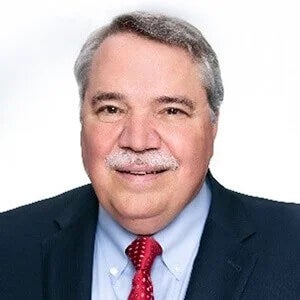
Podcast Guest
Craig Rowley
Senior Client Partner, Consumer Market Practice
Korn Ferry
Craig has 25+ years of experience developing human resources programs that fit a company's business direction and strategy. He is a leader in the consumer sector, leading the provision of consulting services to all companies in the consumer products, retail, hospitality and leisure, digital and media sectors.

Podcast Guest
John Long
Senior Client Partner, Consumer Market Practice
Korn Ferry
John is passionate about innovation and growth and is an expert in identifying the leadership required to bring it about. At Korn Ferry, he conducts senior-level assignments for clients across all retail and digital formats including specialty, fashion, consumer durables, luxury, and lifestyle brands.