Leadership: Diggins Digs Deep
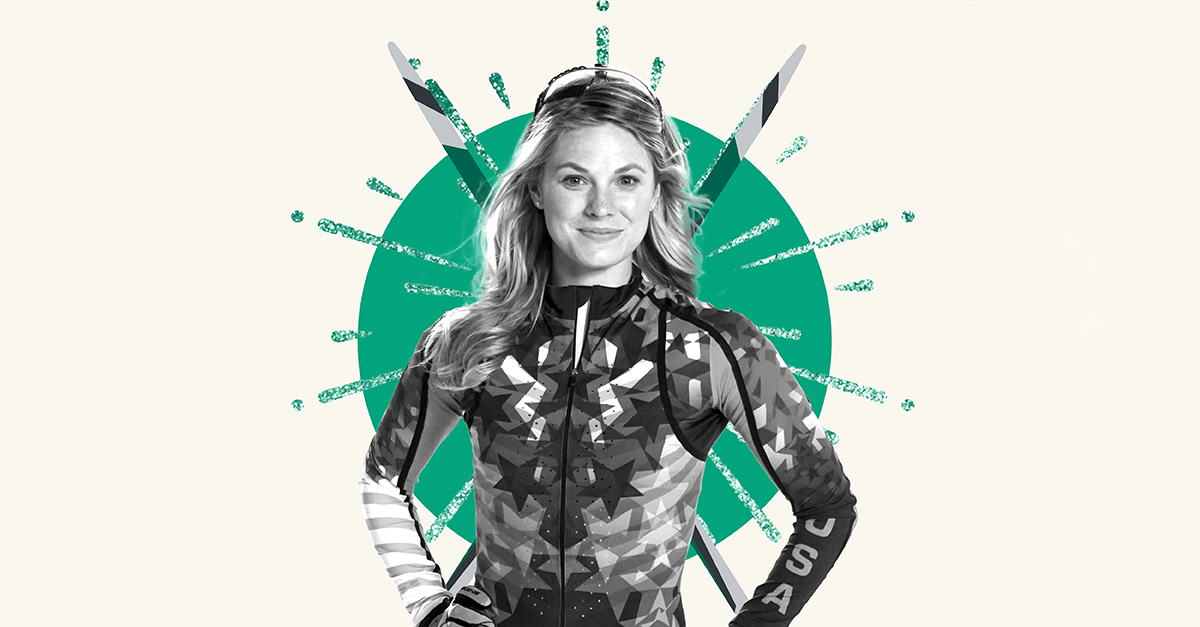
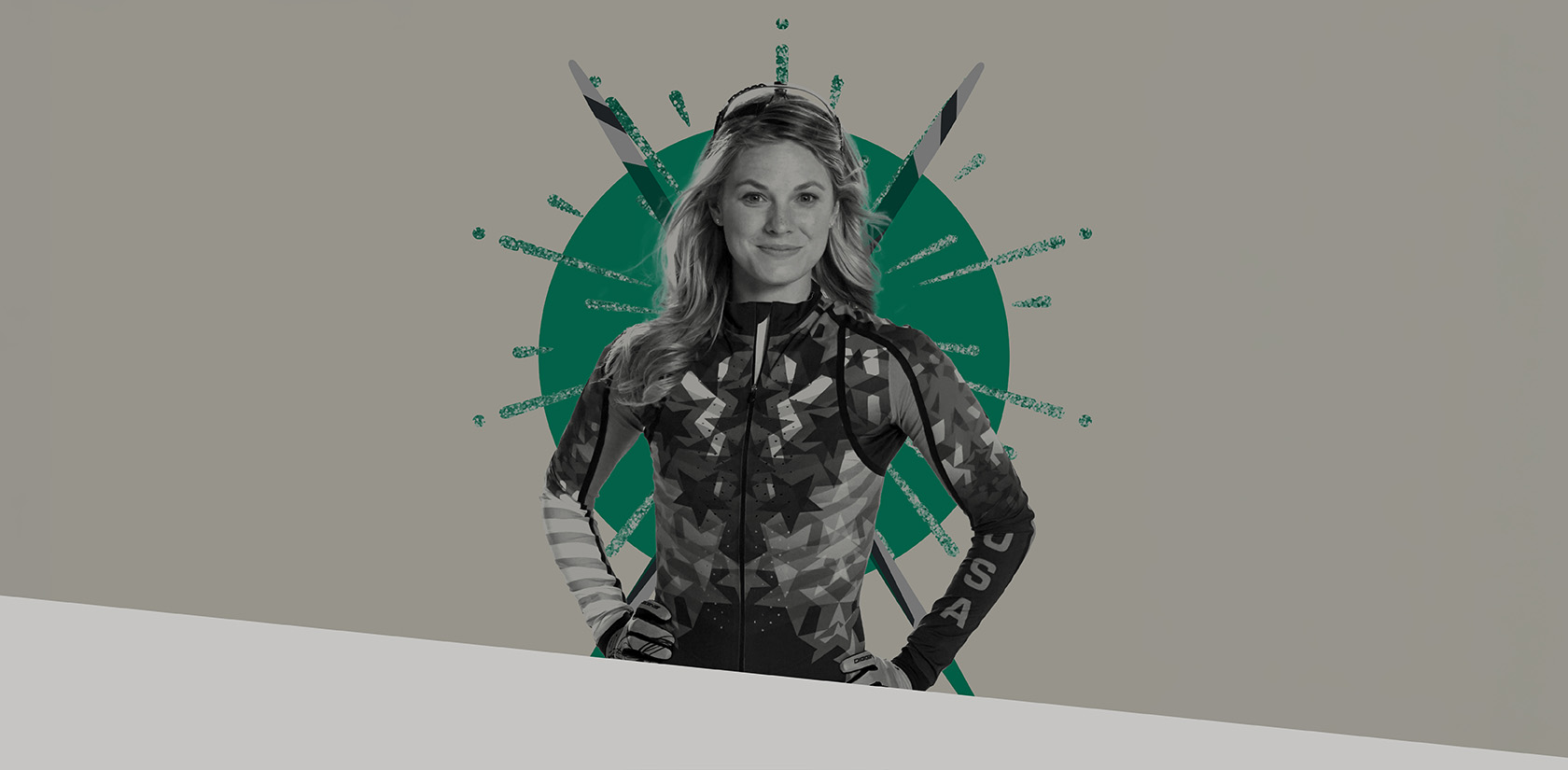
We sit down with Team USA Olympic gold medalist Jessie Diggins to discuss the leadership challenges she overcame on her path to becoming the most decorated U.S. cross-country skier in history.
Leadership: Diggins Digs Deep
NOTE: While this transcript has been reviewed, it may contain errors. Please review the episode audio before quoting from this transcript.
Jill Wiltfong:
Hi, I’m Jill Wiltfong, Chief Marketing Officer for Korn Ferry, and this is Briefings, our deep dive into the topics corporate leaders need to care about.
“Here comes Diggins! Here comes Diggins!”
It was the broadcast call heard around the world as cross-country skier Jessie Diggins passed her rival in the final stretch to win Team USA’s first-ever Olympic gold medal in cross-country skiing.
Diggins’ story didn’t end there. She went on to become the most decorated U.S. cross-country skier in history, earning four Olympic medals for Team USA and seven world championship medals. But it wasn’t always sunshine and fresh powder. Along the way to seemingly impossible feats, her journey shed light on many issues leaders face in the corporate world.
Diggins has faced leadership challenges ranging from team building to mental burnout, and she tells an inspiring story that leaders can learn from as they navigate today’s unpredictable business terrain.
That’s why today we’re honored to be joined by the one and only Jessie Diggins herself to learn what it really takes to reach the top, as Diggins digs deep.
Before we start, if you’re watching us on YouTube, please like, subscribe, and leave a comment to let us know your thoughts on this topic.
As promised, I’m joined now by four-time U.S. Olympic medalist Jessie Diggins. Jessie, thanks so much for coming on.
Jessie Diggins:
Thank you for having me.
Jill Wiltfong:
Jessie, guess what I have?
Jessie Diggins:
I’m guessing that is biodegradable glitter.
Jill Wiltfong:
Yes. Glitter. Biodegradable glitter — and in Korn Ferry green, at that. Shall we glitter ourselves up? I’m excited.
Jessie Diggins:
Absolutely. I’ve got some for your watchers, too. I’ve got some really beautiful stars.
Jill Wiltfong:
Very nice. This is your signature, right?
Jessie Diggins:
It is. It absolutely is.
For me, racing with glitter started a really long time ago. It became this promise to myself, because I was starting to get really nervous before races — almost to the point where it was debilitating. It was stealing all of my energy.
Some nerves are good, right? If you’re not nervous, it probably means you don’t really care about what you’re doing. Whether that’s in sports or in business, a little bit of nerves means you are reaching, challenging yourself, and pushing yourself. That’s good.
But you also want to be able to do it with joy and execute to your full potential. For me, the glitter became the last step in my pre-race ritual before I left for the venue. I would take that moment to remind myself: “Wow, I get to do something that I love.”
Jill Wiltfong:
Let’s talk about the paradox. You wear glitter, but your nickname is “Queen of Pain.”
When you earned bronze for Team USA in the 10-kilometer freestyle at Milano Cortina, despite heavily bruised ribs, you said afterward something along the lines of, “I thought I was going to maybe pass out or die.”
What is it about your mentality that enables you to push yourself to your ultimate limit — a place most people are usually pretty afraid to go?
Jessie Diggins:
I guess I was a little dramatic. I probably wasn’t going to die.
I do want to take a second to thank the team around me, especially our medical staff, who checked me out and made sure it was safe for me to race. They told me, “It is going to be really painful, but medically speaking, you are not in danger.”
I had a crash 1.5 kilometers into my first of six races, and that drastically altered the landscape of the Games for me.
Going into any race — but especially those Olympics — I took a hard look at what was going to happen and said, “This is going to be really painful. I know that. I can’t control it. These are really challenging conditions. I can’t control that either.”
But what I could control was my plan: my pacing, my technique, and my mental plan. What was I going to tell myself when it got hard?
That’s where I think I’ve found a way to excel in ski racing. I ask myself, “How do I want to feel when I cross the finish line?”
This might sound crazy, but I want to feel like I’m going to die when I cross the finish line, because then I know, without any doubt, that I couldn’t possibly have worked harder. I will never have to wonder, “What if?”
Jill Wiltfong:
That’s a training montage from a film about an underdog ski jumper.
Training, of course, is the thousands of hours elite athletes put in before the big day — the work nobody sees. What’s the difference in mindset between those who train at the highest level and those who don’t?
Jessie Diggins:
I feel like I’m starting to understand this a lot more now that I’ve recently retired.
When training for the Olympics is your job — when your body and your fitness are literally how you put food on the table and pay the bills — you make training the highest priority of your day. Everything else in your life revolves around one question: “Is this making me a better athlete?”
When I was training and competing, everyone around me might be having a beer with dinner, and I’d say no, because the next day I had to go out and do intervals. I needed to recover and sleep nine hours so I could show up to training, hit those intervals really hard, and make sure I was improving.
Jill Wiltfong:
You became immortalized for winning gold in the 2018 team sprint for Team USA.
Talk to me about teamwork. We all know it’s critical for success in any big endeavor, but it’s not always easy to master. What were the key factors that made your team win big that day? What worked for you?
Jessie Diggins:
A big part of teamwork is recognizing that nothing big is accomplished alone.
One of the things I learned was how to be vulnerable and open myself up so other people were truly part of the journey with me. I learned that it’s okay to ask for help. The people in your life are excited to give that help and to be part of your journey.
If there’s something you want to learn — an element of sport psychology you’re curious about, or a way teammates can push you harder in workouts — seek out training partners who are better than you at something.
Then, when you do succeed, all of those people are bought into that moment.
Jill Wiltfong:
When you won that famous medal, you became the face of U.S. cross-country skiing almost overnight.
In some ways, that’s similar to what many new CEOs are facing right now. Of the 168 incoming bosses last year, more than 80% were first-time public-company CEOs.
How did you deal with suddenly having a higher level of scrutiny and expectation than you’d ever had before? Are there things leaders can learn from that?
Jessie Diggins:
I will acknowledge that it is challenging. You do not become a cross-country skier to become rich and famous.
One thing that really helped me, which I worked on with my sports psychologist, was holding close my goals and values, and not letting other people’s goals, expectations, or values become my own.
I don’t consume media about me or my sport. I know that may or may not be an option in the business world, but I think the less you can take in from outside opinions — especially anonymous comments — the better.
If someone has feedback that can help me grow, I’m going to hear it face to face. It will be a conversation with someone who cares about me. If that’s not the case, I don’t need to allow it into my life.
Jill Wiltfong:
We’ve talked about how Jessie Diggins became, well, Jessie Diggins.
When we return, we’ll talk about what’s next on her incredible journey. Stay with us.
Jill Wiltfong:
We’re back talking with four-time U.S. Olympic medalist Jessie Diggins.
That last clip featured change leader Christy Elmer talking about how difficult it is for us to experience change. For example, many CEOs and senior leaders may be hesitant to step away for fear of what comes next, perhaps explaining why the average CEO age is now a decade older than it was in 2000.
That does not seem to be the case with you. You recently retired from professional skiing and took that step back.
What emotions are you feeling after dedicating so much of your life to the sport? It has to be a profound change.
Jessie Diggins:
The overwhelming emotions I’ve felt are love, gratitude, and excitement.
Love for the sport was something I felt throughout my entire career, and that was very important to me. I didn’t want to hold on too long and become burned out. I wanted to make sure it stayed fun, exciting, and full of passion.
I was quite literally smiling in the final race of my career. One of my goals was to be happy and to enjoy the process all the way through.
Jill Wiltfong:
What would you say to CEOs and senior leaders who may be afraid to transition out of their role?
Jessie Diggins:
I would say: run toward the thing you want to do. Don’t simply run away from something that you know isn’t working for you.
Make sure you are passionate and excited about the thing you’re moving toward. Maybe that’s more time with your family and balancing the different buckets in your life. Maybe it’s a different role or job. Maybe it’s advocacy, because you’ve learned so much in your career and want to pay it forward in a different way.
Make sure you’re moving toward the thing that excites you.
Jill Wiltfong:
I’d like to end on what comes next in the Jessie Diggins story.
Look into your crystal ball — which I’m sure is shining with glitter — and tell me: when we sit down five years from now, what do you hope we’ll be talking about when it comes to you?
Jessie Diggins:
My swirling crystal ball of glitter will hopefully show that I am happily engaged in motivational speaking and feel like I’m making an impact.
I want people to leave my talks feeling like they’ve learned something. I hope it sparks ideas and conversation. I hope they feel empowered. I also hope it helps them have critical conversations with people in their lives about something they’re going through.
I hope the sport continues to talk about mental health, and that coaches continue to provide resources to their athletes and have those critical conversations. Maybe they can use my career and the things I’ve left behind as an icebreaker.
And I hope I’m doing many long, adventurous training runs out in the mountains.
Jill Wiltfong:
That sounds amazing.
Jessie, your life has already been an inspiration to so many, and I can see why. I have no doubt the next many years will bring just as much inspiration for all of us.
I really appreciate you chatting with us today, telling us a little bit about that glitter magic, and showing how we can all learn from it.
Thank you so much for being here.
Jessie Diggins:
Thank you for having me.
Jill Wiltfong
The executive producer of Briefings is Jonathan Dahl. Today’s episode was produced by Rupak Bhattacharyya and Zachary Dore, and it was edited by Jaren Henry McRae.
It contains reporting by Russell Pearlman, Ariane Cohen, Peter Lauria, and Meghan Walsh. Our video segment contains original artwork by Fraser Milton, Haley Kennel, Jonathan Pink, and Sasha Kotzek. Our web operations are managed by Ed McLaurin.
Don’t forget to read our magazine—available at newsstands and at kornferry.com/briefings.
That’s it for Korn Ferry Briefings. I’m Jill Wiltfong. See you next time.
Subscribe to series:



PODCAST GUEST
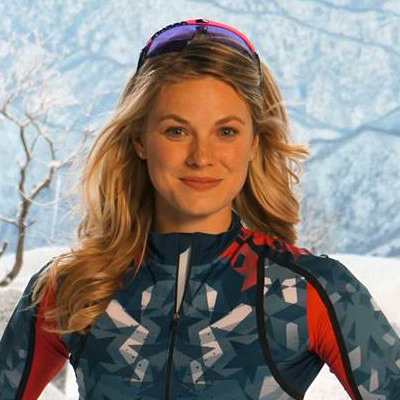
Jessie Diggins
Team USA Olympic Gold Medalist
Cross-Country Skiing
Jessie Diggins is a four-time Olympic medalist and the most decorated U.S. cross-country skier in history. She captured global attention at the 2018 Winter Olympics with a dramatic comeback to win Team USA’s first-ever women’s cross-country gold. Known as the “Queen of Pain,” she has built her career on resilience, grit, and elite performance across four Olympic Games. Jessie holds the record for the most-ever World Cup starts with 385 and finished her career with 90 podiums. Beyond competition, Jessie shares her journey overcoming a life-threatening eating disorder and advocates for mental health and environmental sustainability.