The Great British Brain Drain
Could a British talent exodus dash the UK's hopes of becoming an AI powerhouse? A leading UK talent expert shares his take.

The Great British BrainDrain
NOTE: While this transcript has been reviewed, it may contain errors. Please review the episode audio before quoting from this transcript.
Jill Wiltfong
Hi, I'm Jill Wildfong, Chief Marketing Officer for Corn Fairy, and this is Briefings, our deep dive into topics that corporate leaders need to care about. For the longest time, most British workers expected to spend their lives in the United Kingdom. But that may be changing and rapidly. Between 2021 and 2025, there's been a net outflow of half a million people from the UK, nearly triple the rate from three decades prior. That's a big problem for many reasons, but the biggest impact may be on AI. With the country looking at a possible AI expert deficit of 160,000 people within the next two years, which could seriously dent the UK's plans to become a global AI powerhouse. So, why is all this talent leaving the UK? And what, if anything, can savvy company leaders do to stem the outflow? Let's find out as we unpack the great British brain drain.
Jill Wiltfong
I'm joined now by Lewis Cohen, a managing director at Corn Ferry's AMS Business. He spent many years working with countless British company leaders in the UK on their talent strategies. So there are few people, I would argue, better placed to speak on this topic. Lewis, it's really great to have you with us.
Lewis Cohen
It's very nice to be here. Thank you, Joe.
Jill Wiltfong
So Lewis, set the stage for us a little bit here. What's driving this exodus? Are are people simply chasing bigger paychecks abroad? or or is something more fundamental happening in in Britain's job market? What do you think?
Lewis Cohen
I don't think you can ignore the financial aspects of it, but actually I think more of a driving factor, rather than people leaving just for bigger paychecks, it's it's leaving for an expected greater career trajectory, better opportunities, and perhaps moving to economies where people feel like their paycheck is gonna give them a different life.
Jill Wiltfong
Job vacancies are at 700,000, which is down from the post-pandemic peak, which was almost twice that, right? 1.3 million. As you've mentioned, being there's this paradox there where British companies are still struggling to fill certain jobs at the same time that British workers are leaving because they can't find opportunities. What explains that that disconnect there?
Lewis Cohen
it does appear superficially to be a paradox, but actually, if you look at the topic of skills, really, this is where it stops being a paradox because a labor shortage and a skills shortage are completely different things. You can have people looking for work and employers looking for people simultaneously if the capability and the experience and the location and the opportunities don't line up. So actually it's it's more fundamentally about whether the people that you have in supply have the skills that you need.
Jill Wiltfong
That's a comedic interview scene from the movie Train Spotting. Interviews are, of course, key to securing new talent. But Lewis, you've said that in your experience, hiring managers don't actually do much direct hiring these days, and that companies need to move away from traditional hiring models if they're gonna solve this British brain drain. Unpack that a little bit for us.
Lewis Cohen
I mean first thing to say is interviews are always important and they're always going to be important. I think what we see though is that the way interviews are conducted may not lend itself ideally to this kind of skills-based interaction or skills-based dialogue. A great example of that would be the competency-based interview, which I'm sure we've all got experience of. Tell me about a time you did this. Tell me when you've done these things, what were the outcomes? Because especially when we're talking about skills and you know, AI, for example, these are things that people may not have had the opportunity to work with and have a huge backlog of stories and war stories to tell about where they've done things. So asking where have you done this specific thing that I want done here doesn't necessarily speak to potential and the underlying capability or propensity of that or o individual to to undertake the work in the future.
Jill Wiltfong
So specifically when it comes to AI, Britain has ambitions to become a a major global player. But as we talked a little bit about up front, there's a potentially big talent shortage that could get in the way of that dream. Do you think the UK can realistically compete? with some of the other big players for AI supremacy and and if so many AI professionals end up leaving?
Lewis Cohen
Think I might start by sort challenging what we mean by supremacy actually. because if the if supremacy means we have more compute capability and bigger data centers and more kind of AI engineering talent and than the USA or China, that might not be the kind of contest that we should put ourselves in. but there I think there are other routes to to what you might think of as AI supremacy, or at least becoming the leading AI economy. And that can as much be about how we bring AI to bear, how how AI literate and how AI fluent are individuals and the organizations that they work within. And that doesn't necessarily need to be as quantitatively competitive as as just comparing the number of designers and developers that we've got compared to other places.
Jill Wiltfong
Let's end on a personal note. You're from the UK, you've spent your professional life there. What's made you stay? where others may may or may fear to linger?
Lewis Cohen
I think that I mean going back to what we started talking about, the kind of economic conditions that might be prompting people to leave. I I suppose I have to say that in my life I've been really lucky. From a career perspective, working in the talent acquisition and talent management space, I've always had the opportunity within the UK, with being based in the UK, to a work on global things. And also the UK has been in in my field kind of like the Silicon Valley of TA, a lot of the most innovative solutions and services that have been developed around talent acquisition were developed from the UK in the first instance and then in it across Europe.
Jill Wiltfong
Well Lewis, thank you for coming on today. It's it's really great to get your insider thoughts on all of this. Appreciate it.
Lewis Cohen
Thank you.
Jill Wiltfong
We've looked at what's behind the British brain drain. After the break, we'll look at the brain drain from a global perspective and what all of this means for company leaders. Stay tuned.
*******BREAK********
Jill Wiltfong
We're back in the first half of this episode. We discussed the British talent exodus. Now let's put a more global lens on this phenomenon of talent migration. Joining me for this conversation is Roger Philby, global lead of Cornferry's people strategy and performance practice. Roger, thanks for joining me.
Roger Philby
Always a pleasure to join you, Jill. I'm looking forward to this.
Jill Wiltfong
So I am too. And I'm gonna start with a pop quiz, because I I know you love you know the art, you know, love the art and element of surprise. each of these countries I'm going to name is experiencing a net outflow of skilled workers, except for one. What's the odd country out here? Italy, Romania, United Arab Emirates, or South Korea?
Roger Philby
I'm gonna go with y the UAE just because of the amount of business investment that's gone into that region. am I right?
Jill Wiltfong
You would be right. You would be right. That is right. Well done. Well done. And just wanted to make sure you're staying up to speed on the global trend. So that's right. We asked this question specifically about the UK in the first half, but what do you think company leaders globally should be doing to shore up their talent if they know it's running for the border, so to speak?
Roger Philby
I think this is where leaders get confused. I think the first thing is we shouldn't confuse talent mobility with talent scarcity. If talented people leave your country, they haven't disappeared, they've moved, quite literally. And that's a really important distinction. I think leaders tend to draw an imaginary circle around their people, immediately available to them, and call them the talent pool. But actually, I think you've got three talent pools if you expand your aperture. You've got the talent that's stayed, because there will be talent stage. You've then got the diaspora. So people who've left that might be living in other countries, but they're still could potentially be your talent, especially in a remote world. And then you've got the emerging talent. So people coming through your universities, education, and different industries who haven't fled yet. So I like to kind of consult coach leaders on sort of don't defend yourself against the brain drain, redraw your talent map.
Jill Wiltfong
That's career analyst Dan Pink talking about a study finding that greater material rewards don't necessarily motivate greater performance. This relates to something you've actually witnessed at companies, Roger, which is that employees sometimes willingly take less pay to stay on at their firms. What's the secret? Because there has to be a secret here to creating that kind of workplace to help overcome not just the pull of a job abroad, but also maybe the one next door that might pay more.
Roger Philby
The first thing I'd say is money obviously matters, but what I find fascinating is a bit like, you know, the behavioral studies on why people don't always pay the cheapest price for things. People don't always maximize their career decisions for pay. They make trade-offs, right? We trade money for a fantastic boss. We trade money for flexibility. I think the biggest thing is people trade money for purpose, for the work, so for doing something meaningful, for belonging. And so I I put it that people don't experience an employer as a salary. They experience it as a life. And if you think about it that way If your only retention strategy is, well, we're gonna pay five thousand dollars more than the company next door, you're actually entering an auction. It's not a strategy at all.
Jill Wiltfong
I'd like to end on a pretty fascinating story involving a major Caribbean company that you worked with that couldn't find the local leadership talent it needed because so many accomplished executives had left the island. Imagine that. Imagine that. you actually helped convince some of these people to come back. How did you pull that off? And and talk about what happened to the company afterwards.
Roger Philby
Sure. So this was the largest employer in the Caribbean. And the diagnosis we were given was: we have a talent problem. And so we looked at the diaspora, so we looked at universities and alumni networks. we looked across the world and started asking where in the world are there extraordinary nationals from this region who are capable of doing these jobs? and how do we create the employee value proposition that gets them back? and I have to say, the CEO at the time, his name was David, was hugely inspirational. He was understood the culture and he flew around the world interviewing and luring back Caribbean talent that had left the islands to come back and help the islands economically recover. So he really sold the dream. And this and that taught me a lesson. If talent really matters, leaders can't outsource the recruitment of that talent.
We went from for 200 years, Caribbean nationals had been excluded from that executive team to having an all-Caribbean national executive team. So from scarcity to abundance, that then went on to thrive and eventually exit that organization for a for a lot of money.
Jill Wiltfong
I love this theme of scarcity to abundance. I I and and the diaspora that you talk about. I think that is a roadmap for all of us to think about, even within our own very small worlds versus even a whole corporate infrastructure. There's there's something really powerful.
Jill Wiltfong
A great success indeed. Roger, always great to speak with you. Thanks for coming on.
Roger Philby
Course, Jill, any time.
Jill Wiltfong
The executive producer of Briefings is Jonathan Dahl. Today’s episode was produced by Rupak Bhattacharyya and Zachary Dore, and it was edited by Jaren Henry McRae.
It contains reporting by Russell Pearlman, Ariane Cohen, Peter Lauria, and Meghan Walsh. Our video segment contains original artwork by Fraser Milton, Haley Kennel, Jonathan Pink, and Sasha Kotzek. Our web operations are managed by Ed McLaurin.
Don’t forget to read our magazine—available at newsstands and at kornferry.com/briefings.
That’s it for Korn Ferry Briefings. I’m Jill Wiltfong. See you next time.
Subscribe to series:




PODCAST GUEST
Lewis Cohen
Managing Director
Korn Ferry’s AMS Business
Lewis has 30+ years experience in the Talent Solutions industry, comprising In-house Recruitment Management, RPO Service Delivery and Management, Implementation, Consulting & Project Management and Solution Design. He works across a diverse range of industry sectors including IT/Telco, Pharma and Financial Services.
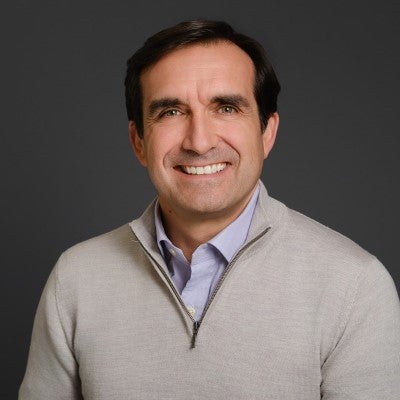
PODCAST GUEST
Roger Philby
Global Lead, People Strategy & Performance Practice
Korn Ferry
Roger advises C-Suite leaders across the FTSE100 and Fortune 500 on their most pressing talent challenges, whilst defining the vision and direction of Korn Ferry’s approach to People and Talent Strategy.