In 2027, the workforce will be defined by what people can do, not the jobs they hold.
That's because the skills businesses need will shift more than they'll stick. And those shifts will happen faster than ever.
People might stay in the same organization, often in the same role, even as the skills they need change. Careers will start differently and move in new directions.
And talent teams and managers will reshape their own ways of working in this new fluid landscape.
The advantage will come from how quickly people, teams, and organizations can learn, adapt, and put new skills to work.
Korn Ferry’s 13th annual report reveals the seven talent trends shaping the year ahead for talent teams and leaders.
The seven trends at a glance
The TRENDs

The Shape-Shifting Job
In 2027, a job won’t sit still anymore. The role someone signed up for and the one they’ll be doing might be two different jobs wearing the same title.
At such a swift pace, capability mismatch is bound to follow. The skills a job will need a year or two from now are unlikely to be the skills people have when they start. Workers may struggle to keep up with how fast that target moves.
“Talent leaders have seen this coming, but it’s really picking up speed,” says David Ellis of Korn Ferry. “They’re asking, ‘Do our people have the skills for the work that's coming next?’”
That’s why the most forward-thinking are prioritizing workforce-wide upskilling and reskilling as a matter of urgency.
The good news is that most employees will be just as eager to build new skills as their companies are to teach them.
In fact, in our Workforce 2026 survey, 65% of workers said they would stay in their job if it offered learning and development opportunities—making this trend a win-win for everyone.
Lead the Shift: Your Next Steps

Knowing what the business needs a year from now is hard. Start by mapping where your strategy and technology are heading, then use a skills assessment framework to find the gaps and close them.

Performance reviews, project history, and manager notes can reveal the next skill a person may be ready to develop. Use that insight to target reskilling at the individual level, not just a company-wide push.

Prioritize your training and development plan to focus on the most crucial skills for business needs.
Wanted: Adaptability
The year's most-wanted skill will be adaptability—the ability to keep learning and shifting to whatever the job needs next.
Adaptability shows up in small course corrections more than in big pivots, in the calls people make when there's no clear answer yet. “It's that real-time judgment that talent leaders are really after,” says Jeanne MacDonald of Korn Ferry.
But being adaptable only works when it’s part of the full package of soft skills, including 2026’s top skill, critical thinking, as well as collaboration.
“Collaboration is becoming one of those skills we're not talking about, but it’s crucial for leaders who want to drive change,” says Cathi Rittelmann of Korn Ferry. People adapt more quickly when they don’t have to figure everything out alone.
Leaders need to create the conditions for adaptability, building a culture where people are encouraged to ask questions and work through change together.
2027
- 1Adaptability
- 2Critical thinking(also among last year’s most in-demand skills)
- 3Collaboration
- 4Problem solving(also among last year’s most in-demand skills)
- 5Communication
- 6Learning agility
- 7AI fluency
Last year’s most in-demand skills
Lead the Shift: Your Next Steps

Many companies still judge adaptability by gut feel, but it’s measurable. Korn Ferry defines it as learning agility, the ability to learn fast and apply that learning to something new. Treat adaptability as a testable capability to ensure you’re getting what you need. “Knowing when to trust instinct, when to reach for data, and when to blend the two—that's the real test,” says Cathi Rittelmann.

Like any skill, adaptability will grow through exposure. Move people into roles, projects, or teams outside, but adjacent, to what they already know, and let the unfamiliar do the teaching.

Embed a have-a-go mentality into your culture. If someone takes a risk and gets punished for it, everyone will learn to stick to what they're good at and play it safe. It would be better to publicly reward people when they try out a new approach or skill, even if it doesn’t always lead to a roaring success.
Entry-Level Upgrade
Junior roles have been widely reported as first on the chopping block, the easiest for AI to replace.
That’s shifting in 2027. A majority of businesses plan to grow or maintain their entry-level headcount, redesigning those starter jobs instead of cutting them.
AI will be central to that redesign. It can handle repetitive work faster than humans, so tasks that used to fill someone’s first year, such as entering data and building reports, will be handled by bots.
That will free up new recruits for higher-value work. In one role, that might mean judging what AI delivers, where it’s right and what it gets wrong. In another, it might be talking to a client directly or managing a real account earlier than in the past.
"Companies are already building fast, three-month paths to get high schoolers job-ready—and that pipeline is going to grow," says MacDonald.
In 2027, what will happen to your entry-level and early-career roles?
- Holding volumes but redesigning entry level around higher-value work40%, rebuild and redesign
- Investing more in development (e.g., apprenticeships, internships)33%, rebuild and redesign
- Shifting to skills-based, not degree-based, early-career hiring29%, rebuild and redesign
- Reducing entry-level hiring and leaning on experienced talent21%, reduce and replace
- Cutting entry-level and leaning on AI and AI agents19%, reduce and replace
- Growing—increasing entry-level hiring as we scale16%, rebuild and redesign
- Recruiting earlier for in-demand roles14%, rebuild and redesign
- Rebuild & redesign
- Reduce & replace
Lead the Shift: Your Next Steps

Give candidates a real task from the job itself, such as a sample of AI output to judge or a mock client scenario to handle, and see how they perform. Keep the test short or offer a fee if it’s a lengthy test with an output you might actually use.

Judgment isn't something people figure out alone. Let new hires shadow someone senior handling a task before they're expected to take on something similar themselves.

New hires should be given a small project with clear objectives early on. Not a shadow assignment. Give them something with actual stakes.

Higher-value work is exciting, right up until someone's underwater in month two. Check in earlier than you think you should so you can give them some guidance if needed.
Fluid Paths
For decades, a career moved in a straight line. Straight up a ladder, rung by rung.
But in 2027, workers will zigzag more than they climb, landing in places no succession plan accounted for.
It will take a broader range of skills to rise through the ranks, so people will be searching for ways to learn them.
That’s why people will increasingly take charge of their own career path. Instead of working towards the next rung on the ladder, they might prioritize moving to a new team or a job that will teach them different skills.
“Traditional layers won't necessarily be the motivator anymore,” says Radhika Papandreou of Korn Ferry. “It will be about the skills you need next, not the job you want next.”
For talent leaders, that raises a difficult question. How do you plan a pipeline when people are more likely to sidestep through different parts of the business than to climb straight up?
Lead the Shift: Your Next Steps

A short list of two or three names in a succession pipeline assumes everyone still moves straight up. Most people won't anymore.

Recognize skill-building and cross-functional experience in pay and recognition. Treat them as real progress, not a detour.

When career paths become less predictable, recruiters need to be part of the conversation earlier. “The question isn't just, ‘Do we have the people?’ It's, ‘Do our people have the skills for the work that's coming?’" says Ellis.

A title tells you what someone was hired to do. It doesn't tell you what they can do now or what they could do next. Track skills development instead, so you know exactly who to tap when a critical role opens.
Managers Without Maps
A manager’s job used to be about managing people’s work—keeping them on track and making sure they had what they needed to deliver.
The job has already been broadening, but in 2027, a substantial shift is coming. Managers will spend more time guiding teams through change than managing their day-to-day work.
AI adoption will make that harder. Just 6% of respondents believe their senior leaders are fully prepared to guide their organizations through AI-driven transformation.
And that uncertainty then lands with managers. They’re the ones who have to translate evolving AI strategies into clear direction for their teams, explaining what’s changing and how it will impact their work.
“Managers will become the shock absorbers of the organization,” says Rittelmann. “Their job will be to help teams keep moving, even when they can’t tell them exactly where things are heading.”
Lead the Shift: Your Next Steps

Leadership training is often built around running a stable team. Create training programs that simulate major changes to the business, so managers can practice leading their teams through ongoing disruption.

Assess managers on how quickly they can adapt when circumstances shift. Those who respond well are more likely to help their teams do the same.

When senior leaders make decisions about AI or other fast-moving issues, managers need more context than just the decision. Change won’t happen until mindsets shift, and that only happens when people can understand the bigger picture.

Managers are usually expected to explain why change is happening, but when the goalposts keep moving, that won’t always be possible. Coach managers to become comfortable with not always having the answer.
Trading Skills
Electricians, technicians, machine operators, welders—the people who keep physical operations running—will be even harder to find in 2027 as demand for their skills soars.
Years of career advice have pushed people toward degrees and away from hands-on work. Trade school enrollments dropped. Apprenticeship pipelines shrank.
But as infrastructure and energy projects expand, there won’t be enough people who can do the hands-on work needed to deliver them.
For knowledge workers, it's a different story. Their opportunities will shrink faster than frontline workers because AI is aimed squarely at the kind of work they do.
That’s why so many governments are planning major investments in apprenticeships and technical training. They want to encourage more people to learn the skills needed in fields where talent will be in short supply.
“Those pipelines will take time to rebuild, leaving a gap between supply and demand that will give tradespeople and frontline workers a strong advantage,” says Papandreou.
How is demand for talent changing in 2027?
- Traditional assumptions about “future-proof” jobs are being challenged.81%
- Organizations will face increasing shortages of skilled manual and technical labor.65%
- AI will disrupt white-collar and knowledge-based work more than frontline work.64%
- Demand for skilled trades and frontline workers will grow faster than demand for knowledge workers.53%
- We are seeing a long-term shift toward infrastructure, manufacturing, energy, and industrial investment.51%
Lead the Shift: Your Next Steps

People might be less inclined to take on debt for a trade the way they might for a degree. Offer to cover the cost upfront and watch your applicant pool expand.
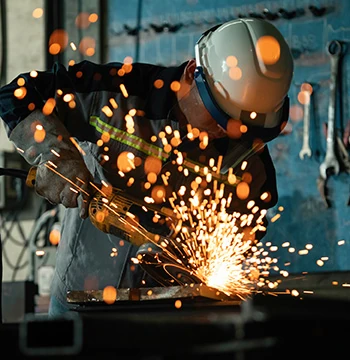
The best teacher for a technician role is someone already doing the job well. Reward them for the hours they spend training someone new.
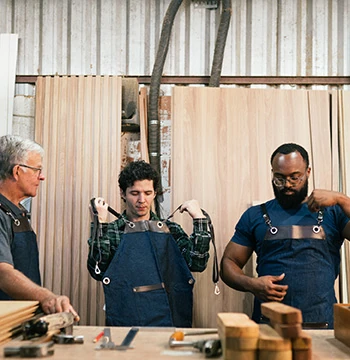
Shortages are worse in places nobody wants to relocate to. "If a plant or facility goes up somewhere remote, the technicians you need often won't exist there, and the ones you want are unlikely to want to move," says MacDonald. "So you’ll need to train up the talent that's already in the area."
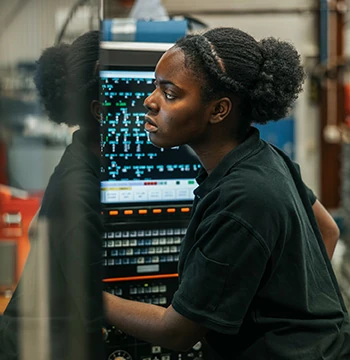
Job listings for frontline roles often make it sound like they’re placeholder jobs, even when the role could lead to something bigger. When writing up the descriptions, focus on what they could be—a competitive career with a solid future.
Talent Teams Connect the Dots
Hiring, learning, and workforce planning currently operate as separate departments, each with its own leader and budget. That's changing. As skills become more fluid, those silos will start to break down in 2027.
The skills a business hires for, builds internally, and needs next are all part of the same workforce puzzle. HR will become a more united team, bringing those decisions together rather than managing them separately.
“Talent teams will join forces to become a single talent ecosystem. Everyone will sit at the same table,” says Ellis.
This all-in-one HR team will also gain some new senior roles. Look out for new positions with unique responsibilities, such as Head of Skills, Head of Work Design, and Head of Human-AI.
What happens to the people function by 2027
HR, TA, L&D, and workforce planning will become one integrated function.
New specialist leadership roles will become more common
Lead the Shift: Your Next Steps

As long as every function controls its own budget, it'll keep making separate decisions, no matter what the reporting lines say. Combine the money, and more connected decision-making will follow.

The fastest way to bring these functions together will be through who you hire next. "The companies ahead of the curve on this merger will be the ones who recruit for an enterprise leadership mindset into HR—people who think about the whole business, not just their corner of it," notes Papandreou.

TA, L&D, and workforce planning shape a person's hiring, growth, and career path from different angles. Map where those processes overlap and where the real gaps are, then use that to decide what belongs in the new HR function.

If you’re planning to add a new senior role, such as Head of Skills, but you don’t give them authority to make decisions, then it’ll just be a title, not a job. Back it with real responsibility.

How We Did It
For our 13th annual Talent Trends survey, Korn Ferry surveyed more than 1,300 talent and senior leaders to get their view on the talent issues that will shape the year ahead. The 2027 survey included people who make talent decisions at every level, from talent teams and CHROs to CEOs and board members. Respondents from more than 75 countries took part.
Talk to a Talent Trends Expert
Complete the form, and a Korn Ferry expert will be in touch to discuss how we can help your business achieve its goals.
By submitting this form, you are agreeing to our Terms of Use.
Any data you provide to us is governed by the terms of the Korn Ferry Global Privacy Policy.
Frequently Asked Questions
The defining talent trend for 2027 will be that skills needs are changing faster than ever, redefining all aspects of work.
Organizations will increasingly focus on what people can do and how quickly they can learn, rather than relying solely on fixed jobs and titles.
Other major trends include:
- adaptability becoming a priority skill
- entry-level roles being redesigned around higher-value work
- career paths will become less linear
- demand for skilled trades will grow
- managers will coach people more on change management than managing day-to-day workloads
- closer integration across HR, talent acquisition, learning, and workforce planning
Organizations should begin by connecting business and technology strategy to the capabilities they will need next. A skills assessment can then identify gaps between current and future requirements.
Performance reviews, project histories, and manager insights can help reveal employees’ reskilling potential, while targeted development can build the most critical capabilities.
This approach supports faster redeployment and helps organizations decide when to develop existing employees and when external recruitment is necessary.
Adaptability will matter because jobs, technology and organizational needs will continue to shift. It involves learning quickly, applying knowledge in unfamiliar situations, and making sound decisions when the answer is not yet clear.
Employers can assess adaptability through learning agility rather than relying on instinct alone. You can also develop adaptability by giving employees exposure to adjacent roles, projects and teams, and by encouraging experimentation.
AI will increasingly handle routine activities, such as data entry and report production, but this does not mean entry-level work will disappear.
Instead, many organizations expect to retain, grow, or redesign early-career roles so that entry-level employees can take on higher-value responsibilities sooner. These could include evaluating AI-generated work, interacting with clients and exercising judgement.
Employers will need realistic skills assessments, structured support, and meaningful early assignments to help new hires build these capabilities.
HR will need to connect talent acquisition, learning and development, workforce planning, and internal mobility around a shared view of skills.
Instead of making separate hiring, development, and succession decisions, these teams should map capability gaps and overlaps together. This could require integrated budgets, broader leadership profiles and senior roles with responsibility for skills or work design.
Giving these roles genuine decision-making authority will be essential if organizations want a unified workforce strategy rather than additional organizational complexity.
As our Talent Trends 2027 research shows, organizations are placing greater emphasis on skills, learning agility, and long-term potential rather than relying solely on job titles, degrees, and traditional career paths.
Recruiters will increasingly assess what candidates can do now and how quickly they can develop new skills for the future.
As jobs continue to evolve, talent acquisition teams will work more closely with workforce planning, learning and development, and HR leaders to identify emerging skill needs and build future-ready talent pipelines.
Organizations will also place greater value on candidates who can adapt to changing business needs and take on higher-value work as technology reshapes roles.
Skills-based hiring shifts the focus from credentials, job titles, and career history towards demonstrated capabilities.
Rather than asking where someone worked or what degree they hold, organizations assess what they can do and how quickly they can learn.
This approach can expand talent pools, improve internal mobility, and help organisations hire for emerging roles where traditional experience might not yet exist.
