The New Excuse: ‘AI Did It’
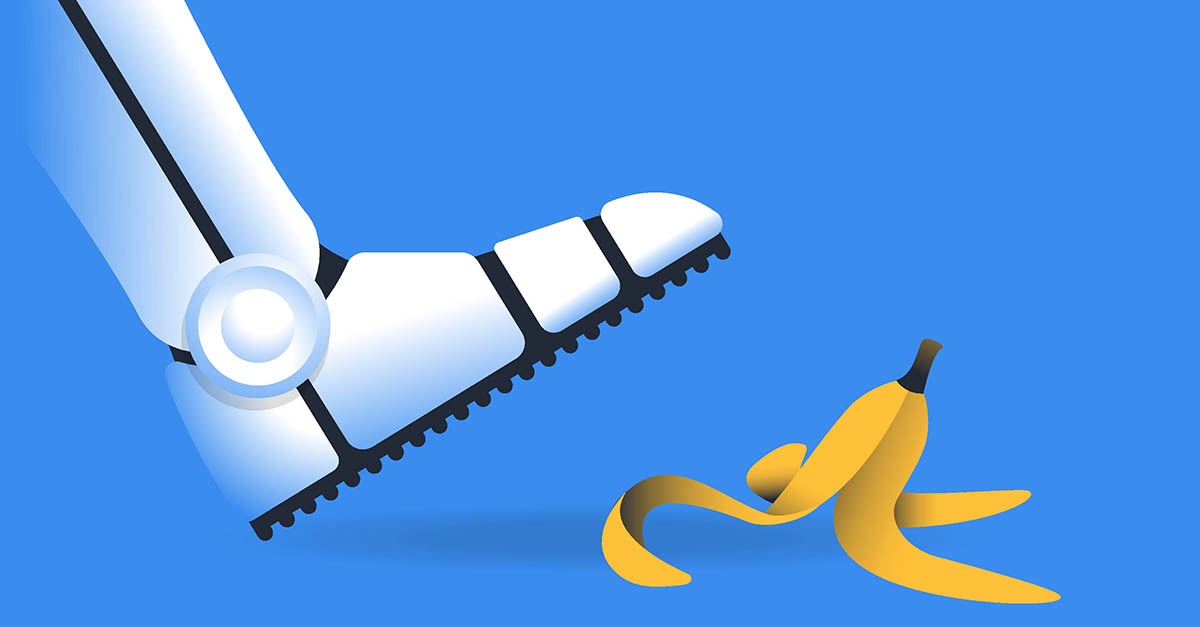
In a remarkable change, nearly a quarter of firms list AI agents in their org charts. Are bosses managing them enough?
The development team loved its AI agents: In half the time, the agents produced proposal decks that were more complex and multifaceted than ever before. Copyediting and scheduling were automated. What’s not to like?
A lot, it may turn out. Twenty-three percent of firms now refer to AI agents as “employees,” according to a new working paper that surveyed more than 1,200 managers. And when it comes to tracking these agents, the paper found, managers are 16% worse at spotting AI agents’ mistakes, and 44% more likely to depend on others to double-check the work they produce. When things go south, managers blame the AI rather than taking responsibility. And yes—the same managers were much more diligent when overseeing humans, and readily took responsibility for their slipups. “Hopefully, this is a moment in time, and not a permanent management trend,” says Bryan Ackermann, head of AI strategy and transformation at Korn Ferry.
AI has infiltrated the workplace with shocking speed: ChatGPT appeared in late 2022; embedded assistants became a norm just a year later. By 2025, agentic AI could complete multi-step tasks with less human input. As those agents grew capable enough to own workflows, some companies began assigning roles and org-chart slots to agents, and discussions arose about whether the “H” in H.R. needed to be replaced. (Consensus: No.) The research suggests that the widespread perception of AI agents as workers arrived faster than the management-oversight infrastructure for them did.
Common use of terms like “assistant” and “agent”—as well as “Alexa” and “Siri”—has fueled the anthropomorphizing of AI. “There’s a huge danger in saying AI is an employee,” says Jenna Young, head of client creative at Korn Ferry. A personified agent is perceived as both universally informed and inherently capable, not to mention infallible. A tool, meanwhile, is more limited in scope, and needs to be precisely employed and overseen with care. Young advises against language in the workplace that humanizes AI tools.
The other issue, say experts, is that managers are still learning how to organize their time around AI management. Sure, AI tools automate drudgery like accounting and data entry, but at the same time, every output needs to be eyeballed by a human. “AI agents don’t have judgement, and they don’t have instincts,” says Karena Man, senior client partner in the Technology and Digital practice at Korn Ferry. “AI is actually causing us more work right now.”
In the short term, researchers strongly suggest that firms avoid oversight problems by assigning each agent a named human manager who is responsible for its output. These managers need minimum guidelines for reviewing agent work. Critically, experts advise that human oversight is essential—and not only when the system flags a problem.
In the medium term, experts say, the solution is staff education on AI management. This includes skills like overseeing AI assistants, evaluating agentic decisions, and checking work. “Managers’ jobs have changed, so you have to train them,” says Ackermann.
Learn more about Korn Ferry’s AI in the Workplace capabilities.