
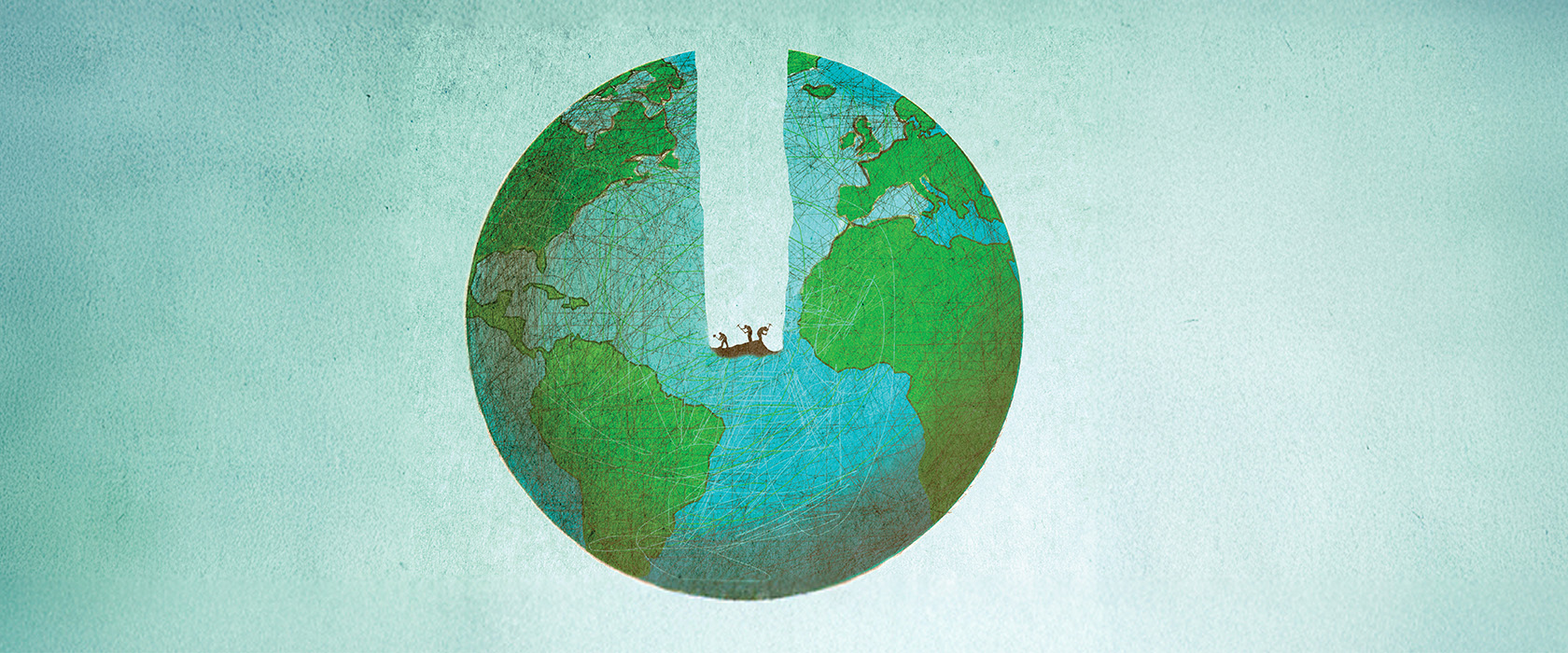

For much of the post-WWII period, buying minerals such as copper, coal, or iron ore was simply a matter of money: Did you have it or not? If your company needed to purchase copper ore, it could get it from Chile, among other places. Likewise, the need for cobalt could be sated with supplies from the Democratic Republic of Congo, Indonesia, or Australia. It more or less didn’t matter which country was selling the product. But that practice of unfettered trade seems to be disappearing, fast—and it has nothing to do with the great tariff wars of 2025. Rather, it comes down to worries about national security.
Currently, there’s a global race to secure minerals and other commodities. To ensure their own growth, as well as protect and defend themselves, countries around the world want access to vital materials. “It’s called commodity nationalism,” says Pete Earle, director of economics and economic freedom at the American Institute for Economic Research. “Control over oil and minerals is becoming more important.”
It was COVID-era changes in international trade that first put the whole issue of supply chains into focus, says Bill Stone, chief investment officer and managing principal at the Glenview Trust Company in Louisville, Kentucky. That period highlighted how susceptible global trade was to interruptions, accidental or otherwise. “When the stakes get big enough, countries will hold back from selling precious materials to other countries,” he says. “The goal is to find their vulnerabilities.” The Ukraine-US minerals deal signed earlier this year was also part of this race for materials, although it served two purposes. The US administration wanted access to key minerals, but also to thwart Ukraine’s adversary, Russia. “America having a stake in Ukraine was meant to ensure that Russia wouldn’t push hard,” Stone says.
As relations between China and the US deteriorate, the Chinese domination of global rare-earth production—with an estimated 70 percent share (or 210,000 metric tons a year, versus 43,000 metric tons in the US)—has become evident. This matters because rare earths are essential for the production of weapons systems. There’s been a lack of transparency in the rare-earths market, both historically (China has been known to hold back on deliveries) and recently. In 2010, amid a tiff between China and Japan, there were unconfirmed reports that China had frozen shipments of rare earths to Japan. China denied there was an embargo, and the matter quickly disappeared.
To deal with possible shortages in the future, the US is considering recycling rare earths. There’s also a possibility that rare earths can be extracted in the US and Canada: Across the two countries, there are currently approximately 17 million metric tons of rare-earth oxides in proven deposits. “We have access to a lot,” Stone says. “We either don’t want to extract it, or won’t.”
Similar tensions exist in the international semiconductor market. In 2018, the US banned sales to China of top-grade semiconductors, such as those used for artificial intelligence—and for weapons systems. This matters in a geopolitical climate in which the US, China, Russia, and Europe’s NATO members are all heavily increasing their military power. “The US has weaponized tech, and China has weaponized rare earths,” says Marc Chandler, chief market strategist at Bannockburn Global Forex.
Ultimately, one of the biggest issues in the global race for minerals may be the rising demand for renewable energy, which produced 32 percent of all electricity in 2024, and is set to increase. Minerals such as copper, cobalt, and lithium play a big role in renewables. But fights over minerals may slow the boom. “If we wanted a full green transition, there could be a problematic choke hold,” Earle says.
