
Time Machine
Typewriters transport modern creators to another era—one with fewer distractions and better acoustics.
September 26, 2025
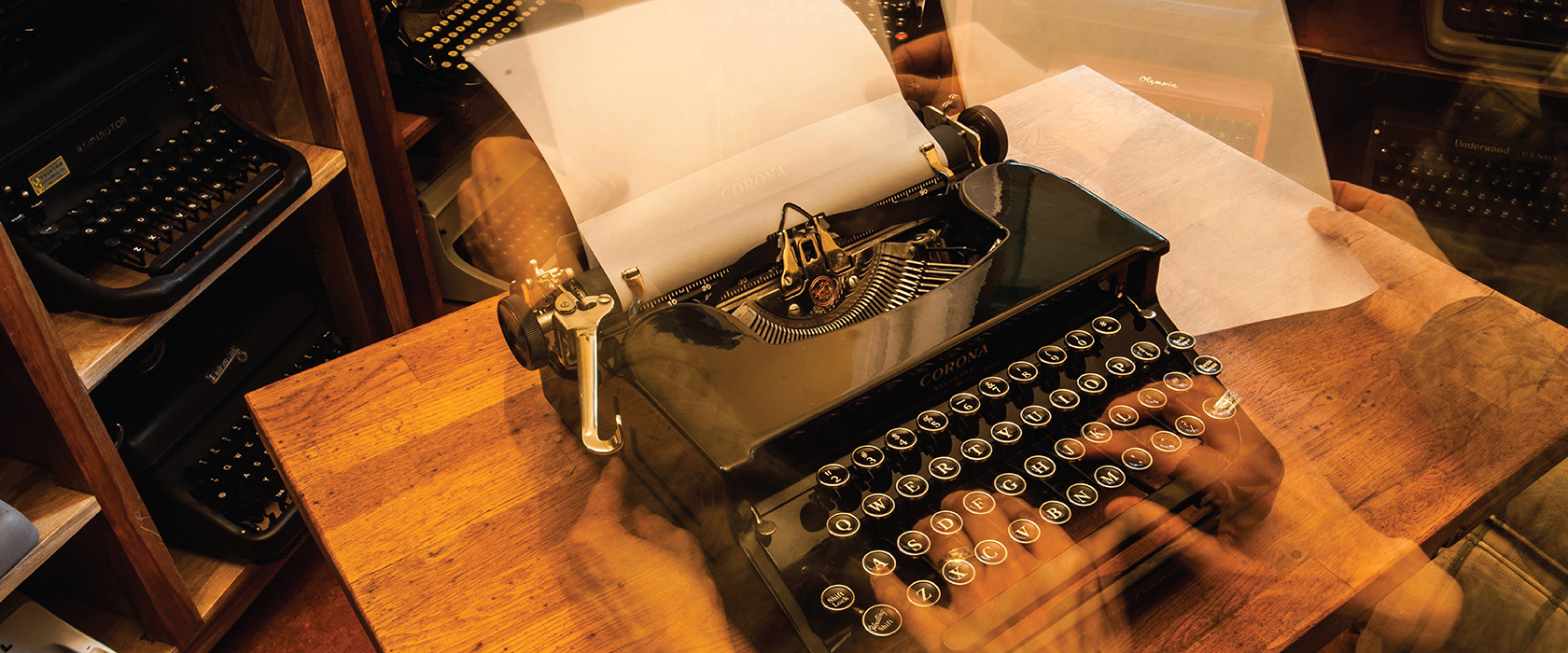
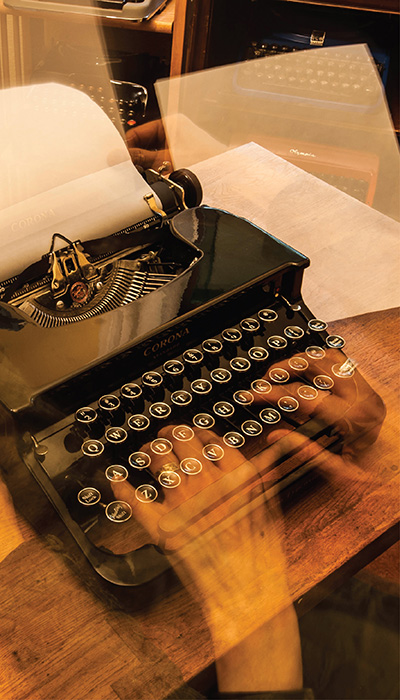
Anjali Banerjee, a young adult novelist, was due to file her latest work in a month, but she kept fiddling with the opening chapters. The 60-year-old best-selling author had just the tool for breaking through this creative block: Banerjee set her laptop aside and pulled out one of her trusty typewriters.
To the percussive clank of the raised steel keys, Banerjee was able to drop into flow, easily constructing the scene that had previously been fighting to emerge. “On a typewriter, you can only move forward,” says Banerjee, who also plays the piano (which she likens to typing on a typewriter). “It’s the enemy of perfectionism and the friend of creativity and productivity.”
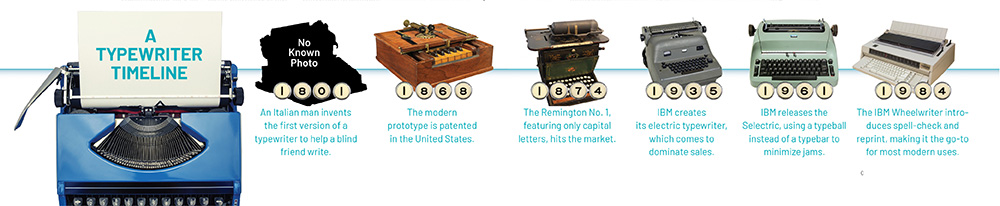
More than 150 years after the first typewriters hit the market, aficionados of all sorts remain devoted to these primitive but proven products. Today, prolific artists, from authors like Danielle Steel to songwriters like Taylor Swift, continue to find inspiration using the machines. Others, such as business leader Steve Soboroff and actor Tom Hanks, are drawn to collecting typewriters as works of art. Mike Marr manages Marr Office Equipment, a family shop that has been servicing and selling typewriters in Rhode Island for 70 years. He says his clients include law offices, funeral homes, and business professionals who prefer the functionality and elegance of producing official documents with a typewriter. And then, of course, there are the parents who want to shield their children from digital technology, younger generations aching for a more tactile experience of life, and creators of all kinds seeking flow.
Through the 1900s the typewriter market thrived, becoming worth more than $1.1 billion in the United States by 1980. With the mainstream emergence of computers and the Internet in the 1990s, the industry’s future became uncertain. But every time the Marr family has feared that the business is going to finally collapse, there is a revival. “Typewriters are going crazy right now,” Marr says through a thick accent that blends patterns from Boston and New York. “I’ve given up thinking the industry is going to go kaput. It’s this gigantic roller coaster that never comes to an end.”
In 2019, Banerjee got fed up with the many distractions inherent to working on a laptop, from grammar corrections to notifications to software updates. In a fit of frustration, she bought an electric typewriter. Soon after, she decided to go for a fully analog apparatus. She began typing out her first drafts, which she would then scan into a computer to edit. But it didn’t stop there.
“I caught typewriter fever,” Banerjee says. Like other enthusiasts, Banerjee set off on a search for the perfect machine. Keys that require just the right amount of pressure. A typeface that invokes just the right sentiment. A product with history and aesthetic appeal.
Marr says when customers come into the shop, with its seventies vibe, they’ll spend an hour trying the various typewriters on the shelves. Some are more than a century old and have made their way to the US from Germany or Italy; each of them is one of a kind. The machines arrive dirty and gummed up, but after a good wash, some grease, and an adjustment, they’re good as new. “They last forever,” Marr says.
At some point, after pressing many keys and listening to many clanks, the customers will say: “This is the one.” But as Banerjee’s story illustrates, the one may not be the only.
Photo credits: Carol Ann Morris, Michael Frank, Sean Gladwell/Getty Images, National Museum of American History; Daderot, Flygvapen Museum, Steve Lodefink, Henk Tobbe
