First AI, Next Robots
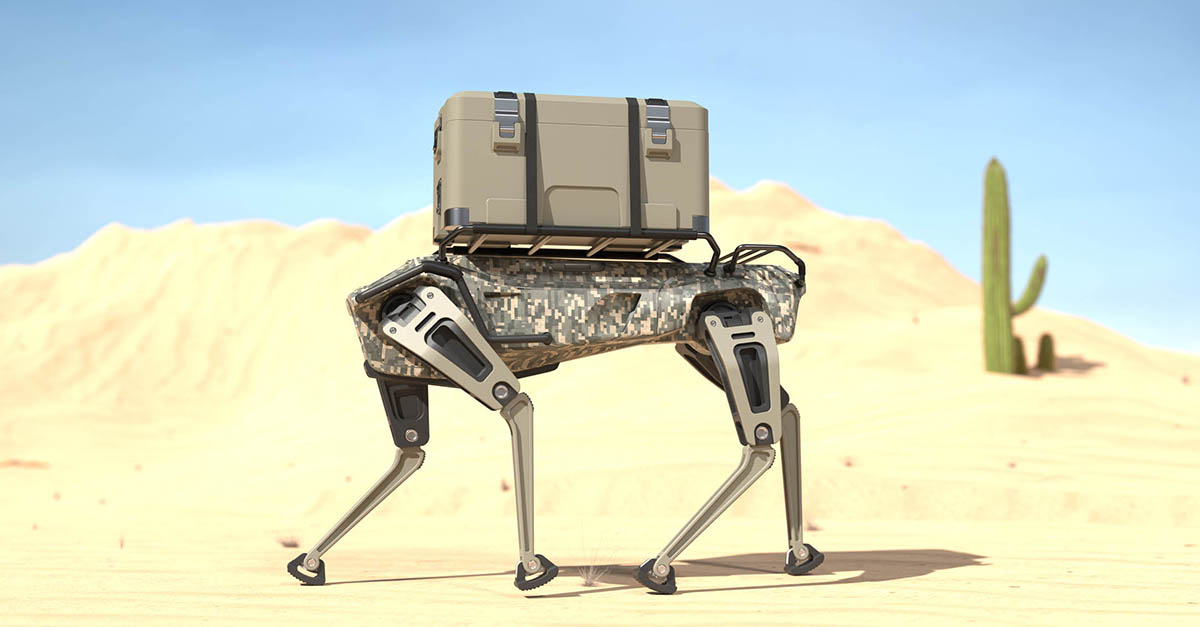
AI’s rapid ascent has already drawn businesses’ attention to robots. Will this tech have its
The excitement over AI is spilling over into another area that has long fascinated the human imagination: robots.
AI’s rapid ascent in business and the mainstream has investors looking for the next big thing—and they’re betting billions of dollars on robots. Over the next decade, the global robotics market will grow from around $90 billion now to an estimated $250 billion, depending on how that market is defined. Of the different categories of robots, the three biggest are humanoid, industrial, and service. Humanoid robots alone are expected to balloon into a $182 billion market by 2035, from only $8 billion today.
Chris Cantarella, a senior client partner in the Global Technology Markets practice at Korn Ferry, says that the money pouring into robotics, along with the pace of innovation, has created a sense that robots are on the cusp of their “ChatGPT moment.” “Some people are of the belief robots will hit big within the next decade,” he says. It’s not an unrealistic expectation, especially against the backdrop of the stunningly fast advance and adoption of AI, which in three years has become commonplace in corporate offices. By comparison, widespread adoption of email took 15 years, and of the Internet and social media, a decade.
But experts say robots haven’t yet reached the tipping point at which they move from novelty to reality, as AI has. Costs are still exorbitantly high, in the tens to the hundreds of millions of dollars. Engineers haven’t yet managed to build a humanoid robot that can walk without difficulty in an unpredictable environment, nor have they created technology that can mimic the dexterity of the human hand. Additionally, says Kara Ruskin, a senior client partner in the Technology practice at Korn Ferry, robots suffer from a “trainability issue,” because robotics researchers and engineers aren’t working with nearly as much data as their peers in LLMs and generative AI. This accounts in part for robots’ difficulties in connecting commands to actions, she says: “There are still basic situations where humanoid robots fail to perform the action its sensors are telling it to do.”
Right now, industrial and specialized robots hold the most promise for business leaders. The automating of manufacturing and warehouse operations—such as sorting, packing, and loading items—has a well-established ROI. Robots, or their equivalent, have long been used to assist or substitute for humans in highly dangerous tasks, from detecting and disarming bombs to cleaning wind turbines. Currently, research and investment is focused on developing robots for specific service- and customer-related tasks: line cooking in restaurants, delivering medications to patients in hospitals, or tracking inventory and other issues in grocery stores. “There are a lot of practical and financial reasons for why healthcare firms are embracing robotics and robots,” says Greg Button, president of global healthcare services at Korn Ferry. Among them he cites the use of robots to care for or assist with surgery on highly contagious patients or to address the ongoing talent shortage the industry faces as the population ages.
Even though a significant amount of experimentation and innovation is happening, Cantarella cautions, the day when humans and robots will work alongside each other is still a ways off—but, he adds, “maybe not as far as most people think.”
Learn more about Korn Ferry’s Organization Strategy capabilities.