
Risk Management: A New Approach
At the board level, managing the ever-expanding list of risks facing firms has taken on a whole new meaning. Three current directors walk us through it.


July 31, 2025
Tariffs. AI. Geopolitics. Activists. Cybersecurity.
The list of risks firms must deal with in today’s business environment goes on and on. Literally. More than a few companies have filed annual reports with the SEC that contain risk factors to performance that run 20 pages or longer. And more risks keep popping up every day, as shareholders press firms on issues ranging from climate change to CEO succession to workforce planning, and everything in between. All of which has changed the game for the group that is ultimately most responsible for a firm’s future: the board. For at least some of them, risk management has taken on a whole new meaning. “Enterprise risk is no longer what it used to be,” says Elise Schroeter, global head for Korn Ferry’s organization and talent strategies for the Board and CEO practice. “It is so much more existential, unpredictable, and often incomprehensible nowadays.”
Directors are being more proactive in stress-testing management’s strategic plans, for instance, and developing contingency playbooks for dozens of different scenarios, from the pros and cons of building new domestic factories to deal with rising tariffs, to weighing whether the mounting costs of AI are worth it, to guarding against a cyberattack. While the number of boards featuring dedicated, stand-alone risk committees has remained relatively stable, boards are adding specific risk-oversight responsibilities to existing committees or ad hoc working groups that will dive deeper into the myriad risks facing companies.
Board directors themselves aren’t immune to risk, either. Activist investors have made priorities of director succession and board effectiveness, homing in on individual-director performance and weighing it against a host of factors such as age, tenure, experience, and skills. To be sure, board change now ranks above M&A as the top objective for activist campaigns. Board change has been the focus of more than half of all campaigns so far this year, well above the four-year average of 35 percent.
OUR PANEL

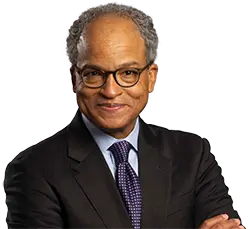

Against that backdrop, we decided to convene a panel of three impressive big-firm directors: Jason Few, the CEO and director at FuelCell Energy and a director on the board of Enbridge; David Fields, who serves on the boards of EastGroup Properties and CBL Properties; and finally, Jack Stahl, who is chairman of the board at United Natural Foods and a director at Catalent Pharma Solutions. They come from different industries—pharmaceuticals, real estate, clean energy—but the challenge for each to navigate today’s world remains similar. Below is a lightly edited version of our conversations.


How has the uncertainty and volatility in the business environment impacted the board's ability to assess future profits and growth?
David Fields: REITs (Real Estate Investment Trusts) have a significant transactional focus, and uncertainty elevates caution in completing transactions. That doesn’t mean no deals are happening. It means it impacts how you get to yes, and the pace it takes to get there, which can be significant financially. In terms of forecasts, this may call for a conservative approach by building an uncertainty factor into what would be a normal transaction process.
Jason Few: Long-term agreements are what drive business in the energy space, so stability is important because billions of shareholder dollars are on the line. Uncertainty for us is the enemy of sensible decision-making. As a board, it’s important for us to build a margin of safety into the business and think about capital commitments carefully to ensure projects remain viable under adverse policy and market swings. That could mean embedding optionality into contracts for our customers, such as shorter time frames, which changes our forecasting scenarios.
Jack Stahl: The key to operating in the environment we are in now is to develop a clear destination for the business and build your strategy around that. Aligning strategy gives boards a lens to evaluate what challenges and risks are most important to address now. For some firms, that could be liquidity and cash. For others it might be protecting supplier relationships.
Of all the issues occurring today, which do you think is the most top of mind for boards, and why?
Fields: It’s not about any one issue, but about the intersection between issues and the multilayered risks that creates. Directors need to be able to see that and look at opportunities for joint efforts amongst board committees to navigate them. In essence, these enumerated issues (AI, cybersecurity, tariffs) become catalysts to rethink structure and talent development for what may be a more lasting and resistant state of uncertainty. It’s a moment to strengthen the organization’s armor.
Stahl: For us, it all starts with talent. If you have the right talent, it gives the leadership team much more capacity to deal with unexpected issues and risks that arise. If you don’t, it doesn’t matter what issue is most or least important, the organization won’t be able to achieve what it wants to.
Few: Tariffs are the biggest issue right now. Not that any other issue is less important, but for the boards I sit on, it’s tariffs. We need to be flexible and deal with the realities of today—where we buy materials, source minerals, and the cross-border relationship between the US and Canada are directly impacted by what happens with tariffs.
Risky Business
Among the many risks boards must manage, here are five that directors often cite as the most challenging.

Economic/Political Instability
Three-quarters of directors in one survey consider uncertainty around tariffs and geopolitical strife the biggest risk they face in the near term.

Financial Performance
With growth slowing and the specters of a trade war and recession looming, boards are focused on mitigating risk around capital allocation, compensation, liquidity, and revenue and earnings performance.

Artificial Intelligence
The risks directors cite with Al include return on investment, organizational capabilities, ethical and security concerns, and even their own knowledge.

Talent
As talent becomes harder to find and retain, boards are taking a harder and deeper look at their firms' talent to ensure they have the right mix to achieve strategic goals.

Leadership
Succession planning has always carried some risk, but the combination of tech disruption, activist action, and record-high CEO turnover has heightened the stakes for boards-and for directors themselves.
How can directors help firms navigate a world with seemingly endless unforeseen challenges and risks?
Few: Directors can’t minimize the notion of normalizing black swan events. They have to expand what they consider in the risk framework and constantly challenge and stress-test management’s assumptions. Succession planning is more important than ever. Directors need to ensure a robust leadership pipeline is being built and that every seat occupied on the board is a value-added seat.
Stahl: It starts with satisfying yourself as a board that you have the right strategy and destination as grounding for setting priorities. Staying at that elevated level and resisting becoming too tactical in the face of uncertainty creates less friction and allows leadership the time, energy, and capacity to drive performance and deal with the unexpected.
Fields: You can’t respond to risks one by one. You have to maintain a consistent, holistic approach. Boards are having much more specific discussions about how committees can expand or collaborate to address risks. The framework is to constantly assess, reassess, and adjust so that boards can start recognizing patterns and deploy a more strategic approach.
CEO turnover is at an all-time high. How much of it is owed to leaders wanting to get out on their own, instead of dealing with activists and the unprecedented disruption their firms face?
Stahl: The demands on CEOs today are dramatically higher than in the past, and certainly higher than when I was a CEO. There was a degree of predictability in the role that is not there today. The bar has been raised in terms of what great CEO performance looks like. It’s a very challenging role, so I’m sure there are leaders who have had success who have chosen to do other things in the face of the total commitment of energy and focus seemingly required to be successful today. At the same time, being a CEO will continue to be a very appealing role for many people.
Few: I don’t know if it has to do with the challenges and risks they face, but I do think most of the turnover is driven by CEOs opting out. There’s no question many leaders are burned out from the constant crisis management and are stepping down to make room for others to lead. But most surveys show that while CEOs have a pessimistic view of the global economy, they also have an optimistic view of their own businesses.
Fields: It’s difficult to pinpoint individual circumstances, though it’s fair to say that post-pandemic fatigue is certainly a factor in the high rate of turnover, combined with shareholder pressures, technology demands, and the expectation to anticipate a broader set of risks.
How has the job of being a director changed given the amount of risk in the environment right now? Has the role gotten harder in recent years, and why?
Few: Boards have to move much faster now, and they have to get more technical and go deeper into more issues than ever before. The role of being a director has shifted from oversight and quarterly review to active advising and ongoing partnership.
Stahl: The landscape boards must cover is broader and more complex, and that takes up more of your focus in terms of opportunity and risk. That’s true for CEOs and other leaders as well, though. Everyone has to be more thoughtful and discerning about what has to go right for the company.
Fields: I don’t subscribe to the idea that being a director today should be perceived as being harder. Because of the complexities, I think it is a really exciting time to be a director, actually. We have the opportunity to rethink the traditional ways in which boards have operated, and I think, quite frankly, that there is an open ear to this in the corporate world. We have the chance to reimagine how boards work, how they’re structured, what kind of perspectives and expertise are needed, and how we choreograph our discussions to handle broader, multidimensional risks.
What role does the heightened state of risk play in the activist landscape? Are firms and boards more vulnerable to activist activity in an uncertain environment?
Stahl: To the extent that risk translates into volatility in business results and stock prices, there is more opportunity for activists. The longer that volatility lasts, the more the activist is seen as a “solution.” When that happens, firms with lagging relative performance over a sustained period are vulnerable, as are boards with very long-tenured directors. Boards can thwart shareholder restlessness by being more accountable and transparent and demonstrating proactive risk management.
Fields: The expanding menu of risks may create more entry points for an activist to make the case that a board isn’t performing. While risk and uncertainty can consume a board, they can also be channeled to reaffirm the board’s commitment to strategic priorities. If the fundamentals are solid and the story we’re telling matches the results we’re delivering, the board is in a stronger position to withstand scrutiny.
Few: The risk environment has created more vulnerability for management and boards,
especially with respect to composition and succession. But if directors and boards are doing their jobs properly, they shouldn’t have to change anything about how they interact with activists. Good governance includes having an annual review of vulnerability relative to activists wanting to engage with your company.
Image credits: Peter Hansen/Getty Images; HIroshi Watanabe/Getty Images; Kadirkaba, Bubaone, Naveed Anjum, BGBlue, Andril Moroziu/Getty Images
