
Visit: Tasmania, Australia
Reckon this one’s a ripper.

July 31, 2025
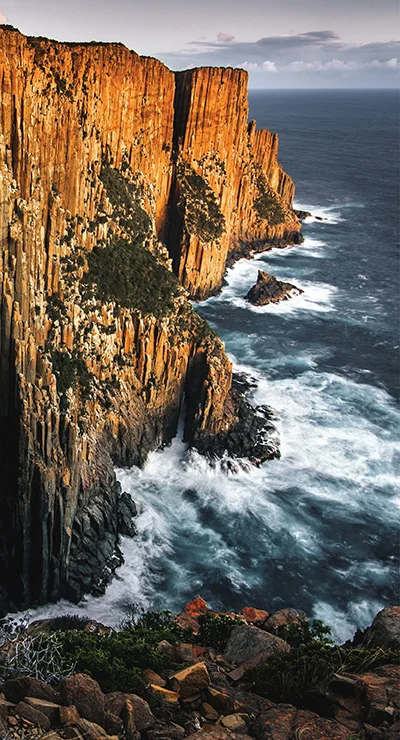
An island 150 miles off the southern shore of Australia with a population of about half a million, Tasmania—or Tassie, as the locals call it—is known for its peculiarity, a manifestation of its colonial past, native cultural heritage, and geographic isolation. The Palawa, Tasmania’s Aboriginal people, spent almost 10,000 years developing a way of life intertwined with the natural world before the British turned the island into a penal settlement in the 1800s and the 20th century saw an influx of mining. Today, Tasmania is returning to its roots by building an economy based on ecotourism. Beyond the culture, for the remote worker, Tasmania offers a lower cost of living than the mainland, exceptionally clean air, a relaxed pace of life, and a stunning backdrop.

Almost half of the island’s land area, including World Heritage sites, is protected as a reserve. The first environmental-focused political party in the world was founded in Tasmania.

Visitors can try yak-cheese pizza or a bowl of thukpa, a Tibetan noodle soup.

Ladakh produces and exports highly sought-after and luxurious pashmina.

The highest saltwater lake and one of the ten highest telescopes in the world are found in the region.

In this hub for trekkers and adventure enthusiasts looking to explore the Himalayas, the eco-tourism industry is growing rapidly.

Marked by red lights and upside crosses, Dark Mofo is a winter-solstice celebration of the island’s Gothic culture.
Visitors can try yak-cheese pizza or a bowl of thukpa, a Tibetan noodle soup.
Ladakh produces and exports highly sought-after and luxurious pashmina.
The highest saltwater lake and one of the ten highest telescopes in the world are found in the region.
In this hub for trekkers and adventure enthusiasts looking to explore the Himalayas, the eco-tourism industry is growing rapidly.

Traditionally, the main industry here was mining copper, zinc, and iron. Today, the economy is built on ecotourism.
Visitors can try yak-cheese pizza or a bowl of thukpa, a Tibetan noodle soup.
Ladakh produces and exports highly sought-after and luxurious pashmina.
The highest saltwater lake and one of the ten highest telescopes in the world are found in the region.
In this hub for trekkers and adventure enthusiasts looking to explore the Himalayas, the eco-tourism industry is growing rapidly.

There is an emphasis on local food sources, including wild salmon, crayfish, abalone, black truffles, and leatherwood honey.
Visitors can try yak-cheese pizza or a bowl of thukpa, a Tibetan noodle soup.
Ladakh produces and exports highly sought-after and luxurious pashmina.
The highest saltwater lake and one of the ten highest telescopes in the world are found in the region.
In this hub for trekkers and adventure enthusiasts looking to explore the Himalayas, the eco-tourism industry is growing rapidly.

The Palawa have preserved long-held land-based traditions like shell-stringing, dance, and storytelling.
Visitors can try yak-cheese pizza or a bowl of thukpa, a Tibetan noodle soup.
Ladakh produces and exports highly sought-after and luxurious pashmina.
The highest saltwater lake and one of the ten highest telescopes in the world are found in the region.
In this hub for trekkers and adventure enthusiasts looking to explore the Himalayas, the eco-tourism industry is growing rapidly.
Photo Credits: Posnov, Scott E Barbour, The Layers of Colour, Abdelrahman Hassanein/Getty Images, Jordan Hatch
