Effective Total Rewards Compensation Programs
Understand how total rewards programs, benefits, and incentives, align with business goals and employee needs.


In today's job market, employees want more than a paycheck. They want a fulfilling work experience that promotes both personal and professional growth.
Total rewards programs address this expectation by offering a strategic combination of financial, emotional, and developmental support. These programs go beyond traditional compensation to provide a rewarding, purpose-driven experience that attracts and retains top talent.
When implemented effectively, total rewards programs create a thriving environment where people are empowered to grow and succeed. They benefit the workforce and strengthen an organization’s ability to attract top talent, drive performance, and build a resilient, future-ready business.
Below, we answer some frequently asked questions about what total rewards programs are, why they matter in the workplace, and how to create a rewards strategy that attracts, engages, and retains talent.


What Exactly Are Total Rewards Programs?
Total rewards means everything with perceived value that a company provides employees in exchange for their work. It includes the full range of compensation, benefits, and other incentives that an organization offers employees. Total rewards also emphasize employee well-being, encompassing everything from wellness programs to purpose-driven work environments.
Common components of total rewards programs include:
- Fixed pay: Paying employees for their time, effort, and expertise. Fixed pay includes base salary and wages.
- Variable pay: Motivating employees with bonuses, stock options, and other performance-related compensation.
- Benefits: Comprehensive programs that support employee well-being and promote financial security. Benefits programs include healthcare coverage, time-off policies, and retirement plans such as a 401(k) for employees and their families.
- Recognition: Formal and informal ways to celebrate employee contributions and achievements, which reinforce company values and motivate further success. Employee recognition may include promotions, awards, and spoken appreciation.
- Training and development: Helping employees develop skills for their current role and preparing them for career advancement opportunities.
- Energizing work climate: Creating a dynamic and positive environment that fosters motivation and engagement.
- Meaningful work: Offering work that gives employees a sense of mission and purpose.
Together, these components create an environment where employees feel supported and motivated to contribute to an organization’s long-term goals.
Total Rewards vs. Compensation vs. Benefits: What's the Key Difference?
Though people often use these terms interchangeably, total rewards, compensation, and benefits each serve distinct purposes.
Compensation refers to the direct financial payments employees receive for their work, including salary, bonuses, and incentives.
Benefits are noncash offerings like health insurance, retirement plans, and paid time off that enhance an employee’s overall financial and personal security.
Total rewards encompass both compensation and benefits but extend further, integrating nonmonetary aspects such as career development, recognition, and wellness programs.
In short, total rewards are the complete package, designed to address employees’ financial and emotional needs.
Why Are Total Rewards Programs Essential for Modern Businesses?
In today’s competitive labor market, organizations must think beyond traditional compensation packages. Employees prioritize not only financial stability but also purpose, flexibility, and opportunities for personal growth. Total rewards address these broader needs by creating a comprehensive package that supports employees’ financial, physical, emotional, and professional well-being.
By offering a holistic approach to rewards, companies can enhance employee engagement, increase retention, and foster a culture that attracts top talent. This integrated strategy boosts performance and equips organizations to thrive in a rapidly changing business environment.
Use this integrated approach to align rewards with business goals, drive growth, manage costs, and enhance the employee experience.
Take the first step toward a holistic rewards program >
What's the Foundation of an Effective Total Rewards Program?
Successful total rewards programs are built on clear outcomes, strong management support, and data-driven decision-making. Here’s how these elements come together:
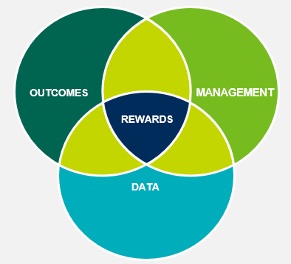
- Outcome-Focused
- Reward programs influence employee behaviors that align with business goals and reinforce the desired culture.
- Total rewards support talent attraction, engagement, and retention.
- Incentive plans create clear links between individual performance and pay, giving key employees the opportunity to share in the company's financial success.
- Reward programs influence employee behaviors that align with business goals and reinforce the desired culture.
- Supported by Management
- Management actively manages pay expectations, ensuring leaders follow through on their promises.
- Incentive plans are backed by well-structured performance management systems.
- Reward structures are simple and easy to understand and administer.
- Underpinned by Data
- Financial, operational, and employee data drive decision-making.
- Total rewards programs reflect employee preferences.
- Rewards study benchmarking data to remain competitive in the market, ensuring high-performing employees are well compensated.
How Do Total Rewards Programs Benefit Employees?
From the employee perspective, total rewards contribute to a more fulfilling and supportive work experience. Here’s how total rewards programs benefit employees:
- Financial security: Total rewards programs offer employees direct compensation and benefits that contribute to long-term financial security. Potential compensation may include base pay, performance incentives, retirement plans, and more, offering peace of mind and stability for employees and their families.
- Holistic well-being support: Total rewards programs address physical, mental, and financial health. Wellness programs, flexible work options, mental health support, and work-life balance initiatives help employees maintain a balanced, healthy lifestyle. These benefits contribute to overall employee satisfaction and sustained engagement.
- Opportunities for career growth: Total rewards support career development through training, mentorship, and skill-building opportunities. By helping employees advance in their careers, these programs foster a sense of progress and purpose, motivating employees to contribute to the organization.
- Recognition and sense of purpose: Employees value formal and informal recognition for their contributions. Total rewards programs include acknowledgment through awards, promotions, and appreciative feedback, creating a workplace culture where employees feel respected and motivated. Additionally, companies that integrate mission-driven work into total rewards connect roles to a larger purpose, enhancing employee satisfaction.
- Personalization: As workforces become increasingly diverse, employees appreciate rewards that cater to different stages of life and unique personal needs. Total rewards programs provide flexibility, offering options like flexible work hours and family-focused benefits. This personalization makes employees feel seen and supported, enhancing loyalty and engagement.


What Makes a Total Rewards Program Successful?
The success of a total rewards program depends how well organizations align it with internal and external factors. Internally, alignment with the following factors is essential:
- Business Strategy: Total rewards programs must incentivize behaviors that align with organizational goals. Whether an organization focuses on operational efficiency, innovation, customer satisfaction, or growth, the rewards program structure must support these objectives.
- Organizational Culture: Culture influences how employees perceive and value total rewards. Top rewards programs reflect an organization’s values and foster a sense of belonging and purpose among employees.
- Leadership Engagement: Leaders play a critical role in championing total rewards programs, communicating the strategy behind the program and ensuring consistent implementation. Their active involvement reinforces the importance of total rewards and cultivates a culture of performance and recognition.
- Inclusion and Diversity: Reward programs must be fair and inclusive, addressing diverse employee needs across different backgrounds and life stages. Programs must promote pay equity, offer inclusive benefits, and provide development opportunities that make all employees feel valued.
- Workforce Demographics: A multigenerational workforce demands flexibility in rewards, with options that appeal to employees at various career stages.
- Employee Feedback: Regularly gathering feedback ensures that total rewards programs remain aligned with employee expectations. Surveys and focus groups provide insights into perceptions of fairness, competitiveness, and preferences, fostering employee satisfaction.
Externally, total rewards programs must consider the following:
- Competitive Labor Markets: Organizations must tailor rewards to job roles, industries, and regions to appeal to current and potential employees. Benchmarking rewards programs against industry standards ensures that the organization’s offerings are attractive and competitive. External alignment also helps prevent overpaying, which increases costs, and underpaying, which risks losing talent to competitors.
- Regulatory Environment: Compliance with labor laws, such as minimum wage requirements and tax regulations, reduces legal risks. Regular audits ensure compliance with evolving regulations, such as pay equity laws and tax treatments for stock options or bonuses.
- Industry and Economic Trends: Economic conditions shape the structure of total rewards programs. During downturns, nonmonetary rewards may take precedence, while stronger economies may focus more on financial incentives.
- Global Market Dynamics: For multinational organizations, rewards strategies need to be flexible to accommodate varying labor laws and regional cultural expectations. Organizations must tailor their rewards strategy to local markets, ensuring competitiveness and compliance in every region.
What’s the Best Way to Implement a Total Rewards Program?
As mentioned above, effective total rewards programs align with organizational goals and adapt to both internal and external challenges. Organizations should take the following steps as they build their program:
- Align total rewards with business goals: Ensure that rewards incentivize behaviors that contribute to long-term stakeholder value. Goals may include innovation, customer satisfaction, and operational efficiency.
- Sync performance metrics with market cycles: Use data-driven performance metrics to ensure rewards match changing market conditions.
- Regulatory compliance and fair pay: Regularly audit compensation structures to maintain compliance and ensure pay equity.
- Incentivize growth through performance: Use variable compensation plans tied to key business priorities, motivating employees to take responsibility for their contributions.
- Increase agile rewards: Empower teams to adapt rewards strategies by incorporating outcome-based rewards, competency-based pay, and flexible job designs.
- Optimize costs and value: Regularly review the cost structure of rewards programs, ensuring that compensation aligns with each role’s value.
- Leverage data for insights: Use analytics to benchmark compensation trends, monitor workforce metrics, and manage costs. Studying workforce metrics, such as retention and employment costs, can strengthen the efficiency and effectiveness of your rewards strategy.
- Cater to demographic diversity: Develop differentiated reward structures that offer customization while maintaining simplicity. Address pay strategy, job equivalency, and pay gap analyses.
- Maximize ROI: Develop rewards that go beyond financial incentives, incorporating career development, meaningful work, and purpose. Regularly evaluate the impact of rewards on talent attraction and retention.
Our Approach to Total Rewards
Executive Compensation
Develop executive rewards that attract leaders and keep them focused on your business strategy.
Sales Compensation
Drive sales performance and enhance bottom-line results with an effective sales incentive program.
Employee Rewards
Attract, motivate, and retain people with the right financial and non-financial rewards packages.
Talk to a Total Rewards Expert
Complete the form, and a Korn Ferry expert will be in touch to discuss how we can help your business achieve its goals.
By submitting this form, you are agreeing to our Terms of Use.
Any data you provide to us is governed by the terms of the Korn Ferry Global Privacy Policy.
