Activate Culture Change with these 3 Mindset Shifts

Ready to change your company culture? Discover the three mindset shifts that leading companies are making to transform their organizational culture.
Key takeaways
- The three mindset shifts needed to spark culture change
- How leading companies are embracing change
- Why you only need 10% buy in to reach the "tipping point" of change
Our recent research shows that two-thirds of Fortune’s World’s Most-Admired Companies (WMACs) attribute a third of their market share to culture, while the other third attribute as much as 50%.
If your culture isn’t bringing you similar returns, it’s time for a rethink.
But where do you start?
When organizations are clear on the culture they want, we always say they need a combination of the will and the way to build it. The way covers the structure, systems, and abilities inside your business, while the will focuses on mindsets. And it’s those mindsets that are crucial for kickstarting culture change. Why? Because it’s easier to transform your organizational culture if your people are motivated to go on that journey with you.
Our MASS model covers the four elements that organizations need to consider for their transformation to hold: mindsets, abilities, structures, and systems.
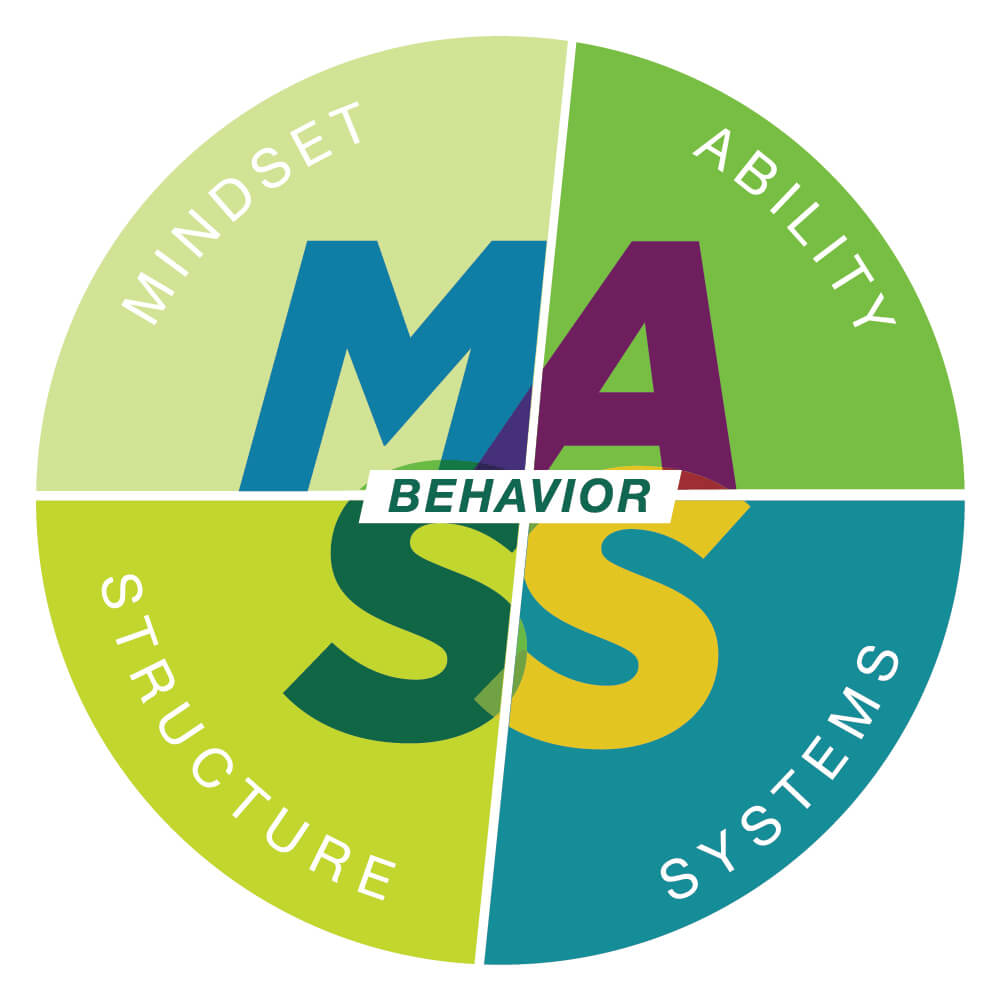
So, what mindset shifts should leaders make—and encourage across their business—to transform their company culture for the future?
Here are three common mindset shifts that successful businesses are making now.
Mindset shift one: from resisting culture change to embracing it
The one thing that’s certain about the world is uncertainty. Even if you’re clear on your culture strategy, the path you follow to deliver it is unlikely to be linear. Rather than resisting twists and turns in the world, market, or industry, successful leaders embrace them. And they develop agile teams who are ready to embrace culture change, too.
One effective way that leading organizations are doing that is by embedding learning and development into their company’s DNA. In fact, our research showed this was the number one cultural priority that Most-Admired businesses planned to focus on in the future. Creating a culture of learning keeps teams innovative and agile. It also helps them build the capabilities they’ll need to rise to whatever challenges might lie ahead.
Leaders who see change as a chance for progress and growth do better still.
Take Airbnb. Back in 2008, when the financial crisis was at its peak, Airbnb embraced the downturn and revolutionized the hotel industry. What began as a way to help the founders pay rent rapidly became a more affordable and personalized way for vacationers worldwide to stay in new places.
During the pandemic, Airbnb adapted by implementing enhanced cleaning protocols and flexible cancellation policies. More recently, the company made coming into the office optional for all workers to support those who prefer remote work options. These are just some of the signs that Airbnb has embraced change, bringing along staff in the process.
Navigating change will always be a balancing act. Leaders who know where their business needs to be but are willing to take an agile path to get there are most likely to succeed.
Mindset shift two: from me to we
A single great leader or high-performing team can only take a business so far. But, get your entire business performing at its peak and you’ll see real culture change, fast. How do you do it? In leading organizations we’ve found success comes when everyone makes the shift from me (and my own personal gain) to we (and how can we all pull together to achieve the same goals).
Tech firm Hewlett Packard Enterprise isn’t just one of Fortune’s World’s Most-Admired Companies, it’s ranked as a Best Company to work for, too. And CEO Antonio Neri believes that shifting to a ‘we before I’ culture has been crucial to achieving that distinction.
“Culture matters, where you bring people together to innovate, to collaborate, to socialize. We have so many events around the globe, which ultimately foster the culture—the culture of ‘we before I’, the culture of inclusion and diversity, which are important elements in today’s environment.” Hewlett Packard CEO Antonio Neri
Time and again, we’ve seen that the organizations that come together, succeed together. Thirty percentof WMAC leaders agreed that collaboration was the behavior that would have the biggest impact on business performance in the future.
Mindset shift three: from focusing on products to focusing on customers
After becoming the number one PC company worldwide, Tech company Lenovo took a new business approach: one that focused less on what the technology engineers wanted to develop and more on the problems customers wanted them to solve. It called for a shared, collaborative focus across the business. And a big mindset shift among the business’ engineers.
Today, far from simply selling computers, the business has transformed to shape IT solutions for virtual healthcare, remote education and smarter shopping, rising to the challenges that people, communities, businesses and even entire populations face.

Can’t shift everyone's mindset at once? Start with 10%.
Ultimately, the more people in your organization who pull in the same direction, the more likely you’ll be to succeed when it comes to culture change. But big businesses can’t expect to change everyone’s minds overnight—and that’s okay.
“Research shows that when 10% of a population adopts a certain belief or behavior, 100% of the time that belief or behavior is adopted by the broader community, too.”
Once you’ve built the will to change, make sure you have the way to change, too
In another recent survey, we found that two thirds of people believe integrating desired changes into the company’s culture and workflows was the most important route to full-scale change—not simply making minor alterations. Building the will to change culture is just the start.
Need help building the will or the way to transform your company culture? Talk to us.
