Redefining a Skills-Based Organization

Place skills at the heart of talent strategy & re-imagine your company's structure with a shift in the relationship between roles, people and business strategy.
Key takeaways
- How skills-based organizations behave
- What it means to disassemble/reassemble an organization as skills-based
- How skills-based organizations think about future talent needs
Organizations around the world are facing a growing skills crisis. From generative AI to automation, the rapid pace of change has altered the skill sets required for jobs by 25% since 2015. And this rate is expected to double by 2027, meaning that finding the right talent will continue to be a key challenge for businesses globally.
In response, some organizations are undertaking a radical re-think of how they structure roles and responsibilities, how they hire, and how they develop talent. The result is a complete re-imagining of what it means to be a skills-based organization.
One way that organizations are striving to be more agile is by evolving their thinking about work—from static jobs to dynamic work where skills are learned and applied in a more fluid way. Skills do not exist in isolation. They must be considered in the context of the whole person and whole company. It’s not just what someone’s skills are, but how they are used.
Transitioning to a skills-based organization provides leaders with a unique opportunity to place skills at the heart of talent strategies. But for this transition to be successful, talent strategies must be aligned with business strategies. This is your guide for determining if this transformation is right for your organization, what to expect, and how to get started.
What is a skills-based organization?
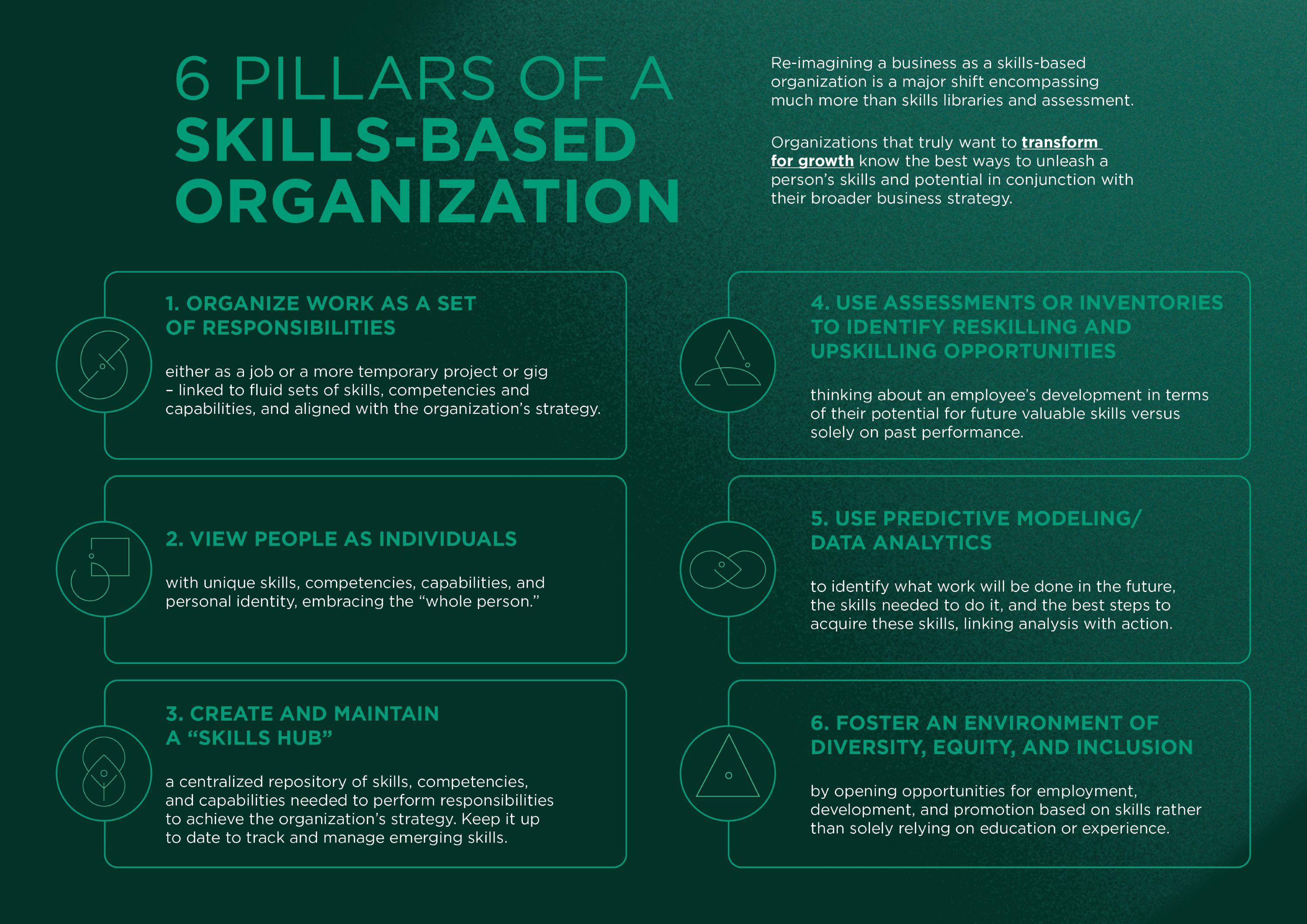
A "skills-based organization" is more than a buzzword—it’s a major shift in how a company thinks about its people, work, and business strategy.
What does it mean to be a skills-based organization? For some organizations, it’s as straightforward as placing skills at the heart of talent strategies. This is a start, but it’s much more. To truly redefine your organization as “skills-based,” consider the following.
A skills-based organization recognizes that people have a wide range of unique skills, capabilities, and mindsets that can be utilized to succeed in various roles. These organizations also understand that a focus on technical abilities is just one part of the bigger picture: they consider the individual as a whole person, how this individual fits within their organization, and the work that needs to be done today and tomorrow.
A skills-based organization recognizes that people have a wide range of skills that can be utilized to be successful in various roles. They consider the individual as a whole person and how their capabilities fit with the work that needs to be done both today and tomorrow within their organization.
“To disassemble and reassemble an organization as one that is ‘skills-driven’ is a major shift versus just knowing the skills needed to do the job,” says Tracy Bosch, Senior Client Partner, Korn Ferry. “Becoming a skills-based organization requires a significant change in mindsets, behaviors and culture norms.”
In many organizations, promotions to another role are predicated on the availability of that role. So regardless of the skill growth of individuals, career mobility can be limited by organizational hierarchy or simply the tenure of fellow colleagues. Transformation to a skills-based organization can disrupt some long-held cultural and structural norms related to responsibility boundaries, career progression and succession planning.
Consider the impact of an organizational transformation
Without clear communication and leadership buy-in at all levels, the magnitude of such a shift can have a destabilizing impact. While adopting a skills-based approach could be the right decision from a business standpoint, the process of how this change is managed impacts the overall outcome. This is why it is critical to consider the impact of transformation on a practical level. This shift starts at the top but must permeate throughout company culture.
- Better agility and adaptability: Organizations focused on skills are 57% more likely to anticipate and effectively respond to changes. “Skills-based organizations can quickly reallocate resources in response to shifting market demands, enabling them to seize new opportunities and navigate industry disruptions more effectively. Prioritizing skills also promotes creativity and innovation while creating a diverse and resilient workforce, which benefits employees, organizations and communities,” says Karin Visser, Vice President, Org, Work & Reward IP Development, Korn Ferry Institute.
- Talent retention and attraction: Skills-based organizations are 107% more likely to place talent effectively and 98% more likely to retain high performers.
“People are looking for purpose and fit with their own beliefs and values. Learning, development, and career clarity are among the top three reasons why people join and stay in an organization. Skills-based organizations are designed to provide intentional and meaningful career progression opportunities aligned with an individual’s goals.” says Visser.
Building skills for the future
Ninety-four percent of leaders expect employees to pick up new skills on the job, but the playbook for doing so is outdated. It can be difficult for people to make time for learning beyond their day-to-day responsibilities. Yet when employee training is separate from daily work, this often leads to surface knowledge acquisition. The trick is to provide access to required training and to do this reskilling in the flow of the work.
Organizations that are redefining what it means to be skills-based address this by placing skill-building at the core of its talent and business strategies:
- Use assessments to identify skill gaps and upskilling/reskilling opportunities, based on a person’s technical abilities, behavioral capabilities and personal identity
- Integrate learning and mentoring into the work day
- Create learner and organization-supported touchpoints for continuous feedback
- Focus on faster reskilling opportunities and build to upskilling
- Explore a range of solutions, including hiring additional people to help bring current employees up to speed faster
Consider an organization that needs to modernize its geographical capabilities. Its current employees need technical training to master new skills and systems. They also need to learn how to work in differently structured teams.
As an example, one option would be for employees to complete a GIS (Geographic Information System) certification program. But while employees would be exposed to the technical skills, this exposure would happen in isolation, rather than the flow of daily work.
A skills-based organization would create faster learning touchpoints integrated into daily operations that reflect the desired team structure.
To accelerate this process further, the organization could also hire a critical mass of GIS experts to work alongside current employees who know the business. Together, these individuals could transform the process, technology and skills of the overall team.

Maximize employee potential
Skills-based organizations think about skills as an enabler and a catalyst, versus an endgame. Documenting skill gaps and providing more comprehensive upskilling and reskilling opportunities are important, but this is just one piece of the puzzle. These organizations must also consider how the company culture and structure impact the way in which these skills come to life, ensuring people are positioned to maximize their full potential.
94% of leaders expect employees to pick up new skills on the job. “Technology advancements, automation, and evolving job market dynamics are rendering certain job roles obsolete while creating new skill requirements in other areas. Skills-based organizations proactively adapt to these changes, ensuring their workforces remain relevant and future-proofed, rather than assuming their employees will simply learn as they go,” says Serena Jones, Senior Client Partner, Korn Ferry.
40% of leaders say their employees’ core skills will change in the next five years. “A skills-based organization understands that while some technical skills are indeed changing, other soft skills, such as adaptability, collaboration, and communication, will continue to be paramount for success. By taking a holistic view, a skills-based organization is better positioned to identify and fill current skill gaps while strengthening existing skills that are key for long-term success.” says Jones.
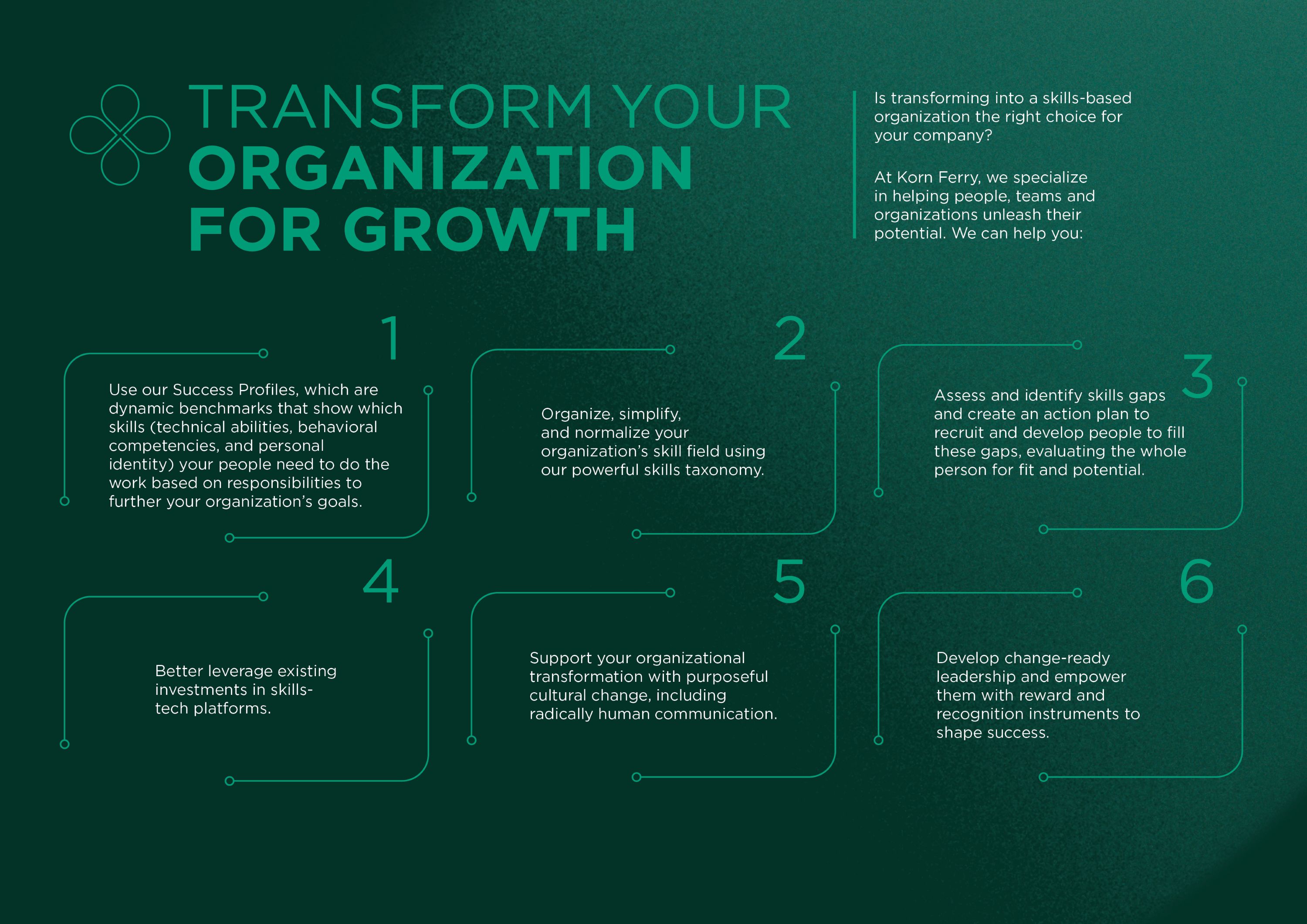
To find out how we can help you transform your organization’s approach to skills, get in touch with us here.
